
From Savoy Arcades to Sunlit Turia: How Wizz Air’s New Turin Base Unlocks Valencia and Beyond
With introductory fares from €24.99 and four weekly flights, Wizz Air launches its 40th global base at Turin Airport, connecting Piedmont’s aristocratic capital directly to the Mediterranean shores of Valencia.

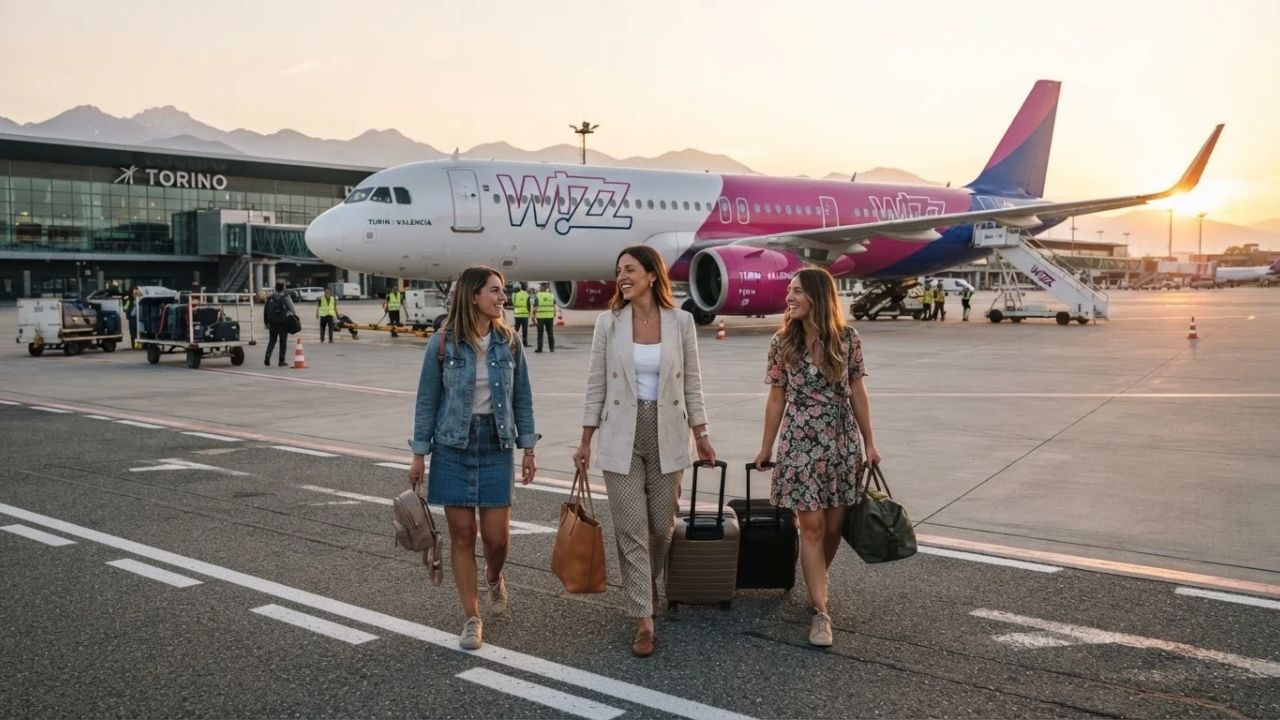
Direct low-cost flights bridge the Alpine elegance of Turin with the sun-drenched Mediterranean culture of Valencia
At exactly 1 hour and 50 minutes of flight time and starting fares of just €24.99, the geographic distance separating the misty, chocolate-scented arcades of Piedmont from the sun-drenched Mediterranean orange groves of Valencia has suddenly dissolved. On September 15, low-cost carrier Wizz Air initiated direct nonstop services linking Turin Airport (Caselle) with Valencia Airport, inaugurating the airline’s seventh operational base in Italy and its 40th worldwide. Operating four times weekly every Tuesday, Thursday, Saturday, and Sunday, this morning air corridor is the vanguard of a broader aviation offensive: stationing a permanent aircraft in Turin with a second arriving on October 25, Wizz Air is deploying nearly 1.3 million seats across 16 routes and eight countries in 2026, positioning the northern Italian city as a potent gateway to Southern Europe.
For seasoned European travelers who deliberately avoid the overwhelming crowds and inflated costs of Rome, Milan, and Barcelona, this new aerial bridge connects two of the continent's most sophisticated, culturally authentic regional capitals. Travelers can sip an espresso infused with thick melted gianduja chocolate beneath eighteen kilometres of 17th-century Royal Savoy porticoes in the morning, and by early afternoon be sitting on a Mediterranean terrace in Valencia, enjoying authentic saffron-infused wood-fired paella just steps from the sandy beaches of the Balearic Sea.
The Piedmont Pivot: Building Wizz Air’s Spanish Corridor
The opening of Wizz Air’s Turin base marks a significant redistribution of low-cost European air traffic away from saturated primary capitals toward high-yield secondary hubs. Spain serves as the centerpiece of this Italian expansion. Just twenty-four hours before the Valencia launch, Wizz Air commenced direct flights from Turin to Barcelona and the Basque culinary capital of Bilbao on September 14. The Iberian network expands further with four weekly flights to Madrid launching on October 25, followed by thrice-weekly services to the Andalusian sun hub of Málaga on October 26.
Once fully operational, travelers based in or visiting northern Italy will possess direct, low-cost access to five premier Spanish destinations: Barcelona, Bilbao, Valencia, Madrid, and Málaga. This network mirrors a companion development in Spain, where Wizz Air is preparing to open its own aircraft base at Valencia Airport in November. On the Turin–Valencia route, the new service introduces direct competition against Ryanair, doubling flight choices for travelers while providing morning departures that maximize weekend city-break itineraries.
Domestically, the Turin base is bolstering Italian north-south links, operating scheduled services to Rome, Naples, Palermo, and Catania. By establishing a low-fare matrix connecting Piedmont to Spain and Southern Italy, the airport is stepping out of the shadow of Milan Malpensa, offering travelers an effortless airport experience free of chaotic terminal transfers and lengthy runway taxi delays.
What Makes Turin and Valencia Different: Aristocracy Meets Mediterranean Vitality
The cultural contrast between these two connected destinations offers a sensory study in European regional identity. Turin, the former capital of the Duchy of Savoy and the first capital of unified Italy in 1861, is an aristocratic masterwork framed by the snow-capped Graian Alps along the Po River. Its urban design is celebrated for its sweeping neoclassical piazzas and grand porticoes, built so Savoy royalty could stroll across the city without raindrops touching their velvet capes.
The city houses cultural treasures rivaling Paris and London, including the world-renowned Museo Egizio—housing the most extensive collection of ancient Egyptian antiquities outside Cairo—and the National Museum of Cinema, spiraling inside the soaring dome of the Mole Antonelliana. Just outside the center lie the opulent Royal Residences of the House of Savoy, inscribed under the UNESCO World Heritage Centre. Yet Turin’s true magic lies in its culinary heritage: it is the birthplace of the modern aperitivo (where Antonio Benedetto Carpano invented vermouth in 1786), slow food culture, and the legendary Bicerin—a heavenly hot beverage of dark espresso, molten chocolate, and chilled fresh cream served in clear glassware at historic wood-paneled cafes since 1763.
Touching down in Valencia, the atmosphere shifts into warm Mediterranean exuberance. Positioned where the Turia River meets the sea, Valencia is celebrated for La Lonja de la Seda (the 15th-century Silk Exchange, another UNESCO World Heritage masterpiece) and the sprawling Modernista architecture of the Mercat Central. In bold contrast, the futuristic, gleaming white domes of Santiago Calatrava’s City of Arts and Sciences (Ciudad de las Artes y las Ciencias) seem to float on turquoise reflective pools along the Jardín del Turia—a verdant nine-kilometre urban park created in the diverted riverbed, where locals jog under palm and orange trees.
Above all, Valencia is the sacred birthplace of paella. True Paella Valenciana is an artisanal ritual cooked over open orange-wood fires, combining round-grain Senia or Bomba rice, rabbit, chicken, green beans (bajoqueta), flat white beans (garrofó), and fragrant rosemary—categorically rejecting the seafood or chorizo additions common in generic tourist establishments abroad.
Visitor Insider Tips: Navigating Turin and Valencia Like a Local
- Savor Bicerin at Historic Cafes, Not Chain Kiosks: In Turin, take your afternoon pause at Caffè Al Bicerin in Piazza della Consolata, operating continuously since 1763. Order the authentic Bicerin and drink it without stirring; the pleasure comes from the contrast of hot, bitter espresso and molten chocolate piercing through a thick layer of cold, unsweetened whipped cream. Pair it with crisp Piedmontese nocciolini (miniature hazelnut cookies).
- Master Valencia’s Paella Rules: Never order paella for dinner in Valencia; locals eat rice exclusively at lunch between 1:30 PM and 3:30 PM, when the rice is freshly prepared in wide pans. For an authentic experience, reserve a table at a traditional arroz restaurant in the seaside fishing quarter of El Cabanyal or take a short bus trip south to the village of El Palmar on the Albufera freshwater lagoon, where rice has been cultivated since Moorish rule. Consult verified dining registries on Visit Valencia.
- Rent a Bicycle to Ride the Turia Riverbed: In Valencia, bypass crowded buses and rent an urban bicycle or e-scooter. The 9-kilometre Jardín del Turia allows you to glide from the historic Old Town (Barrio del Carmen) through lush gardens, rose pavilions, and beneath medieval stone bridges straight to the Mediterranean beach without crossing a single automobile intersection.
- Explore Turin’s Quadrilatero Romano for Evening Aperitivo: From 7:00 PM onward, join the local gathering in Turin's historic Roman Quarter (Quadrilatero Romano) around Via San Domenico. Order a glass of regional Nebbiolo or a classic Vermouth di Torino over ice with an orange peel; local wine bars serve generous platters of local Toma cheese, Vitello Tonnato, and grissini breadsticks included with your drink.
- Utilize Express Airport Transit Links: Turin Airport (TRN) connects directly to central Torino Porta Susa and Porta Nuova railway stations via regional trains and dedicated Arriva express buses departing every 15 minutes. In Valencia, Airport Metro lines 3 and 5 take you straight into the heart of Xàtiva station in just 20 minutes for under five euros. Plan regional train extensions to the Langhe wine region or Costa Blanca through Italia.it.
Cultural and Environmental Context: Regional Decongestion and Slow Tourism
The introduction of direct air links between secondary European cities plays a pivotal role in sustainable tourism decentralization. For years, European travel has suffered from severe spatial concentration, with millions of visitors flooding Venice, Florence, and Barcelona, straining municipal waste systems and driving up rental housing costs for working residents. Direct connectivity between cultural powerhouses like Turin and Valencia redistributes economic revenue directly to regional merchants, family-run trattorias, and independent cultural institutions that possess surplus civic capacity.
Simultaneously, both cities are global champions of environmental urban planning. Valencia was awarded the European Green Capital title in recognition of its pedestrianized plazas, extensive cycling arteries, and community organic orchards in the surrounding Huerta. In Piedmont, regional agriturismo networks actively preserve endangered native grape varietals and alpine dairy pastures, resisting industrial agricultural monoculture.
Conscious travelers utilizing low-fare secondary air links honor this balance by practicing slow travel. By staying multiple nights in neighborhood quarters, avoiding peak summer heat waves, and exploring regional rail connections—such as taking a local train from Turin into the vineyard-covered hills of Barolo or hopping a suburban train from Valencia to the coastal orange groves of Sagunto—visitors help foster an eco-conscious European travel culture rooted in regional pride and mutual respect.
FAQ: Traveling Between Turin and Valencia 2026
What days do Wizz Air flights operate between Turin and Valencia? Flights operate four times weekly on Tuesday, Thursday, Saturday, and Sunday, with morning departures completing the journey in roughly one hour and 50 minutes.
How far is Turin Airport from the city center, and how do I get there? Turin Airport sits 16 kilometres north of the city. The express rail link and Arriva shuttle buses reach central Torino Porta Susa station in approximately 25 to 30 minutes.
How do I reach central Valencia from Valencia Airport? Valencia Airport connects directly to the city center via Metro lines 3 and 5, arriving at Xàtiva and Colón stations in under 25 minutes.
What is the best season to explore Turin and Valencia together? September through November and April through June offer ideal weather, avoiding summer heat while providing clear Alpine skies in Turin and pleasant Mediterranean sunshine in Valencia.
Where the snowy crown of the Alps bows to the warm embrace of the Mediterranean, the rails and runways of Europe continue to weave quiet cities into unforgettable journeys.
Related Travel Guides
- The Realigned Orient: How Currency Shocks, Dual Pricing, and Rail Resurgence Are Rewriting Asian Travel
- The Romantic Bluff Reborn: How The Ocean Cliffs at Dana Point Is Elevating California Coastal Luxury
- From Baroque Arcades to Mediterranean Paella: The 7-Day Turin and Valencia Slow Travel Itinerary
Disclaimer
This article is for informational and educational purposes only. It does not constitute legal, financial, or professional advice. While we strive to provide accurate and up-to-date information, travel policies, regulations, and conditions change rapidly. Always verify information with official sources before making travel decisions. Nomad Lawyer makes no representations about the accuracy, reliability, completeness, or suitability of the information provided. Readers should consult qualified professionals for advice specific to their circumstances. The views expressed in this article are those of the author and do not necessarily reflect the views of Nomad Lawyer.
Raushan Kumar
Founder & Lead Developer
Full-stack developer with 11+ years of experience and a passionate traveller. Raushan built Nomad Lawyer from the ground up with a vision to create the best travel and law experience on the web.
Learn more about our team →