The Autumn Wine Crown: Why France's Rhône Valley Surpassed Bordeaux and Provence in 2026

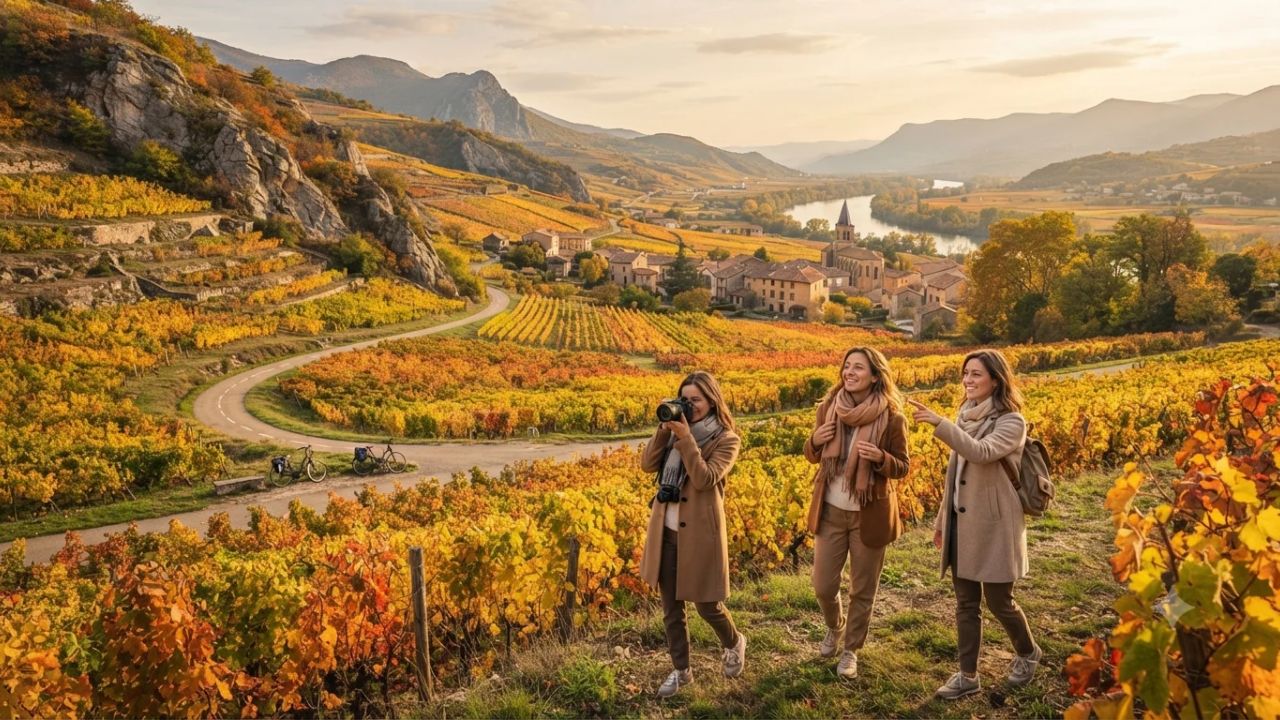
While international travelers have long equated French wine holidays with the grand châteaux of Bordeaux or the lavender fields of Provence, new seasonal travel data reveals that the Rhône Valley has claimed the number one position in France with a perfect Photo Index Score of 100. Surpassing Bordeaux (73) and Provence (71), this historic river corridor has transformed from a transit highway into Europe's premier autumn wine destination, driven by the popularity of the ViaRhôna cycle route and steep granite vineyard hillsides that blaze in vivid shades of amber, gold, and crimson from late September through November.
The index reflects a major shift toward slow, immersive journeys where travelers combine world-class Syrah and Grenache tastings with car-free cycling along quiet riverbanks. By dividing neatly between the dramatic vertical terraces of the Northern Rhône and the sun-baked garrigue plains of the Southern Rhône, the valley offers two distinct seasonal personalities within an effortless two-hour train ride from Lyon.
The Autumn Wine Index: How French Regions Ranked
The 2026 Autumn Photo Index evaluated visitor engagement, scenic diversity, and seasonal visual appeal across eleven prominent French wine territories. Southern French regions captured the top five positions, proving that extended sunshine and dramatic topography create the ultimate autumn travel backdrop.
| Rank | French Wine Region | Photo Index Score | Core Autumn Appeal & Distinctive Terrain |
|---|---|---|---|
| 1 | Rhône Valley | 100 | Steep granite terraces in the north, Mediterranean river plains in the south |
| 2 | Bordeaux | 73 | Grand neoclassical architecture, Garonne waterfront, Cité du Vin museum |
| 3 | Provence | 71 | Golden autumn light, ancient Roman ruins in Arles, stone hilltop hamlets |
| 4 | Languedoc-Roussillon | 55 | Medieval Carcassonne fortifications, Canal du Midi waterway trails |
| 5 | Corsica | 29 | Granite mountain peaks meeting secluded Mediterranean coastal vineyards |
| 6 | Burgundy | 26 | Intimate stone cellars, Côte d'Or golden slopes, historic grand cru plots |
| 7 | Loire Valley | 23 | Renaissance riverside châteaux surrounded by tuffeau limestone caves |
| 8 | Beaujolais | 17 | Rolling granite hills, vibrant Gamay harvest festivals, village bistros |
| 9 | Southwest France | 16 | Bastide towns, Cahors Malbec estates, Dordogne river gorges |
| 10 | Alsace | 12 | Timber-framed villages, Vosges foothills, aromatic Riesling routes |
| 11 | Champagne | 7 | Historic chalk cellars in Reims and Épernay, limited harvest tour access |
While Champagne scored lower due to harvest-period access restrictions across working cellars in Reims, Épernay, Aÿ, and Hautvillers, the Rhône Valley gained top marks for its seamless visitor access, roadside farm gates, and dedicated multi-use cycling networks.
What Sets the Northern and Southern Rhône Apart
The Rhône Valley's visual and viticultural magic lies in its dual identity, where two completely different microclimates and terroirs sit along the same powerful waterway.
In the Northern Rhône, vineyards cling to perilous granite slopes with inclines exceeding 60 degrees. In appellations like Côte-Rôtie, Condrieu, and Hermitage, mechanical harvesting is impossible; grape growers navigate narrow stone terraces supported by drystone walls (murets) built during Roman times. In autumn, the pure Syrah vines turn luminous gold against the dark granite rock, creating dramatic views directly above the river.
In the Southern Rhône, the valley opens into expansive Mediterranean plains surrounding historic towns like Orange and Avignon. Here, ancient vines thrive among smooth quartzite river stones (galets roulés) that absorb intense daytime sunlight and radiate heat back onto the roots during cool autumn nights. Legendary appellations like Châteauneuf-du-Pape, Gigondas, and Vacqueyras produce rich, complex blends dominated by Grenache, Mourvèdre, and Syrah.
For official regional heritage itineraries, visitors can consult the France Tourism Portal.
Visitor Insider Tips: Timing, Local Feasts, and Transport Hacks
Experiencing the Rhône Valley like a seasoned connoisseur requires syncing your schedule with local harvest traditions and utilizing regional rail links:
- Travel by Regional TER Train and E-Bike: Avoid highway tolls by using SNCF Connect to board regional trains between Lyon Part-Dieu, Tain-l'Hermitage, Valence, and Avignon. Pack or rent an electric touring bicycle to ride sections of the ViaRhôna path directly through the vineyards.
- Dine on Autumn Truffles and Wild Game: Autumn menus at village auberges feature wild boar stew (daube de sanglier), roasted Bresse poultry with chanterelle mushrooms, and black truffles from the nearby Tricastin oak woodlands. Pair these dishes with a glass of aged Cornas or Saint-Joseph.
- Visit the Chapel atop the Hill of Hermitage: Hike the steep pedestrian path through the vines behind Tain-l'Hermitage up to the iconic stone chapel (Chapelle Saint-Christophe). The view across the sweeping bend of the river at sunset offers one of the most celebrated vistas in Europe.
- Explore Neighboring UNESCO Monuments: Combine wine excursions with visits to ancient Roman architecture, such as the Roman Theatre in Orange and the Pont du Gard aqueduct, preserved under UNESCO World Heritage protection.
- Reserve Small Domaine Cellar Tastings in Advance: While large cooperative tasting rooms in Tain and Châteauneuf welcome walk-ins, intimate family-run estates require appointments scheduled at least one week prior, especially during October fermentation periods.
Cultural and Environmental Context: Biodynamics and River Ecosystems
The Rhône Valley's transition to sustainable wine tourism highlights a deep commitment to environmental stewardship. Across appellations from Ampuis to Cairanne, winemakers are converting heritage vineyards to organic and biodynamic viticulture, eliminating synthetic herbicides and reintroducing cover crops between vine rows.
This agricultural shift protects the delicate river basin, preventing soil erosion along steep terraces and fostering beneficial insect populations that control pests naturally. Furthermore, the expansion of the car-free ViaRhôna trail encourages low-carbon regional travel, directing economic spending into small village bakeries, bed-and-breakfasts, and family-owned olive mills.
By encouraging visitors to explore during the quiet autumn and early spring months, regional authorities maintain a sustainable tourism cadence that supports local heritage artisans without overwhelming medieval village infrastructures.
FAQ: Visiting the Rhône Valley in 2026
What makes autumn the best season for a Rhône Valley wine tour?
Autumn brings grape harvests, comfortable temperatures in the low 60s Fahrenheit, vibrant foliage across terraced vineyards, and fewer crowds than the summer peak.
How do I get to the Rhône Valley from Paris or Lyon?
High-speed TGV trains connect Paris Gare de Lyon to Valence in two hours, while regional TER trains link Lyon to Northern Rhône wine villages in just 45 minutes.
Can I tour the Rhône Valley without renting a car?
Yes, the ViaRhôna dedicated cycling path connects train stations in Vienne, Tournon, Valence, and Avignon, allowing travelers to hop between vineyards by bicycle and train.
What is the difference between Northern and Southern Rhône wines?
Northern Rhône produces single-varietal red wines made exclusively from Syrah and whites from Viognier, while Southern Rhône focuses on complex Mediterranean blends led by Grenache.
[Where terraced granite slopes meet the golden Mediterranean sun, the Rhône Valley turns every autumn sunset into an unforgettable vintage.]
Related Travel Guides
This article is for informational purposes. Flight routes, passenger regulations, visa rules, and transit advisories are subject to change by airlines and aviation authorities. Readers are advised to verify schedules and travel documentation with relevant carriers and border agencies before departure.
Related Stories
Ayodhya Deepotsav 2026 Logistics Guide: Attending the 30 Lakh Lamp Festival in India

WTM London 2026: AI Booking Shifts and Global Tourism Growth Forecasts for 1.57 Billion Arrivals