
Caribbean Hotels Face Operational Crisis as 41% of Staff Rely on Manual Workarounds in 2026
A critical misalignment between legacy Property Management Systems (PMS) and modern resort operations is forcing Caribbean hoteliers to rely on manual workarounds, threatening guest satisfaction and profit margins.

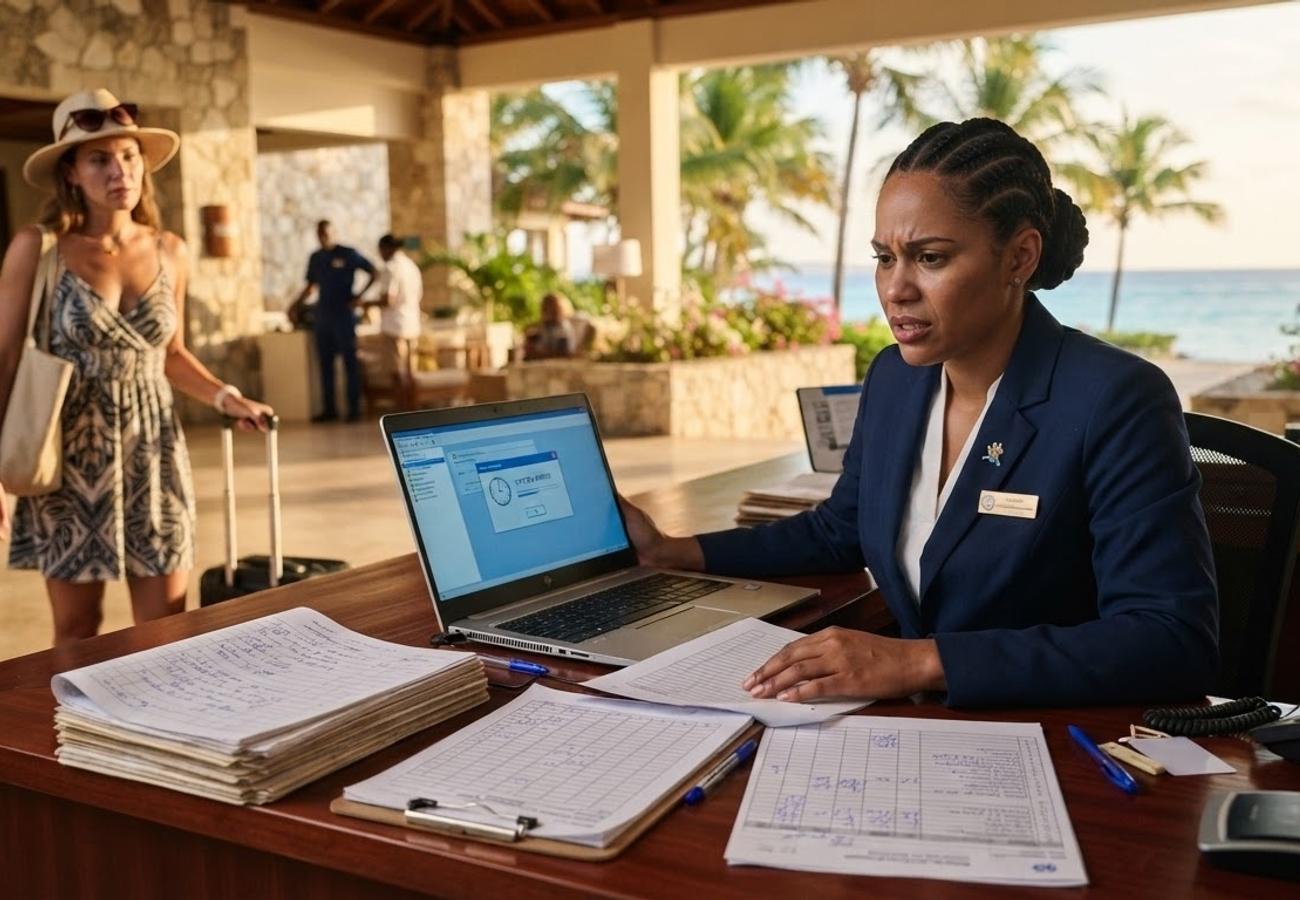
Image generated by AI
41% of hospitality professionals in the Caribbean identify manual processes as the primary driver of major operational failures, according to the Caribbean Hospitality Operations & Technology Survey. This figure highlights a systemic disconnect where the software intended to streamline hotel management has instead become a bottleneck, forcing staff to bypass official systems in favor of spreadsheets and handwritten notes to maintain basic service levels.
The Erosion of the Digital Front Desk
The failure of Property Management Systems (PMS) in the Caribbean is rarely a sudden crash; it is a gradual drift. As resorts evolve from simple lodging providers into complex experience hubs, the software used to manage them often remains static. This creates "operational gaps"—invisible frictions where a task cannot be completed within the system, prompting employees to create "shadow systems" of emails and external documents.
In the Caribbean, this technical lag is exacerbated by shifting demographics. The region is seeing a surge in North American travelers alongside traditional European and UK markets. These guests bring heightened expectations for seamless, digitized journeys. When a resort's PMS cannot handle the concentrated arrival spikes typical of Caribbean flight schedules, the result is the dreaded check-in queue.
For the traveler, these queues are not merely an inconvenience; they are the first data point in their perception of the luxury experience. When front desk staff are forced to manually collect missing data from third-party booking channels because the PMS cannot sync profiles, the hospitality element is replaced by administrative friction.
Quantifying the Operational Gap
The disconnect between perceived importance and actual performance in Caribbean hotel management is stark. While profitability and RevPAR (Revenue Per Available Room) are viewed as critical metrics, the tools available to manage them are failing.
| Operational Metric | Rated "Extremely Important" | Rated "Exceptional Performance" |
|---|---|---|
| Profitability & Margin Performance | 67% | 21% |
| RevPAR (Revenue Per Available Room) | 67% | 33% |
| Guest Communication & Engagement | ~50% | Not Specified |
The survey data further reveals a troubling trend in automation. Approximately 65% of respondents describe the processes linked to their biggest operational issues as only "partially automated," while 35% admit these processes are "mostly manual." This indicates that for a third of the region's hotels, the "system" is essentially a digital filing cabinet rather than an active management tool.
Expert Analysis: The "Experience Fragmentation" Trap
From a regulatory and business perspective, the Caribbean is facing a crisis of "Experience Fragmentation." Traditional PMS platforms were engineered for room inventory—essentially managing a grid of beds and dates. However, the modern Caribbean resort model sells an ecosystem: spa treatments, excursions, fine dining, and water sports.
When these services operate on disconnected platforms, the hotel loses the "unified guest view." For the traveler, the direct consequence is a fragmented stay where they must repeat their preferences or requests to four different departments. For the operator, the pricing pressure created by this fragmentation means missed ancillary revenue. If a guest's interest in a diving excursion isn't linked to their room profile in real-time, the opportunity for a personalized upsell vanishes.
Furthermore, the region's vulnerability to extreme weather adds a layer of logistical risk. A resilient system must do more than record a booking; it must facilitate emergency communication. Reliance on a cloud-only system in an area with unstable infrastructure can be a liability. The shift toward hybrid models—where local resilience meets cloud scalability—is no longer optional; it is a requirement for survival in the World Tourism Organization (UNWTO) era of sustainable and resilient tourism.
For the nomad lawyer or the corporate traveler, this means that the "luxury" label of a resort is increasingly tied to its tech stack. A hotel that cannot proactively identify a broken air conditioner before the guest checks in is operating a reactive model that is fundamentally incompatible with 2026 service standards.
Key Takeaways
- Systemic Failure: 41% of Caribbean hotel operational challenges stem from manual workarounds, not just software bugs.
- The Automation Gap: 65% of critical hotel processes are only partially automated, leading to inefficiency during peak arrival windows.
- Performance Paradox: While 67% of managers prioritize profitability and RevPAR, only 21% to 33% feel their performance in these areas is exceptional.
- Experience Fragmentation: Legacy PMS models fail to integrate ancillary services (spa, dining, tours), resulting in lost revenue and guest frustration.
- Resilience Needs: Environmental volatility in the Caribbean requires flexible technology that can function during connectivity drops and severe weather.
FAQ: Caribbean Hotel Tech 2026
Why are check-in lines still long at luxury Caribbean resorts? Many resorts use outdated PMS that cannot sync data from third-party booking sites. This forces staff to manually enter guest details upon arrival, creating bottlenecks during peak flight landing windows.
What is a "manual workaround" in hotel operations? It occurs when staff use spreadsheets, paper notes, or private emails to manage tasks because the official hotel software lacks the necessary features to complete the workflow.
How does outdated technology affect hotel pricing? When systems are fragmented, hotels miss "ancillary revenue" opportunities (like spa or tour bookings). This inefficiency can lead to higher base room rates to compensate for lost secondary spending.
Can cloud-based systems handle Caribbean weather risks? While cloud systems offer scalability, they depend on internet stability. The most resilient hotels use hybrid systems that allow for offline functionality during storms or connectivity outages.
The luxury of a Caribbean getaway is now measured by the invisibility of the technology powering it.
Related Travel Guides
Disclaimer
This article is for informational and educational purposes only. It does not constitute legal, financial, or professional advice. While we strive to provide accurate and up-to-date information, travel policies, regulations, and conditions change rapidly. Always verify information with official sources before making travel decisions. Nomad Lawyer makes no representations about the accuracy, reliability, completeness, or suitability of the information provided. Readers should consult qualified professionals for advice specific to their circumstances. The views expressed in this article are those of the author and do not necessarily reflect the views of Nomad Lawyer.
Preeti Gunjan
Contributor & Community Manager
A passionate traveller and community builder. Preeti helps grow the Nomad Lawyer community, fostering engagement and bringing the reader experience to life.
Learn more about our team →