
Cape Town Safari Demand Surges as Aquila Reserve and Air France KLM Expand European Connectivity in 2026
Increased flight capacity from Air France KLM and the expansion of Aquila Private Game Reserve are transforming Cape Town into a primary hub for short-stay Big Five safaris.

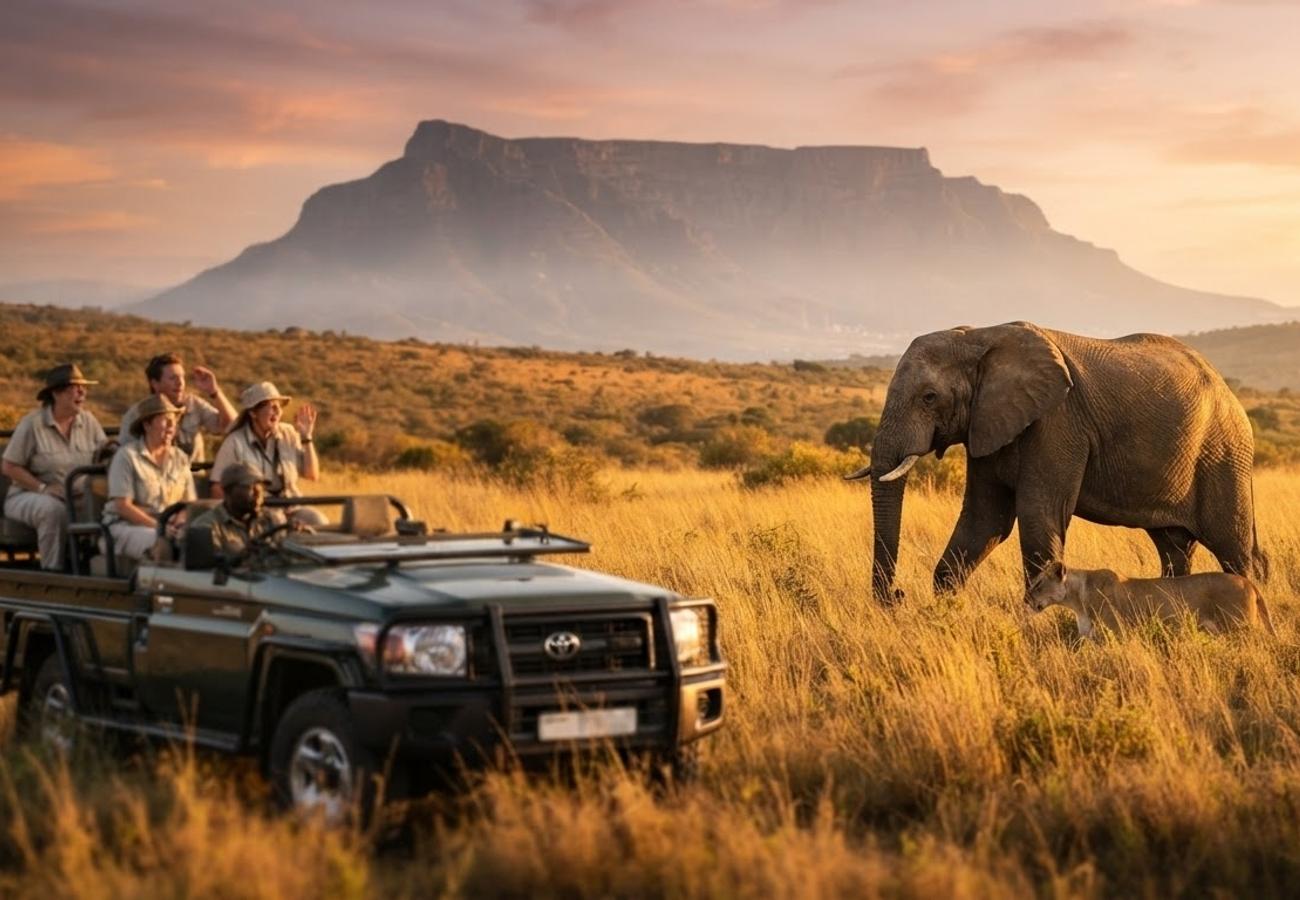
Image generated by AI
Cape Town is rapidly evolving into a strategic gateway for short-duration wildlife experiences, driven by a surge in European flight capacity and the aggressive expansion of the Aquila Private Game Reserve. This shift allows international visitors to experience "Big Five" wildlife without the logistical burden of traveling to remote northern provinces.
The traditional South African tourism model often required travelers to choose between the urban appeal of the Mother City and the wildlife density of Kruger National Park. However, current industry trends indicate a pivot toward "hybrid itineraries." By leveraging Cape Town's existing infrastructure, safari operators are now capturing a market of time-constrained travelers who prioritize accessibility over remote isolation.
Aquila Private Game Reserve Redefines Short-Stay Wildlife Tourism
Since its inception in 1999, Aquila Private Game Reserve has functioned as a pioneer in bringing large-scale game back to the Western Cape, a region historically dominated by viticulture and coastal tourism. The reserve has successfully repositioned itself as the primary wildlife anchor for visitors using Cape Town as their base.
To cater to the modern traveler, Aquila has developed a tiered product offering that includes day trips, overnight stays, and fly-in safari packages. Because the reserve is located approximately two hours from the city center, it serves as a viable alternative for tourists who cannot allocate the necessary time or budget to reach the Eastern Cape or the far north.
Market data suggests this strategy is hitting a sweet spot. For many European visitors, the Western Cape is the sole South African destination on their itinerary. By offering a structured, low-friction wildlife experience, Aquila is effectively converting city-break tourists into safari guests. This trend is supported by global search data from 2024, which revealed a double-digit increase in international queries for African safari experiences.
Strategic Partnerships and Global Market Expansion
Aquila has recently leveraged its 25th anniversary to solidify its standing within the regional tourism ecosystem. The reserve's prominence was highlighted in the 2024/25 official visitor guide produced by Cape Town Tourism, where it featured on the cover, signaling its role as a cornerstone of the "Cape Town safari" concept.
Beyond local visibility, the Aquila Collection has targeted the Asian market to diversify its visitor base. In 2024, the reserve conducted a Safari Roadshow in China, presenting the Western Cape as a dual-destination—combining urban exploration with wildlife viewing—to major Chinese tour operators.
Innovation in accessibility has also played a role. In September 2024, a partnership with Uber resulted in the launch of "UberSafari." This integration allows guests to book a day trip to Aquila directly through the app, providing door-to-door transport. This move specifically targets car-free international tourists and those seeking a seamless, digitally-integrated travel experience.
Air France KLM Boosts European Air Access to the Western Cape
The growth of the safari sector is inextricably linked to the increase in long-haul aviation capacity. Air France KLM has significantly deepened its commitment to Cape Town, reducing the friction for travelers arriving from Europe.
According to reports from Wesgro’s Cape Town Air Access programme, KLM expanded its Amsterdam-to-Cape Town frequency from seven to ten flights per week for the 2024/25 southern summer season. This increase was a direct response to a surge in demand for direct connectivity between the Netherlands and the Western Cape.
Similarly, Air France has extended its operational window for the Paris Charles de Gaulle to Cape Town route. While services traditionally ended in March, the airline extended its three-weekly flights through late April 2025 to capture the Easter and early autumn travel peaks. Looking ahead to the 2025/26 northern winter season, Air France KLM is planning further frequency growth.
These aviation shifts are part of a broader corporate strategy. In 2024, the group reported a roughly 5 percent expansion in long-haul operations, with Southern African routes identified as high-performing leisure corridors.
Analyzing the French and European Market Influence
European travelers continue to be the primary engine for South Africa's long-haul recovery. France, in particular, has emerged as a top-tier source market. Data from the Western Cape’s trade and investment agency reveals that air arrivals from France into Cape Town exceeded 33,000 tourists in 2023.
The synergy between high-frequency flights from Paris and Amsterdam and the availability of near-city safaris creates a powerful incentive for French and Dutch travelers. These visitors typically prioritize holiday travel and nature-based tourism, making them the ideal demographic for the "city-plus-safari" bundle.
South African Tourism data confirms that the Western Cape captures a majority share of the rebounding European market. This is reflected in record passenger volumes at Cape Town International Airport, which now serves as a high-capacity funnel for guests heading straight to reserves like Aquila.
Sustainability and the Future of Accessible Safaris
As the industry moves toward 2025 and 2026, the focus is shifting from mere accessibility to ethical tourism. Modern travelers are increasingly scrutinizing animal welfare, habitat restoration, and the carbon footprint of their trips.
Aquila has responded by integrating conservation and rehabilitation narratives into its core messaging. By emphasizing the reintroduction of the Big Five to the region and supporting wildlife rehabilitation, the reserve is attempting to bridge the gap between "convenience tourism" and "authentic conservation."
The outlook for the region suggests that while remote reserves will always hold a prestige factor, the commercial momentum lies in the "accessible safari." As Air France KLM continues to thicken the web of direct links, the demand for high-quality, sustainable, and time-efficient wildlife experiences in the Western Cape is expected to climb.
Why This Matters: The Traveler's Perspective For the international tourist, this evolution eliminates the "safari dilemma"—the need to spend several days of a precious vacation on domestic flights and transfers to reach the interior. The integration of Uber-based bookings and increased European flight frequencies means a Big Five experience can now be added to a Cape Town itinerary as easily as a museum visit. From a logistical standpoint, this transforms the Western Cape from a stopover into a comprehensive destination, though travelers should remain mindful of the difference between the managed environments of near-city reserves and the raw wilderness of remote national parks.
The convergence of aviation growth and strategic reserve placement is making the African safari more accessible than ever before.
Related Travel Guides
Disclaimer
This article is for informational and educational purposes only. It does not constitute legal, financial, or professional advice. While we strive to provide accurate and up-to-date information, travel policies, regulations, and conditions change rapidly. Always verify information with official sources before making travel decisions. Nomad Lawyer makes no representations about the accuracy, reliability, completeness, or suitability of the information provided. Readers should consult qualified professionals for advice specific to their circumstances. The views expressed in this article are those of the author and do not necessarily reflect the views of Nomad Lawyer.
Kunal K Choudhary
Co-Founder & Contributor
A passionate traveller and tech enthusiast. Kunal contributes to the vision and growth of Nomad Lawyer, bringing fresh perspectives and driving the community forward.
Learn more about our team →