
Canada Issues Updated Travel Advisory for Greece 2026: Wildfire Risks and New ETIAS Entry Rules
Canada has updated its travel advisory for Greece, warning visitors about heightened wildfire risks and upcoming ETIAS electronic travel authorization requirements for 2026.

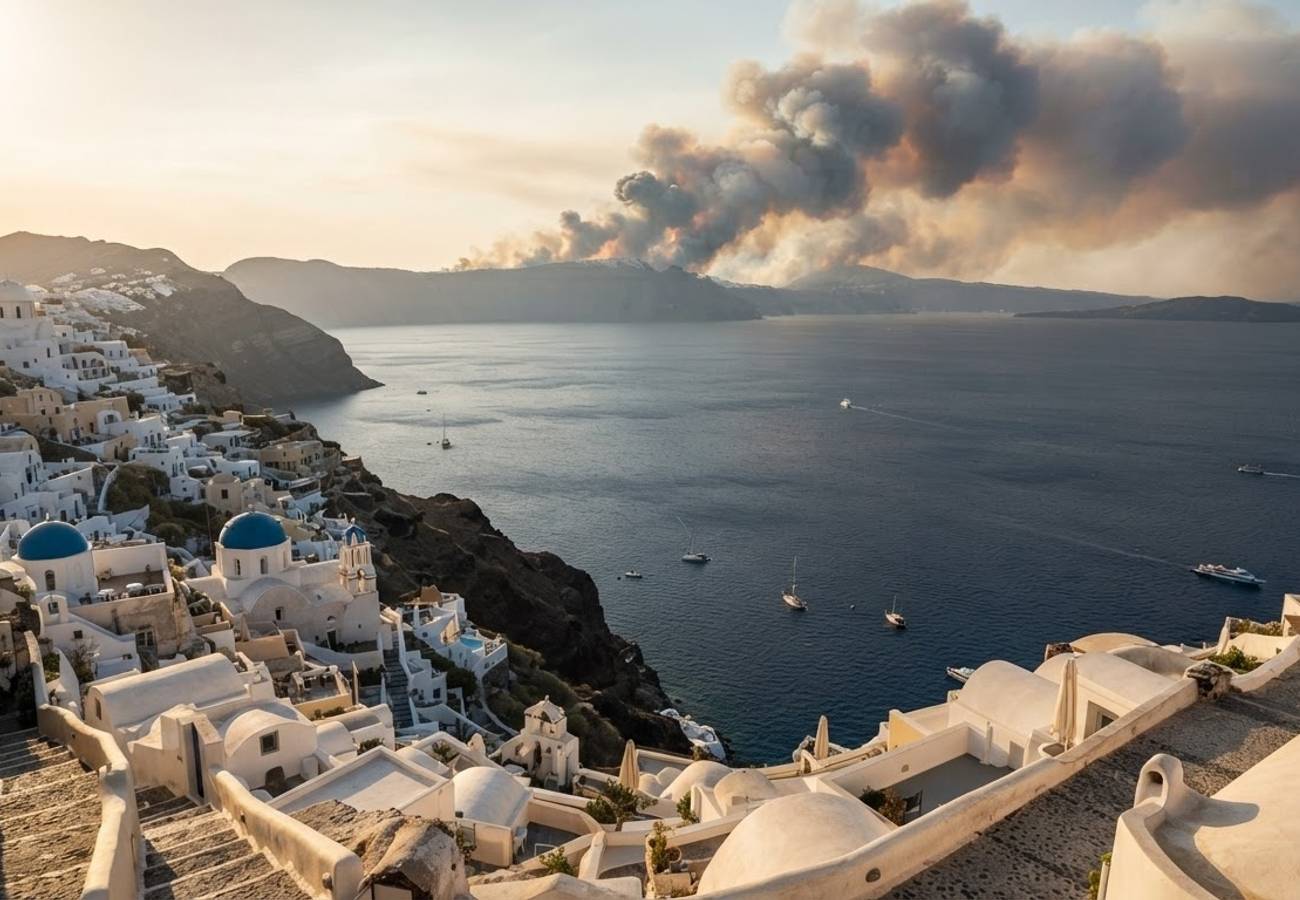
Image generated by AI
Canadian authorities have issued a critical update for travelers heading to Greece, citing an elevated risk of wildfires and imminent changes to European border security. While the advisory does not mandate the cancellation of trips, it urges high vigilance regarding extreme weather and new digital entry requirements.
The updated guidance comes as Greece enters the peak of its summer season, a period historically characterized by volatile weather patterns. The advisory emphasizes that the combination of intense heat, arid vegetation, and seasonal winds has created a high-risk environment for forest fires across both the Greek mainland and the popular island archipelagos. Beyond environmental hazards, the Canadian government is preparing its citizens for a significant shift in how they enter the European Union, specifically regarding the launch of the ETIAS authorization system.
Wildfire Hazards Across Mainland Greece and Islands
The primary focus of the current advisory is the volatile wildfire situation. During the summer months, Greece frequently battles a "perfect storm" of climatic conditions—extreme temperatures and low humidity—that allow fires to ignite and spread with lethal speed.
Industry reports indicate that these fires are currently impacting various regions, including high-traffic tourist zones. For the traveler, this creates a layer of unpredictability. Active fires can lead to sudden road closures, the suspension of outdoor excursions, and in severe cases, mandatory local evacuations.
Because these blazes move rapidly when fueled by strong winds, visitors are urged to avoid complacency. The Greek government continues to manage these crises, and the advisory stresses that travelers must follow the direct instructions of local authorities and monitor official emergency channels in real-time to ensure their safety.
Managing Heatwaves and Maritime Disruptions
Beyond the immediate threat of fire, the Canadian advisory points to the broader risks associated with Mediterranean summer weather. Heatwaves are becoming more frequent and intense, posing a direct health risk to tourists engaging in typical activities.
Sightseeing at archaeological sites, hiking through rural landscapes, and exploring coastal towns during peak afternoon hours can lead to heat-related illnesses. Travelers are encouraged to prioritize hydration and adjust their itineraries to avoid the most intense heat of the day.
Furthermore, the advisory notes that strong seasonal winds—often the same winds that drive wildfires—can disrupt maritime logistics. Ferry services, which are the lifeline for island-hopping itineraries in the Aegean and Ionian seas, may face delays or cancellations. This can lead to stranded passengers or sudden changes in accommodation plans, making flexible booking essential for those visiting islands like Santorini, Mykonos, or Crete.
The Transition to ETIAS and Digital Border Security
A significant portion of the advisory is dedicated to the upcoming implementation of the European Travel Information and Authorisation System (ETIAS). This represents a fundamental change in how visa-exempt travelers, including Canadians, access the Schengen Area.
The system is slated to become operational in the final quarter of 2026, specifically between September and December. While applications are not yet open, the Canadian government is proactively warning citizens about the requirements to avoid last-minute travel disruptions.
Key ETIAS Specifications:
- Requirement: Mandatory for all visa-exempt visitors to 30 participating European countries.
- Process: Completed via an official online application.
- Validity: The authorization remains valid for three years or until the traveler's passport expires.
- Consistency: Travelers must use the exact passport submitted during the application process.
Crucially, officials have warned against "spoof" websites. Fraudulent platforms are already appearing, claiming to offer ETIAS processing. Travelers are instructed to use only official European Union channels once the system officially launches.
Navigating Schengen Area Regulations and the EES
While ETIAS is a future requirement, the existing Schengen Area rules remain in full effect. Canadian citizens are currently permitted to enter Greece and other Schengen nations without a visa for short-term stays.
However, the "90-day rule" is a critical point of compliance. The allowance for a 90-day stay applies to the entire Schengen Area collectively, not per country. For example, a traveler spending 60 days in France and 30 days in Italy has exhausted their allowance and cannot legally enter Greece without a specific visa.
Additionally, the advisory introduces the Entry/Exit System (EES). Unlike ETIAS, the EES does not require a pre-travel application. Instead, it is an automated mechanism that will collect biometric data—including fingerprints and facial images—at the border control point upon arrival. This is part of a broader EU initiative to modernize security and track the duration of stays more accurately.
Passport Compliance and Dual Citizenship Logistics
The Canadian government has reiterated that passport validity is not a mere suggestion but a legal requirement for entry. For those using a standard Canadian passport, the document must be valid for at least three months beyond the intended date of departure from the Schengen Area.
It is important to note that some airlines may enforce stricter validity windows than the official Greek government requirements. Travelers are advised to verify these rules with their carriers to avoid being denied boarding.
The advisory also addresses specific passport types and identifiers:
- Gender Identifiers: While Canada recognizes the "X" gender identifier, not all European systems or border agencies do. Travelers using these passports are urged to contact the nearest embassy to confirm acceptance.
- Dual Nationals: Canadians who also hold citizenship in an EU/ETIAS-participating country are exempt from ETIAS. In such cases, they must travel using their European passport. However, they must still possess a valid Canadian passport to re-enter Canada by air.
Why This Matters: The Impact on the Modern Traveler
From a logistical standpoint, these updates signal the end of the "frictionless" entry era for North Americans visiting Europe. The shift toward ETIAS and EES means that the boundary between "visa-free" and "authorized" is blurring. Travelers can no longer simply show up with a passport; they will soon need a digital "green light" before they even book their flight.
For the visitor, the wildfire warnings highlight a growing trend of "climate-aware travel." The risk is no longer confined to remote forests but extends to the very hotels and beaches tourists frequent. This necessitates a shift in travel insurance—ensuring that policies cover "natural disasters" and "evacuations"—and a requirement for a more agile approach to itinerary planning.
Greece remains a premier global destination, but the 2026 season demands a higher level of administrative preparation and environmental awareness than ever before.
Related Travel Guides
Disclaimer
This article is for informational and educational purposes only. It does not constitute legal, financial, or professional advice. While we strive to provide accurate and up-to-date information, travel policies, regulations, and conditions change rapidly. Always verify information with official sources before making travel decisions. Nomad Lawyer makes no representations about the accuracy, reliability, completeness, or suitability of the information provided. Readers should consult qualified professionals for advice specific to their circumstances. The views expressed in this article are those of the author and do not necessarily reflect the views of Nomad Lawyer.
Raushan Kumar
Founder & Lead Developer
Full-stack developer with 11+ years of experience and a passionate traveller. Raushan built Nomad Lawyer from the ground up with a vision to create the best travel and law experience on the web.
Learn more about our team →