American Airlines Cohorts With United as Fuel Crisis Forces Major US Airlines Into a New Era of Flight Planning

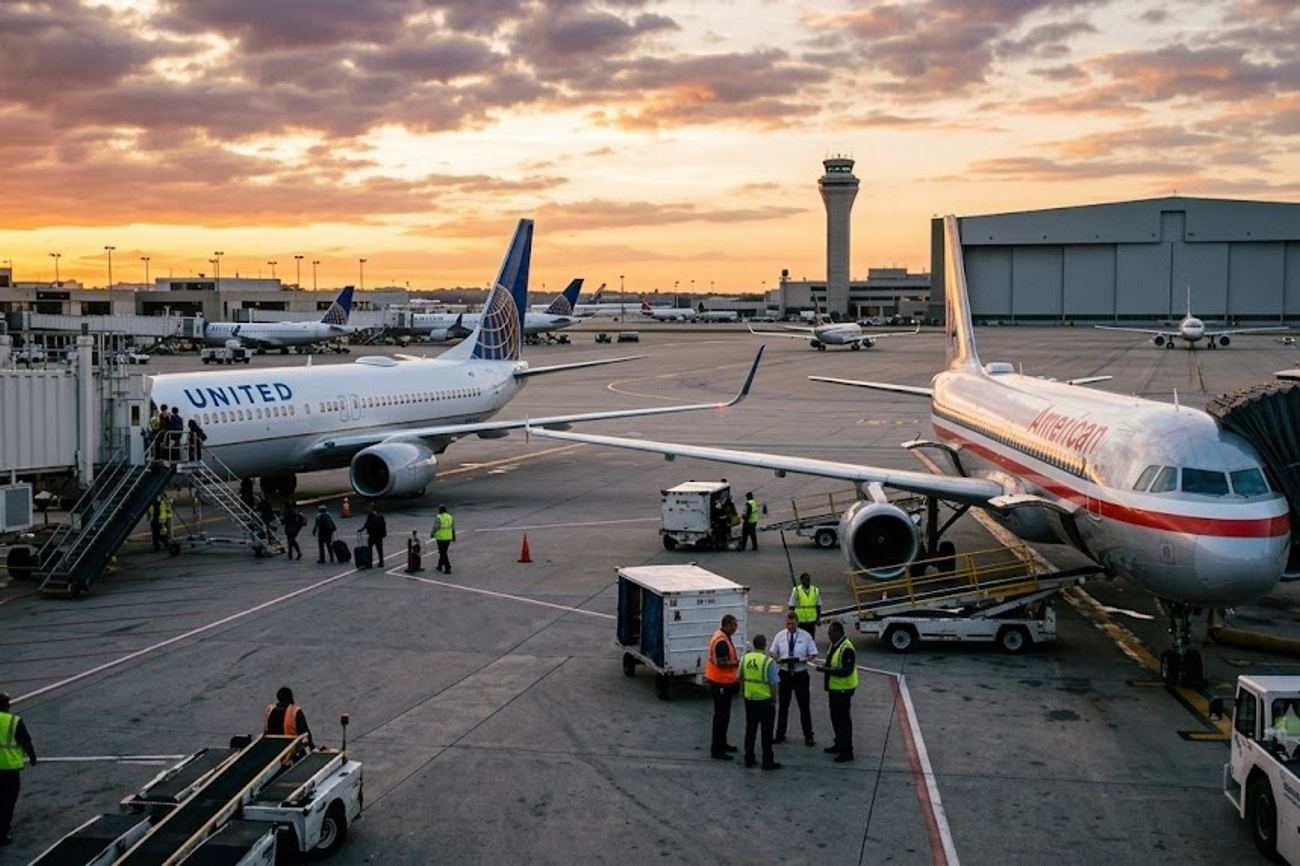
Image generated by AI
Jet fuel expenses have historically fluctuated between 15% and 30% of total airline operating costs, but current supply pressures have pushed major U.S. carriers into a defensive posture that prioritizes margin protection over market share. This shift is most evident in the synchronized capacity reductions seen across American Airlines, United Airlines, and Southwest Airlines, signaling a departure from the aggressive post-pandemic expansion era.
The Fuel Equation: Capacity vs. Profitability
The current operational climate for U.S. aviation is defined by a pivot toward "selective connectivity." Rather than pursuing the traditional growth metric of Available Seat Miles (ASMs), carriers are now optimizing for Revenue per Available Seat Mile (RASM). This transition is a direct response to elevated energy prices reported by the U.S. Energy Information Administration (EIA), which has highlighted how global supply disruptions create immediate volatility in jet fuel expenditures.
For a carrier like American Airlines, the strategy has shifted toward a comprehensive review of route performance. When fuel costs spike, the "break-even" load factor for a flight increases; a route that was profitable at $2.50 per gallon may become a liability at $3.50. Consequently, airlines are no longer adding flights based on passenger volume alone, but are instead auditing the specific fuel burn of aircraft models against the yield of the route.
This trend is not limited to legacy carriers. Southwest Airlines, which traditionally relied on a high-frequency, low-cost model, has explicitly slowed its planned capacity growth. This indicates that even the most efficient low-cost structures are reaching a ceiling where fuel costs can no longer be absorbed by operational efficiencies alone. Data from the International Air Transport Association (IATA) suggests that fuel remains the most volatile variable in airline financial planning, forcing a move toward "smarter scheduling" over "rapid expansion."
Comparative Capacity Shifts: Legacy vs. Low-Cost
The response to the fuel crisis varies by business model, but the trajectory is uniformly restrictive. Legacy carriers (American and United) are leveraging their premium cabins to offset fuel costs, while low-cost carriers (Southwest) are forced to adjust the actual number of flights offered.
| Airline | Strategic Response | Primary Metric Impacted | Growth Trajectory |
|---|---|---|---|
| American Airlines | Route Audit & Capacity Review | Operational Expense | Decelerating |
| United Airlines | Profitability-First Scheduling | Market Share % | Selective |
| Southwest Airlines | Slowed Capacity Expansion | Total Flight Frequency | Restricted |
When comparing these movements to previous cycles, the current trend is more focused on "surgical" cuts. In previous downturns, airlines often slashed wide-scale capacity. Today, the approach is a granular analysis of route profitability. United Airlines, for example, has publicly pivoted away from maximizing market share in favor of protecting the bottom line, a strategic shift that prioritizes the quality of the route over the quantity of destinations.
Practical Traveler Advisory and Strategic Insights
The data indicates a transition from a "buyer's market" of abundant flight options to a "carrier's market" where capacity is tightly controlled. For the individual traveler, this manifests in three specific ways:
- Reduced Frequency on Secondary Routes: Airlines are protecting "fortress hubs" and high-demand corridors. If you travel to mid-sized cities or less frequent destinations, you will likely see a reduction in daily flight options. This increases the risk of delays cascading through the day, as there are fewer backup flights available.
- Upward Pressure on Base Fares: While demand remains strong, the cost of fuel is being passed to the consumer. Travelers should expect higher baseline prices, particularly on routes served by only one or two carriers where competition is low.
- The Necessity of Early Booking: With capacity being intentionally restricted to maintain profitability, seats on high-demand routes will fill faster. Booking 8-12 weeks in advance is no longer just a cost-saving measure; it is a necessity to ensure seat availability.
To mitigate the impact of fuel volatility, American Airlines and United are optimizing route efficiency and coordinating ground logistics. Passengers can monitor real-time flight adjustments and updated scheduling through the American Airlines official portal to ensure seamless travel.
For those tracking fares, utilizing tools from OAG or similar flight data providers can help identify which routes are seeing capacity drops, allowing travelers to pivot to alternative airports before prices peak.
Forward Projection: The Era of Efficiency
The current trajectory suggests that the U.S. aviation industry is entering a permanent phase of "efficiency-first" planning. We are seeing a move toward fleet modernization—replacing older, fuel-thirsty aircraft with next-generation models that offer lower burn rates per seat.
Furthermore, the integration of FAA predictive technology will likely play a role in mitigating fuel waste. By reducing idling times and optimizing flight paths to avoid congestion, carriers can shave small percentages off their fuel burn, which translates to millions of dollars in savings across a global network.
We expect to see a continued trend of "co-opetition," where major airlines like American and United may align their capacity strategies to avoid "price wars" that would be unsustainable under high fuel costs. The focus will remain on premium travel markets and profitable international services, while domestic "thin" routes may be handed off to regional partners or eliminated entirely.
FAQ: U.S. Airline Fuel Trends 2024-2025
Will ticket prices continue to rise due to fuel costs? Yes, unless global oil prices stabilize or drop significantly. Airlines are currently using a combination of fare increases and capacity reductions to offset expenses. Strong travel demand allows them to maintain higher prices without losing significant passenger volume.
Which airlines are most affected by this shift? Low-cost carriers like Southwest are highly sensitive due to their lean margins. However, legacy carriers like American and United are also making major adjustments, specifically by cutting less profitable routes to protect overall corporate profitability.
Is this the best time to book flights for the next quarter? Yes. Because airlines are intentionally reducing capacity to avoid losses, the "last-minute deal" is becoming rarer. Booking early is essential to secure a seat on routes where frequency has been reduced.
Are flights being canceled permanently? Not necessarily. Most carriers are "adjusting" or "reviewing" routes. This means a route may see fewer flights per week or a change in schedule rather than a total disappearance, though chronically underperforming routes may be cut.
The aviation industry is no longer chasing the horizon of endless growth; it is now calculating the exact cost of every mile flown.
#US-Aviation-Fuel-Costs #Capacity-Reduction-2024 #Airline-Profitability-Metrics #American-Airlines-Network-Shift #United-Airlines-Yield-Management #Jet-Fuel-Volatility-Analysis
Related Travel Guides
- Dover Adapts As Biometric Border Checks Expand
- Texas Teams Up With California and More in Skyrocketing US Tourism as Leading Source of Mexican Tourist Arrivals for Eight Straight Months in 2026
- Poland Business Travel Magic Is Astonishing Global Executives And Completely Transforming International Corporate Journeys
This article is for informational purposes. Flight routes, passenger regulations, visa rules, and transit advisories are subject to change by airlines and aviation authorities. Readers are advised to verify schedules and travel documentation with relevant carriers and border agencies before departure.
Related Stories

US International Tourism 2026: Overseas Arrivals Drop 7% as Mexico and Canada Drive 50% of Traffic

Thailand Tourism Slowdown Tests Small Businesses as Kingdom Pivots to High-Yield Travel and Secondary Provinces