
Cairns Airport Transit Guide 2026: Navigating T1 and T2 Terminals for Tropical North Queensland
A comprehensive logistics guide to navigating Cairns Airport T1 and T2, featuring 2026 transfer costs, terminal connection times, and essential transit tips for travelers heading to Port Douglas and the Great Barrier Reef.
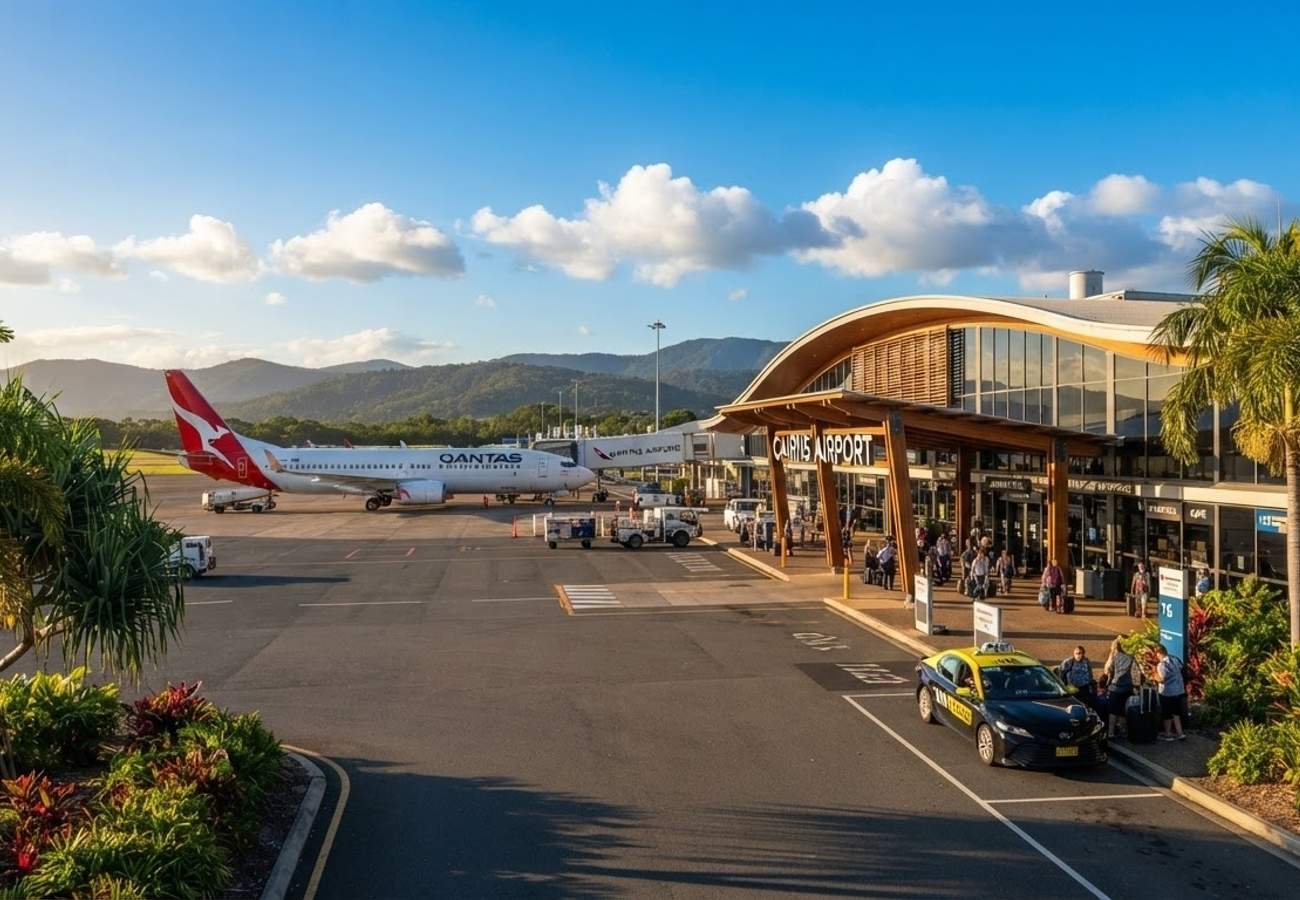
Image generated by AI
Landing at Cairns Airport is the primary gateway to the Great Barrier Reef and the Daintree Rainforest. Efficiently navigating the split-terminal layout and selecting the correct transfer method can save travelers significant time and expense.
Terminal Architecture and Connection Logistics
Cairns Airport operates via two distinct passenger terminals located on Airport Avenue. T1 serves as the international hub, handling carriers such as Singapore Airlines and Jetstar. T2 is dedicated to domestic operations, serving major hubs like Brisbane, Sydney, and Melbourne via Qantas, Virgin Australia, Jetstar, and Rex.
For passengers connecting between international and domestic flights on separate tickets, the transition requires a landside transfer. This process involves collecting checked luggage, clearing Australian Border Force customs and biosecurity, and walking to the adjacent terminal for a new check-in.
Transit Parameters:
- Inter-Terminal Walk: 5 to 10 minutes via a signed outdoor path.
- Recommended Connection Window: 2 to 3 hours for separate-ticket transfers.
- Overnight Stay: The airport is not a 24-hour sleeping hub; airside overnight stays are generally prohibited due to security and cleaning protocols.
2026 Transit Costs and Route Specifications
Transport from the airport is segmented by destination, with pricing varying based on vehicle type and peak-hour demand.
| Destination | Transport Mode | Estimated Cost (AUD) | Approx. Travel Time | Notes |
|---|---|---|---|---|
| Cairns CBD / Esplanade | Taxi | $25 – $40 | 10–15 mins | Direct from taxi rank |
| Cairns CBD / Esplanade | Rideshare (Uber) | Variable | 10–15 mins | Subject to surge pricing |
| Palm Cove | Taxi / Uber | Higher than CBD | 25–40 mins | Northern Beaches route |
| Port Douglas | Shared Shuttle | $35 – $55 (per adult) | 60–75 mins | Advance booking recommended |
| Port Douglas | Return Shuttle | $150 – $190 (couple) | 60–75 mins | Based on 2026 operator rates |
Traveler Logistics Guide: Ground-Level Navigation
From a ground-level perspective, the most common friction point for first-time visitors is the transition from the arrivals hall to the transport zones.
Navigating Customs and Biosecurity Australia maintains stringent quarantine laws. Travelers arriving at T1 must declare all food, plant materials, and outdoor gear. If you have used camping equipment or hiking boots prior to arrival, ensure they are cleaned and declared to avoid on-the-spot fines from the Australian Border Force.
Optimizing Ride-Booking vs. Taxis While Uber and other rideshare services operate at Cairns Airport, they use designated pickup zones separate from the public taxi ranks.
- The Access Fee Factor: Rideshare pickups incur an airport access fee. For very short trips to nearby Cairns North guesthouses, a standard taxi is often more cost-effective.
- The "After-Hours" Gap: After 11:00 PM, rideshare availability can become inconsistent. In these instances, the taxi rank is the most reliable option.
- Group Logistics: For families or groups with dive gear and large suitcases, a "maxi taxi" from the rank is typically more economical than booking two separate rideshare vehicles.
Port Douglas and Northern Beach Transfers For those bypassing the city center, shared shuttles are the most efficient logistics choice. Most operators require a flight number to synchronize pickups. Look for drivers with branded clipboards in the arrivals area. If you are traveling during the wet season, keep a light rain jacket accessible, as the walk between terminals and the transition to shuttles is exposed to the elements.
Infrastructure Impact Assessment
The current terminal configuration allows for rapid processing of high-volume tourist arrivals, but the lack of integrated airside transfers between T1 and T2 remains a bottleneck for connecting passengers. However, the proximity of the terminals to the CBD and the efficiency of the Captain Cook Highway ensure that the "last mile" of the journey to Port Douglas or the Northern Beaches is streamlined. The reliance on shared shuttles reduces regional traffic congestion while providing a scalable solution for the 2026 tourism surge.
Navigate the tropics with precision and local insight.
Related Travel Guides
Disclaimer
This article is for informational and educational purposes only. It does not constitute legal, financial, or professional advice. While we strive to provide accurate and up-to-date information, travel policies, regulations, and conditions change rapidly. Always verify information with official sources before making travel decisions. Nomad Lawyer makes no representations about the accuracy, reliability, completeness, or suitability of the information provided. Readers should consult qualified professionals for advice specific to their circumstances. The views expressed in this article are those of the author and do not necessarily reflect the views of Nomad Lawyer.