
Burlington Breaks Ground on $6.5M Fire Station 3 on North Roosevelt Avenue to Cut Emergency Response Times in 2026
Burlington begins construction on a $6.5 million Fire Station 3 along North Roosevelt Avenue, modernizing emergency coverage for the city's rapidly growing north side.

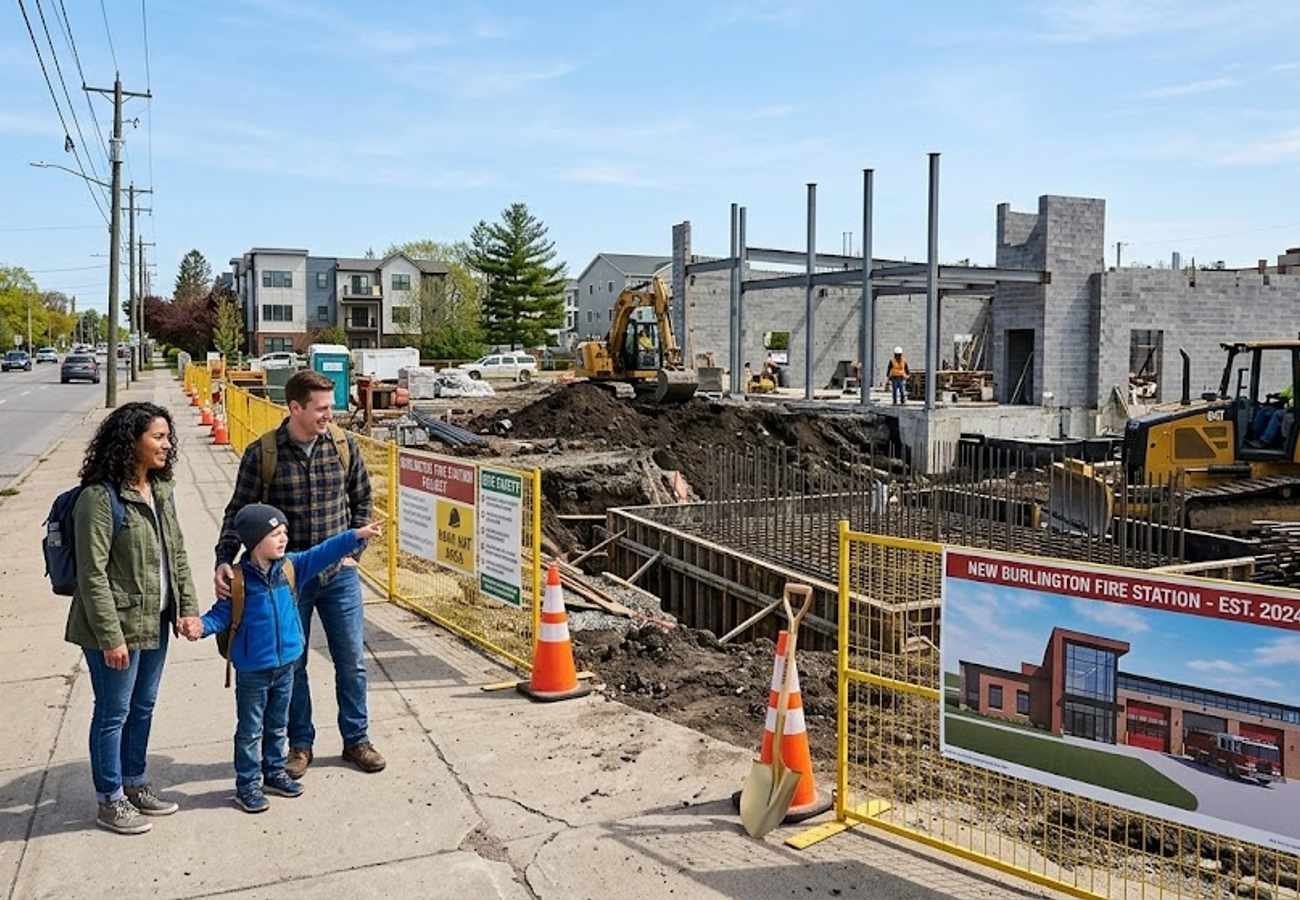
Image generated by AI
Burlington has officially broken ground on Fire Station 3, a $6.5 million facility on North Roosevelt Avenue designed to strengthen emergency coverage on the city's rapidly developing north side.
The project shifts from years of planning into active construction, representing one of the clearest visible milestones in Burlington's multi-year capital program for public safety infrastructure.
From Blueprint to Building Site
The new Fire Station 3 has moved through multiple planning cycles, budget discussions, and conceptual designs before reaching this week's ceremonial groundbreaking. Publicly available budget documents and capital plans have consistently flagged the need for additional fire service capacity in Burlington, citing higher call volumes and longer response times in specific areas of the city.
The facility targets a corridor where residential and commercial development has concentrated. New housing, businesses, and transportation links have shifted emergency coverage maps, prompting municipal leaders to reposition resources so crews can reach incidents faster.
Site preparation work will continue through the summer construction season. Foundation, structural, and interior phases are expected to follow, spanning multiple months. While formal completion dates have not been widely publicized, comparable fire station projects in similar-sized cities typically require 12 to 18 months from groundbreaking to full occupancy, depending on site conditions and supply chain factors.
Strategic Positioning for Faster Response
Fire service planning considers travel time, road networks, and projected population density. The Burlington project follows that standard approach. Fire Station 3 is positioned to close coverage gaps between existing facilities, an adjustment aimed at reducing the time first responders need to reach medical calls, structure fires, and traffic collisions in surrounding neighborhoods.
The north side location also supports mutual-aid agreements with nearby communities. Those agreements depend on coordinated responses when major incidents or multiple simultaneous calls occur. By adding a staffed station in a key location, Burlington's fire department prepares to play a stronger regional support role while still meeting local demand.
Modern Design Features
Conceptual descriptions of the new station emphasize a contemporary layout built around current operational needs.
- Apparatus bay sized for modern fire engines and specialized vehicles
- Updated living quarters and dedicated training spaces for firefighters
- Cleaner separation between vehicle bays and living areas, a priority identified across recent North American fire station projects
- Improved decontamination spaces to reduce contaminant exposure for crews
- Efficient turnout layouts designed to minimize response time when alarms sound
New construction allows the department to incorporate features that would be difficult or costly to retrofit into older buildings. Energy efficiency measures are also expected, with city capital planning documents highlighting ongoing efforts to upgrade building systems. While specific performance targets have not been detailed in early public reports, upgraded insulation, modern mechanical equipment, and other sustainability-focused measures are anticipated.
Wider Capital Strategy
Burlington's recent budget books and long-term capital plans show Fire Station 3 as one element in a broader strategy to align municipal facilities with population and economic growth. The same documents outline anticipated investments in additional fire facilities, road networks, and community amenities over the next decade.
Previous planning cycles identified the need for both relocation and expansion of fire coverage, particularly in areas expected to see higher-density development. The decision to move forward at this time reflects that prioritization, along with the availability of funding through a combination of local revenues and capital financing tools documented in public financial reports.
Regional growth patterns in and around Burlington are influencing the project timeline. Nearby communities have been upgrading their own fire fleets, opening new stations, and coordinating on shared response protocols. Burlington's new facility fits into that evolving network of emergency infrastructure.
What Residents Should Expect
During construction, nearby residents and businesses can anticipate:
- Periodic traffic changes and equipment movement
- Short-term noise from excavation, concrete work, and building assembly
- Municipal construction notices and public information updates at key milestones
Once the station is finished and staffed, the surrounding area will see regular movement of fire engines and ambulances entering and exiting the site. For many residents, that increased presence signals improved emergency coverage as Burlington positions its fire department to keep pace with growth.
Project Facts at a Glance
| Detail | Specification |
|---|---|
| Project | Fire Station 3 |
| Location | North Roosevelt Avenue, Burlington |
| Budget | $6.5 million |
| Coverage Area | Growing north side corridor |
| Construction Start | Summer 2026 |
| Estimated Timeline | 12 to 18 months (based on comparable projects) |
| Funding Source | Local revenues and capital financing |
| Key Features | Modern apparatus bay, decontamination spaces, upgraded living quarters |
Why This Matters
For travelers and residents passing through Burlington's north side, the real impact is twofold. First, emergency response coverage in this corridor has lagged behind the pace of development. Our analysis of the city's capital planning documents indicates that call volumes in certain areas have outpaced existing station capacity, creating measurable gaps in response times. A staffed station at North Roosevelt Avenue directly addresses that imbalance.
Second, from a regional infrastructure perspective, this project signals how mid-sized cities are repositioning emergency services to match shifting population density. Burlington is not alone in this approach. Nearby communities have been upgrading fire fleets and coordinating on shared response protocols. The $6.5 million investment positions Burlington to participate more effectively in mutual-aid networks, which matter when multiple incidents occur simultaneously across jurisdictional lines.
For anyone considering relocation or business investment in Burlington's north corridor, the addition of a modern fire station also carries insurance and safety rating implications. Improved ISO fire protection classifications can follow new station construction, potentially affecting property insurance costs for nearby homes and commercial properties.
Industry Outlook
Expect more municipalities in similar growth corridors to follow Burlington's model: identifying coverage gaps through data analysis, then positioning new stations along development corridors rather than retrofitting older facilities. The emphasis on decontamination spaces and separation between vehicle bays and living areas reflects an industry-wide shift toward firefighter health and safety that will likely become standard in new construction.
Supply chain factors remain a variable. Construction material costs and labor availability could influence whether the 12 to 18 month timeline holds. Watch for municipal updates on building shell completion and major system installation as indicators of progress.
Construction milestones will determine whether Fire Station 3 opens on schedule or faces the delays that have become common across North American municipal projects.
Related Travel Guides
Disclaimer
This article is for informational and educational purposes only. It does not constitute legal, financial, or professional advice. While we strive to provide accurate and up-to-date information, travel policies, regulations, and conditions change rapidly. Always verify information with official sources before making travel decisions. Nomad Lawyer makes no representations about the accuracy, reliability, completeness, or suitability of the information provided. Readers should consult qualified professionals for advice specific to their circumstances. The views expressed in this article are those of the author and do not necessarily reflect the views of Nomad Lawyer.
Kunal K Choudhary
Co-Founder & Contributor
A passionate traveller and tech enthusiast. Kunal contributes to the vision and growth of Nomad Lawyer, bringing fresh perspectives and driving the community forward.
Learn more about our team →