
Aviation Updates: Brussels Airport Deploys Massive Tarmac Super-Filter as Severe Idling Emissions Threaten to Trigger European Travel Chaos
As incredibly severe terminal gridlock forces massive fleets into toxic holding patterns, Brussels Airport deploys an unprecedented industrial air filter to prevent health-induced travel chaos.

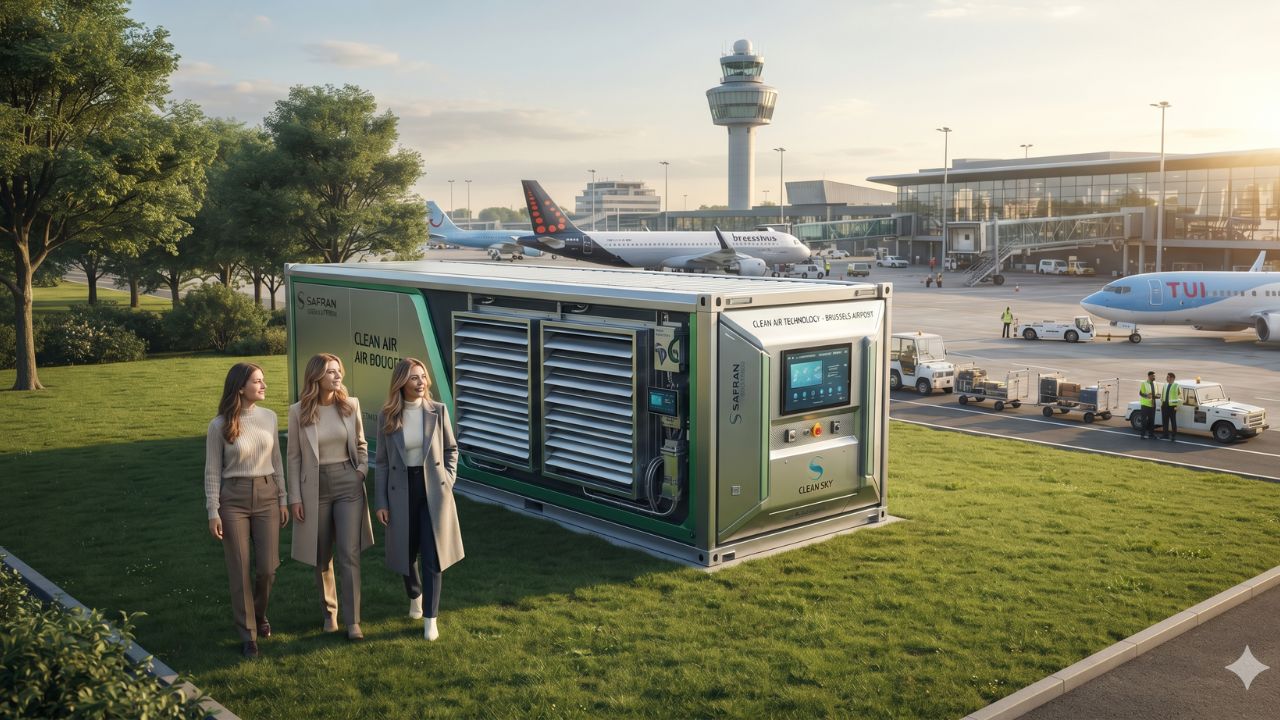
Image generated by AI
Aviation Updates: Brussels Airport Deploys Massive Tarmac Super-Filter as Severe Idling Emissions Threaten to Trigger European Travel Chaos
As incredibly severe terminal gridlock and massive legacy airline network failures completely suffocate primary aviation gateways across the continent, Brussels Airport aggressively deploys a groundbreaking, 12-metre-long industrial air filtration system to eliminate toxic tarmac smog before plummeting air quality triggers catastrophic operational shutdowns and devastating European travel chaos.
While incredibly exhausted domestic and international passengers desperately navigate an incredibly brutal peak travel season defined by rolling flight cancellations and severe, localized airport disruptions, a massive, highly toxic side effect of systemic operational gridlock is actively threatening the absolute highest levels of the European commercial aviation network. According to the absolute latest breaking airline news and official environmental disclosures, Brussels Airport is violently battling extreme levels of fine and ultrafine particulate matter generated by massive fleets of idling jet machinery. Desperate to ensure that severe, localized pollution does not force mandatory health-related evacuations of ground crews—which would instantly completely destroy critical inter-European travel itineraries—the hub has launched an aggressive second pilot phase of a groundbreaking mobile air filtration system. At the time of reporting, real-time aviation analysts confirmed that this massive environmental intervention heavily allows airport operations to continue safely, shielding staff and highly vulnerable surrounding communities from the terrifying unpredictability of toxic emissions triggered by relentless tarmac gridlock.
This highly critical technological deployment explicitly exposes the international aviation network not just as a vital transit feed, but as a heavily congested, deeply fragile ecological zone prone to sudden, catastrophic failure during peak summer traffic waves. By violently overwhelming ground handling crews and massive wide-body aircraft rotation schedules, systemic demand is directly driving massive global travel chaos that leaves aircraft idling for hours. Because traditional transit nodes frequently suffer from severe tarmac congestion leading to massive localized pollution clouds, this sudden, heavily funded shift toward active atmospheric cleansing serves as an absolute survival tactic. It completely bypasses the terrifying logistical nightmares of attempting to operate a saturated mega-hub under suffocating air quality alerts, representing a highly structural corporate intervention that forces all global competitors to aggressively reconsider their environmental defenses. The Brussels initiative is actively reshaping global airport management, proving that technological intervention is the absolute ultimate shield against systemic operational health meltdowns.
Aviation Updates: The Strategic Deployment of the Safran Super-Filter
This massive, highly structural shift in regional network defense perfectly illustrates the intense, incredibly fragile nature of modern European mobility and the toxic consequences of continuous gridlock.
According to highly detailed, official aviation updates, this strategic expansion is explicitly designed to safeguard local residents and aviation staff from the brutal reality of saturated airspace. Engineered alongside Safran Aero Boosters, the revolutionary industrial apparatus is cleverly housed within a massive shipping container measuring roughly 12 metres in total length. As intense airport disruptions force jets to idle endlessly on taxiways, the prototype vigorously sucks in massive volumes of contaminated ambient air using an extremely powerful front-mounted intake fan. The highly toxic airstrip atmosphere is violently channeled through a series of complex, high-efficiency industrial filtration matrices that meticulously trap the ultrafine particles that typically bypass standard commercial units. Running daily between the operational window of 8 am and 8 pm, the system is actively preventing the tarmac microclimate from collapsing into a toxic hazard zone that would force immediate union walkouts and cascading flight cancellations.
Section-Wise Breakdown: Navigating the Ecological Defense Phases
The sudden, massive evolution of these critical environmental defense models actively impacts several incredibly distinct, highly sensitive operational dynamics spanning multiple massive regional tourism sectors.
The Initial Pier A Triumph
At the absolute core of this massive operational pivot is the severe congestion strangling traditional transit operations at terminal gates. An introductory trial phase was aggressively executed from December 2025 to March 2026 directly in front of Pier A. To ensure that the technology could withstand the brutal reality of winter travel chaos, air quality measurements were rigorously scrutinized by independent bodies, including the Scientific Institute of Public Service (ISSeP) and the Flemish Institute for Technological Research (VITO). Arnaud Feist, the CEO of Brussels Airport, praised the early performance metrics as a massive triumph for local public health. The initial trial successfully validated the prototype under real-world aviation stress, proving that ground staff handling highly delayed flights could be shielded from the immediate exhaust plumes of idling aircraft.
The Strategic skeyes Control Tower Deployment
Simultaneously protecting the broader operational perimeter, the second phase of this rigorous environmental assessment launched on 22 June 2026 and will run continuously until the end of September. The massive container is currently unfolding on the spacious lawn adjacent to the skeyes control tower. This highly strategic location actively allows the massive filtration container to intercept shifting summer wind currents carrying fresh emissions directly from the active runways. By placing the equipment in this open zone, scientists—backed by the University of Liège and the von Karman Institute—can accurately measure long-range filtration efficacy. This ensures that even as massive volumes of European tourists completely saturate the summer schedule, the resulting emissions gridlock will not spill over into neighboring Belgian communities.
The Cross-Sector Collaboration Engine
The ultimate execution of this massive transit shift heavily relies on unprecedented cross-sector engineering. Fabricated by Safran Aero Boosters, the manufacturing team successfully adapted complex industrial airflow mechanics originally designed for aerospace engine test benches. Furthermore, specialized engineering companies including GD Tech and KMA Filter offered proprietary structural designs, while the Walloon Region provided substantial financial and administrative backing. Operating under the European Stargate programme and funded by the EU’s Horizon 2020 initiative, this consortium proves that solving modern aviation toxicity requires massive, heavily funded government and corporate integration to prevent the total collapse of public health near major transit hubs.
Filtration Operations and Verified Impact Matrix
To fully understand the exact structural parameters of this massive performance upgrade and how airports are desperately attempting to navigate complex emission constraints, the following matrix explicitly details the operational testing metrics directly recorded by the consortium.
Confirmed Brussels Airport Filtration Project Matrix
| Operational Phase | Testing Location | Timeline | Core Objective |
|---|---|---|---|
| Initial Assessment | Pier A Tarmac | Dec 2025 – Mar 2026 | Validate Prototype Technical Efficacy |
| Expanded Trial | skeyes Control Tower Lawn | Jun 22, 2026 – Sep 2026 | Evaluate Long-Range Filtration |
| System Mechanics | Mobile 12-Metre Container | 8 AM to 8 PM Daily | Trap Fine & Ultrafine Particulates |
Data explicitly reflects the massive, highly structural environmental deployment currently allowing Brussels Airport to bypass severe emission hazards triggered by hub congestion.
Passenger and Staff Impact: The Health and Logistical Reality
For the highly demanding ground crews actively engaged in this massive European mobility crisis, traditional, highly anticipated summer operations are currently viewed as a high-stakes health hazard caused by infrastructure limits.
The immediate consequence of this massive tactical shift is measured in the profound respiratory relief experienced by incredibly exhausted tarmac workers. Staff originally paralyzed by the terrifying threat of inhaling toxic ultrafine particles from massive fleets of idling jets delayed by airport disruptions are now successfully shielded. By utilizing this massive industrial super-filter, Brussels Airport completely bypasses the severe threat of health-induced labor shortages that would instantly cripple the entire European summer season. The massive upgrades to localized air quality guarantee that ground operations can continue at maximum physical capacity, completely neutralizing the paralyzing terror of arriving at a transit hub only to find operations violently halted due to unsafe atmospheric conditions, which would instantly trigger mass flight cancellations.
Industry Analysis: The Economics of Tactical Emission Defense
Aviation structural analysts strictly point out that this massive, multi-national operational shift perfectly illustrates the extreme, highly vital importance of heavily optimized environmental defenses in a saturated market.
Economic data explicitly indicates that massive carrier networks are absolutely desperate to secure rapid schedule recoveries without violating increasingly strict European Green Deal mandates. The aggressive deployment of the Safran filter proves that modern aviation fundamentally requires continuous, heavy investment in atmospheric cleansing to outpace rising aircraft density constraints. As travelers aggressively prioritize escaping travel chaos, legacy hubs that fail to manage their localized pollution clouds will rapidly face devastating fines and mandated capacity reductions from European regulators. This sensational trend beautifully proves that airports must aggressively deploy point-source filtration to successfully survive the political and operational realities of a highly volatile, heavily regulated market.
Conclusion: A Highly Cleansed Aviation Future
The massively evolving infrastructure dynamics directly defining the integration of high-volume demand into the Brussels Airport network violently reflect a much broader, highly critical structural transformation currently dominating how commercial aviation is physically managed in 2026.
Rather than violently forcing massive international traffic and ground crews to choke on the exhaust of a delayed, failing legacy network, Brussels is actively giving the industry a template to reclaim its operational safety. As major travel portals across the European Union heavily watch this massive pilot project, hubs actively navigating the incredibly busy sector must absolutely remain highly vigilant. To actively survive potential travel chaos this season, passengers and regulators must aggressively monitor all breaking aviation updates, demand immediate environmental accountability, and perfectly understand that escaping modern airport disruptions fundamentally requires extreme technological intelligence and an absolute refusal to let massive hubs operate as unregulated toxic zones.
Key Takeaways
- Massive Smog Filtration: Brussels Airport has launched the second phase of testing for a massive 12-metre-long mobile air filtration system to eliminate toxic tarmac smog.
- Mitigating Gridlock Hazards: The system violently scrubs fine and ultrafine particles generated by massive fleets of jets idling due to severe European travel chaos.
- Strategic Deployment: Following a successful winter trial at Pier A, the unit is currently operating daily (8 am to 8 pm) near the skeyes control tower until late September 2026.
- Aerospace Collaboration: Developed by Safran Aero Boosters with backing from Horizon 2020, the project prevents health-induced ground crew shortages that cause massive flight cancellations.
- Global Industry Benchmark: The successful deployment of this super-filter provides a critical blueprint for other congested mega-hubs to survive increasingly strict environmental regulations without triggering airport disruptions.
Related Travel Guides
Massive UAE Visa Bombshell: Strict New 30-Day Escape Window Announced
Travel Chaos Cripples Spain as Iberia and Ryanair Suffer 1,079 Delays
Disclaimer
This article is for informational and educational purposes only. It does not constitute legal, financial, or professional advice. While we strive to provide accurate and up-to-date information, travel policies, regulations, and conditions change rapidly. Always verify information with official sources before making travel decisions. Nomad Lawyer makes no representations about the accuracy, reliability, completeness, or suitability of the information provided. Readers should consult qualified professionals for advice specific to their circumstances. The views expressed in this article are those of the author and do not necessarily reflect the views of Nomad Lawyer.
Preeti Gunjan
Contributor & Community Manager
A passionate traveller and community builder. Preeti helps grow the Nomad Lawyer community, fostering engagement and bringing the reader experience to life.
Learn more about our team →