Brunei Unveils Centralized Tourism Booking Platform Ahead of Visit Brunei Year 2027 to Expand Global Travel Reach

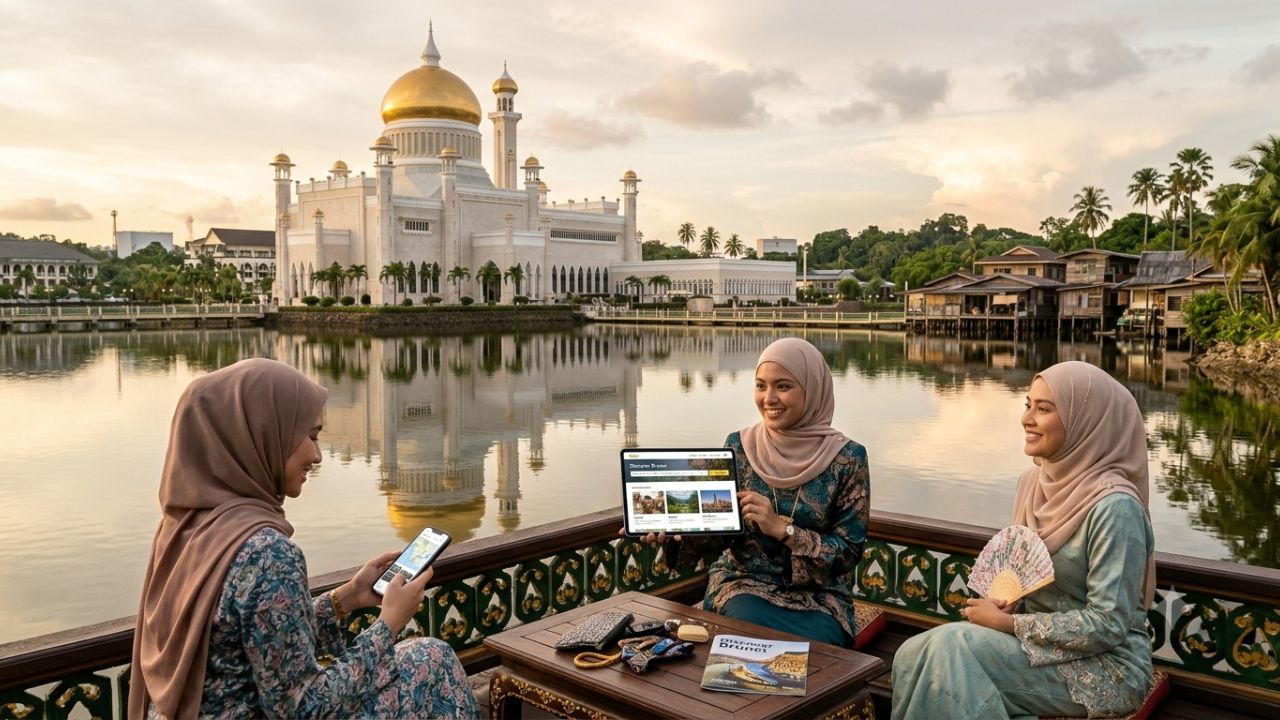
LONDON & BANDAR SERI BEGAWAN — In a strategic bid to diversify its economy and project its cultural and ecological treasures onto the world stage, the Sultanate of Brunei Darussalam has officially launched "Discover Brunei," a comprehensive one-stop digital booking marketplace. Unveiled at the World Travel Market (WTM) London 2026 on November 5, 2026, the digital platform was developed by national flag carrier Royal Brunei Airlines in close coordination with national tourism authorities. Designed as the primary commercial engine ahead of the highly anticipated Visit Brunei Year 2027 campaign, the portal brings the country’s diverse portfolio of pristine rainforest excursions, living heritage tours, marine diving expeditions, and community homestays into a single, unified booking architecture accessible to global travelers.
The launch addresses a historical impediment that has long restricted international tourism in the oil-rich Bornean kingdom: information fragmentation. While international travelers have recognized Brunei for its political stability, grand Islamic architectural landmarks, and untouched primary rainforests, identifying verified independent operators, comparing transparent excursion pricing, and executing secure advance digital bookings was historically cumbersome. By aggregating accredited local micro-enterprises, eco-lodges, diving charters, and cultural guides onto a single digital clearinghouse, Discover Brunei directly bridges international consumer interest with on-the-ground booking execution. The initiative forms an important pillar of Wawasan Brunei 2035 (Brunei Vision 2035), the national masterplan aimed at building a dynamic, sustainable knowledge-and-services economy independent of fossil fuel extraction.
       DISCOVER BRUNEI TOURISM ECOSYSTEM & DIGITAL ARCHITECTURE
       ========================================================

       [ GLOBAL TRAVEL DEMAND (UK, EUROPE, AUSTRALASIA, ASIA) ]
       * Long-haul passenger corridors via Royal Brunei Airlines (Boeing 787)
       * Increasing demand for low-impact eco-tourism & cultural immersion
                                      |
                                      v
       +---------------------------------------------------------------+
       |             DISCOVER BRUNEI CENTRALIZED PORTAL                |
       |  * Single-window digital marketplace (discover-brunei.com)    |
       |  * Real-time availability, dynamic packaging & secure payment |
       |  * Integration with Royal Brunei flight booking engines       |
       +---------------------------------------------------------------+
                                      |
       +------------------------------+------------------------------+
       |                              |                              |
       v                              v                              v
[ VIRGIN BORNEO NATURE ]      [ LIVING HERITAGE & CULTURE ]   [ MARINE REEF & WRECKS ]
* Ulu Temburong Canopy Walk   * Kampong Ayer Water Village    * 30+ untouched coral reefs
* Primary rainforest lodges   * Sultan Omar Ali Saifuddien    * World-class shipwreck diving
* Heart of Borneo reserves      & Jame' Asr Hassanil Mosques  * Macro marine photography
The "Hidden Kingdom" Paradox: Solving Brunei’s Digital Tourism Fragmentation
Nestled on the northern coast of the island of Borneo, surrounded by the Malaysian states of Sarawak and Sabah, Brunei Darussalam has long occupied a unique position in Southeast Asian tourism. Blessed with immense petroleum and natural gas wealth since the early twentieth century, the Sultanate never experienced the economic compulsion to pursue mass-market, high-density tourism. Consequently, while neighboring Southeast Asian destinations transformed entire coastlines into crowded resort corridors, Brunei deliberately preserved its natural assets, maintaining more than 70 percent of its landmass under dense primary rainforest cover.
However, this conservation success created what travel industry analysts have termed the "hidden kingdom" paradox. Discerning eco-travelers and cultural enthusiasts around the globe knew that Brunei possessed some of the most biodiverse equatorial rainforests on earth and an unbroken six-century royal lineage, yet organizing a self-guided itinerary was an exercise in frustration.
BRUNEI TOURISM BOOKING LANDSCAPE: LEGACY VS. DIGITAL
| Entity / Facility | Delays | Cancellations | Details |
|---|---|---|---|
| Operating Dimension | Legacy Booking | Discover Brunei | Traveler & Industry |
| & Channel Mechanism | Environment | Unified Portal | Transformation Impact |
| Information Discovery | Fragmented social | Single centralized | Instant cross-category |
| & Product Search | media pages & | marketplace with | discovery across |
| word-of-mouth blogs | curated categories | all national districts | |
| Operator Booking | Manual email, | Instant electronic | Eliminates language |
| & Payment Clearance | international bank | checkout with | barriers and currency |
| wire, or cash only | global credit cards | transfer transaction fee | |
| Local SME Exposure | Restricted to walk- | Equal digital | Empowers community |
| & Market Access | in retail or local | shelf-space for | tour operators and |
| agency middlemen | licensed operators | family-owned homestays |
Prior to the launch of Discover Brunei, local tour operators—ranging from boatmen navigating the Temburong River to culinary artisans in Kampong Ayer—operated primarily through disjointed social media channels, informal telephone messaging, or physical storefronts in Bandar Seri Begawan. Overseas travelers planning complex journeys from London, Sydney, or Frankfurt frequently encountered unverified contact details, opaque pricing, and an absence of direct digital payment gateways.
Speaking at the launch event at WTM London, Colonel Norsuriati Haji Sharbini, Interim Chief Executive Officer of Royal Brunei Airlines, highlighted this exact operational challenge. She pointed out that Brunei’s core challenge was never a lack of authentic attractions, but rather the absence of an integrated, frictionless digital bridge connecting curious travelers with licensed local hosts. The new portal resolves this challenge by providing instant product visibility, verified safety certifications, customer reviews, and multi-currency credit card clearing.
The Pristine Rainforest Frontier: Ulu Temburong and the "Green Jewel"
At the core of Brunei’s eco-tourism appeal is Ulu Temburong National Park, widely revered as the "Green Jewel of Brunei." Encompassing approximately 50,000 hectares of completely untouched equatorial rainforest within the isolated Temburong District, the national park forms a vital ecological sanctuary within the multilateral "Heart of Borneo" conservation network.
Unlike many deforested or commercially logged areas across Southeast Asia, Ulu Temburong has enjoyed strict royal protection for generations. The park contains zero vehicular roads; access is permitted exclusively by water along the pristine curves of the Temburong and Belalong rivers.
       ULU TEMBURONG ECO-ADVENTURE TRANSIT & CANOPY EXPEDITION
       =======================================================

       Bandar Seri Begawan (Capital City)
                     |
                     v (Transit across 30 km Sultan Haji Omar 'Ali Saifuddien Bridge)
       Bangar Town (Temburong District Center)
                     |
                     v (Boarding Traditional Wooden "Temuai" Longboats)
       Temburong River Canyon Rapids & Pristine Primary Jungle
                     |
                     v (Arrival at Ulu Mutong Basecamp)
       Canopy Walkway Steel Tower Ascent (500+ Engineered Timber Steps)
                     |
                     v
       50-Meter-High Suspended Tree-Crown Walkway
       * 360-Degree panoramic vistas over ancient primary Dipterocarp canopy
       * Observation of hornbills, gibbons, proboscis monkeys & endemic orchids
Visitors embark on traditional wooden longboats known locally as temuai, steered by skilled indigenous boatmen who navigate shallow limestone rapids and swirling freshwater eddies with exceptional precision. From the riverbank basecamps, travelers ascend a wooden staircase system through dense jungle undergrowth to reach the park’s engineering marvel: the Ulu Temburong Canopy Walkway.
Engineered from high-tensile structural steel anchored directly into bedrock, the walkway towers rise more than 50 meters into the sky, linked by suspended aluminum suspension bridges that meander through the uppermost crowns of giant dipterocarp trees. Standing above the misty forest canopy at sunrise, travelers witness an ancient primeval landscape alive with the calls of Bornean gibbons, rhinoceros hornbills, and rare birdwing butterflies.
Eco-tourism in Temburong received a major infrastructure boost following the completion of the 30-kilometer Sultan Haji Omar 'Ali Saifuddien Bridge in 2020. As Southeast Asia’s longest sea-crossing bridge, the engineering monument links Bandar Seri Begawan directly across Brunei Bay to Temburong, eliminating the historical necessity of passing through two international Malaysian border checkpoints. Through Discover Brunei, international travelers can now effortlessly book day-trips or multi-day wilderness immersions at boutique rainforest eco-lodges, directly supporting local conservationists and indigenous guides.
Scientific exploration also flourishes alongside leisure eco-tourism within the park's protected perimeter. The Kuala Belalong Rainforest Experience (KBREC), operated in partnership with Universiti Brunei Darussalam, serves as a premier international field research station where botanists, entomologists, and climate scientists study primary forest carbon sequestration and medicinal flora. International visitors booking through the new digital portal can participate in guided interpretive nature walks led by resident naturalists, exploring natural waterfall pools, learning about indigenous ethnobotany, and staying in solar-powered eco-resorts built entirely on raised timber pilings to eliminate ground soil erosion.
Living History and Islamic Architecture: Kampong Ayer and the Golden Domes
In stark contrast to the untamed wilderness of Temburong, Brunei’s capital city, Bandar Seri Begawan, presents an extraordinary synthesis of living ancient maritime culture and awe-inspiring modern Islamic architectural grandeur.
Anchoring the historic heart of the capital along the Brunei River is Kampong Ayer (the Water Village), recognized as the largest contiguous stilt-settlement on earth. Inhabited continuously for more than 1,300 years, Kampong Ayer served as the imperial capital of the Bruneian Empire during its golden age in the fifteenth and sixteenth centuries, when its sovereign naval fleets commanded trade routes stretching from the Philippines to the Malacca Strait. When the Italian chronicler Antonio Pigafetta sailed into Brunei Bay aboard Ferdinand Magellan’s circumnavigation expedition in 1521, he marvelled at the floating civilization, famously dubbing it the "Venice of the East."
BANDAR SERI BEGAWAN CULTURAL & ARCHITECTURAL SPECTRUM
| Entity / Facility | Delays | Cancellations | Details |
|---|---|---|---|
| Cultural Landmark | Historical Origin | Architectural | Traveler Experience |
| & Urban Precinct | & Significance | & Structural Form | & Heritage Immersion |
| Kampong Ayer | 1,300-year-old | 30,000 residents; | Wooden boat taxi rides; |
| (Water Settlement) | ancient maritime | stilt houses on 36 | artisan weaving tours; |
| capital of Borneo | km of boardwalks | heritage museum visits | |
| Sultan Omar Ali | Completed in 1958; | Pure Italian marble | Peaceful reflecting |
| Saifuddien Mosque | spiritual symbol | columns, gold leaf | lagoon, 16th-century |
| of modern Brunei | dome, stained glass | royal barge replica | |
| Jame' Asr Hassanil | Built in 1994; | 29 golden domes; | Grand chandeliers, |
| Bolkiah Mosque | largest mosque in | turquoise glazed | manicured fountains & |
| Brunei Darussalam | tiles & minarets | monumental prayer hall | |
| Royal Regalia Museum | Dedicated in 1992; | Royal coronation | Grand royal chariots, |
| (Muzium Alat | houses sovereign | artifacts, crowns, | jewel-encrusted armor, |
| Kebesaran Diraja) | royal heritage | & diplomatic gifts | and ceremonial kris |
Today, Kampong Ayer remains a thriving, self-contained community of approximately 30,000 people. Extending across 36 kilometers of interconnected wooden footbridges and concrete boardwalks raised on stilts above the tidal river, the village maintains its own schools, fire stations, medical clinics, and mosques.
Through Discover Brunei, international visitors can arrange guided cultural walking tours led by local village residents. Travelers traverse the river on high-speed water taxis (perahu tambang), visit heritage stilt-houses to observe traditional silver-smithing and kain tenunan gold-thread fabric weaving, and learn about the sustainable mangrove conservation efforts protecting local proboscis monkey colonies living along the river’s upper estuaries.
On the mainland shore directly overlooking Kampong Ayer stands the Sultan Omar Ali Saifuddien Mosque, considered one of the most magnificent Islamic monuments in the Asia-Pacific region. Completed in 1958, the mosque features an imposing central dome gilded in pure gold, walls fabricated from imported Italian Carrara marble, hand-woven Persian carpets, and stained-glass windows sourced from England. The mosque is surrounded by a serene artificial lagoon that reflects its gleaming white arches, beside which sits a full-scale concrete replica of a sixteenth-century royal ceremonial barge (Mahligai).
Further inland rises the colossal Jame' Asr Hassanil Bolkiah Mosque, built in 1994 to commemorate the Silver Jubilee of His Majesty the Sultan's reign. As the largest mosque in the nation, the complex features 29 monumental golden domes, four 58-meter-high minarets, and manicured ornamental fountains, accommodating up to 5,000 worshipers in a breathtaking atmosphere of spiritual tranquility.
Marine Conservation: Secret Coral Reefs and Historic Shipwreck Diving
While Brunei’s terrestrial rainforests are internationally recognized, its underwater realm remains one of commercial aviation's best-kept secrets. Located in the warm tropical waters of the South China Sea, Brunei Bay encompasses more than 30 untouched coral reefs and a globally renowned collection of historic shipwrecks.
Because commercial fishing trawlers have been heavily restricted within Brunei’s territorial waters to protect offshore oil and gas infrastructure, the Sultanate's marine ecosystems have avoided the severe dynamite-fishing and anchor-damage degradation seen elsewhere in the region. The reefs boast extraordinarily dense populations of hard and soft corals, providing sanctuary for hawksbill sea turtles, reef sharks, giant trevally, and dense schools of chevron barracuda.
       BRUNEI UNDERWATER HERITAGE: THE SHIPWRECK DIVING CIRCUIT
       ========================================================

       [ THE HISTORIC WRECK SANCTUARIES ]
       --------------------------------------------------------
       * Australian Wreck (SS Sofia): Sunk by mine in 1945; 33m depth
       * American Wreck (USS Salute): US Navy minesweeper, sunk in WWII
       * Dolphin Wreck: Commercial cargo vessel; home to dense macro life
       * Cement Wreck (MV Tung Hwang): 20-30m depth; encrusted in black coral
                                      |
                                      v
       [ DIVE PROFILE & OPERATIONAL ADVANTAGES ]
       --------------------------------------------------------
       * Low Diver Density: Maximum 10-15 divers on a wreck simultaneously
       * High Biodiversity: Pristine macro critters, sea slugs & pelagic fish
       * Zero Overtourism: Protected by naval maritime security corridors
For technical and recreational scuba divers, Brunei is renowned for its historic shipwreck diving circuit. Resting in depths between 20 and 35 meters, these wrecks have evolved into flourishing artificial reefs. The most celebrated include:
- The Australian Wreck: The SS Sofia, a Dutch cargo vessel captured by Japanese forces and later sunk by an allied naval mine during the liberation of Borneo in 1945. Sitting upright in 33 meters of water, the wreck is completely encrusted in gorgonian sea fans, soft corals, and dense schools of glassfish.
- The American Wreck: The USS Salute (AM-294), an Admirable-class minesweeper of the United States Navy that struck a Japanese mine in June 1945 while clearing Brunei Bay during the Battle of North Borneo.
- The Cement Wreck: A commercial freighter that sank while carrying cargo in 1980, creating an expansive playground for macro photographers seeking rare nudibranchs, frogfish, and seahorses.
Discover Brunei aggregates the country’s boutique, PADI-certified dive operators onto its booking engine, allowing international diving enthusiasts to schedule all-inclusive dive packages complete with equipment rental, boat charters, and nitrox support before leaving home.
Gastronomic Identity: From Ambuyat Feasts to Gadong Night Market
No exploration of Brunei is complete without an immersion into its culinary traditions. Positioned at the crossroads of ancient Malay, Javanese, Chinese, and indigenous Bornean trading networks, Bruneian cuisine balances rich spices, fresh jungle botanicals, and delicate seafood.
At the apex of national culinary heritage is Ambuyat, a traditional delicacy derived from the interior pith of the sago palm tree (rumbia). Prepared by blending refined sago starch with boiling water until it coalesces into a translucent, velvety paste, Ambuyat is eaten using a specialized two-pronged bamboo utensil known as candas.
                  THE CULTURAL RITUAL OF BRUNEIAN AMBUYAT
                  ======================================

                           [ THE CORE STARCH: SAGO PALM ]
                           * Pure white starch harvested from wild rumbia trees
                           * Whisked with boiling water into smooth, chewy paste
                                          |
                           [ THE BAMBOO CANDAS UTENSIL ]
                           * Twin bamboo chopsticks twirled to capture starch
                           * Never chewed; swallowed whole with spicy dips
                                          |
                                          v
                           [ THE DIPPING SAUCES (CACAH) ]
                           * Cacah Tempoyak: Fermented salted durian paste
                           * Cacah Binjai: Sour wild mango botanical reduction
                                          |
                                          v
                           [ THE TRADITIONAL ACCOMPANIMENTS ]
                           * Daging Masak Kicap: Braised sweet-soy beef strips
                           * Sayur Pakis: Sautéed wild jungle fiddlehead ferns
                           * Ikan Goreng: Crispy fried whole reef fish
Eating Ambuyat is an inherently communal, ceremonial event. Diners twirl the starch around the tips of the candas and dip it into fiery, aromatic sauces known as cacah—most famously cacah tempoyak (fermented durian with chili and lime) or cacah binjai (a pungent sour mango botanical relish). The feast is accompanied by savory side dishes, including braised beef in sweet soy sauce, wild fiddlehead ferns (pakis) gathered from the rainforest, and grilled coastal fish.
In the evening, the gastronomic epicenter shifts to the famous Gadong Night Market (Pasar Pelbagai Barangan Gadong) in Bandar Seri Begawan. Housed beneath an expansive covered pavilion, hundreds of local merchants grill fresh skewered meats, fry fragrant banana fritters (cucur pisang), and prepare Brunei’s beloved comfort food: Nasi Katok. Comprising fragrant steamed rice, a golden piece of crispy fried chicken, and a generous dollop of fiery sweet-and-spicy sambal wrapped in brown paper, Nasi Katok is an affordable national staple that captures the culinary soul of the Sultanate.
Beyond the capital's night markets, the platform introduces visitors to rural agro-tourism initiatives across Tutong and Belait districts. Travelers can book experiential visits to family-owned stingless bee farms producing rare, medicinal kelulut honey, tour organic dragon fruit plantations, and visit traditional sago processing mills where indigenous artisans demonstrate the labor-intensive extraction of raw starch from wild palms. In the interior highlands of Tutong, community homestays operated by the indigenous Dusun and Iban peoples allow travelers to stay inside traditional communal longhouses, witness ancient hornbill blessing dances, and learn ancestral botanical weaving techniques passed down through generations.
Macroeconomic Strategy: Wawasan Brunei 2035 and Visit Brunei Year 2027
The introduction of Discover Brunei is not merely a promotional tourism initiative; it is an economic instrument designed to support long-term national restructuring. For over half a century, Brunei has enjoyed one of the highest per-capita GDPs in the world, sustained by rich offshore crude oil and natural gas fields operated by Brunei Shell Petroleum (BSP).
However, global decarbonization mandates and the finite lifecycle of hydrocarbon reserves have prompted Brunei’s leadership to enact Wawasan Brunei 2035. This sweeping national vision seeks to transform the country into a globally connected, highly skilled, and diversified economy. Sustainable tourism has been prioritized as a primary growth pillar capable of generating high-value employment for educated Bruneian youth, fostering local entrepreneurship, and attracting foreign exchange reserves.
WAWASAN BRUNEI 2035 TOURISM TRANSFORMATION MATRIX
| Entity / Facility | Delays | Cancellations | Details |
|---|---|---|---|
| National Strategy | Policy Focus | Discover Brunei | Long-Term Socioeconomic |
| & Campaign Pillar | & Timeline | Operational Role | Development Dividend |
| Visit Brunei Year | 2027 international | Primary digital | Attracts over 500,000 |
| 2027 (VBY2027) | promotional and | booking gateway for | high-yield inter- |
| cultural campaign | global campaigns | national arrivals | |
| Economic | Moving away from | Expands non-oil | Fosters service sector |
| Diversification | hydrocarbon dominance | services revenue | resilience and foreign |
| (oil & gas >50% GDP) | through tourism | capital investment | |
| MSME Community | Fostering private | Equal digital shelf | Distributes tourism |
| Empowerment | local business | space for licensed | revenue directly to |
| entrepreneurship | village operators | rural and stilt families | |
| Royal Brunei Fleet | Transforming hub | Bundles stopovers | Converts transient |
| Synergy & Stopovers | transit traffic | with curated 3-day | transit passengers into |
| into destination stays | local itineraries | destination spenders |
A cornerstone of this strategy is leveraging the international network of Royal Brunei Airlines. Flying an ultra-modern widebody fleet of Boeing 787 Dreamliners and Airbus A320neo aircraft, Royal Brunei operates high-frequency kangaroo routes connecting London Heathrow with Melbourne, as well as non-stop links to Singapore, Dubai, Tokyo Narita, and Seoul.
Historically, tens of thousands of British and European travelers flew Royal Brunei simply to transit through Brunei International Airport (BWN) en route to Australia. Through Discover Brunei, the airline is executing a coordinated "Stopover Brunei" campaign. International transit passengers are offered seamless attribute bundles that pair flight itineraries with discounted three-day eco-tours, luxury accommodation at The Empire Brunei (one of the world's most opulent beachfront resort palaces), and guided excursions into Kampong Ayer.
Simultaneously, the platform democratizes digital commerce for local micro-, small-, and medium-sized enterprises (MSMEs). Rather than paying punitive 25 percent commission rates to overseas digital aggregators, Bruneian tour guides, homestay owners, and boatmen gain direct exposure to international credit-card-paying customers through a government-supported platform that reinvests commercial capital directly back into local communities.
Traveler Action Plan: Mastering Brunei Journeys in 2026/2027
For international tourists, eco-travelers, and culture seekers preparing to visit Brunei Darussalam ahead of Visit Brunei Year 2027, following these practical guidelines guarantees an authentic, respectful, and smooth experience:
        STRATEGIC BRUNEI TRAVEL PLANNING WORKFLOW
        =========================================

        [ 1. ACCESS DISCOVER BRUNEI BEFORE DEPARTURE ]
        * Visit discover-brunei.com to cross-reference licensed activities
        * Pre-book Temburong longboats & certified shipwreck dive charters
                               |
                               v
        [ 2. TIME CLIMATE & SEASONAL WINDOWS ]
        * Driest Weather: February through April (Ideal for canopy walks & diving)
        * Lush Rainforest Season: November through January (Fast-flowing river rapids)
                               |
                               v
        [ 3. RESPECT CULTURAL & RELIGIOUS ETIQUETTE ]
        * Dress modestly: Cover shoulders and knees when visiting mosques
        * Note: Alcohol sales are prohibited in the Sultanate (non-Muslim import caps apply)
        * Friday Midday Prayer Window: Commercial shops close between 12:00 and 14:00
                               |
                               v
        [ 4. OPTIMIZE CURRENCY & LOCAL LOGISTICS ]
        * Brunei Dollar (BND) is pegged 1:1 with Singapore Dollar (SGD)
        * Singapore Dollar notes are legally accepted everywhere in the Sultanate
        * Utilize local ride-hailing apps (Dart) for effortless urban transit
- Pre-Book Specialist Excursions in Advance: Due to Brunei’s strict conservation policies, visitor access to sensitive ecological zones like Ulu Temburong National Park is strictly managed to prevent environmental degradation. Utilize Discover Brunei to reserve your longboat transport, park permits, and licensed guides at least two to four weeks prior to arrival, particularly during holiday travel windows.
- Understand Currency Interchangeability: The Brunei Dollar (BND) is pegged at absolute parity (1:1) with the Singapore Dollar (SGD) under a long-standing monetary interchangeability agreement established in 1967. Travelers can use Singapore Dollar currency notes interchangeably across hotels, restaurants, market stalls, and taxi boats throughout Brunei without currency conversion penalties.
- Observe Cultural Customs and Friday Closures: Brunei is a peaceful, welcoming, but deeply traditional Islamic nation governed under the concept of Melayu Islam Beraja (Malay Islamic Monarchy). Modest clothing that covers the shoulders and knees is appreciated in public areas, and visitors must remove shoes and don complimentary black robes when entering mosques. Importantly, under national statutory law, all commercial businesses, restaurants, and attractions close every Friday between 12:00 PM and 2:00 PM to observe Friday congregational prayers; plan dining and sightseeing schedules accordingly.
- Leverage the Dart App for City Mobility: While water taxis are the definitive way to navigate Kampong Ayer, exploring the terrestrial sights of Bandar Seri Begawan—including the Royal Regalia Museum, Jame' Asr Mosque, and Gadong Market—is easiest via Dart, Brunei’s licensed domestic ride-hailing application. Downloading Dart and syncing an international credit card eliminates the need to negotiate taxi fares in cash.
The launch of Discover Brunei marks an important milestone in Southeast Asian travel. By transforming fragmented, word-of-mouth tourism into a modern, transparent digital marketplace, Brunei Darussalam is ready to share its ancient rainforests, golden architectural masterpieces, and warm cultural hospitality with the global travel community.
Related Travel Guides
- Auckland Advances New Zealand's Long-Haul Travel with Economy Skynest Sleep Cabins
- Calgary International Airport Transforms Domestic Travel with Nine Security Lanes and CT Technology
- USA Air Travel Costs Surge as JetBlue Increases Baggage Fees to Fifty Dollars
- Vietnam Airlines Implements Strict US Travel Rules and CDC Ebola Health Declarations
- Emirates Explores First Class Suites for Airbus A350-1000 Amid Widebody Fleet Modernization
This article is for informational purposes. Flight routes, passenger regulations, visa rules, and transit advisories are subject to change by airlines and aviation authorities. Readers are advised to verify schedules and travel documentation with relevant carriers and border agencies before departure.
Related Stories


Bolivia Emerges as a Global Corporate Incentive Powerhouse: Inside the Shift from Sterile Ballrooms to Andean Singularity