
Brooklyn Leads North American Bike Tourism Boom with 1,500 Mile Urban Network in 2026
Brooklyn is transforming urban exploration by leveraging North America's largest bike network of 1,500 lane miles to attract a record surge in leisure travelers.

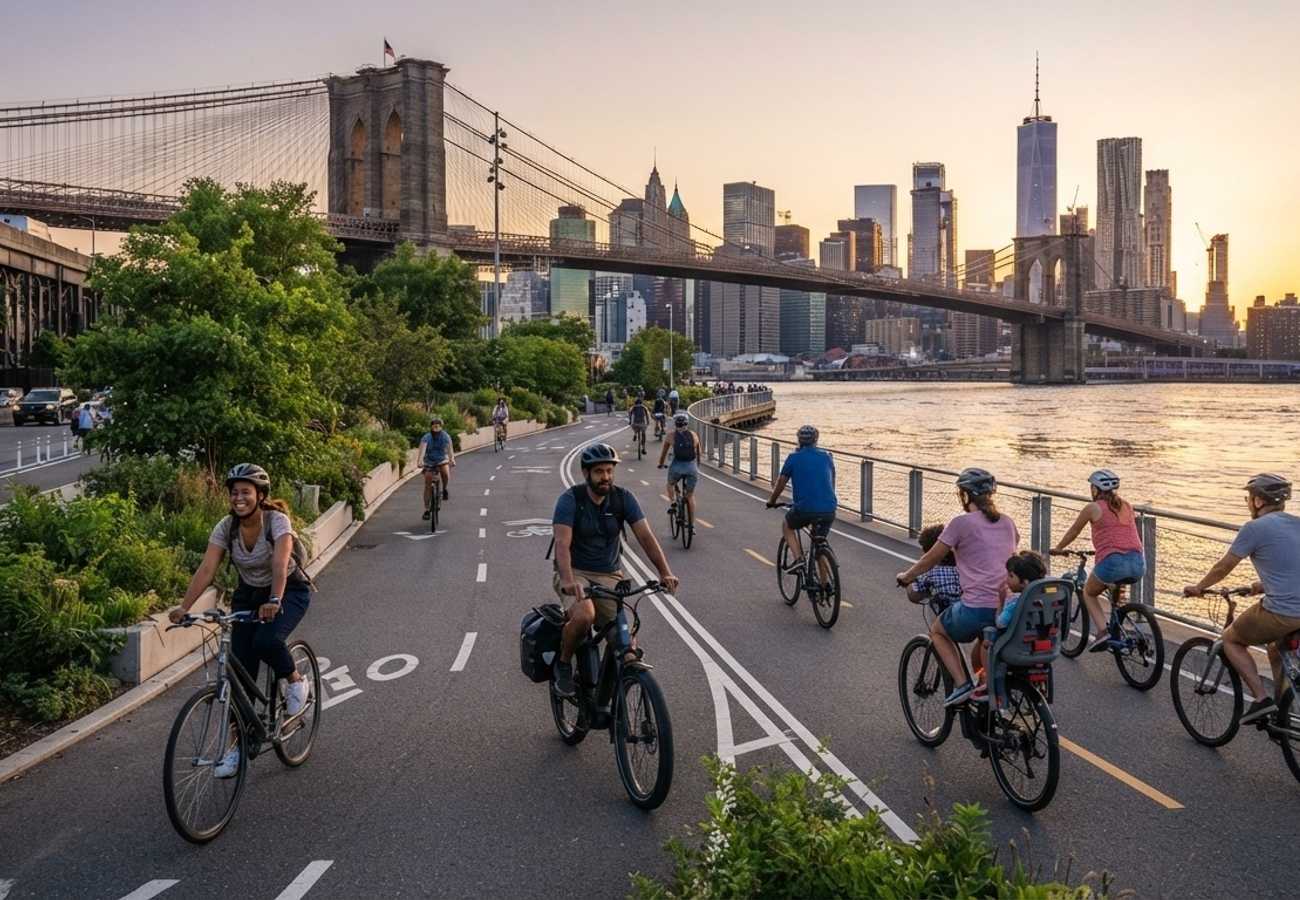
Image generated by AI
Cycling trips in New York City now number in the hundreds of millions annually, anchored by a network of more than 1,500 lane miles. This infrastructure shift is turning Brooklyn from a residential hub into a premier global destination for slow-travel enthusiasts.
The era of the taxi-dependent tourist is fading. Brooklyn is currently spearheading a transition where bicycle infrastructure is no longer just a utility for commuters but a primary driver of tourism revenue. By integrating protected corridors with cultural landmarks, the borough is redefining how visitors interact with the urban environment.
The Shift Toward Urban Cycling Assets
Brooklyn's strategy centers on converting its massive cycling volume into a tangible visitor asset. Data from East River bridge crossings reveal a significant trend: the Brooklyn Bridge has seen double-digit percentage growth in average daily cyclists over recent years. This indicates a strong preference for two-wheeled transit between Manhattan and Brooklyn.
The core of this growth lies in the expansion of continuous protected corridors. The Brooklyn Waterfront Greenway and the Brooklyn–Queens Greenway are being developed as landscaped, traffic-separated routes. These paths connect diverse neighborhoods from Greenpoint to East New York, allowing visitors to bypass the subway and explore shoreline views, local eateries, and museums via a single, cohesive itinerary.
This is not an isolated local trend. According to a report from PeopleForBikes, a record 112 million Americans rode a bike at least once in 2024. Crucially, social and recreational trips have become the primary reason for cycling, aligning perfectly with Brooklyn's push to market leisure riding as a signature experience.
Scaling the Model: The North American Competition
Brooklyn’s momentum is part of a broader continental race. Mid-sized destinations and resort towns in Utah, Michigan, Tennessee, and the Dakotas are climbing the "best places to bike" rankings. These regions are utilizing off-street paths and traffic-calmed main streets to create "visitor promenades" that link historic districts with regional parks.
In larger hubs, cities like Austin are adopting a similar playbook, investing in linear park-style greenways and connected downtown grids. The goal is to create a "low-stress" environment where out-of-town riders, regardless of their skill level, can rent a bike and navigate safely.
| Region | Infrastructure Focus | Tourism Goal |
|---|---|---|
| Brooklyn, NY | 1,500+ mile network / Waterfront Greenways | All-day cultural itineraries |
| Sun Belt (e.g., Austin) | Linear parks / Downtown bike grids | Riverfront and arts district access |
| US Midwest/West | Off-street paths / Low-stress routes | Historic district and nature loops |
| European Hubs | Integrated bike trains / Car-free centers | Multi-day regional riding holidays |
The European Influence and Environmental Value
The blueprint for this expansion is largely European. In the European Union, cycling tourism generates billions of trips annually. Countries like the Netherlands, Germany, and France have mastered the "bike train" and waymarked national routes, making multi-day journeys seamless.
For the visitor, the real impact is the move from isolated paths to cohesive networks. In Copenhagen and Amsterdam, the design prevents cyclist congestion and allows tourism agencies to market the entire city as a navigable zone. Brooklyn and other US cities are now adopting these European standards—emphasizing family-friendly gradients and easy transfers between ferries, trains, and bikes.
Beyond the visitor experience, this shift supports regional heritage by steering tourists away from overcrowded city centers and toward smaller communities and rural rail trails, distributing economic benefits more equitably across the region.
Visitor Insider Tips for Brooklyn Cycling
To make the most of the borough's expanding network, travelers should consider these local nuances:
- The Golden Window: To avoid the heavy commuter rush on protected lanes, plan your leisure rides between 10:00 AM and 3:00 PM.
- Hidden Route: Instead of the crowded Brooklyn Bridge, try the Manhattan Bridge for a less congested ride with stunning views of the skyline.
- Local Etiquette: Always yield to pedestrians on shared waterfront paths. In Brooklyn, "bike-friendly" cafes often have designated racks; look for the greenway signage to find these hubs.
- Eco-Tip: Opt for electric bike rentals to cover the distance from Greenpoint to East New York without exhaustion, supporting the growing e-bike infrastructure.
Future Tourism Outlook
The long-term trajectory for bike tourism is being accelerated by federal funding and technology. The U.S. Department of Transportation’s "Safe Streets and Roads for All" program is currently directing tens of millions of dollars to nearly one hundred communities for road safety plans and separated bike lanes.
Additionally, innovative programs like the electric bicycle lending library in Long Beach, California, suggest a future where the barrier to entry for cycling is virtually removed. As more cities integrate these safety grants with e-bike accessibility, the "car-free itinerary" will likely move from a niche preference to the standard for urban exploration.
The city is no longer a barrier to be crossed, but a trail to be followed.
Related Travel Guides
Disclaimer
This article is for informational and educational purposes only. It does not constitute legal, financial, or professional advice. While we strive to provide accurate and up-to-date information, travel policies, regulations, and conditions change rapidly. Always verify information with official sources before making travel decisions. Nomad Lawyer makes no representations about the accuracy, reliability, completeness, or suitability of the information provided. Readers should consult qualified professionals for advice specific to their circumstances. The views expressed in this article are those of the author and do not necessarily reflect the views of Nomad Lawyer.
Raushan Kumar
Founder & Lead Developer
Full-stack developer with 11+ years of experience and a passionate traveller. Raushan built Nomad Lawyer from the ground up with a vision to create the best travel and law experience on the web.
Learn more about our team →