
Brazil to Peru with Luxury Expedition Cruise is On the Rise as Travel Boom is Imminent
Brazil to Peru with Luxury Expedition Cruise is On the Rise as Travel Boom is Imminent

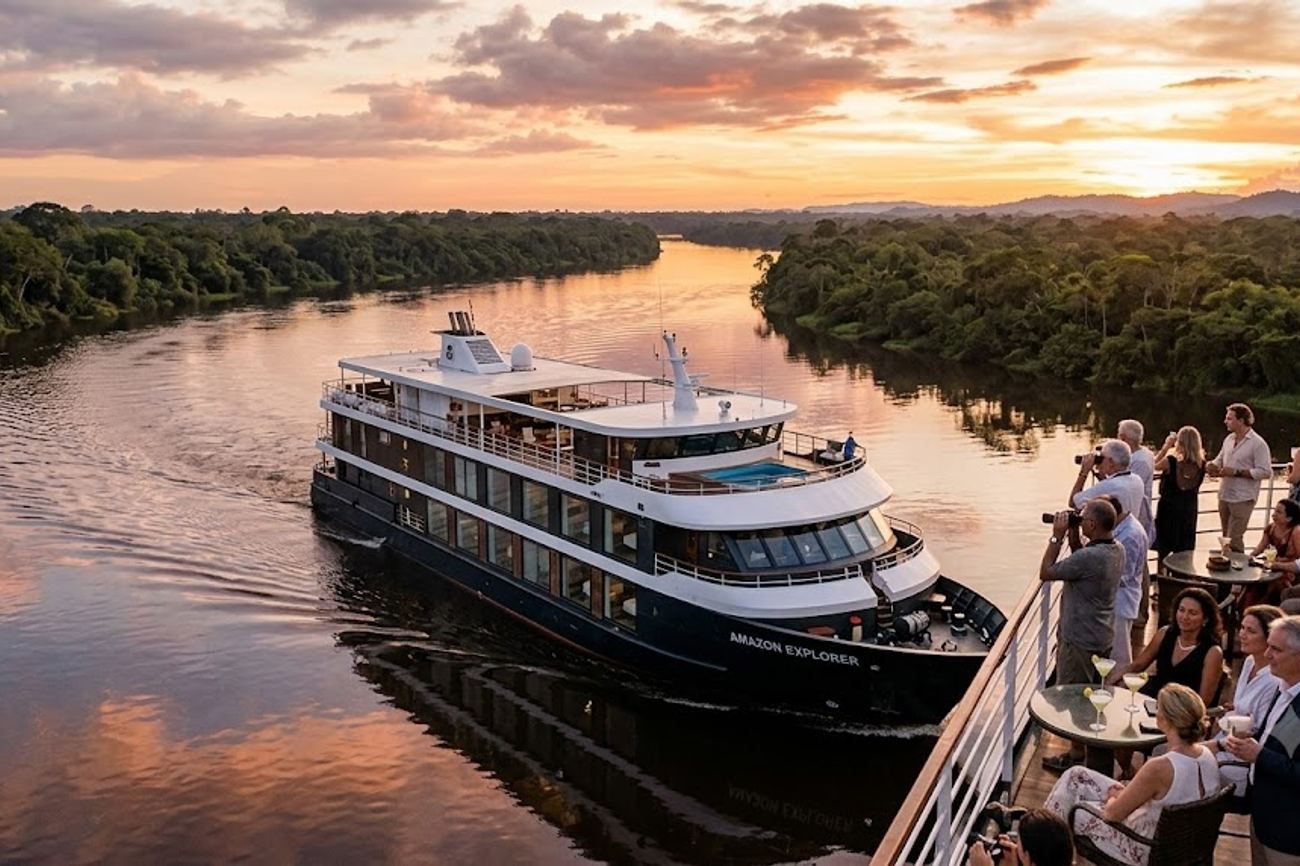
Image generated by AI
[Iquitos, September 12, 2026] — The Peruvian Amazon is entering a new era of high-end tourism with the official launch of the Amazon Explorer, a luxury expedition yacht designed to establish a zero-impact benchmark for rainforest exploration.
The debut of the vessel in September 2026 marks a strategic shift toward low-impact, high-value tourism in the region. Operating out of Iquitos, the yacht will navigate the Ucayali and Marañón rivers—the primary tributaries of the Amazon—integrating strict conservation protocols with luxury hospitality. This launch coincides with a broader surge in demand for sustainable adventure travel across South America, particularly along the Rio Tapajos in Brazil, where boutique wooden riverboats are increasingly used to support indigenous micro-economies.
The Shift to Low-Impact Exploration
The transition from traditional, resource-heavy river cruising to a "low-impact" model is driven by a fundamental change in passenger expectations. Modern luxury travelers are moving away from passive observation in favor of immersive, educational experiences that actively fund the preservation of the Amazon basin.
Unlike massive cruise ships, these new expedition vessels utilize shallow drafts and strictly limited passenger capacities. This design choice is intended to prevent the overcrowding of wildlife habitats and minimize the carbon footprint of each voyage. By prioritizing the destination over passenger volume, operators are reducing waste generation and limiting the physical disruption of the riparian environment.
This model also emphasizes equitable economic distribution. Rather than relying on imported luxury goods, these operations source ingredients from regional farmers and employ native guides. This strategy ensures that the financial gains from elite tourism remain within the local communities, creating a sustainable economic alternative to destructive industries such as unregulated mining and illegal logging.
Who Is Affected
The expansion of luxury expedition cruising impacts several specific regions, regulatory bodies, and passenger demographics:
| Entity/Region | Impact/Role | Specifics |
|---|---|---|
| Iquitos, Peru | Primary Operational Hub | Serving as the launch point for the Amazon Explorer and other luxury yachts. |
| Pacaya-Samiria National Reserve | Primary Destination | Over 5 million acres of protected flooded forest ("Jungle of Mirrors") facing increased high-end foot traffic. |
| Rio Tapajos, Brazil | Market Growth | Rise in boutique wooden riverboat operations focusing on indigenous empowerment. |
| MINCETUR | Regulatory Oversight | The Ministry of Commerce and Tourism (MINCETUR) is aligning these launches with national conservation-led tourism goals. |
| Indigenous Communities | Economic Beneficiaries | Direct employment as guides and suppliers; beneficiaries of scholarship programs. |
| Elite Travelers | Target Demographic | Discerning global travelers seeking "zero impact" luxury and scientific education. |
What This Means for Travelers
For passengers booking Amazonian expeditions in late 2026, the "luxury expedition" label translates to a radically different experience than a standard cruise.
First, expect extreme exclusivity. The Amazon Explorer, for example, features only 15 suites and a maximum capacity of 32 guests. This ensures a high staff-to-guest ratio and a personalized itinerary. Travelers will find that these vessels function more as floating research centers than hotels, featuring "Explorer Centres" for scientific lectures and educational briefings.
Second, there is a shift in the "luxury" definition. Opulence is now paired with cultural authenticity. Interiors are moving away from generic luxury toward regional aesthetics, such as the Kené art patterns of the Shipibo-Conibo culture.
Finally, booking a ticket now includes a direct contribution to conservation. A percentage of passenger fares is earmarked for community-led initiatives, including the protection of native river turtle species and the funding of scholarships for indigenous youth. Travelers are effectively paying a premium to ensure their presence does not degrade the ecosystem they are visiting.
The Future of Amazonian Conservation
The integration of luxury travel and environmental stewardship is being tested in the Pacaya-Samiria National Reserve. As one of the largest protected flooded forests globally, the reserve serves as a critical laboratory for whether high-end tourism can actually fund bio-cultural restoration.
The success of the Amazon Explorer's model depends on the continued partnership between private operators and government bodies like the Peruvian Ministry of Environment. By creating a direct economic link between the survival of the rainforest and the livelihoods of its inhabitants, the industry aims to make the standing forest more valuable than cleared land.
Looking forward, the trend suggests a further contraction in vessel size and an increase in specialized, theme-based voyages (such as bio-diversity tracking or indigenous linguistic studies). The "travel boom" imminent in the region is not characterized by a mass influx of people, but by an influx of capital directed toward sustainable, low-density exploration.
FAQ: Amazon Luxury Cruising 2026
What is "low-impact cruising" in the Amazon? It is a travel model utilizing small-capacity vessels with shallow drafts to minimize environmental disruption. It prioritizes ecological preservation and indigenous community support over passenger volume, ensuring a smaller carbon footprint per guest.
How does the Amazon Explorer differ from standard river cruises? The vessel limits guests to 32 people across 15 suites. It focuses on scientific education via an on-board Explorer Centre and integrates indigenous Shipibo-Conibo art and culture into its architecture.
Where does the money from these luxury cruises go? A portion of fares is reinvested into local scholarship programs for indigenous youth and community-led conservation projects, specifically targeting the protection of native river turtle species.
Which regions are the primary focus for these new expeditions? Current growth is concentrated in the Peruvian Amazon (specifically Iquitos and the Pacaya-Samiria National Reserve) and along the Rio Tapajos in Brazil.
The rainforest is no longer just a destination; it is becoming a high-stakes experiment in sustainable opulence.
#AmazonExplorer2026 #IquitosTourism #PacayaSamiria #MINCETUR #SustainableCruising #AmazonExpeditions
Related Travel Guides
Disclaimer
This article is for informational and educational purposes only. It does not constitute legal, financial, or professional advice. While we strive to provide accurate and up-to-date information, travel policies, regulations, and conditions change rapidly. Always verify information with official sources before making travel decisions. Nomad Lawyer makes no representations about the accuracy, reliability, completeness, or suitability of the information provided. Readers should consult qualified professionals for advice specific to their circumstances. The views expressed in this article are those of the author and do not necessarily reflect the views of Nomad Lawyer.
Preeti Gunjan
Contributor & Community Manager
A passionate traveller and community builder. Preeti helps grow the Nomad Lawyer community, fostering engagement and bringing the reader experience to life.
Learn more about our team →