
Brazil Leads Chile and More as Montevideo Expands International Air Links and Uruguay Tourism Gains Momentum: All You Need to Know
Brazil Leads Chile and More as Montevideo Expands International Air Links and Uruguay Tourism Gains Momentum: All You Need to Know

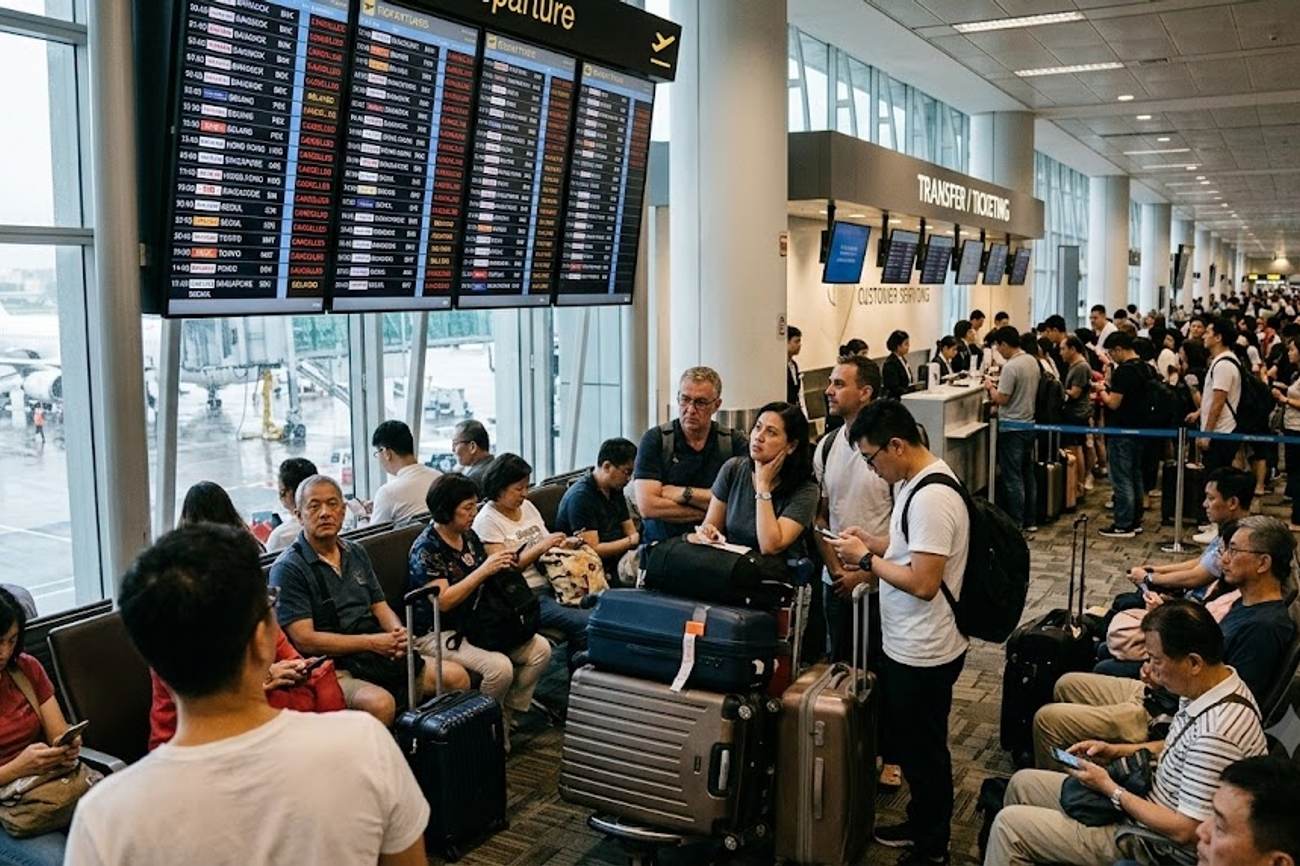
Image generated by AI
[Montevideo, March 2026] — Brazil has secured a dominant position in Uruguay's international aviation market, controlling 37.6% of all available international seat capacity into Montevideo. This surge in connectivity is driving a significant shift in regional tourism dynamics, positioning the Brazilian market as the primary engine for seat availability, even as Argentina maintains the highest total volume of actual arrivals.
The expansion is part of a broader strategic push by the Uruguayan government to diversify its tourism portfolio. Current data indicates that Montevideo is expanding its direct air links to encompass 18 cities across 10 different countries. This infrastructure growth coincides with a sharp rise in visitor numbers; the city recorded 220,166 international arrivals in the first quarter of 2026, a 31% increase compared to the same period in 2025.
The Aviation Capacity Shift
The current distribution of available international seat capacity highlights a heavy reliance on Brazilian corridors. Brazil’s 37.6% share dwarfs other key markets, including Panama (13.6%), Chile (12.8%), Spain (12.7%), and Argentina (10.8%). While these figures represent potential capacity rather than realized passenger counts, they signal a strategic pivot toward the Brazilian market to ensure long-term accessibility.
To support this capacity, the Ministerio de Turismo de Uruguay and aviation partners have established a network connecting Montevideo to seven major Brazilian hubs. These include:
- South-Eastern Hubs: São Paulo, Rio de Janeiro, and Belo Horizonte.
- North-Eastern Gateways: Salvador, Recife, Fortaleza, and Natal.
The geographic diversity of these routes allows Montevideo to tap into various economic zones within Brazil, reducing the city's dependence on a single entry point like São Paulo.
Reestablishing the Belo Horizonte Link
A pivotal moment in this expansion occurred on March 4, 2026, with the resumption of direct flights between Belo Horizonte and Montevideo. This route had been dormant for over a decade. The service, operated by Azul Brazilian Airlines, runs twice weekly on Wednesdays and Sundays.
The aircraft deployed on this specific route can carry up to 136 passengers. By removing the requirement for connecting flights, the Belo Horizonte service provides a direct conduit for travelers from the Minas Gerais region, further decentralizing the flow of Brazilian tourists into Uruguay.
Q1 2026 Visitor Statistics
While Brazil leads in seat capacity, actual visitor data reveals a more complex market share. During the first quarter of 2026, Montevideo saw a total of 220,166 visitors, up from 167,952 in Q1 2025.
The breakdown of visitor growth reveals an aggressive upward trend across multiple continents:
- Argentina: Remains the largest source market by volume with 87,073 visitors (up 21.5%).
- Brazil: Recorded 24,111 visitors, representing a 36% increase over the 17,735 arrivals in Q1 2025.
- Europe: Saw the most explosive growth at 78%, totaling 31,018 visitors.
- North America: Increased by 68% to reach 21,689 visitors.
- Chile: Generated 7,614 visitors, a growth of 65.5% year-over-year.
These figures suggest that while Brazil and Argentina remain the regional pillars, Montevideo is successfully attracting a more global demographic, reducing its vulnerability to local economic fluctuations in any one neighboring country.
What This Means for Travelers
For passengers booking travel to Uruguay in 2026, these developments translate into tangible benefits:
1. Reduced Travel Time and Cost The addition of direct routes—specifically from Belo Horizonte and the upcoming Porto Alegre service—eliminates the "connection tax" (both in time and money). Travelers no longer need to route through São Paulo or Rio de Janeiro, which typically adds hours to a journey and increases the risk of luggage loss or missed connections.
2. Greater Flexibility for Short-Stay Trips With 1.14 million available seats and approximately 7,000 flights scheduled across the 2026 connectivity window, travelers have more options for "city-break" itineraries. The increased frequency makes it viable for professionals and tourists to visit Montevideo for 3-4 days to explore the Ciudad Vieja, the Rambla, or the Mercado del Puerto without spending a disproportionate amount of the trip in transit.
3. Diversified Tourism Offerings The shift toward cultural tourism—highlighted by Montevideo's status as a UNESCO Creative City of Literature and its recognized tango and candombe traditions—means that travelers can now find curated cultural experiences that go beyond the traditional beach resorts of Punta del Este.
The Porto Alegre Expansion
The connectivity strategy will receive another boost on December 14, 2026, with the return of direct flights between Porto Alegre and Montevideo. This service is scheduled to operate twice weekly on Mondays and Fridays.
The timing is strategic, coinciding with the Southern Hemisphere summer peak. This route provides critical access from southern Brazil, allowing tourists to easily combine an urban visit to Montevideo with the broader coastal attractions of Uruguay. This addition completes a comprehensive "north-to-south" Brazilian coverage, ensuring that no major Brazilian region is more than one short flight away from the Uruguayan capital.
Long-Term Strategic Outlook
Montevideo is positioning itself as a primary South American gateway. By expanding its network to 10 countries and 18 cities, the city is moving away from being a secondary destination and toward becoming a regional hub. The reliance on Brazil for 37.6% of seat capacity is not an accident but a calculated move to leverage the size of the Brazilian economy.
The integration of high-capacity aircraft and frequent scheduling suggests that Uruguay intends to maintain this momentum through 2027. The goal is to balance the high volume of Argentinian visitors with the high capacity of Brazilian flights, while continuing to scale the rapidly growing European and North American markets.
FAQ: Montevideo Air Travel 2026
Which Brazilian cities have direct flights to Montevideo in 2026? Direct connections are available from São Paulo, Rio de Janeiro, Salvador, Recife, Belo Horizonte, Fortaleza, and Natal. Porto Alegre is scheduled to resume direct service on December 14, 2026.
How has the number of visitors to Montevideo changed in 2026? International arrivals rose by 31% in the first quarter of 2026, with 220,166 visitors compared to 167,952 during the same period in 2025.
Is Brazil the largest source of tourists for Montevideo? No. While Brazil provides the most available seat capacity (37.6%), Argentina remains the largest source market by actual visitor numbers, contributing 87,073 arrivals in Q1 2026.
What are the flight details for the Belo Horizonte route? Operated by Azul, the service runs twice weekly on Wednesdays and Sundays using aircraft with a capacity of up to 136 passengers.
Montevideo is no longer just a stopover; it is becoming a destination of choice for the Americas.
#MVD-GRU-2026 #AzulAirlines #MontevideoTourism #UruguayAviation #SouthAmericaAirLinks #BeloHorizonteMVD
Related Travel Guides
- Frontier Airlines Cancel for Any Reason Policy: HTS Refund Guide
- CDN Lighting Advances Hospitality Design With Anti Glare Lighting Technology
- You can now traverse the distance between Zurich and Barcelona while sleeping in a fully flat bed, reducing your carbon footprint by up to 91% compared to flying. This is not a luxury train or a first-class flight, but a reimagined approach to the overnight coach, designed to turn transit hours into actual rest.
Disclaimer
This article is for informational and educational purposes only. It does not constitute legal, financial, or professional advice. While we strive to provide accurate and up-to-date information, travel policies, regulations, and conditions change rapidly. Always verify information with official sources before making travel decisions. Nomad Lawyer makes no representations about the accuracy, reliability, completeness, or suitability of the information provided. Readers should consult qualified professionals for advice specific to their circumstances. The views expressed in this article are those of the author and do not necessarily reflect the views of Nomad Lawyer.
Naina Thakur
Contributor & Travel Specialist
Travel enthusiast and legal writer covering visa regulations, responsible tourism, and cultural journeys across global destinations.
Learn more about our team →