
The South American Tourism Shift: How Argentina's 28% Air Booking Surge Is Powering Brazil's Record-Breaking Year
With over 2.24 million Argentine visitors and forward air bookings up 28%, Brazil records its strongest August since 2009, generating US$7.4 billion in foreign traveler spending.

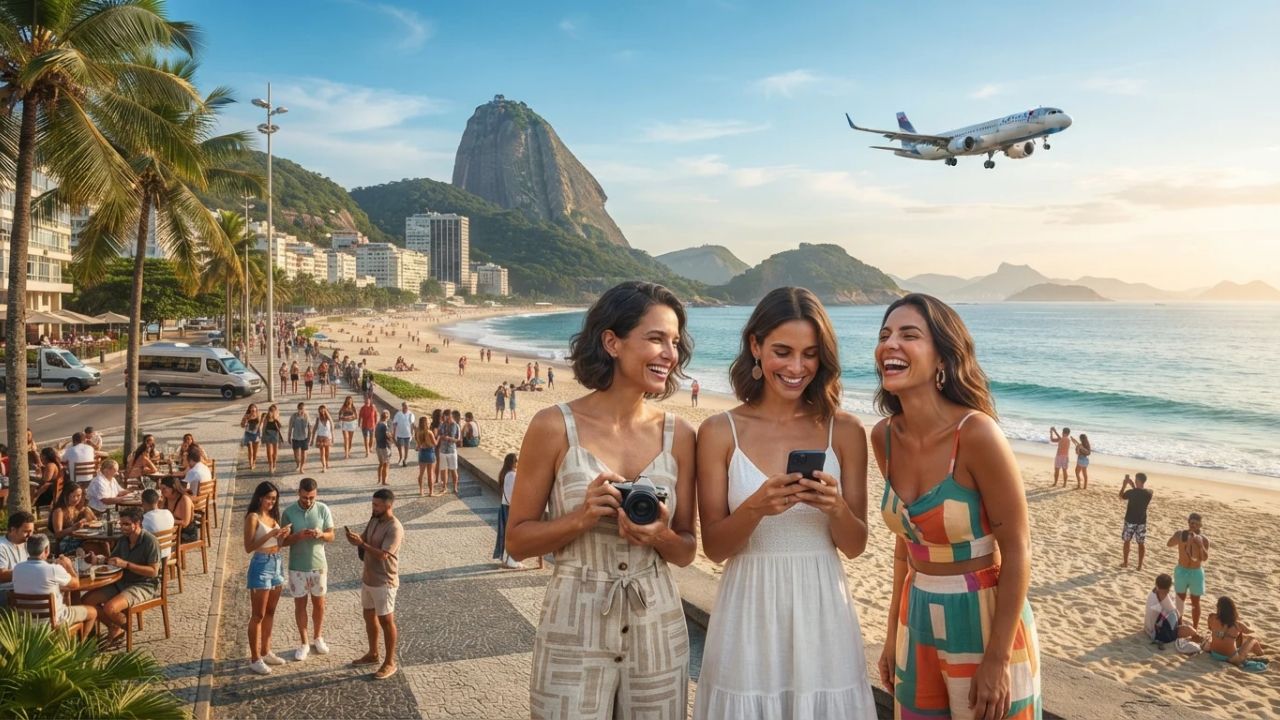
While European and North American travelers frequently dominate long-haul headlines, a single neighboring country now drives more than one-third of all international journeys to Brazil: Argentina delivered 2,244,297 visitors between January and August 2026, accompanied by a 28 percent surge in forward air-ticket bookings. Official data released by the Brazilian tourism authority Embratur reveals that Brazil welcomed a total of 6,451,257 foreign tourists during the first eight months of the year. August 2026 set a historical benchmark by welcoming 576,276 international guests—marking the highest single-month August total since national statistical records began in 2009—powered by cross-border road trips and expanding direct flights into southern coastal enclaves and regional capitals.
The influx extends far beyond a single bilateral corridor. Robust arrivals from Chile (547,601 visitors), the United States (514,128 visitors), Portugal (199,700 air arrivals), and France (162,700 air arrivals)—alongside double-digit booking growth from Germany (+11%), Spain (+10%), and China (>30% arrival surge)—have elevated foreign tourism spending to between R$38.5 billion and R$38.7 billion (approximately US$7.4 billion) through August. With air travel accounting for 4,477,469 arrivals (70 percent of all foreign entries), understanding the regional routes and cultural dynamics of Brazil’s historic surge provides vital insight for international travelers navigating South America.
Source Market Hierarchy & Regional Destination Matrix
| Country / Source Market | 2026 Visitor Volume (Jan–Aug) | Forward Booking Growth & Air Share | Primary Destinations & Traveler Profile |
|---|---|---|---|
| Argentina | 2,244,297 Visitors | +28% Air Bookings (~1.19M via air) | Florianópolis, Búzios, Rio de Janeiro, Balneário Camboriú (Beaches & nightlife) |
| Chile | 547,601 Visitors | +3% Air Bookings (~537,200 via air) | São Paulo, Rio de Janeiro (Urban culture, gastronomic dining, concerts) |
| United States | 514,128 Visitors | Moderate (-3% early variance, ~486.2K air) | Rio de Janeiro, Bahia, Amazon eco-lodges (Premium leisure & corporate) |
| Portugal | 199,700 Air Arrivals | +8% Air Bookings (+35% Jan surge) | Salvador da Bahia, Rio, Northeast beaches (Heritage, language ties) |
| France | 162,700 Air Arrivals | +1% Air Bookings | Pantanal wildlife, Paraty, Rio de Janeiro (Cultural & ecotourism) |
| China | ~113,000 Visitors | >+30% Arrivals (+130% search volume) | São Paulo, Foz do Iguaçu (Business delegations, multi-city itineraries) |
| Germany / Spain / Uruguay | Strong Growth (+11% DE / +10% ES / +8% UY) | Combined ~10% of international bookings | Atlantic Forest, Iguaçu Falls, Rio Grande do Sul (Nature & overland trips) |
How Regional Corridors Are Dispersing Beyond Rio and São Paulo
While São Paulo (1.89 million international arrivals) and Rio de Janeiro (1.67 million international arrivals) continue to anchor Brazil's international gateways, the sheer scale of South American overland and regional flight traffic has driven unprecedented growth across southern states. Rio Grande do Sul welcomed approximately 954,000 foreign tourists, Paraná recorded roughly 665,000, and Santa Catarina registered 556,000 visitors.
The state of Santa Catarina, anchored by the island capital of Florianópolis, represents the prime beneficiary of Argentine and Uruguayan holiday patterns. Known locally as Ilha da Magia (the Magic Island), Florianópolis features 42 distinct beaches ranging from the calm waters of Jurerê and Canasvieiras to the surf breaks of Praia Mole and Campeche. During the Southern Hemisphere summer and shoulder seasons, the island transforms into a cultural melting pot where Spanish and Portuguese blend across seaside quiosques serving fresh oysters and grilled seafood.
Simultaneously, the tripartite border region of Foz do Iguaçu in Paraná connects travelers directly to the thundering cataracts of Iguaçu National Park, recognized by the UNESCO World Heritage Centre. With expanded direct flights linking Foz do Iguaçu (IGU) with Buenos Aires, Santiago, and Lima, travelers increasingly combine Argentine and Brazilian nature wonders on single itineraries promoted in partnership with INPROTUR Argentina.
Air Connectivity and the Rise of Bleisure Travel
Brazil's aviation network processed 88.6 million total passengers during the first eight months of 2026, including 20.6 million international passengers—a 7.6 percent year-over-year expansion. August alone handled 2.5 million international fliers across major airport hubs.
Alongside leisure beachgoers, corporate mobility has surged. Domestic corporate travel generated approximately R$9.75 billion between January and August 2026—an 8.2 percent increase over the previous year. Corporate flight revenue accounted for roughly R$5.83 billion, while business hotel bookings generated R$2.88 billion. Multinational business travelers attending conferences in São Paulo's financial core frequently extend their itineraries into weekend escapes to the colonial coastal enclave of Paraty or the historic coffee estates of the Paraíba Valley.
Visitor Insider Tips
- Bypass Road Border Delays with Pre-Registered Migration: If crossing overland by car or bus between Argentina and Brazil via the Paso de los Libres–Uruguaiana or Puerto Iguazú–Foz do Iguaçu bridges, complete the Federal Police digital pre-registration online to utilize expedited electronic lanes.
- Adopt PIX for Instant Payments: While international credit cards function in hotels and upscale restaurants, beach vendors, coconut stalls, and local taxis prefer Brazil's instant payment system, PIX. Foreign travelers can now set up digital wallets supported by international fintech apps to scan PIX QR codes everywhere.
- Base Yourself strategically in Florianópolis: To avoid heavy island bridge traffic during peak summer months, base yourself in the north (Canasvieiras/Jurerê) for family-friendly beaches, or in the east/south (Lagoa da Conceição/Campeche) for surfing, hiking trails, and artisan dining.
- Fly Open-Jaw Tickets to Maximize Travel Time: Avoid costly backtrack flights by booking multi-city flights—such as flying into São Paulo (GRU), taking domestic flights to Florianópolis (FLN) or Salvador (SSA), and departing internationally directly from Rio de Janeiro (GIG).
- Time Iguaçu Falls Visits Across Both National Parks: Dedicate two separate days to Iguaçu: spend one day walking the panoramic walkways on the Brazilian side for sweeping canyon vistas, and a second day traversing the upper and lower boardwalks on the Argentine side to look straight down into the Devil's Throat (Garganta del Diablo).
Cultural and Environmental Context
The rapid expansion of international tourism brings both economic vitality and environmental responsibilities to Brazil's delicate coastal and forest biomes. In Santa Catarina and Rio de Janeiro, municipal authorities enforce strict coastal preservation guidelines that limit high-rise development near pristine surf beaches, protecting coastal dunes and Atlantic Forest reserves.
In the interior, the surge in European and Asian interest in biodiversity travel directly benefits community-managed conservation initiatives in the Pantanal wetlands and Amazonian river basins. Indigenous-led cooperatives and local riverine communities (ribeirinhos) earn sustainable livelihoods as certified wildlife guides, safeguarding jaguar habitats and freshwater river systems from unauthorized cattle ranching and deforestation. By respecting local environmental regulations, supporting community eco-lodges, and dispersing journeys into secondary towns, travelers ensure their presence actively preserves South America's greatest natural biospheres.
FAQ: Visiting Brazil During the 2026 Tourism Boom
What is driving the 28 percent surge in travel from Argentina to Brazil?
The surge is driven by strong geographical proximity, expanding direct flight frequencies between Argentine cities and Brazilian beach hubs, and high demand for southern coastal destinations like Florianópolis and Rio de Janeiro.
Do tourists need a visa to enter Brazil in 2026?
Visa requirements depend on nationality. Citizens of South American nations can enter with national identity cards, while European Union citizens enjoy visa-free entry; US, Canadian, and Australian travelers should verify current eVisa requirements before flying.
What was Brazil's total foreign tourism revenue in the first eight months of 2026?
Foreign visitor expenditure reached between R$38.5 billion and R$38.7 billion (approximately US$7.4 billion) between January and August, with August alone generating US$932 million.
Which Brazilian states receive the most foreign visitors after São Paulo and Rio?
The southern states of Rio Grande do Sul (954,000 visitors), Paraná (665,000 visitors), and Santa Catarina (556,000 visitors) welcome the highest foreign arrivals outside the two main gateway capitals.
From the surf-swept coves of Santa Catarina to the thundering cascades of Iguaçu, South America's travel renaissance proves that shared borders and cultural curiosity create the continent's most powerful journeys.
Related Travel Guides
- Canada's Middle East Travel Advisory Update: What Heightened Risk Tiers Mean for Transit Hubs
- Abu Dhabi's 37km Coastal Expressway: Al Hudayriyat to Al Dhafra Highway Guide
- Hong Kong to Hefei Direct: How HK Express Unlocks Anhui's Imperial Heritage
- The Battle for European Skies: Franco-German Aviation Alliances and Green Fuel Rules
Disclaimer
This article is for informational and educational purposes only. It does not constitute legal, financial, or professional advice. While we strive to provide accurate and up-to-date information, travel policies, regulations, and conditions change rapidly. Always verify information with official sources before making travel decisions. Nomad Lawyer makes no representations about the accuracy, reliability, completeness, or suitability of the information provided. Readers should consult qualified professionals for advice specific to their circumstances. The views expressed in this article are those of the author and do not necessarily reflect the views of Nomad Lawyer.
Raushan Kumar
Founder & Lead Developer
Full-stack developer with 11+ years of experience and a passionate traveller. Raushan built Nomad Lawyer from the ground up with a vision to create the best travel and law experience on the web.
Learn more about our team →