
Azerbaijan Targets High-Yield Tourism and Extended Stays Through 2026–2030 Development Strategy with Key Russian and Turkish Inbound Markets
Azerbaijan pivots toward visitor spending and longer stays under its 2026–2030 tourism strategy, driven by core inbound markets in Russia, Türkiye, and Central Asia.

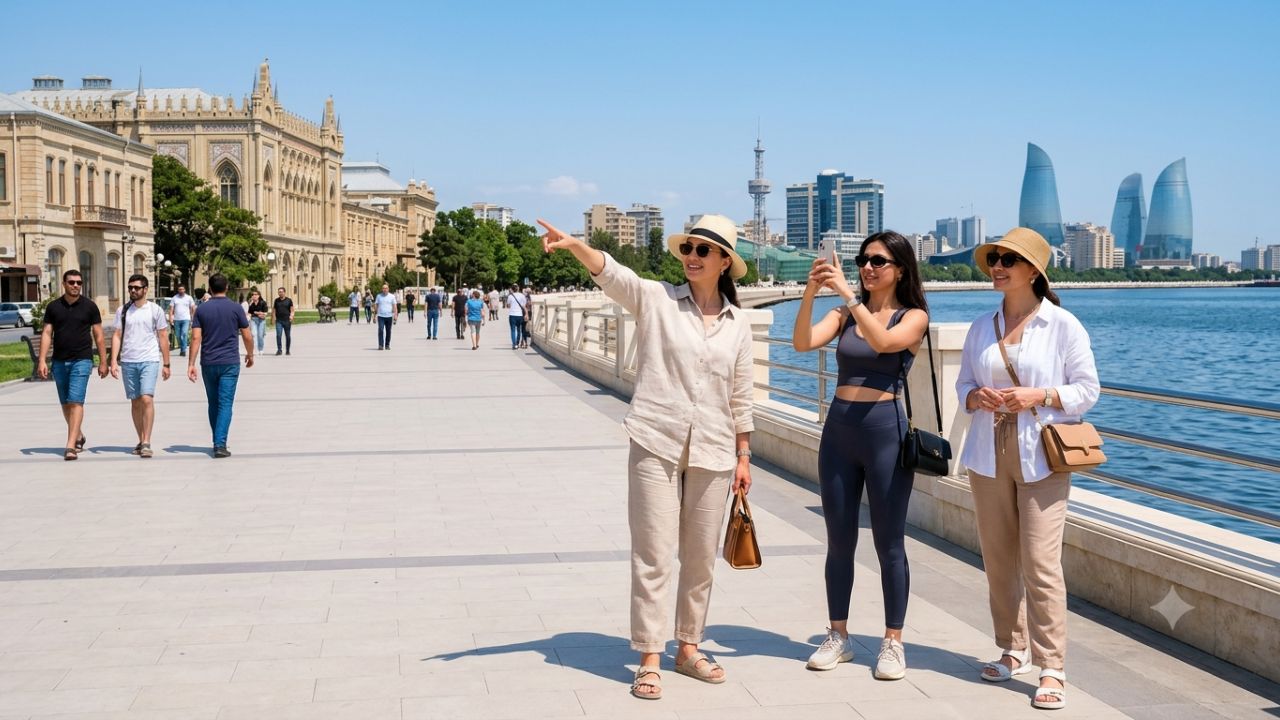
Azerbaijan is pivoting its national tourism strategy to prioritize per-visitor spending, extended durations of stay, and regional dispersal beyond Baku, supported by robust travel flows from anchor source markets in Russia, Türkiye, Georgia, and Kazakhstan.
Backed by the formal government approval of the State Programme for Tourism Development for 2026–2030 on 20 August 2026, the South Caucasus nation is transitioning away from pure volume-based growth toward high-yield experiential travel.
While total foreign and stateless arrivals reached 1.586 million during the first eight months of 2026—a 7.8% contraction compared with the same period in 2025—inbound performance revealed strong resilience from traditional Eurasian partners, with Russia contributing 27.9% of all visitors and Turkish arrivals expanding by 6.4% through September.
===================================================================================
      AZERBAIJAN TOURISM PERFORMANCE & STRATEGIC BENCHMARK 2026
===================================================================================
 [MACRO INBOUND BENCHMARKS: JANUARY–AUGUST 2026]
  * Total Foreign Arrivals: 1,586,000 visitors from 191 nations (-7.8% YoY).
  * Air Transport Dominance: 73.1% of all international arrivals entered via air.
  * Land & Rail Crossings: 25.5% of total foreign visitor arrivals.
  * Maritime Arrivals: 1.4% via Caspian Sea passenger ferry ports.

 [TOP INBOUND SOURCE MARKETS]
  * Russia: 442,494 arrivals (27.9% share) — #1 source market nationwide.
  * Türkiye: 307,684 arrivals (19.4% share) — expanded to 355,045 by Sept (+6.4%).
  * Iran: 123,708 arrivals (7.8% share) — #3 regional inbound market.
  * Georgia: 76,128 arrivals (4.8% share) — #4 regional market.
  * Kazakhstan: 72,956 arrivals (4.6% share) — grew 5.5% YoY through July.

 [STRATEGIC POLICY REFORM]
  * Policy Framework: State Programme for Tourism Development 2026–2030 (Approved 20 Aug).
  * Core Pillars: Regional product development, aviation integration, high-spend incentives.
===================================================================================
Macroeconomic Overview: Transitioning Toward High-Yield Regional Tourism
The performance of Azerbaijan's visitor economy in 2026 reflects an intentional realignment toward economic quality rather than gross arrival numbers.
Data compiled by the State Statistical Committee and the State Tourism Agency demonstrates that while overall visitor volumes dipped 7.8% to 1.586 million between January and August 2026, market performance varied significantly across geographic regions.
Arrivals from Commonwealth of Independent States (CIS) nations expanded by 3.1% to reach 619,500 visitors, and travel from European Union member states grew by 6.6% to 77,800 arrivals.
Conversely, travel from the Gulf region contracted sharply by 33.3% to 192,000 visitors, prompting national tourism planners to focus on stabilizing traditional regional corridors and broadening product offerings beyond luxury shopping in Baku.
| Travel Origin Category | Jan–Aug 2026 Arrivals | YoY Percentage Change | Structural Impact on Tourism Economy |
|---|---|---|---|
| Total International Arrivals | 1,586,000 Visitors | -7.8% YoY | Establishes baseline for value-focused 2026–2030 strategy |
| CIS Regional Inbound | 619,500 Visitors | +3.1% YoY | Primary foundation of regional mountain and city travel |
| European Union (EU) | 77,800 Visitors | +6.6% YoY | Steady expansion in cultural and eco-trekking segments |
| Gulf Cooperation Council | 192,000 Visitors | -33.3% YoY | Sharp drop prompting shift toward diversified source markets |
| Other International Markets | 696,700 Visitors | -8.2% YoY | Broad global footprint spanning 191 sovereign territories |
| Aviation Transport Share | 73.1% of All Entrants | Primary Gateway | Underpins importance of direct flights to Heydar Aliyev (GYD) |
| Overland & Rail Share | 25.5% of All Entrants | Controlled Access | Highlights regional transit links across the Caucasus |
| Caspian Sea Maritime | 1.4% of All Entrants | Niche Transit | Operates via Baku International Sea Trade Port (Alat) |
Leading Source Markets: Russia, Türkiye, and Central Asian Corridors
Four primary regional markets—Russia, Türkiye, Georgia, and Kazakhstan—generate the vast majority of international travel receipts in Azerbaijan, sustained by dense flight schedules, bilateral trade relationships, and deep cultural affinities.
AZERBAIJAN INBOUND SOURCE MARKET RANKING (JAN–AUG 2026)
| Column 1 | Column 2 | Column 3 | Column 4 | Column 5 |
|---|---|---|---|---|
| RANK | SOURCE COUNTRY | PERCENTAGE SHARE | ESTIMATED ARRIVALS | PRIMARY FOCUS |
| 1 | Russia | 27.9% | 442,494 | Ski, MICE, Spa |
| 2 | Türkiye | 19.4% | 307,684 | Business, Culture |
| 3 | Iran | 7.8% | 123,708 | Cross-border, Shop |
| 4 | Georgia | 4.8% | 76,128 | Regional Transit |
| 5 | Kazakhstan | 4.6% | 72,956 | Caspian, Wellness |
| 6 | Israel | 3.5% | 55,510 | Heritage, City |
| 7 | Pakistan | 3.4% | 53,924 | Leisure, Mountain |
| 8 | Uzbekistan | 3.2% | 50,752 | Silk Road, Trade |
| 9= | China | 2.6% | 41,236 | Group Cultural |
| 9= | India | 2.6% | 41,236 | Destination Events |
Russia: Dominant Source Market Driven by Aviation and Resort Promotion
Accounting for more than one in every four international visitors, Russia generated 442,494 arrivals between January and August 2026 (27.9% of all foreign travelers).
The strength of the Russian market is maintained by extensive direct air services operated by national carrier Azerbaijan Airlines (AZAL) and Russian carriers connecting Baku's Heydar Aliyev International Airport (GYD) directly with Moscow, Saint Petersburg, Kazan, Novosibirsk, and Yekaterinburg.
In March 2026, the Azerbaijan Tourism Board conducted high-level travel trade roadshows across Moscow and Saint Petersburg.
Engaging more than 240 Russian travel agency leaders, corporate buyers, and media representatives, the delegation included 13 major Azerbaijani hospitality partners, including national ski destination Shahdag Mountain Resort.
Marketing efforts centered on converting short city breaks into week-long regional stays combining Baku's culinary scene with mountain skiing and thermal mineral wellness.
Türkiye: High-Growth Partner Expanding Year-Round Travel
Türkiye represents Azerbaijan's most dynamic growth market, demonstrating consistent expansion even amid broader regional shifts.
According to State Tourism Agency statistics, Turkish arrivals reached 355,045 during the January–September 2026 window, representing a robust 6.4% year-on-year increase compared with 2025.
Bilateral tourism ties have been strengthened through intensive B2B promotional tours:
- Provincial Turkish Roadshows (October 2026): Between 5 and 8 October 2026, Azerbaijani tourism authorities organized direct commercial workshops across Trabzon, Gaziantep, Bursa, and Konya, presenting four-season travel products to Anatolian travel planners.
- Gabala Wellness Showcase in Istanbul (September 2026): In September, the Azerbaijan Tourism Board hosted an exclusive trade event in Istanbul focused on positioning the mountain district of Gabala as a year-round wellness, medical retreat, and luxury resort alternative.
Georgia: Cross-Border Synergies and Regional Itineraries
Georgia held the fourth position among inbound markets during the first eight months of 2026, contributing 4.8% of total arrivals (approximately 76,128 visitors), with January alone recording 8,734 Georgian entrants.
The proximity between the two South Caucasus nations makes multi-country regional itineraries highly attractive for international long-haul travelers visiting both Georgia and Azerbaijan on single extended vacations.
However, cross-border tourism expansion continues to navigate special land border health and security protocols maintained by the Azerbaijani government.
Travel organizers must coordinate cross-country transfers utilizing scheduled international air shuttles between Tbilisi (TBS) and Baku (GYD) until surface transit checkpoints fully normalize.
Kazakhstan: Emerging Central Asian Trans-Caspian Travel Corridor
Kazakhstan represents a rapidly expanding market, supplying 4.6% of foreign arrivals (72,956 visitors) between January and August 2026.
The State Tourism Agency noted that arrivals from Kazakhstan grew by 5.5% year-on-year during the first seven months of 2026, reaching 62,079 visitors.
Trans-Caspian connectivity is supported by direct scheduled flights connecting Baku with four major Kazakh urban centers: Almaty, Astana, Aktau, and Atyrau.
In August 2026, the Azerbaijan Tourism Board completed an extensive promotional tour across Shymkent, Almaty, and Astana, marketing Caspian coastal summer holidays, winter sports in the Greater Caucasus, and medical health resorts in Naftalan.
The 2026–2030 State Programme: Strategic Framework for Tourism Diversification
Formally ratified by the national government on 20 August 2026, the State Programme for Tourism Development for 2026–2030 outlines the statutory blueprint for the transformation of Azerbaijan's visitor economy.
The strategy identifies clear institutional priorities designed to spread tourism capital throughout rural districts:
===================================================================================
         AZERBAIJAN STATE PROGRAMME FOR TOURISM DEVELOPMENT 2026–2030
===================================================================================
 [STRATEGIC PILLAR 1: REGIONAL INFRASTRUCTURE DIVERSIFICATION]
  * Developing competitive mountain, health, and agritourism products outside Baku.
  * Direct fiscal incentives for hotel development and guest houses in rural zones.

 [STRATEGIC PILLAR 2: AVIATION AND ACCESSIBILITY ENHANCEMENT]
  * Enhancing direct air routes linking regional hubs (Ganja, Gabala) with overseas points.
  * Coordinating slot allocations and low-cost carrier access to stimulate inbound traffic.

 [STRATEGIC PILLAR 3: TARGETED DESTINATION MARKETING]
  * High-precision marketing campaigns tailored to high-yield segments in CIS, EU, Asia.
  * Promoting year-round leisure travel, MICE conventions, and cultural festivals.

 [STRATEGIC PILLAR 4: LOCAL HERITAGE & COMMUNITY PRESERVATION]
  * Restoring historical craft villages to stimulate rural employment and stop migration.
  * Enhancing service quality standards and professional hospitality certifications.
===================================================================================
Regional Exploration Beyond Baku: Mountain Resorts, Silk Road Villages, and Ancient Monuments
Distributing traveler expenditure across secondary and tertiary destinations represents the operational core of Azerbaijan's new tourism roadmap.
By restoring historic mountain settlements and upgrading winter sports infrastructure, authorities are building attractive regional circuits accessible from the capital.
AZERBAIJAN REGIONAL TOURISM CORRIDORS BEYOND BAKU
| Entity / Route | Metrics | Operational Status |
|---|---|---|
| REGIONAL DESTINATION | CORE ATTRACTION PROFILE | SIGNATURE TRAVEL EXPERIENCE |
| Shahdag (Gusar) | Premier Alpine Ski Resort | Winter skiing, alpine coasters, |
| Elevation up to 2,500 meters | luxury 5-star mountain hotels | |
| Gabala & Tufandag | Mountain wellness & ski links | Cable car circuits, Chenot |
| Subalpine forests & waterfalls | Palace wellness, shooting | |
| Basqal (Ismayilli) | Ancient Silk Road craft village | Historic stone streetscapes, |
| Silk Kelaghayi headscarf craft | 20 returning artisan families | |
| Lahij (Ismayilli) | 5th-century mountain enclave | UNESCO copper craft workshops |
| Ancient cobblestone alleys | Medieval stone sewer network | |
| Diri Baba (Maraza) | 1402 two-story cliff mausoleum | Mystical Sufi architecture, |
| Gobustan desert-steppe setting | 12,175 foreign ticket holders | |
| Naftalan | Therapeutic crude oil springs | Medicinal bath sanatoriums, |
| Unique global balneology hub | musculoskeletal therapy |
Shahdag and Tufandag: Four-Season Mountain Destinations
Azerbaijan has transformed its Greater Caucasus peaks into international-standard alpine resorts:
- Shahdag Mountain Resort (Gusar District): Located three hours north of Baku near Mount Shahdag, the resort features 30 kilometers of ski slopes, high-speed gondolas, and five luxury hotels. In summer, the facility operates mountain coasters, zip lines, and paragliding excursions.
- Tufandag Mountain Resort (Gabala District): Boasting 15 kilometers of ski runs and advanced snow-making equipment, Tufandag connects seamlessly with Gabala's international hospitality footprint, which includes the renowned Chenot Palace Health Wellness Hotel.
Basqal and Lahij: Preserving Rural Artisan Economies
In the Ismayilli District, targeted state restoration initiatives are demonstrating how cultural tourism can drive economic revitalization:
- Basqal Village: Extensive restoration has rehabilitated historic 17th-century cobblestone streets, bathhouses, and silk-weaving workshops. The State Tourism Agency confirmed that nearly 20 families who previously migrated to metropolitan areas have returned to settle permanently in Basqal, opening boutique guesthouses and craft shops producing the traditional Azerbaijani silk headscarf (Kelaghayi), inscribed on UNESCO's Representative List of the Intangible Cultural Heritage of Humanity.
- Lahij: Set deep inside a mountain canyon, Lahij preserves an ancient sewer system built over a millennium ago and features dozens of family-run copper workshops lining its stone streets, where artisans hand-hammer intricate trays, samovars, and pitchers.
Diri Baba Mausoleum: Spiritual Heritage in the Maraza Valley
Constructed in 1402 into a limestone cliff face in the Gobustan region, the Diri Baba Mausoleum stands as a masterpiece of Shirvanshah funerary architecture.
Following comprehensive state restoration and the construction of an accessible visitor reception center, the site recorded 12,175 foreign ticket-purchasing visitors between January and September 2026, demonstrating strong demand for heritage excursions along the Baku–Shamakhi highway.
| Regional Destination | Department / Territory | Distance from Baku | Recommended Transit | Signature Product |
|---|---|---|---|---|
| Shahdag Resort | Gusar District | 215 km (3h 15m) | Private Transfer / Shuttle | Winter skiing & alpine trekking |
| Gabala & Tufandag | Gabala District | 225 km (3h 30m) | ADY Passenger Train / Car | Medical wellness & cable cars |
| Basqal Village | Ismayilli District | 150 km (2h 15m) | Regional Bus / Private Car | Traditional silk Kelaghayi weaving |
| Lahij Village | Ismayilli District | 180 km (2h 45m) | 4WD Transfer from Ismayilli | Hand-hammered UNESCO copperware |
| Diri Baba | Gobustan District | 90 km (1h 15m) | En-route stop on M4 highway | 15th-century cliffside architecture |
| Naftalan Spas | Goranboy District | 330 km (4h 15m) | High-speed train to Ganja + Taxi | Naphthalene oil therapeutic baths |
Traveler Logistics Guide: Navigating Azerbaijan in 2026 (Information Gain)
Visiting Azerbaijan requires clear planning regarding visa regulations, transportation modes, and payment systems.
===================================================================================
               AZERBAIJAN TRAVELER ENTRY & TRANSIT CHECKLIST
===================================================================================
 [VISA & IMMIGRATION REQUIREMENTS]
  * Visa-Free Travel: Citizens of Türkiye, Russia, Georgia, Kazakhstan, Belarus,
    Uzbekistan, and other CIS nations enter visa-free (up to 90 days).
  * ASAN Visa (Official e-Visa): Citizens of ~95 nations (including US, UK, EU,
    Canada, Australia, India) apply online via evisa.gov.az ($26 USD standard).
  * Registration Rule: Stays exceeding 15 days require mandatory state registration
    with the State Migration Service (hotels complete this automatically).

 [CURRENCY & MONETARY LOGISTICS]
  * Official Currency: Azerbaijani Manat (AZN). Fixed pegged rate (~1.70 AZN = $1 USD).
  * Digital Payments: Contactless credit cards & Apple Pay/Google Pay are ubiquitous
    in Baku hotels, upscale restaurants, and modern transit.
  * Rural Cash Rule: Carry physical Manat banknotes when traveling to regional
    villages like Lahij, Basqal, or mountain homestays.
===================================================================================
Entry Protocols and Air Transport Hubs
Heydar Aliyev International Airport (GYD) in Baku processes more than 90% of international scheduled passenger flights.
The airport features Terminal 1, an architectural showpiece recognized for its wooden cocoon seating pods and duty-free amenities:
- Airport Express Bus (Aero Express): Operates 24/7 between Heydar Aliyev Airport and Baku Central Railway Station (28 May Station) with departures every 30 minutes. Transit takes 30 minutes and costs approximately 1.50 AZN via the contactless BakiKart transit card.
- Official Airport Taxis: Pre-paid taxi booking desks are located inside the arrivals hall. Fares to central Baku are typically fixed between 25 and 35 AZN.
- App-Based Ridesharing: Bolt and Yango operate extensively and affordably throughout Baku, providing upfront pricing and GPS tracking.
Domestic Rail Connectivity via Azerbaijan Railways (ADY)
Azerbaijan Railways (Azərbaycan Dəmir Yolları - ADY) operates comfortable Swiss-built Stadler double-decker passenger trains connecting Baku with provincial hubs:
- Baku to Gabala: The direct rail link operates on weekends and selected weekdays, delivering passengers directly to the foot of Tufandag mountain resort in approximately 3 hours and 20 minutes.
- Baku to Ganja: High-speed Stadler Kiss electric passenger trains reach Ganja, Azerbaijan's second-largest city, in under 4 hours, providing easy road connections to the thermal baths of Naftalan.
Infrastructure and Economic Diversification Assessment
Azerbaijan's 2026–2030 tourism strategy represents an essential macroeconomic shift for a country historically dependent on oil and natural gas exports.
TOURISM DIVERSIFICATION ECONOMIC MULTIPLIER
| Category / Entity | Details / Impact |
|---|---|
| ECONOMIC SECTOR | STRUCTURAL EFFECT ON PROVINCIAL COMMUNITIES |
| Rural Hospitality | Expands guesthouses, small hotels, and farm stays |
| Artisanal Cooperatives | Preserves ancient metalworking, pottery, and weaving |
| Aviation Revenues | Justifies expanded international routes for AZAL |
| Agriculture & Food Supply | Elevates demand for regional lamb, tea, fruit, herbs |
| Balanced National Budget | Mitigates fiscal exposure to fluctuating energy prices |
Reducing Dependence on Hydrocarbon Volatility
While petroleum and natural gas continue to dominate Azerbaijan's export revenues, the government's long-term economic development vision (Azerbaijan 2030) targets non-oil GDP expansion as a top national priority.
Tourism represents an ideal economic catalyst, stimulating construction, domestic transport, food services, and retail commerce without depleting finite natural resources.
By focusing on high-spending visitors from Russia, Türkiye, and Central Asia who seek extended multi-destination stays, Azerbaijan is insulating its visitor economy from sudden downturns in specific outbound markets.
Fostering Community-Based Heritage Preservation
The revitalization of settlements like Basqal and Lahij proves that regional tourism development can directly halt rural depopulation.
When international travelers venture into mountain valleys to purchase authentic hand-crafted copperware or silk scarves, the economic dividend flows straight to local families, providing dignified rural livelihoods and ensuring ancient craft traditions survive for future generations.
Through coordinated investments in aviation, alpine recreation, and community heritage, Azerbaijan is crafting a sophisticated, resilient tourism model that balances commercial ambition with cultural preservation.
Frequently Asked Questions
Which countries are the largest source markets for tourism in Azerbaijan?
Russia is Azerbaijan's largest inbound tourism source market, accounting for 27.9% of foreign arrivals (442,494 visitors) between January and August 2026, followed by Türkiye at 19.4% (307,684 visitors), Iran at 7.8%, Georgia at 4.8%, and Kazakhstan at 4.6%.
What is the goal of Azerbaijan's 2026–2030 State Programme for Tourism Development?
Approved on 20 August 2026, the programme aims to shift Azerbaijan's visitor economy from volume-based growth to high-value travel by promoting regional investment, improving aviation connectivity, and encouraging longer multi-destination stays beyond Baku.
Which regional destinations in Azerbaijan are best for travel outside Baku?
Top destinations include Shahdag Mountain Resort in Gusar for alpine skiing, Gabala and Tufandag for mountain wellness, the restored historic craft village of Basqal, ancient copper-crafting settlement Lahij, and the cliffside Diri Baba Mausoleum in Gobustan.
Do international travelers need a visa to visit Azerbaijan?
Citizens of Türkiye, Russia, Georgia, Kazakhstan, and CIS nations enter visa-free for up to 90 days. Travelers from approximately 95 countries, including the US, UK, EU, Canada, and India, can obtain an electronic ASAN Visa online via evisa.gov.az.
Related Travel Guides
Disclaimer
This article is for informational and educational purposes only. It does not constitute legal, financial, or professional advice. While we strive to provide accurate and up-to-date information, travel policies, regulations, and conditions change rapidly. Always verify information with official sources before making travel decisions. Nomad Lawyer makes no representations about the accuracy, reliability, completeness, or suitability of the information provided. Readers should consult qualified professionals for advice specific to their circumstances. The views expressed in this article are those of the author and do not necessarily reflect the views of Nomad Lawyer.
Kunal K Choudhary
Co-Founder & Contributor
A passionate traveller and tech enthusiast. Kunal contributes to the vision and growth of Nomad Lawyer, bringing fresh perspectives and driving the community forward.
Learn more about our team →