
Mapping Brazilian Travel: Inside the First National Tourism Demand Survey Across 50 Destinations and 22,500 Interviews

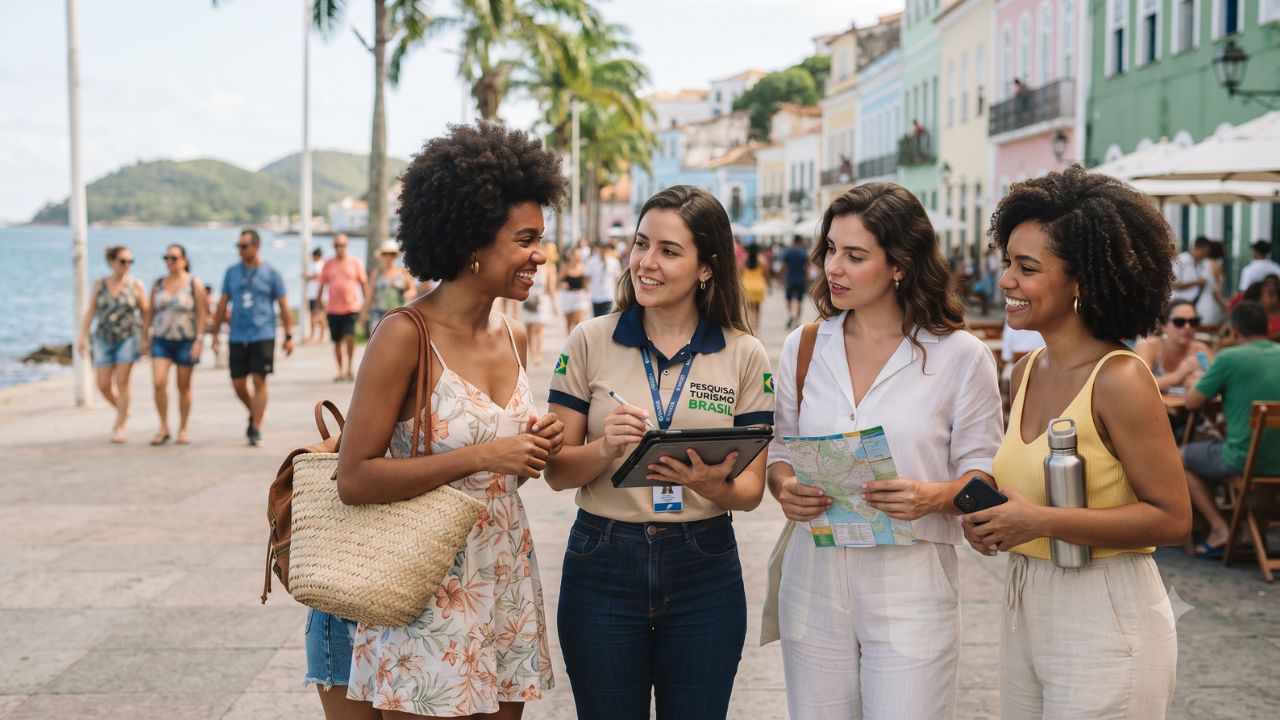
While conventional international travel statistics have long relied strictly on passport entry gates at Rio de Janeiro and São Paulo, Brazil has completed the most comprehensive on-the-ground traveler study in its history. Researchers conducted approximately 22,500 face-to-face interviews across 50 municipalities spanning all five geographic regions, creating the country's first official National Tourism Demand Survey (Pesquisa Nacional de Demanda Turística – PNDT).
Coordinated by the Ministério do Turismo, the historic fieldwork window ran from September 16 to October 3, 2026. By interviewing both domestic vacationers and international travelers directly at destinations, the initiative moves beyond simple headcounts to examine socioeconomic backgrounds, travel motivations, transport choices, accommodation preferences, daily spending patterns, and length of stay. The gathered intelligence feeds directly into Brazil's National Sustainable Tourism Observatory (Observatório Nacional de Turismo Sustentável), establishing an evidence-based foundation for regional infrastructure investment, public transport corridors, and destination stewardship promoted globally by Visit Brasil.
The Scale and Framework of the Inaugural PNDT Study
Conducting rigorous destination-level research across a continental territory requires extensive regional coordination. The PNDT evaluates visitor dynamics across Brazil's five official macro-regions:
- North (Norte): Focusing on river transit, rainforest lodges, community-based tourism, and gateway access into the Amazon basin from Manaus and Belém.
- Northeast (Nordeste): Examining beach resort stays, culinary tourism, and historic preservation across coastal capitals like Salvador, Recife, and Fortaleza.
- Southeast (Sudeste): Capturing high-yield business travel, cultural exhibitions, and urban gastronomy in São Paulo, Rio de Janeiro, and Belo Horizonte.
- South (Sul): Tracking cross-border South American road trips, mountain ecotourism in Serra Gaúcha, and eco-travel around Iguaçu Falls.
- Centre-West (Centro-Oeste): Assessing nature tourism, wildlife photography safaris, and seasonal wetland travel across the Pantanal and Bonito.
PNDT Operational Scope and Survey Matrix
The operational parameters of the nationwide study highlight its unprecedented breadth:
| Survey Dimension | Official Metric / Parameter | Strategic Policy & Traveler Insight |
|---|---|---|
| Official Title | Pesquisa Nacional de Demanda Turística (PNDT) | Brazil's first standardized national demand survey |
| Fieldwork Execution Period | 16 September 2026 – 3 October 2026 | Comprehensive end-of-dry-season travel window |
| Total Planned Interviews | Approximately 22,500 travelers | High-density face-to-face questionnaire model |
| Municipalities Covered | 50 diverse tourism destinations | Encompasses capitals, beach towns, and eco-hubs |
| Geographic Macro-Regions | All 5 Brazilian regions (N, NE, SE, S, CW) | Balances coastal resorts with inland wilderness |
| Target Respondent Base | Domestic travelers & foreign visitors | Compares spending habits and stay durations |
| Institutional Repository | National Sustainable Tourism Observatory | Open data platform for municipal planners |
| Core Research Focus | Profiling, spending, transport, lodging | Transitions policy from volume to economic value |
What Makes Regional Brazilian Travel Experiences Unique
The geographic diversity captured by the PNDT reflects Brazil's extraordinary regional identities. Rather than treating the country as a single beach destination, independent explorers can move between contrasting cultural and ecological worlds.
In Bahia, travelers walk the pastel-colored cobblestone avenues of the Historic Centre of Salvador de Bahia, immersing themselves in Afro-Brazilian drumming traditions, capoeira circles, and coconut-milk seafood stews (moqueca). Further south, travelers in Paraná witness the thundering cascades of Iguaçu National Park before heading into the highlands of Rio Grande do Sul for wine tastings. In the interior, the crystalline freshwater rivers of Bonito and the vast flooded savannas of the Pantanal offer wildlife encounters with jaguars, giant river otters, and hyacinth macaws.
Visitor Insider Tips
To experience Brazil like an insider while navigating regional distances, consider these practical strategies:
- Embrace Regional Domestic Flight Corridors: Given Brazil's continental scale, driving between regions is rarely practical. Use major domestic carriers (LATAM, Gol, and Azul) connecting through secondary hubs like Brasília (BSB) or Campinas (VCP) to avoid unnecessary transfers in São Paulo.
- Master Regional Dining Customs: In southern Brazil, experience traditional rodízio steakhouses, while in Minas Gerais, visit rustic botecos for slow-cooked pork ribs with cassava. In the Northeast, buy hot acarajé (deep-fried black-eyed pea fritters stuffed with dried shrimp and vatapá) directly from traditional Baiana street vendors dressed in lace attire.
- Plan Around Seasonal Climate Windows: The dry season (May to October) is ideal for wildlife viewing in the Pantanal and exploring the dunes of Lençóis Maranhenses. For the southern beaches of Santa Catarina, the summer months from December to March offer the best ocean swimming temperatures.
- Prioritize Pix and Contactless Payments: While international credit cards are widely accepted in major cities, carry a small reserve of Brazilian Reais (BRL) in cash for remote beach kiosks, handicraft stalls, and rural national park entrance fees.
Cultural and Environmental Context
The data compiled by the PNDT will be instrumental in balancing economic tourism growth with fragile biome conservation. High-volume visitor pressure along coastal dune systems and Atlantic rainforest corridors requires careful spatial planning.
By feeding field data directly into the National Sustainable Tourism Observatory, environmental agencies can monitor carrying capacities in sensitive ecological reserves. Additionally, mapping traveler demand helps municipal authorities direct funding toward community-led hospitality projects in indigenous territories and traditional riverbank communities (ribeirinhos), ensuring that tourism revenue strengthens local heritage preservation rather than concentrating wealth solely in commercial metropolitan centers.
FAQ: Exploring Brazil and the PNDT Survey 2026
What is the primary goal of Brazil's National Tourism Demand Survey? The PNDT aims to understand who visits Brazil, their motivations, how long they stay, what they spend, and how they evaluate local infrastructure and hospitality across 50 destinations.
Have the consolidated survey results been published yet? As of October 2026, the fieldwork window has concluded, and government statisticians are processing the data. Consolidated national averages will be released by the Ministry of Tourism in upcoming official bulletins.
Which regions of Brazil were included in the survey? The study covered 50 municipalities across all five geographic regions: North, Northeast, Southeast, South, and Centre-West.
What is the best way for international travelers to explore multiple Brazilian regions? Domestic air passes and multi-city flight bookings on Brazilian carriers offer the most efficient way to connect distant biomes, such as the Amazon, Rio de Janeiro, and the Pantanal.
Travelers who venture beyond the famous postcard vistas will discover that Brazil's authentic rhythm lives in its regional kitchens, colonial cobblestones, and protected wilderness sanctuaries.
Related Travel Guides
- Brazil Travel Advisory Canada US Consular Election Guide 2026
- Ireland Embraces AI Tourism: Failte Ireland 2026-2029 Strategy
- Camino Bulgaria: The New 81km Spiritual Trail Across Strandzha
- Thailand Dominates China National Day Travel as Bangkok Emerges as Top Overseas Destination for 2026 Golden Week
Disclaimer
This article is for informational and educational purposes only. It does not constitute legal, financial, or professional advice. While we strive to provide accurate and up-to-date information, travel policies, regulations, and conditions change rapidly. Always verify information with official sources before making travel decisions. Nomad Lawyer makes no representations about the accuracy, reliability, completeness, or suitability of the information provided. Readers should consult qualified professionals for advice specific to their circumstances. The views expressed in this article are those of the author and do not necessarily reflect the views of Nomad Lawyer.
Raushan Kumar
Founder & Lead Developer
Full-stack developer with 11+ years of experience and a passionate traveller. Raushan built Nomad Lawyer from the ground up with a vision to create the best travel and law experience on the web.
Learn more about our team →