
Brazilian Aviation Meltdown Triggers Massive Travel Chaos as São Paulo Gridlock Forces 26 Flight Cancellations Across LATAM and Azul
Breaking airline news: A massive radar failure and severe weather in Brazil trigger extreme travel chaos, forcing 26 flight cancellations across LATAM, GOL, and Azul.

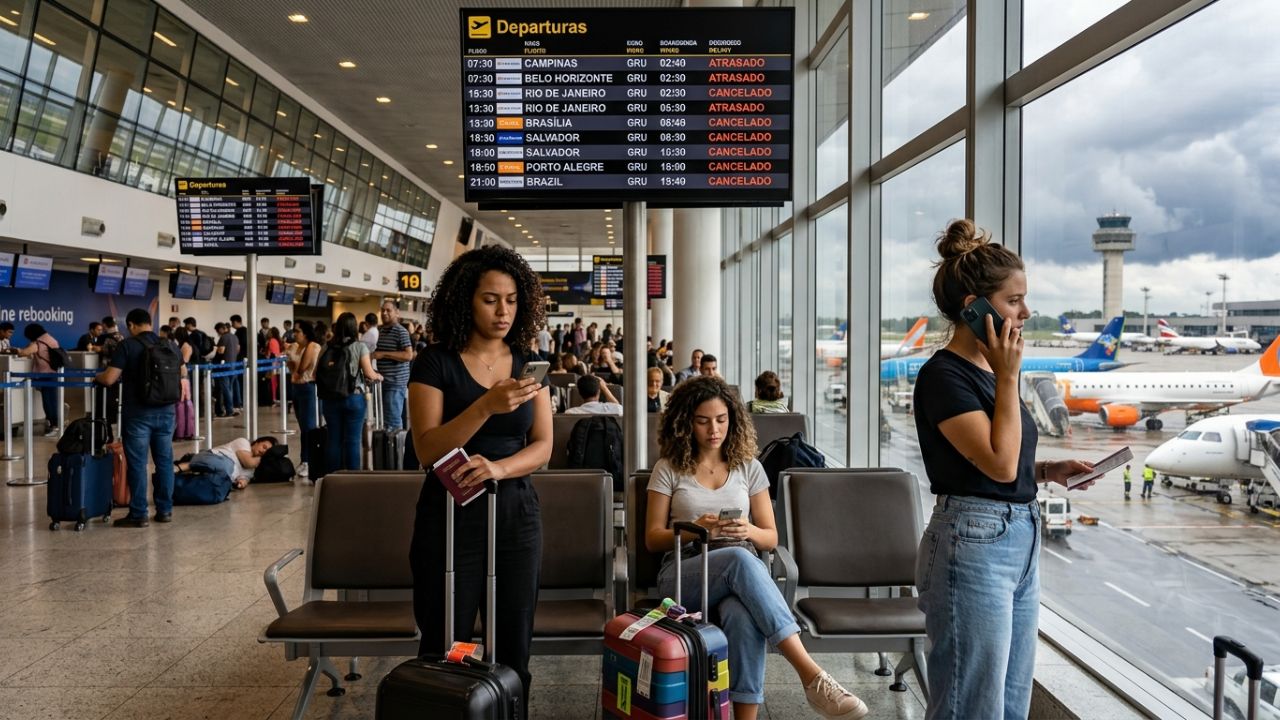
Image representing the severe aviation meltdown currently paralyzing Brazil's southeastern corridor. As highly volatile localized weather violently collides with a critical technical radar malfunction, the aviation grid has officially suffered 26 flight cancellations and up to 232 severe delays, engineering intense travel chaos and massive airport disruptions across major carriers including LATAM, Azul, and GOL. (Image Credit: South American Aviation Tracking)
Brazilian Aviation Meltdown Triggers Massive Travel Chaos as São Paulo Gridlock Forces 26 Flight Cancellations Across LATAM and Azul
A Devastating Combination of Severe Weather and Radar Failure Paralyzes Brazil's Economic Core, Crippling Connectivity at Major Hubs in São Paulo and Belo Horizonte
The absolute structural fragility of South America's most critical aviation network has been brutally exposed following a catastrophic operational breakdown in Brazil. According to the absolute latest breaking airline news and highly critical aviation updates, thousands of commuting schedules have violently imploded today, stranding hundreds of travelers across the nation. The severe travel chaos officially erupted when a terrifying total of 26 absolute flight cancellations and up to 232 cascading delays suddenly hit massive mega-hubs in São Paulo, Campinas, and Belo Horizonte. This massive gridlock was directly engineered by a sudden, incredibly toxic combination of localized severe weather and a highly critical technical radar malfunction. Consequently, the incredibly dense flight paths over Brazil's southeastern economic core choked rapidly, plunging the domestic aviation grid into complete paralysis.
For major carriers specifically including LATAM, GOL, Azul Brazilian Airlines, and Azul Conecta, the operational reality has become a nightmare. These incredibly tightly packed schedules collapsed almost instantly under the infrastructure strain, leaving aircraft and essential flight crews violently out of position. As a direct result, airport terminals are currently flooded with highly frustrated, stranded passengers. While ground crews work tirelessly to clear the terrifying logjam, airline customer service counters are visibly struggling to handle the overwhelming, desperate demand for emergency rebookings. Because these specific regional hubs serve as the absolute vital organs connecting the entire country, aviation analysts strongly warn that the massive ripple effects of these airport disruptions will paralyze Brazilian domestic air traffic well into tomorrow morning.
Section-Wise Breakdown: The Anatomy of a Southeastern Collapse
The highly detailed operational tracking data provided by regional aviation authorities definitively exposes exactly how this massive gridlock destroyed schedules across specific hubs:
The Southeastern Corridor Bottleneck Geographically, the massive disruptions were incredibly intensely concentrated in Brazil’s southeastern economic core—specifically across the highly lucrative states of São Paulo and Minas Gerais. The cities of São Paulo, Campinas, and Belo Horizonte represent the absolute vital organs of Brazilian domestic aviation. Because these three massive hubs are so deeply interconnected, an air traffic delay triggered by radar failure in São Paulo almost instantly translates to a catastrophic delayed arrival or outright cancellation in Belo Horizonte. The data explicitly confirms that São Paulo-Guarulhos (GRU) alone horrifyingly accounted for roughly 68% of the day’s total delays, permanently establishing it as the primary epicenter of this operational collapse.
Hub Collapse: GRU, VCP, and CNF The operational breakdown reveals a stark, terrifying contrast in how specific hubs absorbed the trauma. São Paulo-Guarulhos International (GRU) bore the absolute brunt of the day’s disruptions. While GRU managed to keep absolute cancellations relatively low at 10 flights, it suffered a massive, completely unmanageable gridlock, racking up a staggering 157 severe delays. As the primary international gateway, this failure instantly triggered a nationwide domino effect. Viracopos International (VCP) in Campinas experienced a vastly different nightmare, recording the absolute highest number of outright cancellations of the day with 11 flights completely scrubbed, though holding its total delays to 36. Meanwhile, Tancredo Neves International (CNF) in Belo Horizonte faced a steady stream of setbacks, registering 5 cancellations and 39 delays, heavily destroying regional connectivity through the state of Minas Gerais.
Airline Impact: LATAM, GOL, and Azul's Battle for Recovery The disruption data paints a devastating picture for the specific carriers. Azul Brazilian Airlines faced the absolute steepest operational climb, leading the board with 11 catastrophic cancellations and enduring 87 delays heavily tied to their mega-hub at Viracopos. Conversely, LATAM Brasil explicitly chose to prioritize schedule retention over punctuality; while they kept cancellations to 8 flights, they recorded an industry-leading 100 delayed flights, a massive backlog directly tied to their dominance at the congested Guarulhos airport. GOL Linhas Aéreas Inteligentes mirrored LATAM’s cancellation metric perfectly with 8 cancellations, but successfully managed to hold delays to 77. Finally, Azul Conecta—the vital regional feeder subsidiary—reported only 1 delay but was forced to issue 5 absolute cancellations due to severe crew positioning issues stemming from the parent company's broader collapse.
Operational Details: The Factual Brazilian Disruption Matrix
To provide exact, factual clarity on the immense operational scale of the Brazilian aviation meltdown, analysts have mapped the specific disruption metrics across hubs and carriers. The following factual matrix exactly details the precise breakdown of the crisis:
Factual Brazilian Aviation Disruption Matrix
| Operational Hub / Airline | Cancelled Flights | Delayed Flights | Core Operational Driver |
|---|---|---|---|
| São Paulo-Guarulhos (GRU) | 10 | 157 | Accounted for 68% of total delays; massive radar/weather gridlock. |
| Viracopos International (VCP) | 11 | 36 | Highest volume of absolute cancellations; Azul mega-hub collapse. |
| Tancredo Neves Intl (CNF) | 5 | 39 | Steady regional connectivity failure in Minas Gerais. |
| Azul Brazilian Airlines | 11 | 87 | Severely impacted by the Viracopos hub operational collapse. |
| LATAM Brasil | 8 | 100 | Massive delayed backlog driven by Guarulhos congestion. |
| GOL Linhas Aéreas | 8 | 77 | Maintained slightly better schedule integrity during the gridlock. |
| Azul Conecta (Regional) | 5 | 1 | Forced cancellations due to parent company aircraft positioning limits. |
Data reflects the confirmed flight cancellations and severe delay metrics officially recorded during the massive Brazilian aviation gridlock on June 16, 2026. (Source: FlightAware and Affected Airports)
Passenger Impact: Demanding Your ANAC Rights
For the hundreds of passengers physically trapped inside these failing terminals, immediate tactical recovery requires a strict understanding of Brazilian aviation law. The National Civil Aviation Agency (ANAC) rigidly mandates specific tiers of mandatory assistance under Resolution 400. For delays over 1 hour, airlines must provide free communication access (Wi-Fi/phone). For delays over 2 hours, the airline is legally required to provide adequate meals or food vouchers. For delays over 4 hours or outright flight cancellations, the airline must offer immediate options for rebooking on the next available flight—including utilizing competitor flights if absolutely necessary—or issue a full refund. If the disruption forces an overnight stay away from a passenger's home city, the airline is strictly obligated to provide free hotel accommodation and round-trip airport transfers. Passengers must relentlessly demand written proof of the delay from the gate agent to secure these legal rights.
Industry Analysis: The Danger of Infrastructure Strain
Aviation experts closely monitoring this massive event emphasize that these 26 canceled and 232 delayed flights expose the incredibly dangerous fragility of Brazil's radar and air traffic management infrastructure. When a highly localized weather event violently collides with a technical radar malfunction within the busiest airspace on the continent, the resulting congestion mathematically guarantees a system collapse. The fact that heavily resourced carriers like LATAM and GOL were entirely unable to recover their schedules highlights the absolute necessity for massive federal upgrades to Brazil's air traffic control network.
Conclusion: Paralyzed Domestic Traffic
The terrifying travel chaos that erupted from São Paulo, Campinas, and Belo Horizonte explicitly confirms that the Brazilian domestic grid remains incredibly vulnerable to sudden infrastructure failure. As LATAM, GOL, Azul, and Azul Conecta desperately battle to recover from 26 brutal flight cancellations and hundreds of cascading delays, the flying public is paying the ultimate price in lost capital and massive frustration. While ground crews frantically attempt to clear the horrifying logjam at Guarulhos, the massive ripple effects of these airport disruptions guarantee a deeply unstable operational environment well into the next day. Travelers attempting to navigate the southeastern corridor are fiercely advised to secure flexible tickets, legally demand their ANAC Resolution 400 compensation, and relentlessly monitor their airline's mobile applications to survive this catastrophic aviation meltdown. (Source: FlightAware via Nomad Lawyer)
Key Takeaways
- Massive Corridor Collapse: A combination of severe weather and critical radar malfunction triggered massive gridlock across Brazil's vital southeastern economic core.
- Devastating Delay Volume: The crisis generated a massive 26 absolute flight cancellations and up to 232 severe flight delays across the region.
- The Guarulhos Epicenter: São Paulo-Guarulhos (GRU) absorbed the worst of the delay shockwave, racking up 157 delays and accounting for roughly 68% of the total disruption.
- Major Carrier Strain: Azul Brazilian Airlines suffered 11 cancellations, while LATAM Brasil endured a massive 100 delayed flights attempting to salvage its schedule.
- Passenger Legal Rights: ANAC Resolution 400 legally guarantees Brazilian travelers meals for 2-hour delays and mandatory hotel accommodation/rebooking for cancellations or 4-hour holds.
✈️ Frequently Asked Questions (Factual Aviation Disruption Data)
Exactly how many flights were disrupted across the Brazilian network today? The operational tracking data officially recorded a combined total of 26 absolute flight cancellations and up to 232 severe flight delays.
What specific operational or environmental factors triggered this massive aviation meltdown? The severe gridlock was directly caused by an incredibly sudden, highly toxic combination of localized severe weather and critical technical radar malfunctions.
Which specific Brazilian airports served as the epicenter for these massive disruptions? The massive disruptions hit the absolute core of the southeastern aviation corridor, specifically heavily impacting hubs in São Paulo (GRU), Campinas (VCP), and Belo Horizonte (CNF).
How severely was São Paulo-Guarulhos International Airport (GRU) impacted by the failure? GRU bore the absolute brunt of the massive delay shockwave, recording an incredible 157 severe delays (accounting for roughly 68% of the daily total) and 10 absolute cancellations.
Which specific Brazilian airline suffered the highest volume of absolute flight cancellations? Azul Brazilian Airlines faced the absolute steepest climb, leading the board with 11 catastrophic cancellations largely tied to the failure at their Viracopos mega-hub.
Which specific airline recorded the absolute highest volume of delayed flights? LATAM Brasil prioritized schedule retention but suffered an industry-leading 100 delayed flights, a massive backlog heavily tied to congestion at Guarulhos.
Under ANAC Resolution 400, what compensation is legally required for a 2-hour delay in Brazil? For any delay exceeding 2 hours, Brazilian aviation law legally requires the airline to immediately provide adequate meals, food vouchers, or refreshments to all passengers.
What specific legal rights do passengers have if their flight is delayed over 4 hours or canceled? For delays over 4 hours or absolute cancellations, airlines must immediately offer rebooking on the next available flight (including competitor airlines if necessary) or a full refund, plus hotel accommodation if the passenger is away from home.
🌍 Related Travel Guides & Flight Resources
- Navigate Airport Disruptions Like a Pro Master the art of surviving unexpected travel chaos and sudden regional meltdowns.
- Breaking Airline News & Evasion Routes Stay ahead of the delays with our real-time aviation updates and alternative destination intelligence.
- Global Flight Cancellation Defense Grid Essential legal rights and ANAC compensation tactics when your flight goes down in Brazil.
⚖️ Disclaimer
The flight delay metrics, cancellation figures, and airport disruption statistics provided in this report are for informational purposes only. The specific aviation variables regarding the severe gridlock in Brazil—including the 26 cancellations, the up to 232 delays, and the specific operational pressures impacting LATAM, Azul, GOL, and Azul Conecta across GRU, VCP, and CNF—are based on official aviation tracking data active as of June 16, 2026. NomadLawyer does not guarantee the absolute accuracy or current validity of the specific operational recovery timelines provided and assumes no liability for unannounced flight cancellations, extreme delays during rebooking procedures, or any financial consequences resulting from the use of this analytical content. Passengers navigating the South American aviation network are strongly advised to utilize official airline mobile platforms for real-time routing updates and aggressively verify ANAC compensation policies directly with their carrier.
Disclaimer
This article is for informational and educational purposes only. It does not constitute legal, financial, or professional advice. While we strive to provide accurate and up-to-date information, travel policies, regulations, and conditions change rapidly. Always verify information with official sources before making travel decisions. Nomad Lawyer makes no representations about the accuracy, reliability, completeness, or suitability of the information provided. Readers should consult qualified professionals for advice specific to their circumstances. The views expressed in this article are those of the author and do not necessarily reflect the views of Nomad Lawyer.
Kunal K Choudhary
Co-Founder & Contributor
A passionate traveller and tech enthusiast. Kunal contributes to the vision and growth of Nomad Lawyer, bringing fresh perspectives and driving the community forward.
Learn more about our team →