
Travel Chaos Plagues Brazil as LATAM, Azul, and GOL Suffer 120 Delays and 16 Flight Cancellations Across São Paulo, Rio de Janeiro, and Campinas: Latest Airline News
A massive, nationwide operational breakdown severely cripples Brazilian aviation, triggering widespread flight cancellations and paralyzing major hubs across the country.

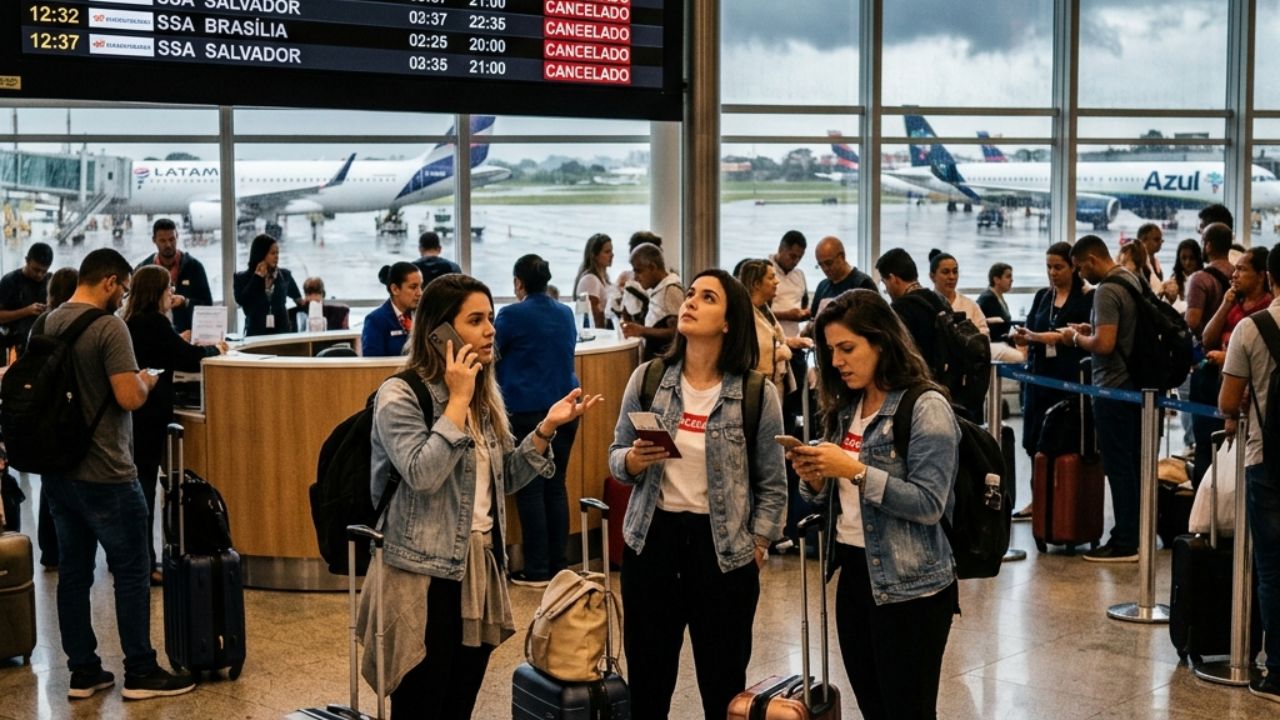
Image generated by AI
A Devastating Nationwide Operational Collapse
While the global passenger network frequently battles unpredictable weather events and localized terminal congestion, a massive, highly disruptive operational breakdown is currently paralyzing the entire Brazilian aviation system. Delivering highly urgent, breaking airline news, verified flight tracking data confirms that major airports across Brazil have succumbed to overwhelming terminal gridlock today, May 31, 2026. While desperate travelers attempt to navigate sudden airport disruptions, these exclusive aviation updates reveal that a staggering 120 flight delays and 16 massive flight cancellations have completely shattered the domestic and international schedules. By aggressively bottlenecking critical departures across São Paulo, Rio de Janeiro, Belo Horizonte, Campinas, and Salvador, this massive operational collapse has triggered uncontrollable travel chaos. Hundreds of passengers relying on LATAM Brasil, Azul Brazilian Airlines, and GOL are currently stranded, facing entirely ruined itineraries.
Expanded Overview: The Scale of the Brazilian Gridlock
The sudden execution of these mass delays serves as a massive, undeniable example of how rapidly an interconnected national aviation network can collapse. Historically, the transcontinental corridors linking São Paulo and Rio de Janeiro with regional economic hubs operate as the vital economic and tourism arteries of South America. However, the sheer scale of today's disruption has completely dismantled that reliability.
By aggressively failing to dispatch flights at the country's absolute busiest hubs, ground operations have violently cascaded into failure. This is not a localized technical fault affecting a single airport; the delays heavily impact both massive flag carriers and critical international operators simultaneously. The severe gridlock has trapped business executives, international tourists, and domestic commuters inside overcrowded departure halls, desperately competing for rapidly diminishing rebooking options while airline backlogs aggressively multiply.
Section-Wise Breakdown of the Airport Disruptions
São Paulo and Rio de Janeiro Gridlock
The absolute epicenter of this logistical nightmare is located squarely in Brazil's most populated urban centers. São Paulo-Guarulhos International Airport recorded the highest number of delays nationwide, buckling under the immense pressure of 55 delayed flights and one full cancellation. As Brazil's primary global gateway, the collapse at Guarulhos immediately triggered a catastrophic domino effect across the continent, severely impacting LATAM Brasil, GOL, and Ethiopian Airlines. Simultaneously, Rio de Janeiro/Galeão International Airport suffered 18 severe delays and one cancellation, heavily disrupting flights for Aerolineas Argentinas and Boliviana de Aviación alongside the major domestic carriers.
Severe Cancellations Hit Campinas and Salvador
While São Paulo absorbed the highest sheer volume of delays, other critical airports suffered devastating cancellation rates. Viracopos International Airport in Campinas became the absolute epicenter for grounded aircraft, recording the highest number of cancellations nationwide with 6 scrapped flights alongside 15 severe delays. This disruption primarily paralyzed operations for Azul and GOL.
Further north, Deputado Luís Eduardo Magalhães International Airport in Salvador experienced a massive operational halt, suffering 23 delays and 5 full cancellations. This severely impacted both domestic carriers and international visitors utilizing Sky Airline and Air France. Additionally, Tancredo Neves International Airport in Belo Horizonte was swept into the nationwide gridlock, reporting 9 delays and 3 cancellations that heavily impacted TAP Air Portugal and Azul.
Verified Brazilian Flight Disruption Metrics Tables
To fully comprehend the highly severe operational parameters and massive logistical breakdown dictating this network collapse, the following tables explicitly detail the exact delay and cancellation metrics for the affected airports and airlines:
Most Disrupted Airports Across Brazil
| Airport Location | Total Delays | Total Cancellations |
|---|---|---|
| São Paulo-Guarulhos | 55 | 1 |
| Salvador (Magalhães) | 23 | 5 |
| Rio de Janeiro/Galeão | 18 | 1 |
| Campinas (Viracopos) | 15 | 6 |
| Belo Horizonte (Tancredo Neves) | 9 | 3 |
Airlines Most Disrupted by Brazilian Gridlock
| Airline | Total Delays | Total Cancellations |
|---|---|---|
| LATAM Brasil | 39 | 3 |
| Azul Brazilian Airlines | 31 | 11 |
| GOL Linhas Aéreas Inteligentes | 29 | 0 |
(Note: Other heavily impacted international carriers include Ethiopian Airlines, Boliviana de Aviación, Air France, Sky Airline, TAP Air Portugal, and Aerolineas Argentinas.)
Passenger Impact: Stranded Across the Continent
For the modern commuter and international traveler, the passenger impact of these massive, coordinated delays is financially and emotionally devastating. Passengers traveling on Air France or TAP Air Portugal flights through Brazil encountered massive schedule adjustments and excruciating wait times. Those booked on Azul or LATAM Brasil immediately experienced the massive terror of sudden, full-route cancellations.
Instead of seamlessly executing cross-country or transborder itineraries, these passengers are forced to endure hours of severe uncertainty inside overcrowded terminals. Without timely communication, families and corporate groups face entirely ruined itineraries and the severe emotional exhaustion of attempting to rebook flights. Passengers are urgently advised to check flight status regularly, allow massive amounts of additional time when arriving at mega-hubs like São Paulo-Guarulhos, and aggressively secure flexible onward travel arrangements to mitigate the chaos.
Industry Analysis: The Fragility of the National Network
From a macroeconomic and industry operations perspective, this incident highlights a highly terrifying reality for South American aviation planners. Travel analysts fiercely argue that when a national system suffers 136 total disruptions simultaneously across its primary hubs, it exposes a fatal vulnerability in peak-season air traffic control, weather resilience, or ground handling infrastructure.
By severely crippling operations for the primary flag carriers (LATAM Brasil logged an astonishing 39 delays, while Azul suffered a devastating 11 cancellations), the Brazilian aviation sector has demonstrated how fragile modern airline schedules truly are. This massive capacity disruption forces airlines to recognize that a breakdown in São Paulo or Campinas instantly and violently ripples all the way to Salvador and Belo Horizonte, heavily impacting the country's reputation for reliable domestic and international connectivity.
Conclusion: A Highly Volatile Recovery Phase for Brazil
The sudden, highly publicized reporting of 120 delays and 16 cancellations across Brazil is exponentially more than a routine operational hiccup—it represents a massive, highly visible failure of the national network's daily integrity. By completely severing critical connections across the country, the disruption has proven how rapidly transcontinental travel can devolve into absolute chaos. As operations teams aggressively attempt to process the backlog of stranded aircraft and rebook hundreds of displaced passengers, travelers are urgently advised to constantly monitor their airline's official app for real-time flight status and keep all booking references readily accessible before heading to the airport.
Key Takeaways
- Massive Nationwide Gridlock: Major Brazilian airports suffered a staggering 120 flight delays and 16 full cancellations in a single operational window.
- São Paulo Hub Devastated: São Paulo-Guarulhos recorded the highest delay count nationwide, absorbing 55 severe delays and 1 cancellation.
- Azul Airlines Severely Impacted: Azul Brazilian Airlines recorded the highest cancellation total nationwide with 11 flight cancellations and 31 delays.
- Widespread Airline Disruptions: LATAM Brasil (39 delays), GOL (29 delays), Air France, and TAP Air Portugal all suffered severe schedule disruptions.
- Campinas Cancellations: Viracopos International Airport in Campinas suffered the highest cancellation volume with 6 scrapped flights.
Disclaimer: The specific flight delay counts, airline impacts, and cancellation metrics presented in this report are based on verified flight tracking data (FlightAware) regarding operations across Brazilian airports on May 31. Official causes for this massive operational breakdown, subsequent network recovery timelines, and passenger compensation procedures are highly volatile and subject to continuous, real-time update. Affected passengers are urgently advised to monitor their specific booking status directly via their airline's official portal and avoid traveling to the airport unless their departure is explicitly confirmed.
Disclaimer
This article is for informational and educational purposes only. It does not constitute legal, financial, or professional advice. While we strive to provide accurate and up-to-date information, travel policies, regulations, and conditions change rapidly. Always verify information with official sources before making travel decisions. Nomad Lawyer makes no representations about the accuracy, reliability, completeness, or suitability of the information provided. Readers should consult qualified professionals for advice specific to their circumstances. The views expressed in this article are those of the author and do not necessarily reflect the views of Nomad Lawyer.
Kunal K Choudhary
Co-Founder & Contributor
A passionate traveller and tech enthusiast. Kunal contributes to the vision and growth of Nomad Lawyer, bringing fresh perspectives and driving the community forward.
Learn more about our team →