
Bournville and Bruges Join Europe’s Heritage Circuit as Chocolate Tourism Turns Cocoa History Into Major Attractions
Bournville and Bruges Join Europe’s Heritage Circuit as Chocolate Tourism Turns Cocoa History Into Major Attractions

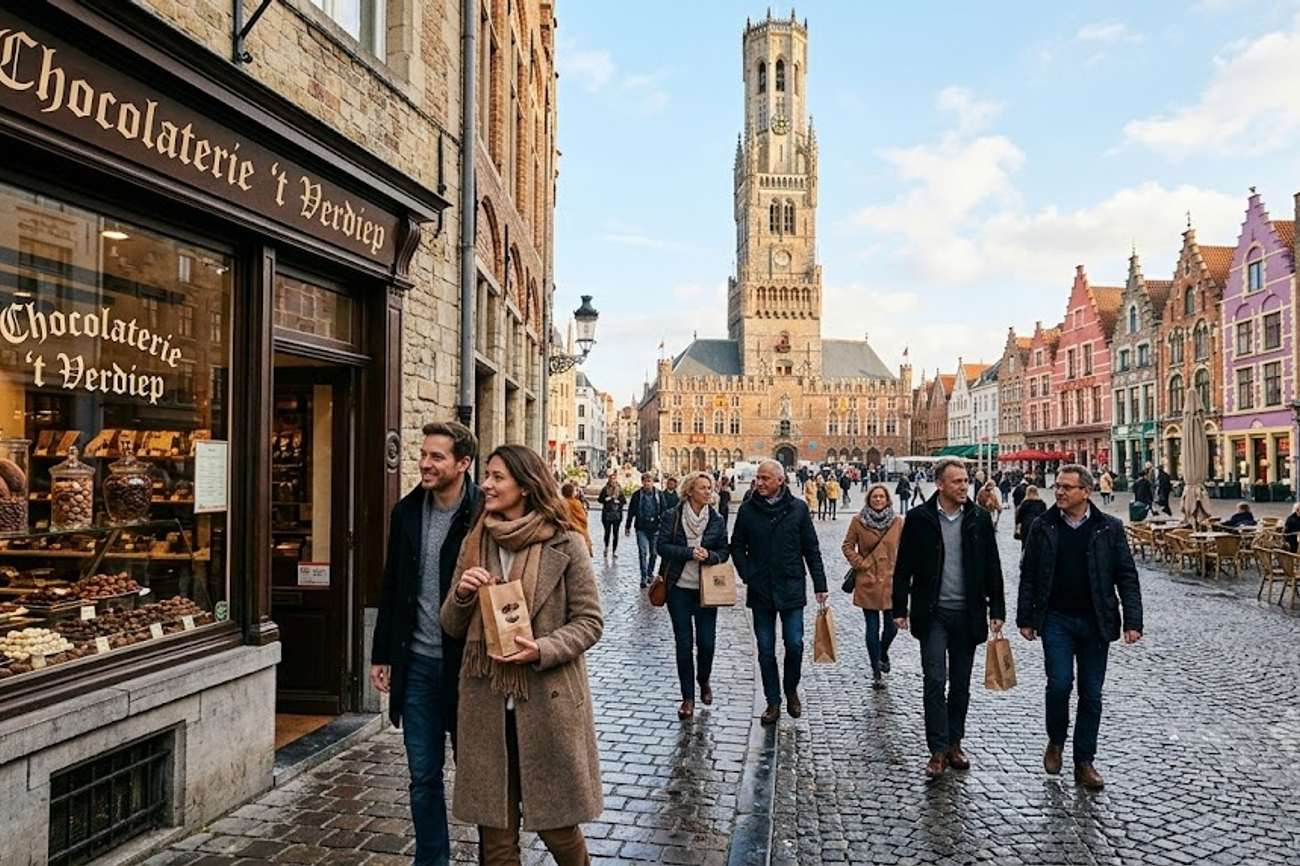
Image generated by AI
Visitor throughput at Cologne’s Chocolate Museum hit a record 716,000 in 2025, while Zurich’s Lindt Home of Chocolate recorded 752,053 visitors in 2023—data that signals a fundamental pivot in European tourism from passive product consumption to immersive industrial heritage. This shift is most evident in Bournville, Birmingham, where Cadbury World has transitioned from a factory tour into a multigenerational asset, drawing over 18 million visitors since its inception in 1990.
The Cocoa Economy in Numbers: From Tonnage to Tourism
The conversion of industrial production into tourist revenue is not an accident but a strategic response to changing consumer behavior. In Germany, the industrial scale provides a massive foundation for this trend. According to data from Destatis, German manufacturers produced nearly 1.07 million tonnes of cocoa-containing chocolate products in 2024, with a market value of approximately €6.75 billion. While production saw a 5.8% decline from 2023, the output remains 6.2% higher than 2019 levels.
This industrial strength translates directly into museum economics. The Cologne Chocolate Museum is no longer a niche site; it is now the most visited museum in Cologne and ranks among the top museums in all of Germany. When comparing this to the Lindt Home of Chocolate in Zurich, which hosted 752,053 people in 2023—including 1,500 guided tours and 400 school groups—a pattern emerges. Chocolate is being repositioned as a "primary driver" for city visits rather than a secondary activity.
In the UK, the Bournville model represents a different data set: the longevity of the "company town." By utilizing a site that began as a 14.5-acre plot at Bournbrook in 1879, Cadbury has leveraged its historical railway and canal connections to create a permanent tourism anchor. The 18 million visitors recorded between 1990 and February 2025 prove that industrial heritage, when integrated with social history, maintains a higher retention rate across generations than standalone retail experiences.
Comparative Heritage Models: Regional Benchmarks
The European chocolate circuit is not monolithic. Data shows three distinct operational models: the Integrated Village (UK), the Layered City (Belgium), and the Immersive Hub (Germany/Switzerland).
The Belgian model, seen in Bruges and Brussels, integrates cocoa into the existing urban fabric. In Bruges, the Choco-Story museum (with adult admission at €16) acts as a catalyst for the wider artisan retail sector. In Brussels, the strategy is focused on "dwell time." By offering four-hour walking tours combined with one-hour creative workshops, Brussels increases the average time a visitor spends in commercial zones. The Belgian Chocolate Village further optimizes this by repurposing the former Victoria chocolate and biscuit factory, blending production history with economic displays.
The following table compares the primary data points of these regional hubs:
| Destination | Primary Metric | Visitor Volume / Scale | Strategic Model |
|---|---|---|---|
| Bournville (UK) | Cumulative Reach | 18 Million+ (1990-2025) | Social/Industrial Village |
| Cologne (GER) | Annual Peak | 716,000 (2025) | Urban Museum Anchor |
| Zurich (SUI) | Annual Throughput | 752,053 (2023) | Immersive Competence Center |
| Brussels (BEL) | Experience Duration | 5-Hour Integrated Tours | Urban Gastronomic Trail |
This distribution indicates that while the UK focuses on the long-term legacy of a single brand, the DACH region (Germany, Austria, Switzerland) is scaling via high-volume, high-tech immersive centers. Belgium, meanwhile, is leveraging chocolate to increase the "per-capita spend" within its historic city centers. For a deeper look at how these shifts impact global tourism spending, the World Travel & Tourism Council (WTTC) provides comprehensive data on the rise of experiential travel.
What This Means for Travelers
The data suggests that "chocolate tourism" has moved from a simple tasting activity to a structured itinerary. For the modern traveler, this requires a shift in booking and planning strategies.
If you are planning a visit to Cologne or Zurich, the record-breaking attendance figures (716,000 and 752,053 respectively) indicate that these sites are prone to extreme crowding. Booking timed-entry tickets 3-4 weeks in advance is now a necessity to avoid queues. In Zurich, the high volume of school groups (400 classes in 2023) suggests that visiting during mid-week mornings will result in a lower quality of experience; late afternoon or weekend slots are preferable for individual travelers.
For those visiting Belgium, the data on "integrated tours" suggests that a fragmented approach—visiting one museum and then searching for shops—is less efficient than the curated walking tours. Travelers should prioritize the four-hour guided formats in Brussels to maximize their exposure to both the Belgian Chocolate Village and the artisan boutiques.
In Bournville, the shift toward the "Bournville Experience" and the official heritage trail means that a visit to Cadbury World alone is no longer the optimal way to see the site. Travelers should allocate at least an additional 2-3 hours to explore the village's planned environment to understand the social history that drove the 18 million visitors over the last three decades. To track current aviation capacity to these hubs, OAG provides real-time data on flight frequency to Birmingham, Brussels, and Zurich.
Forward Projection: The Shift Toward "Edutainment"
The trajectory of these destinations points toward a total convergence of education and entertainment, or "edutainment." The evolution of Cadbury World from a factory tour to a 4D attraction and the Lindt Home of Chocolate's multimedia approach show that static museums are obsolete.
We can expect a further increase in "participation metrics." Brussels is already leading this with workshops where visitors create pralines and mendiants. As the International Air Transport Association (IATA) reports a general increase in regional European travel, these specialized hubs will likely expand their "hands-on" offerings to capture a larger share of the high-spending "foodie" demographic.
The data from Germany is particularly telling. Even with a 5.8% dip in production, the tourism numbers are hitting records. This suggests that the "experience economy" is decoupled from the "production economy." The value is no longer in the chocolate itself, but in the narrative of the chocolate. Future developments will likely see more "factory-to-museum" conversions across Europe as traditional manufacturing seeks new revenue streams through tourism.
FAQ: Chocolate Tourism Trends 2025
Will admission prices for these attractions increase? Yes. With record-breaking attendance in Cologne and Zurich, demand is outpacing capacity. Expect dynamic pricing models similar to major theme parks to be implemented to manage crowd flow.
Is it better to visit a single museum or a city-wide trail? For depth of history, a single hub like Zurich or Bournville is superior. For culinary variety and urban exploration, the Brussels and Bruges "trail" models provide a more diverse experience.
Which destination is best for families with children? Bournville and Zurich are the strongest options. Cadbury World's 4D attraction and Lindt's immersive multimedia displays are specifically engineered for high-engagement, multigenerational visits.
Are these attractions seasonal? While cocoa production is year-round, visitor data shows peaks during Q4 (holiday season). Booking 8-10 weeks ahead for November and December is essential due to the high volume of seasonal tourists.
The transition from selling a product to selling a legacy has turned the European cocoa trail into a high-yield tourism corridor.
Tags: #EuropeanIndustrialHeritage #ChocolateTourismData #BournvilleVisitorTrends #CologneMuseumEconomics #ZurichLindtAnalytics #BelgiumGastronomicTourism
Related Travel Guides
- UAE Expands Travel And Residential Tourism Appeal As Rove Hotels And IRTH Group Launch New Homes
- Saudi Arabia’s Red Sea Luxury Tourism Surges As Nammos Resort AMAALA Opens With 110 Rooms, Villas And Exclusive Experiences
- Minor Hotels Signs Avani+ Hanoi: 310-Room Urban Lifestyle Hotel Opening in Vietnam in 2028
Disclaimer
This article is for informational and educational purposes only. It does not constitute legal, financial, or professional advice. While we strive to provide accurate and up-to-date information, travel policies, regulations, and conditions change rapidly. Always verify information with official sources before making travel decisions. Nomad Lawyer makes no representations about the accuracy, reliability, completeness, or suitability of the information provided. Readers should consult qualified professionals for advice specific to their circumstances. The views expressed in this article are those of the author and do not necessarily reflect the views of Nomad Lawyer.
Naina Thakur
Contributor & Travel Specialist
Travel enthusiast and legal writer covering visa regulations, responsible tourism, and cultural journeys across global destinations.
Learn more about our team →