
Bolivia Unveils Samkani Camp Bringing Luxury Stays To Uyuni Salt Flats In 2027
Bolivia Unveils Samkani Camp Bringing Luxury Stays To Uyuni Salt Flats In 2027
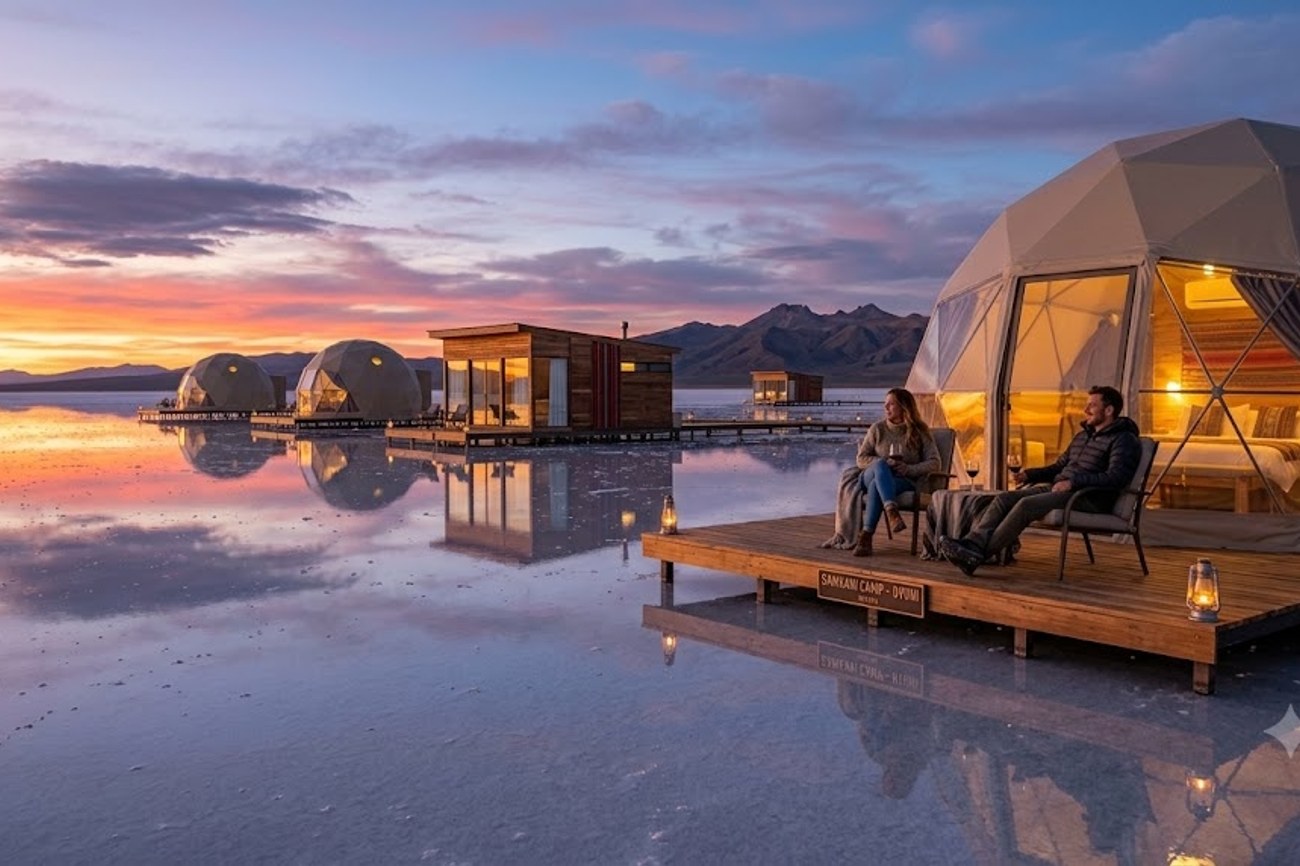
Image generated by AI
While Bolivia has traditionally been a stronghold for budget-conscious backpackers and rugged adventure seekers, the shift toward high-net-worth infrastructure is accelerating, as evidenced by the transition from basic salt hotels to the planned late-2027 launch of Samkani Camp. This move signals a pivot in the Andean tourism model, moving away from high-volume transit toward low-impact, ultra-high-margin exclusivity. By placing luxury Airstream suites directly on the Salar de Uyuni, A&K Sanctuary is betting on a growing global demand for "extreme isolation" combined with five-star amenities.
The Salar de Uyuni Pivot: Luxury by the Numbers
The development of Samkani Camp is not merely an addition of rooms but a strategic deployment of a specific architectural model designed for high-altitude volatility. The project focuses on a micro-scale footprint to maintain exclusivity and minimize environmental degradation on the 12,000 square kilometre salt flat.
The core data of the development reveals a strict adherence to intimacy over scale:
- Total Units: 6 Airstream structures.
- Guest Capacity: 5 dedicated guest suites.
- Common Infrastructure: 1 Airstream serving as the dining and lounge hub.
- Isolation Metric: Positioning approximately 20 to 30 kilometres away from any other human presence.
- Experience Depth: A catalog of over 30 curated activities, including volcanic cave exploration and hidden island visits.
- Timeline: Scheduled market entry for late 2027.
This operational model mirrors a trend seen in the luxury safari sectors of Sub-Saharan Africa, where the "mobile camp" philosophy is used to provide access to protected wilderness without the permanent ecological scarring of concrete resorts. By integrating blue Bolivian marble and chrome detailing into the Airstream interiors, the developer is targeting a demographic that seeks the "wilderness" aesthetic without sacrificing the tactile comforts of a luxury hotel.
Comparative Market Context: Bolivia vs. Regional Luxury Benchmarks
Historically, Bolivia has lagged behind neighbors like Peru and Chile in the luxury hospitality sector. According to data trends often tracked by STR, the Andean region has seen a fragmented recovery, with Peru leading in gastronomic luxury and Chile dominating in high-end wine and lodge tourism. Bolivia’s offering has remained largely centered on "salt hotels"—structures built from salt blocks—which, while novel, often lack the consistent luxury standards required by the ultra-high-net-worth (UHNW) traveler.
The introduction of Samkani Camp represents a shift from "novelty luxury" to "experiential luxury." The following table compares the traditional Salar de Uyuni experience with the projected Samkani model.
| Feature | Traditional Salt Hotel Model | Samkani Camp Model (2027) | Market Shift |
|---|---|---|---|
| Location | Perimeter of the Salar | Directly on the salt flat | Peripheral $\rightarrow$ Immersive |
| Scale | Mid-to-large capacity | 5 Guest Suites | Volume $\rightarrow$ Exclusivity |
| Mobility | Permanent structures | Low-impact Airstreams | Static $\rightarrow$ Adaptive |
| Privacy | Shared communal areas | 20-30km isolation buffer | Social $\rightarrow$ Solitary |
| Service | Standard tour packages | Private guide/driver + 30+ activities | Mass $\rightarrow$ Bespoke |
This transition is part of a broader global movement toward "silent travel." As indicated by reports from the World Tourism Organization (UNWTO), there is a rising preference for destinations that offer psychological detachment from urban centers. Samkani’s focus on astronomy and the "dreamer" (Samkani) philosophy aligns perfectly with this data point.
What This Means for Travelers
For the individual traveler, the arrival of Samkani Camp changes the logistics of visiting the Altiplano. Until now, the Salar de Uyuni was primarily a "day trip" or a "short overnight" destination where the accommodation was secondary to the landscape. Starting in late 2027, the accommodation becomes the primary attraction.
Actionable Booking Intelligence:
- Shift Your Booking Window: Because the capacity is limited to only five suites, the booking window for late 2027 will likely be extremely tight. Travelers should anticipate a 6-to-12 month lead time for these specific units.
- Seasonal Timing: The data on the Salar’s surface—transforming from geometric salt patterns in the dry season to a reflective mirror in the wet season—means that the "value" of the stay changes monthly. If your goal is the mirror effect, you must align your booking with the rainy season (typically December to March).
- Budget Allocation: Expect a significant price premium. The transition from standard salt hotels to A&K Sanctuary’s luxury collection moves the destination into a different price bracket. Travelers should budget for "all-inclusive" luxury packages rather than a-la-carte touring.
- Altitude Preparation: The camp is located in the Altiplano. Regardless of the luxury of the Airstream, the physiological data remains the same: altitude sickness is a risk. Travelers should plan for 2-3 days of acclimatization in Uyuni or La Paz before heading to the camp.
Projecting the Andean Luxury Trajectory
The Samkani project is a bellwether for how Bolivia will handle its most precious natural assets over the next decade. By choosing a low-impact, mobile Airstream model over a permanent hotel, the developer is acknowledging the fragility of the 12,000 square kilometre salt flat.
We can project that this will trigger a "luxury arms race" in the region. As the World Travel & Tourism Council (WTTC) notes, the demand for sustainable, high-end travel is growing. We should expect to see similar "pop-up" luxury concepts in other remote Bolivian regions, such as the Madidi National Park or the Torotoro National Park, following the Samkani blueprint.
Furthermore, the focus on "astronomy tourism" (stargazing) is a strategic move to extend the profitability of the destination. By marketing the night sky as a primary asset, the operator removes the dependency on daytime sightseeing, effectively increasing the "dwell time" of the guest and, consequently, the average spend per visit.
FAQ: Salar de Uyuni Luxury Trends 2027
Will the introduction of Samkani Camp increase general travel costs to the Salar? Not necessarily. The camp targets the ultra-luxury segment. Standard salt hotels and budget tours will continue to operate, but the "ceiling" for luxury pricing in the region will rise.
Is it better to visit the Salar in the dry or wet season? This depends on your data preference. For geometric patterns and easier land navigation, choose the dry season. For the world-famous mirror reflections, the wet season is essential.
Which carriers provide the best access for this luxury tier? Most luxury travelers will fly into La Paz (LPB) via major international hubs and then take domestic flights to Uyuni (UYU) or private charters to minimize transit time.
How does the Airstream model benefit the environment? Unlike concrete hotels, Airstreams are mobile and low-impact. They allow the operator to provide luxury without permanent land alteration, preserving the salt flat's geological integrity.
The era of the rugged Bolivian expedition is evolving into an era of curated isolation.
Tags: Salar de Uyuni 2027, A&K Sanctuary, Bolivia Luxury Tourism Growth, Altiplano Hospitality Trends, Low-Impact Travel Models
Related Travel Guides
- Jackson Hole Aligns Alaska and Park City Set for a High-Adrenaline US Winter Adventure Tourism Boom in December 2026
- Malaysia Travel 2026: Epic Road Trip Reveals Johor, Kuala Lumpur And Cameron Highlands Wonders
- Kentucky Extreme Sports and Outdoor Recreation Surge Drives Record 14.6 Billion Dollar Economic Impact Across State Parks and Waterways in 2026
Disclaimer
This article is for informational and educational purposes only. It does not constitute legal, financial, or professional advice. While we strive to provide accurate and up-to-date information, travel policies, regulations, and conditions change rapidly. Always verify information with official sources before making travel decisions. Nomad Lawyer makes no representations about the accuracy, reliability, completeness, or suitability of the information provided. Readers should consult qualified professionals for advice specific to their circumstances. The views expressed in this article are those of the author and do not necessarily reflect the views of Nomad Lawyer.
Naina Thakur
Contributor & Travel Specialist
Travel enthusiast and legal writer covering visa regulations, responsible tourism, and cultural journeys across global destinations.
Learn more about our team →