
Bolivia Expands Community Ecotourism from Torotoro Canyon to the Amazon

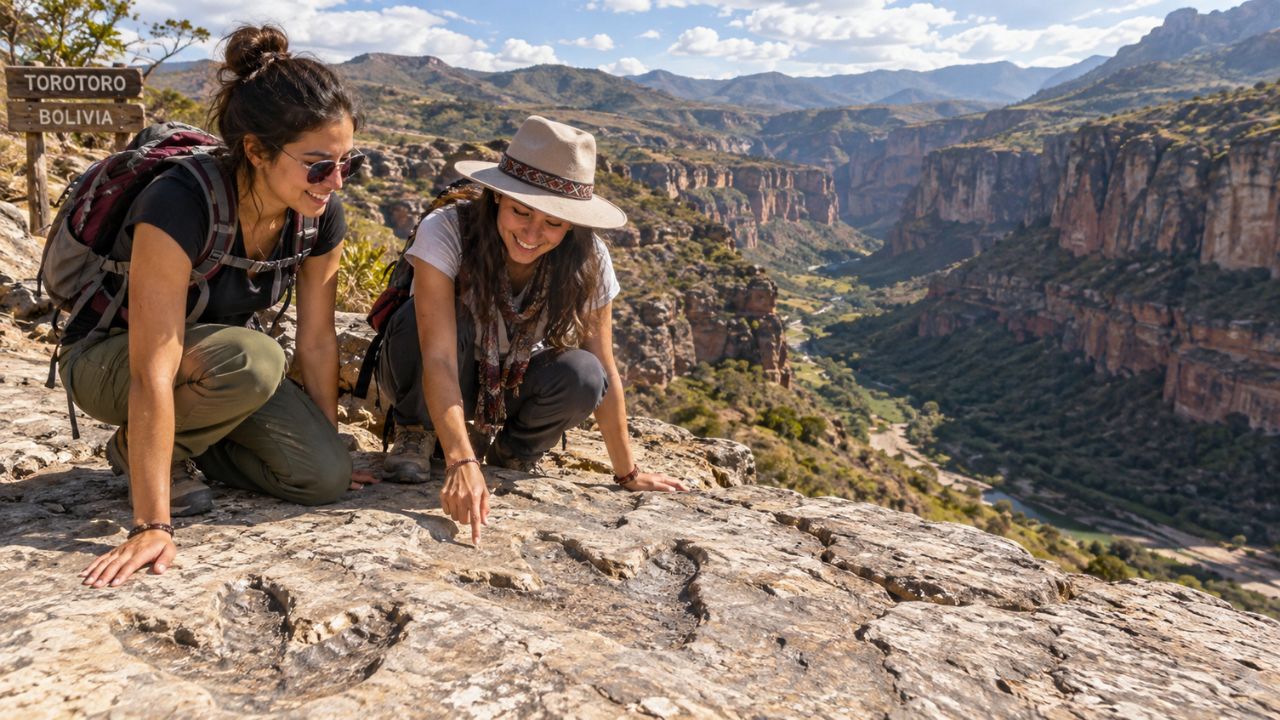
Venturing beyond the salt flats of Salar de Uyuni and Lake Titicaca, Bolivia is expanding its community-based nature tourism across northern Potosí's Torotoro National Park and the Amazon basin. Fusing Cretaceous dinosaur trackways, limestone cave networks, and deep river canyons with certified Quechua-led guiding, Torotoro establishes a sustainable adventure model that directly enriches rural highland and lowland communities.
For decades, international itineraries across Bolivia adhered strictly to an established high-altitude circuit: arriving in La Paz, taking boat crossings on Lake Titicaca, and embarking on 4x4 expeditions across the blinding white expanses of the Salar de Uyuni. In 2026, a structural shift is taking hold across the nation's travel sector. Backed by the National Service of Protected Areas (SERNAP), Bolivia is diversifying its tourism economy by actively developing secondary conservation corridors that unite paleontological wonder, adventure trekking, and indigenous community stewardship.
Tucked into the rugged valleys of northern Potosí Department, Torotoro National Park has emerged as the premier showcase for this model. Boasting thousands of authentic fossilized dinosaur footprints preserved in situ, towering karst formations, and subterranean river systems, Torotoro provides a multi-day adventure that connects travelers directly with local Quechua guides, transport associations, and family-operated guesthouses.
The Local Trend Revealed: A Palaeontological and Karst Wonderland
Torotoro's geological profile offers an outdoor experience radically different from Bolivia's windswept altiplano. Between 2,600 and 3,600 meters above sea level, the park contains an extraordinary concentration of Mesozoic trackways left by theropods, sauropods, and ankylosaurs over 65 million years ago. Unlike conventional museum exhibits, visitors walk alongside these exposed, fossilized footprints embedded directly into limestone riverbeds and rocky plateaus.
The park's diverse network of natural features includes four primary exploration sectors:
- Ciudad de Itas: A surreal stone labyrinth perched at roughly 3,800 meters, where wind and water erosion have sculpted massive sandstone and limestone formations into cavernous chambers and rock bridges used anciently by indigenous cultures.
- Torotoro River Canyon and El Vergel: A breathtaking limestone gorge plummeting over 300 meters. A scenic hiking route descends stone staircases into the canyon floor, leading to El Vergel—a lush oasis of subterranean waterfalls and natural swimming basins fed by mountain springs.
- Umajalanta Cave: Bolivia's deepest and most extensive limestone cave system. Guided speleological expeditions take visitors through vast subterranean vaults, stalactite galleries, and underground rivers inhabited by blind endemic cave fish (Trichomycterus chaberti).
- Extensive Dinosaur Trackways: Easily accessible on foot from Torotoro village, thousands of fossilized footprints line Carreras Pampa and surrounding limestone terraces, interpreted in real time by community guides.
| Attraction Sector | Primary Geological & Heritage Features | Visitor Experience & Accessibility |
|---|---|---|
| Carreras Pampa Trackways | Thousands of theropod & sauropod footprints | Guided walking circuit; visible fossilized trackways in situ |
| Ciudad de Itas | Weathered limestone labyrinth & rock art | Moderate high-altitude trek with panoramic valley vistas |
| Torotoro Canyon & El Vergel | 300m vertical canyon walls & natural spring pools | Steep descent via stone steps to waterfalls and lush canyon floor |
| Umajalanta Cave | Extensive karst caverns & subterranean streams | Spelunking adventure with helmets, headlamps, and ropes |
| Madidi Amazon Corridors | Pristine tropical rainforest & river networks | Lowland wildlife observation, community ecolodges, and canoe transit |
Cultural & Environmental Value: Community Stewardship from the Andes to the Amazon
The foundational strength of Torotoro lies in its community-first operating structure. Every visitor entering the park must register at the central SERNAP office in Torotoro town and hire a licensed member of the local Torotoro Guides Association. This mandatory guiding system ensures that adventure tourism directly funds rural households in northern Potosí and Cochabamba departments rather than flowing out to overseas operators.
Local guides—many of whom are bilingual Quechua speakers whose families farmed these valleys for generations—act as primary conservators. They manage trail maintenance, enforce strict no-touch protocols across delicate fossil tracks, and ensure that subterranean cave passages remain unblemished.
This model mirrors successful indigenous conservation efforts in Bolivia's lowland protected areas, notably Madidi National Park. In the Bolivian Amazon, community-owned enterprises like the world-renowned Chalalán Ecolodge—operated by the indigenous Uchupiamona people—have proven that ecotourism generates higher, more sustainable economic returns than logging, ranching, or gold mining. By linking Torotoro's highland karst routes with Madidi's lowland rainforest and river excursions, Bolivia establishes a comprehensive conservation corridor that encourages travelers to spend two to three weeks exploring diverse ecosystems while distributing revenue across small-scale communities.
Visitor Insider Tips: Practical Guide to Exploring Torotoro
Planning a multi-day journey to Torotoro requires specific logistical preparation due to its remote Andean setting:
- Gateway and Transit via Cochabamba: Although administratively located in Potosí Department, Torotoro is geographically accessed from the valley city of Cochabamba. Take a shared minivan (surubí) from the corner of Avenida República and Valle Grande in Cochabamba. The 135-kilometer journey takes roughly 4 to 5 hours across scenic paved and cobblestone mountain roads.
- Acclimatization Advantage: Sitting around 2,700 meters in the town center, Torotoro is significantly lower in elevation than La Paz (3,640m) or Salar de Uyuni (3,650m). Use Torotoro as an ideal acclimatization stop to adjust to Andean altitude before heading to the higher altiplano.
- Umajalanta Cave Gear Essentials: When tackling Umajalanta Cave, wear quick-drying pants, long sleeves, and rugged hiking boots with aggressive tread; limestone surfaces inside the cave are slippery and wet. Helmets and basic headlamps are provided by guides, but bringing your own 300+ lumen waterproof headlamp enhances your view of distant ceiling formations.
- Cash and Park Entry Logistics: ATMs do not exist in Torotoro village. Withdraw ample Bolivian Bolivianos (BOB) in Cochabamba before departing to cover park entry fees (valid for 4 days), mandatory local guide fees (which can be split among groups of up to 6 people), transport to trailheads, and rustic guesthouse accommodation.
- Savor Valley Culinary Specialties: Taste traditional regional dishes at family-run eateries around the main plaza. Try chicharrón de cerdo (crispy fried pork served with hominy corn and potatoes), sopa de maní (savory peanut soup with beef and vegetables), and refreshing mocochinchi (cinnamon-spiced dehydrated peach nectar).
Tourism Outlook: Broadening Bolivia's Nature Portfolio
The rise of Torotoro National Park and community-operated Amazonian corridors signals a vital maturation for Bolivian tourism. By demonstrating that travelers eagerly seek authentic palaeontology, challenging canyon hikes, and subterranean caves, Torotoro proves that rural communities can successfully steward their natural heritage without compromising ecological integrity.
As SERNAP continues to collaborate with municipal authorities and indigenous confederations, geographic dispersion will become the cornerstone of Bolivia's visitor strategy. By packaging dinosaur fossil routes with cloud forests and Amazonian waterways, the nation is positioning itself as one of South America's most dynamic, community-empowered ecotourism frontiers.
Related Travel Guides
Disclaimer
This article is for informational and educational purposes only. It does not constitute legal, financial, or professional advice. While we strive to provide accurate and up-to-date information, travel policies, regulations, and conditions change rapidly. Always verify information with official sources before making travel decisions. Nomad Lawyer makes no representations about the accuracy, reliability, completeness, or suitability of the information provided. Readers should consult qualified professionals for advice specific to their circumstances. The views expressed in this article are those of the author and do not necessarily reflect the views of Nomad Lawyer.
Raushan Kumar
Founder & Lead Developer
Full-stack developer with 11+ years of experience and a passionate traveller. Raushan built Nomad Lawyer from the ground up with a vision to create the best travel and law experience on the web.
Learn more about our team →