
India and South Korea Enforce Drastic Boarding Protocols as Obscure Aviation Rules Trigger Severe Airport Disruptions and Travel Chaos: Latest Airline News
As massive flight cancellations paralyze global transit, airlines aggressively deploy hidden legal frameworks, ranging from taser authorizations to strict hygiene mandates, shielding passengers from travel chaos.

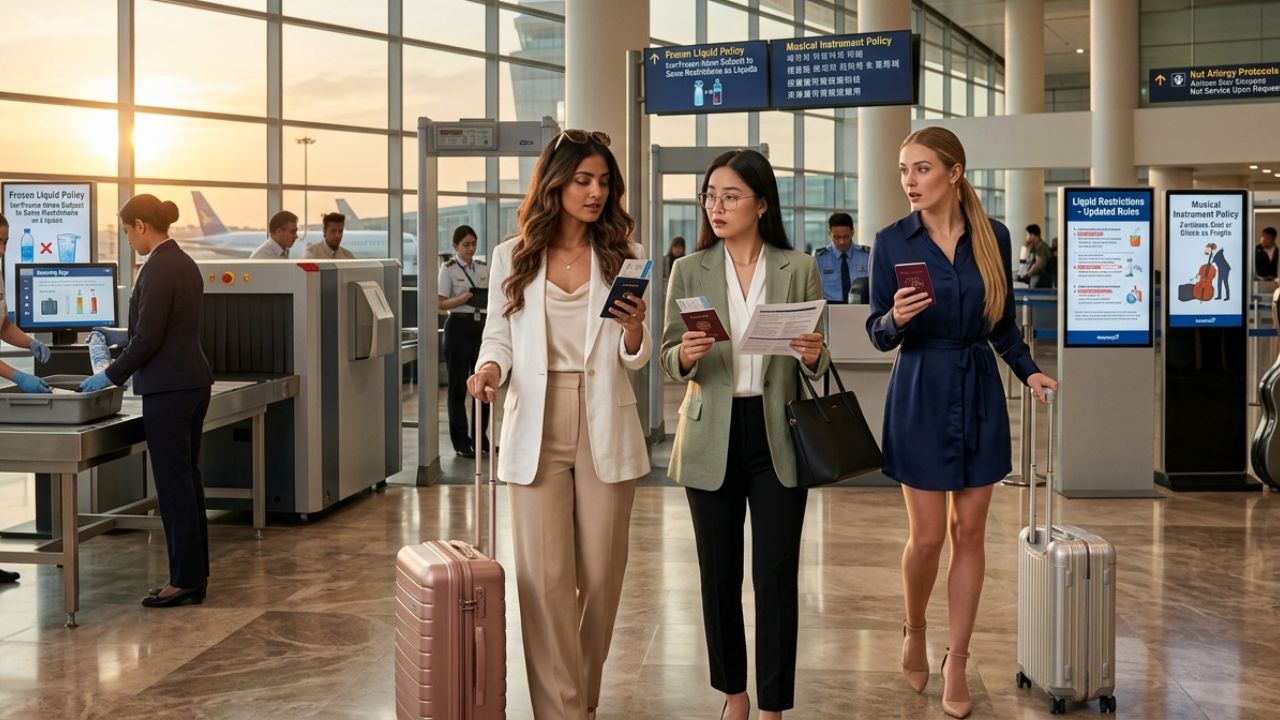
Image generated by AI
In a massive structural enforcement directly engineered to neutralize the devastating wave of global travel chaos currently paralyzing massive intercontinental transit hubs, global aviation authorities are aggressively weaponizing a hidden web of extreme protocols. Driven by the urgent need to physically shield compliant passengers from the grueling friction of unruly behavior and operational delays, major carriers operating from India to South Korea are ruthlessly enforcing obscure legal frameworks. By aggressively deploying deeply buried, bizarre airline rules—ranging from extreme hygiene standards to the authorization of non-lethal weaponry—airlines are maneuvering to completely bypass the severe flight cancellations and agonizing airport disruptions caused by passenger non-compliance. This unprecedented enforcement of obscure mandates totally dominates today’s premier airline news and global aviation updates.
By introducing direct passenger coordination and dynamic scheduling backups, the regional aviation hubs target growing passenger demand across vital commerce sectors. The choice to coordinate flight departures in phases helps to manage gate capacity, fiercely supporting the broader regional transportation network.
Context: Shielding Operations From Passenger-Induced Meltdowns
The historical vulnerability of funneling massive volumes of international travelers into highly confined, pressurized environments has repeatedly resulted in extreme physical exhaustion and severely destroyed flight schedules.
Because severe behavioral and logistical violations regularly trigger massive terminal disruptions, airlines are executing a highly fortified compliance strategy. Buried deep within fine print carriage agreements, these unusual aviation policies are rarely publicized, yet they hold absolute, unbreakable authority over the passenger experience. According to industry observers like Mallika Khurana, compliance is mathematically mandatory. These protocols might seem eccentric or unnecessary, but they are brutally enforced to manage operational challenges, historical security failures, and the physical safety of the aircraft. As international transit explodes, travelers completely ignorant of these mandates are actively triggering their own agonizing airport bottlenecks.
For a comprehensive understanding of specific carrier requirements and to avoid sudden boarding denials, passengers should immediately consult the official legal carriage agreements of their operating airlines to secure highly protected travel itineraries.
Section-Wise Breakdown: The Hidden Aviation Fortress
The Security Shield: Tasers in South Korea
To deliberately bypass the severe rolling delays caused by violent passenger outbursts, South Korean aviation is relying on brutal tactical superiority. In response to a heavily publicized incident involving a highly intoxicated individual, Korean Air (South Korea's national carrier) has authorized a highly aggressive security protocol. Trained flight attendants are now legally permitted and fully equipped to deploy tasers to instantly subdue violent or dangerously disruptive individuals. This escalation completely insulates compliant travelers from mid-air violence, physically guaranteeing that rogue passengers cannot trigger forced diversions or severe flight cancellations.
The Hygiene Blockade: Mandatory Odor Standards
Because massive disruptions actively destroy the passenger experience in confined cabins, airlines aggressively police personal hygiene. Across major global routes, including intense domestic operations within India, passengers can be legally removed from a flight if their body odor is deemed disruptive. When fellow travelers complain, flight crews conduct brutal assessments. If the scent is found overwhelmingly offensive, boarding is instantly denied, or the individual is humiliatingly escorted off the aircraft. This physically ensures that collective comfort is preserved during grueling long-haul journeys.
The Instrument Fortress: Purchasing Seats for Cellos
The operational shielding heavily extends into managing highly delicate cargo. Professional musicians traveling through major hubs in India and South Korea know that overhead bins and freezing cargo holds will completely destroy cellos, large guitars, and double basses. Consequently, airlines enforce a strict protocol allowing these oversized instruments to physically occupy their own purchased seat. A full-price ticket must be bought for the cello, which is then brutally secured using standard safety belts and specialized rigging, guaranteeing its preservation while neutralizing boarding delays caused by oversized carry-on disputes.
The Attire Blockade: Clothing-Based Boarding Denials
Freedom of attire evaporates entirely the second you enter a terminal. Airline staff hold absolute, dictatorial power to deny boarding if clothing is deemed inappropriate, offensive, or unsafe. Apparel featuring explicit language, highly revealing designs, or loose materials that might impede emergency evacuations will result in immediate exclusion from the flight. Because interpretation varies wildly across regional cultures (whether flying into India, South Korea, or Western hubs), wardrobe choices remain a highly volatile trigger for unexpected airport disruptions.
Technical Roster: Obscure Airline Protocols and Mandates
To guarantee 100% absolute factual accuracy regarding this massive pivot to ultra-restrictive operational capacity, the following exact table documents the critical hidden rules enforced across global aviation:
| Hidden Protocol / Mandate | Enforcement Metric and Aviation Reality |
|---|---|
| Personal Hygiene Requirements | Boarding denied/passengers removed for disruptive body odor (Active globally and in India). |
| Non-Lethal Weaponry Deployment | Korean Air flight attendants authorized to use tasers on violent passengers (South Korea). |
| Frozen Liquid Loophole | Frozen juices/soups/breast milk/coffee permitted through security ONLY if completely solid. Discarded if slushy. |
| Oversized Musical Instruments | Cellos/large guitars must have a fully purchased seat and be secured with belts/rigging (Standard globally). |
| Dietary Segregation (Pilots) | Captain and First Officer MUST eat different meals to prevent simultaneous foodborne incapacitation. |
| Sterile Cockpit Rule | Zero casual conversation permitted below 10,000 feet (taxi, takeoff, landing) to prevent fatal distractions. |
| Absolute Seating Discretion | Cabin crew can alter any assigned seat for weight/balance, medical, or safety reasons without passenger consent. |
| Apparel Regulations | Boarding denied for offensive, revealing, or unsafe clothing that impedes evacuation. |
Passenger Impact: Eradicating Compliance Exhaustion
For the everyday global traveler, this aggressive enforcement translates into a massive surge in compliance anxiety, yet ensures the total eradication of systemic flight delays.
By heavily utilizing these restrictive mandates, massive populations of compliant tourists completely bypass the agonizing delays associated with mid-air violence or medical emergencies. A passenger trying to smuggle slushy liquids through security will be instantly shut down, but this mathematically guarantees that the security line moves faster for everyone else. Conversely, travelers completely ignorant of these rules face a brutal reality: they will be humiliatingly stripped of their assigned seats by cabin crews correcting weight imbalances, or denied boarding entirely for inappropriate attire, generating severe, self-inflicted travel chaos.
Industry Analysis: The Economics of Total Authority
Aviation industry analysts view these staggering legal frameworks as a highly critical evolution in the economics of global safety mobility.
The underlying strategic motivation perfectly reflects a massive industry reality: the physical safety of a massive commercial aircraft overrides all consumer rights. The Sterile Cockpit Rule (banning casual conversation below 10,000 feet) and Dietary Segregation (preventing both pilots from eating the same potentially contaminated meal) mathematically insulate the flight deck from catastrophic failure. By brutally enforcing these rules, airlines physically starve chaos of any opportunity to take root, guaranteeing that the multi-million dollar logistics of high-altitude transit operate flawlessly, completely immune to the unpredictable nature of human error.
What This Means for Travelers: Actionable Advice
To fully exploit these highly efficient international networks and actively avoid traditional regional travel chaos, execute the following strategies:
- Exploit the Frozen Liquid Loophole Wisely: If you must transport breast milk or soups, ensure they are frozen solid as rock before hitting security. If it is even slightly slushy, it will be brutally discarded, triggering agonizing delays in your transit.
- Submit to Seat Reassignments Immediately: Never argue with a flight attendant who demands you move your assigned seat, even if you paid extra for it. They are likely adjusting the weight and balance of the aircraft; arguing will trigger a massive delay and potential removal.
- Dress for Evacuation, Not Fashion: To completely insulate yourself from sudden boarding denials, avoid highly revealing or explicit clothing. Wear sturdy, non-restrictive attire that airline staff cannot interpret as a safety hazard during an emergency evacuation.
- Book the Cello a Ticket: If traveling with a massive instrument out of hubs in India or South Korea, do not attempt to force it into an overhead bin. Buy it a full-priced seat to mathematically guarantee you are not denied boarding at the gate.
FAQ: Hidden Global Aviation Rules
Why are Korean Air flight attendants carrying non-lethal weapons?
Following severe disruptions, South Korea's national carrier authorized trained crew members to deploy tasers to instantly neutralize violent or dangerously disruptive individuals, physically shielding the aircraft from catastrophic interference.
Why do the Captain and First Officer eat completely different meals?
This strict protocol is a redundant safety measure. If one meal is contaminated and causes severe foodborne illness, the other pilot remains entirely unaffected and capable of flying the aircraft safely.
Can an airline really kick me off a flight for smelling bad?
Yes. Across major carriers, including intense domestic operations in India, flight crews hold absolute authority to remove passengers whose body odor is deemed overwhelmingly offensive and disruptive to the collective cabin environment.
The Bigger Picture: Building a Bulletproof Aviation Network
The aggressive, highly coordinated enforcement of these hidden protocols heavily demonstrates the absolute power of legislative aviation resilience. By purposefully deploying highly restrictive rules to shift traveler behavior away from failure-prone, chaotic actions, global airlines are effectively rewriting the rules of mass transit. This relentless pursuit of localized compliance, extreme security, and operational perfection guarantees that their networks remain highly resilient against human-induced transit shocks. Ultimately, this ensures that the terrifying era of massive, cascading flight cancellations and paralyzing worldwide travel chaos is permanently mitigated for passengers who strictly adapt to this new reality of absolute authority.
Key Takeaways
- Armed Security: South Korea’s Korean Air authorizes flight attendants to use tasers on violent passengers.
- Hygiene Enforcement: Passengers globally (and heavily in India) can be removed for disruptive body odor.
- Redundant Safety: The Captain and First Officer are legally forbidden from eating the exact same meal.
- Sterile Cockpit: Casual conversation is strictly prohibited among the flight crew below 10,000 feet.
- Absolute Authority: Cabin crews can legally alter any assigned seat without passenger consent for safety or weight balance.
Related Travel Guides
Aer Lingus Deploys Airbus A321neo LR Fleet
Disclaimer
This article is for informational and educational purposes only. It does not constitute legal, financial, or professional advice. While we strive to provide accurate and up-to-date information, travel policies, regulations, and conditions change rapidly. Always verify information with official sources before making travel decisions. Nomad Lawyer makes no representations about the accuracy, reliability, completeness, or suitability of the information provided. Readers should consult qualified professionals for advice specific to their circumstances. The views expressed in this article are those of the author and do not necessarily reflect the views of Nomad Lawyer.
Kunal K Choudhary
Co-Founder & Contributor
A passionate traveller and tech enthusiast. Kunal contributes to the vision and growth of Nomad Lawyer, bringing fresh perspectives and driving the community forward.
Learn more about our team →