
Birmingham to Manchester Airport Direct Rail Link to Launch in 2027 Connecting 17 Stations
A new direct rail connection between Birmingham New Street and Manchester Airport launching in 2027 will eliminate transfers for West Midlands travelers, linking 17 regional stations to a hub serving 32 million annual passengers.

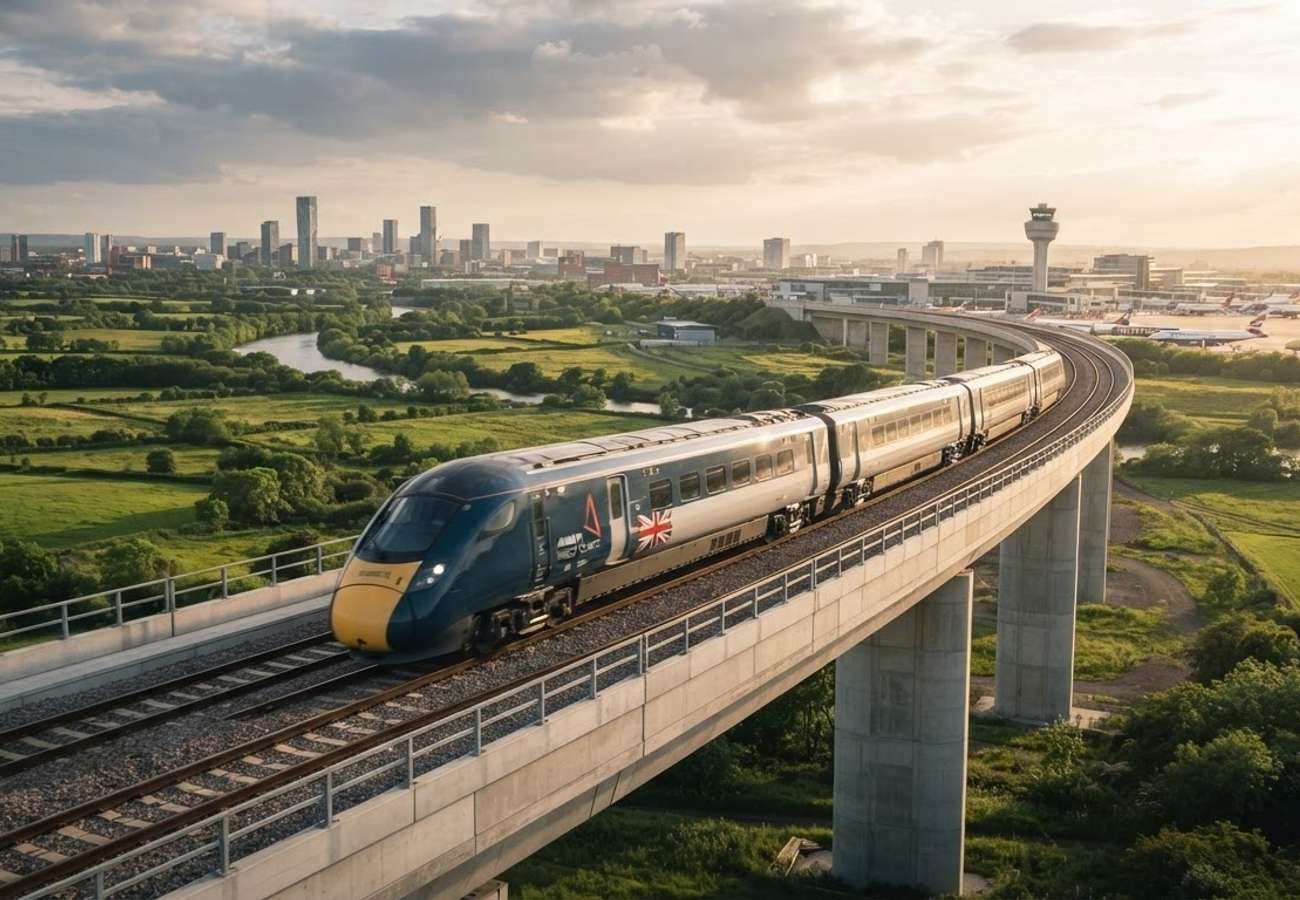
Image generated by AI
32 million annual passengers currently flow through Manchester Airport, making it one of the United Kingdom's most critical aviation gateways. To alleviate the logistical friction for travelers in the West Midlands and Staffordshire, a new direct rail link connecting Birmingham New Street to this international hub is set to commence operations in 2027. This strategic infrastructure expansion aims to remove the systemic inefficiency of multiple train changes, providing a streamlined corridor for both corporate commuters and leisure travelers.
Phased Implementation of the West Midlands Corridor
The rollout of this service is not instantaneous but follows a tiered integration strategy. The initial phase begins with the December timetable update, which will see the existing rail connection serving Crewe, Stoke, and Stafford extended to reach Birmingham New Street. This serves as a transitional step before the full-scale operation begins.
The comprehensive Birmingham to Manchester Airport direct service is scheduled for a full launch in May 2027. Once fully operational, the route will transition to an hourly frequency, significantly increasing the capacity and reliability of transit between these two economic powerhouses.
Route Logistics and Regional Integration
The new service is designed as a regional artery rather than a high-speed express, stopping at 17 distinct stations. This approach ensures that the benefits of airport access are distributed across the Black Country and Staffordshire, rather than being reserved solely for city-center passengers.
The transit map for the new route includes the following sequence of stops:
- Birmingham New Street
- Tame Bridge Parkway
- Darlaston
- Willenhall
- Wolverhampton
- Stafford
- Stone
- Stoke-on-Trent
- Longport
- Kidsgrove
- Alsager
- Crewe
- Sandbach
- Holmes Chapel
- Wilmslow
- Styal
- Manchester Airport
The total transit time for the full journey is estimated at approximately two and a half hours. While this duration is longer than a private vehicle trip in ideal conditions, the elimination of transfers and the removal of airport parking logistics provide a compelling value proposition for the modern traveler.
Expert Analysis: The Logistics of Hub Connectivity
From a logistical standpoint, this rail link addresses a long-standing gap in the International Air Transport Association (IATA) recognized need for "seamless intermodality"—the ability for a passenger to move from a residential or business district to an aircraft with minimal friction.
For travelers booking flights out of Manchester, the direct consequence is a drastic reduction in "transfer anxiety." The current necessity to navigate multiple platforms with heavy luggage is a significant deterrent for high-value business travelers and families. By implementing an hourly service that operates until 10pm, the rail operator is effectively expanding the "catchment area" of Manchester Airport.
The pricing pressure this creates is interesting: as rail becomes more convenient, the demand for expensive airport parking and private hire vehicles may soften. However, the real win is in the Sunday service upgrade. Moving from a two-hourly to an hourly timetable on Sundays acknowledges the shift in travel patterns where "weekend getaways" have become a primary driver of short-haul aviation.
Furthermore, this route integrates the West Midlands more tightly with the Manchester Airport ecosystem, which currently hosts over 50 airlines serving more than 200 global destinations. By linking 17 regional stations to this network, the UK is essentially decentralizing airport access, allowing residents of smaller towns like Sandbach or Alsager to access global flight networks without first commuting into a major city center.
Key Takeaways
- Launch Timeline: Phased extension begins in December; full hourly direct service launches in May 2027.
- Network Reach: 17 stations are included in the route, connecting Birmingham New Street directly to the airport.
- Operational Capacity: Trains will run hourly, including Sundays, with service extending until approximately 10pm.
- Airport Scale: The route services a hub that handles 32 million passengers annually across 200+ destinations.
- Transit Time: The end-to-end journey is projected to take roughly 2.5 hours.
FAQ: Birmingham-Manchester Rail 2027
When does the direct train from Birmingham to Manchester Airport start? The service is introduced in phases. An extension to Birmingham New Street begins in the December timetable update, with the full hourly direct service launching in May 2027.
How many stops are there on the new route? The route consists of 17 stations, including key stops at Wolverhampton, Stafford, Stoke-on-Trent, and Crewe, before terminating at Manchester Airport.
How long is the journey from Birmingham New Street to the airport? The total travel time for the direct service is expected to be approximately two and a half hours.
Will there be Sunday services on this route? Yes. The new schedule upgrades Sunday service from the current two-hourly frequency to an hourly service to provide better flexibility for travelers.
The shift toward direct rail-to-runway connectivity marks a pivotal move in reducing the UK's reliance on airport road congestion.
Related Travel Guides
Disclaimer
This article is for informational and educational purposes only. It does not constitute legal, financial, or professional advice. While we strive to provide accurate and up-to-date information, travel policies, regulations, and conditions change rapidly. Always verify information with official sources before making travel decisions. Nomad Lawyer makes no representations about the accuracy, reliability, completeness, or suitability of the information provided. Readers should consult qualified professionals for advice specific to their circumstances. The views expressed in this article are those of the author and do not necessarily reflect the views of Nomad Lawyer.
Raushan Kumar
Founder & Lead Developer
Full-stack developer with 11+ years of experience and a passionate traveller. Raushan built Nomad Lawyer from the ground up with a vision to create the best travel and law experience on the web.
Learn more about our team →