
Beyond Machu Picchu: South Andes Travel’s Powerful Push to Turn Peru Tourism Into an Immersive Community Experience
Beyond Machu Picchu: South Andes Travel’s Powerful Push to Turn Peru Tourism Into an Immersive Community Experience

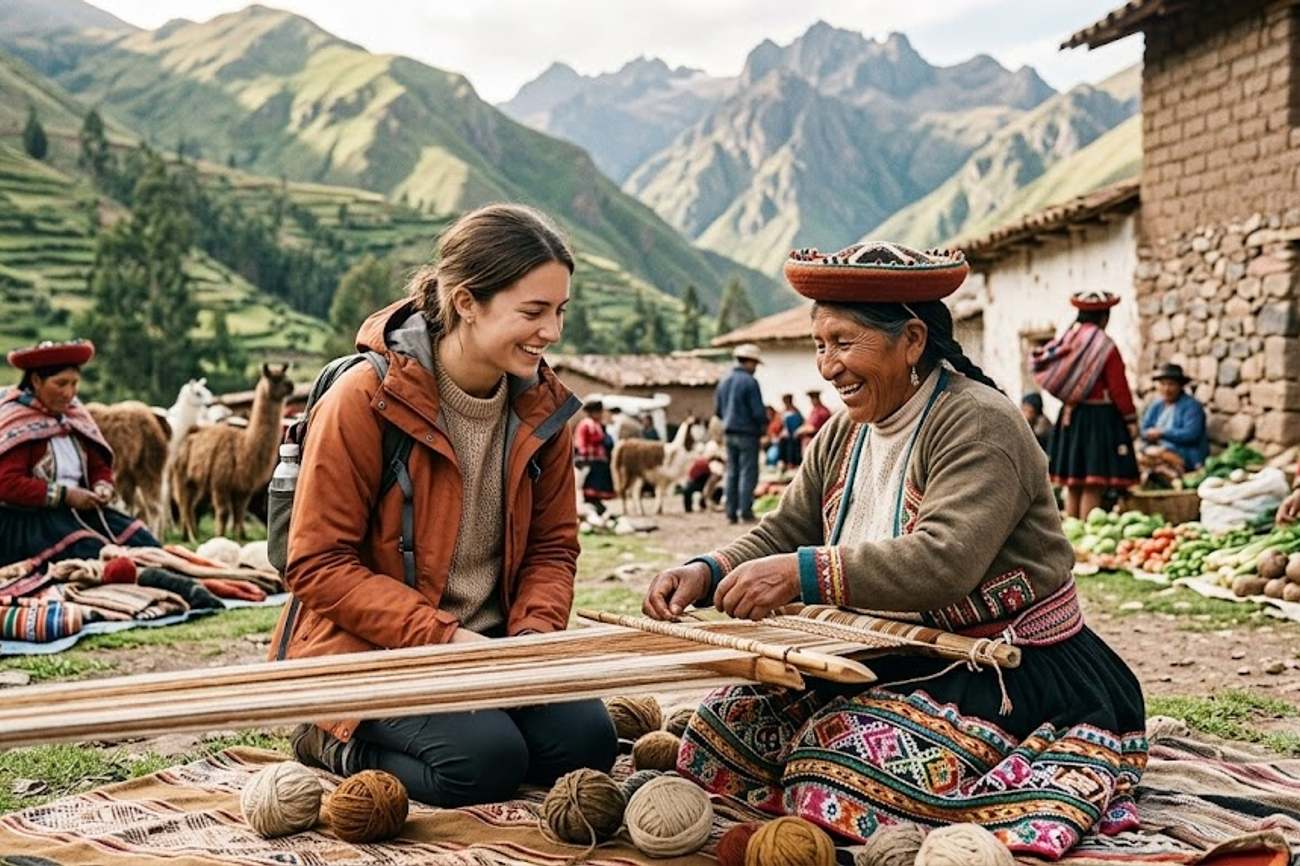
Image generated by AI
A traveler arriving in Cusco with a standard Machu Picchu itinerary finds themselves staring at a checklist of monuments, feeling a disconnect between the postcard images and the living culture of the Andes. This is where the shift toward community-based tourism transforms a trip from a sightseeing exercise into a personal exchange.
The Shift Toward Community-Centric Tourism in Cusco
The traditional tourism model in Peru has long been dominated by a linear path: arrive in Cusco, visit the Sacred Valley, and culminate the trip at the ruins of Machu Picchu. However, a structural shift is occurring in how visitors engage with the region. South Andes Travel, a Cusco-based operator, is actively pivoting away from this conventional sightseeing approach to prioritize immersive, relationship-driven experiences.
The company was established nine years ago, though its co-founder, Matthew, has been embedded in the Peruvian tourism sector since 2006. This nearly two-decade tenure has allowed the operator to move beyond the "tourist bubble." Instead of utilizing third-party contractors, the business relies on deep-rooted connections with village elders and local families. This model ensures that the economic benefits of tourism reach the communities directly, while visitors gain access to authentic daily life that remains invisible to those on standard bus tours.
This evolution reflects a broader trend in global travel where "slow tourism" replaces the "checklist" mentality. By integrating community visits into the itinerary, the operator allows travelers to understand the ancestral roots of the land before they encounter the architectural remnants of the Inca Empire.
Immersive Community Programming and Local Integration
The core of this new approach lies in the transition from passive observation to active participation. Rather than simply photographing a textile market, passengers are integrated into the production process. The current programming focuses on several key pillars of Andean life:
- Textile Arts: Hands-on workshops focusing on traditional weaving techniques and natural dyeing processes.
- Ceramics and Pottery: Learning the ancestral methods of clay work and pottery making.
- Agricultural Exchange: Direct engagement with farming practices in the high Andes, offering insight into food security and traditional crop management.
- Residential Integration: Homestays with local families, which remove the barrier between the visitor and the resident.
These activities are specifically designed for travelers who find conventional tours superficial. There is also a targeted educational component for families traveling with children, allowing younger generations to learn traditional skills through direct mentorship from community members. This pedagogical approach transforms the trip into a living classroom, focusing on the human element of the destination rather than just the geography.
The Sacred Valley: A Strategic Cultural Hub
While community tourism is expanding across various Peruvian regions, the Sacred Valley remains the primary operational hub for these immersive experiences. Its geographical position between the city of Cusco and the sanctuary of Machu Picchu makes it a logical insertion point for travelers.
The Sacred Valley serves as a natural extension of the Machu Picchu visit. Travelers can now structure their journey to include community engagement either as a preamble to the ruins or as a reflective period following the visit. This proximity allows for a seamless blend of "bucket-list" sightseeing and deep cultural immersion. According to the operator, while other parts of Peru are beginning to develop similar community-led models, the Sacred Valley is currently the most established and refined environment for these interactions.
Evolution of the Community Tourism Sector (2006–2024)
The landscape of community tourism in Peru has undergone a significant transformation over the last eighteen years. When Matthew entered the industry in 2006, community-based tourism existed but was often rudimentary or poorly organized. Over the last two decades, there has been a gradual professionalization of these experiences.
Local communities have become more adept at hosting international guests, improving their infrastructure for homestays, and refining how they communicate their cultural heritage. This growth has not been a sudden explosion but a steady evolution. For the modern traveler, this means that the "authentic" experience is now supported by better logistics and a more sustainable framework, ensuring that the influx of visitors does not erode the very culture they come to admire.
Market Growth and International Reach
Unlike mass-market operators that target specific demographics through aggressive advertising, South Andes Travel has grown through organic referral networks. This "word-of-mouth" growth ensures that the clients arriving in Cusco are already aligned with the philosophy of community-focused travel.
The current client base is geographically diverse, spanning North America and Europe. Specifically, there has been a noted increase in visitors from the United Kingdom, Canada, and the United States, with an emerging and growing market of travelers from Romania. By avoiding the mass-market approach, the operator maintains a niche focus on "deeper engagement," attracting individuals who are specifically seeking a connection with local people rather than a curated, sanitized version of Peruvian culture.
Passenger Rights and Travel Logistics in Peru
When booking specialized community tours in Peru, travelers must be aware of the legal and logistical frameworks governing their trip. Unlike flights governed by EU261 or US DOT rules, ground-based tour operators in Peru fall under local Peruvian tourism laws and the terms of the individual service contract.
Booking Protections and Refunds Travelers should ensure their contracts specify refund policies for "force majeure" events, such as landslides in the Sacred Valley or political unrest in Cusco. It is highly recommended to use a credit card for bookings to maintain the right to a chargeback if services are not rendered.
Travel Insurance Requirements Because community tourism often involves remote areas and homestays, standard travel insurance may not be sufficient. Passengers should verify that their policy covers "adventure activities" and provides medical evacuation (medevac) from high-altitude regions. For real-time updates on travel safety and requirements, travelers should consult the U.S. Department of State Travel Advisories or the UK Foreign, Commonwealth & Development Office (FCDO).
Logistical Tracking For those coordinating their own transport between Cusco and the Sacred Valley, using tools like FlightRadar24 to monitor arriving flights into Cusco (CUZ) can help in coordinating pickups with local operators to avoid expensive airport waiting fees.
Rebooking and Itinerary Strategy
If a traveler finds that their planned community experience is unavailable or if they wish to pivot their itinerary, the following strategies are recommended:
- The "Pivot to Pisac": If Sacred Valley homestays are full, the town of Pisac offers a high concentration of artisan markets and community-led weaving workshops that serve as an excellent alternative.
- The "Ollantaytambo Buffer": Use Ollantaytambo as a base. Since it is the primary gateway to Machu Picchu, staying here allows for a mix of ruins exploration and local community interaction without the need for constant transit.
- Refund vs. Credit: If a community tour is canceled, negotiate for a "service credit" that can be used for a different local experience (e.g., swapping a pottery workshop for a textile tour) rather than a cash refund, as this often yields better value from local operators.
FAQ: Peru Community Tourism 2024
Is community tourism safer than standard tours? Yes, often more so. Because these tours are based on personal relationships with local families, travelers have a "local guardian" who provides a level of security and guidance that generic tour groups lack.
Can I visit Machu Picchu and do community tours in one trip? Absolutely. The most efficient route is to integrate community visits in the Sacred Valley between your arrival in Cusco and your train departure to Aguas Calientes.
Are homestays comfortable for all ages? Most homestays are basic but clean. They are designed for immersion, not luxury. Families with children often find them rewarding, provided they are prepared for a non-hotel environment.
How do I find authentic community operators? Look for operators with long-term residency in Cusco and a history of direct partnerships with village elders, rather than those who simply "outsource" a visit to a village.
True travel is not about the monuments we see, but the people who change how we see the world.
#SouthAndesTravel #CuscoTourism #SacredValley #CommunityBasedTourism #PeruTravel2024 #CulturalImmersion
Related Travel Guides
Disclaimer
This article is for informational and educational purposes only. It does not constitute legal, financial, or professional advice. While we strive to provide accurate and up-to-date information, travel policies, regulations, and conditions change rapidly. Always verify information with official sources before making travel decisions. Nomad Lawyer makes no representations about the accuracy, reliability, completeness, or suitability of the information provided. Readers should consult qualified professionals for advice specific to their circumstances. The views expressed in this article are those of the author and do not necessarily reflect the views of Nomad Lawyer.
Naina Thakur
Contributor & Travel Specialist
Travel enthusiast and legal writer covering visa regulations, responsible tourism, and cultural journeys across global destinations.
Learn more about our team →