
Yucatán Peninsula Beach Guide 2026: Top Coastal Destinations by Travel Style and Budget
A comprehensive analysis of Yucatán Peninsula beaches, from Cancún's luxury resorts to Holbox's bohemian shores, detailing costs, sargassum patterns, and seasonal logistics for 2026.

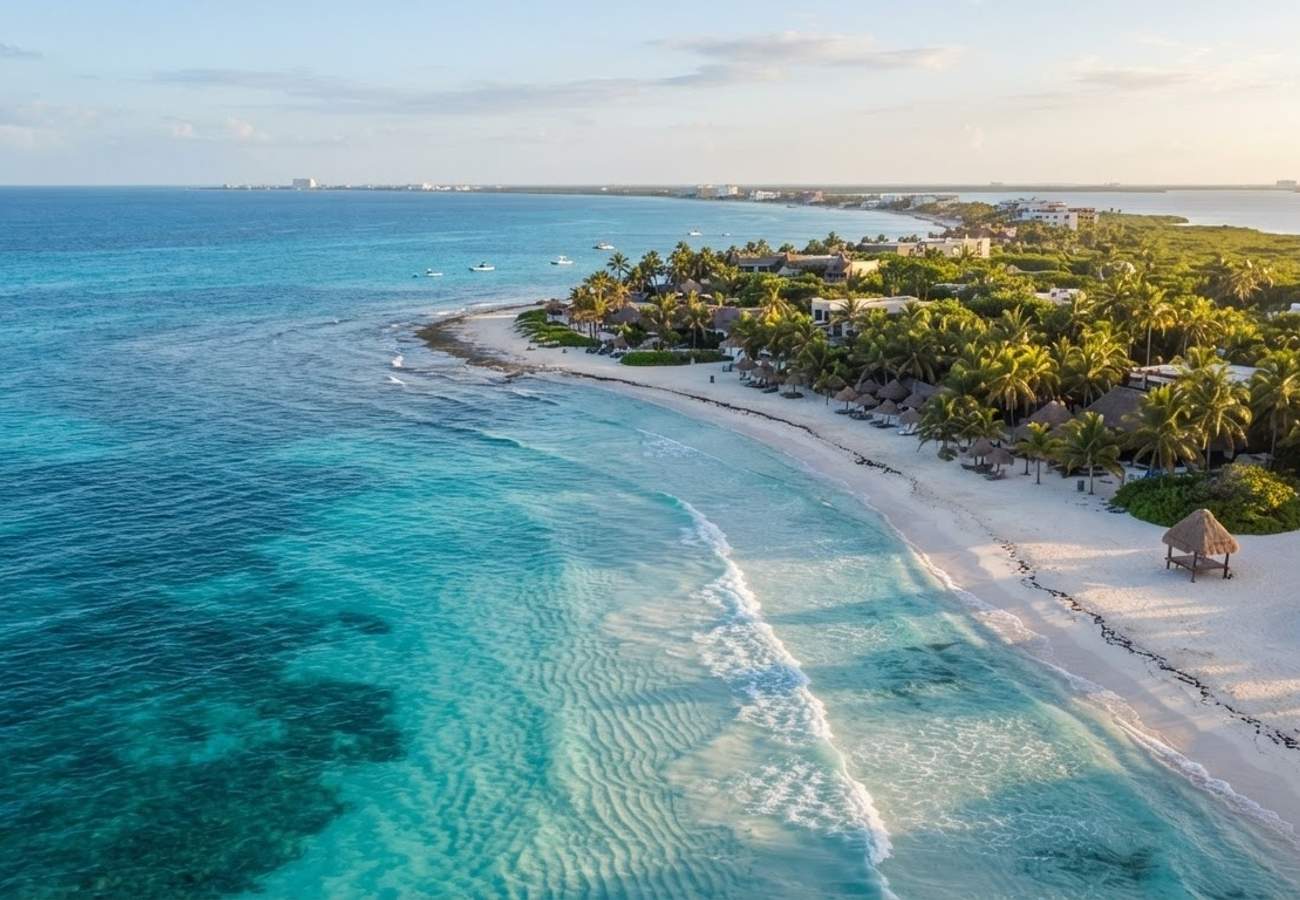
Image generated by AI
The Yucatán Peninsula offers three distinct aquatic environments: the Caribbean coast, the Gulf of Mexico, and the inland freshwater lagoons. For travelers, the choice of destination depends entirely on the desired balance between luxury infrastructure and secluded nature.
The region's coastline is split between the high-energy Caribbean side—stretching from Cancún to Belize—and the low-key Gulf of Mexico side near Progreso and Celestún.
Regional Logistics and Environmental Factors
Timing is the most critical variable for a Yucatán trip. The dry season (late November to April) provides the calmest seas and highest water clarity. Conversely, May through October marks the humid season, with hurricane risks peaking between August and October.
A significant operational challenge for Caribbean destinations is sargassum (brown seaweed). This phenomenon typically peaks between April and September. Our analysis of recent patterns indicates that the northern curve of the Cancún Hotel Zone and Isla Mujeres generally maintain cleaner shores due to their geographical orientation and aggressive municipal cleanup efforts. In contrast, Tulum and parts of Playa del Carmen are more susceptible to heavy accumulations.
Destination Breakdown by Travel Style
Cancún: High-Efficiency Luxury
The 20-kilometer Hotel Zone serves as the primary gateway for first-time visitors. It is dominated by all-inclusive models that remove the logistical friction of dining and activities.
- Best For: Families and short-stay travelers.
- Prime Area: The northern curve (near Playa Caracol) offers shallower, calmer waters.
- Budget: Midrange all-inclusives average 250 to 400 USD per night; luxury suites can exceed 800 USD during peak holiday weeks.
Playa del Carmen and Tulum: Boutique and Trendy
Moving south into the Riviera Maya, the architecture shifts from high-rise hotels to walkable urban strips and eco-chic retreats.
- Playa del Carmen: Centered on Quinta Avenida, this is a car-free hub. Budget hotels range from 80 to 150 USD, while beachfront properties exceed 300 USD.
- Tulum: Split into the Pueblo (budget), the Beach Zone (luxury), and the Archaeological Zone. Luxury eco-resorts here command premiums of 400 to 800 USD per night. Note that beach access in Tulum is often privatized via beach clubs.
Isla Mujeres and Holbox: Low-Impact Escapes
These islands offer a stark contrast to the mainland by restricting standard vehicle traffic.
- Isla Mujeres: A 20-to-30-minute ferry from Cancún. Playa Norte is the standout for its shallow, sargassum-resistant waters.
- Holbox: Accessible via Chiquilá. This is a bohemian destination with unpaved streets and a reliance on golf carts and bicycles.
Cost and Location Comparison
| Destination | Primary Style | Avg. Nightly Rate (USD) | Water Type | Key Feature |
|---|---|---|---|---|
| Cancún | All-Inclusive | 250 – 800+ | Caribbean | High convenience |
| Playa del Carmen | Urban/Boutique | 80 – 300+ | Caribbean | Walkability |
| Tulum | Eco-Luxury | 100 – 800+ | Caribbean | Wellness/Design |
| Isla Mujeres | Relaxed | Variable | Caribbean | Shallow bays |
| Holbox | Bohemian | Variable | Caribbean | Car-free/Sandbars |
| Progreso | Local/Low-key | 60 – 100 | Gulf of Mexico | Local atmosphere |
| Bacalar | Serene | 60 – 100 | Freshwater | "Seven Colors" Lagoon |
Why This Matters: Industry Implication
From a logistical perspective, the "Yucatán experience" is no longer a monolith. We are seeing a clear bifurcation of the market. On one end, the "Industrialized Caribbean" (Cancún/Playa) focuses on volume and all-inclusive efficiency. On the other, the "Boutique Caribbean" (Tulum/Holbox) leverages exclusivity and environmental aesthetics to justify significantly higher price points.
For the traveler, the real impact is the "Sargassum Variable." The volatility of seaweed arrivals means that booking a non-refundable luxury stay in Tulum during June is a high-risk move. We recommend prioritizing destinations like Isla Mujeres or the Gulf coast during peak sargassum months to ensure beach usability.
Forward Outlook
Expect further privatization of the Tulum shoreline and an increase in "slow travel" infrastructure on Holbox. As Cancún reaches saturation, luxury investment is shifting toward boutique, sustainable models in the southern Riviera Maya. Travelers should anticipate higher "beach club" entry fees as a standard requirement for shoreline access in trendy zones.
The Yucatán remains a premier global destination, provided the traveler matches their budget and tolerance for nature's volatility to the specific coastline.
Related Travel Guides
Disclaimer
This article is for informational and educational purposes only. It does not constitute legal, financial, or professional advice. While we strive to provide accurate and up-to-date information, travel policies, regulations, and conditions change rapidly. Always verify information with official sources before making travel decisions. Nomad Lawyer makes no representations about the accuracy, reliability, completeness, or suitability of the information provided. Readers should consult qualified professionals for advice specific to their circumstances. The views expressed in this article are those of the author and do not necessarily reflect the views of Nomad Lawyer.
Raushan Kumar
Founder & Lead Developer
Full-stack developer with 11+ years of experience and a passionate traveller. Raushan built Nomad Lawyer from the ground up with a vision to create the best travel and law experience on the web.
Learn more about our team →