
Tampa Waterfront Travel Guide 2026: Riverwalk, Ybor City, and Top Attractions Analysis
An authoritative guide to navigating Tampa's 2.6-mile Riverwalk, historic Ybor City, and major waterfront hubs, featuring cost breakdowns and logistics for 2026 visitors.

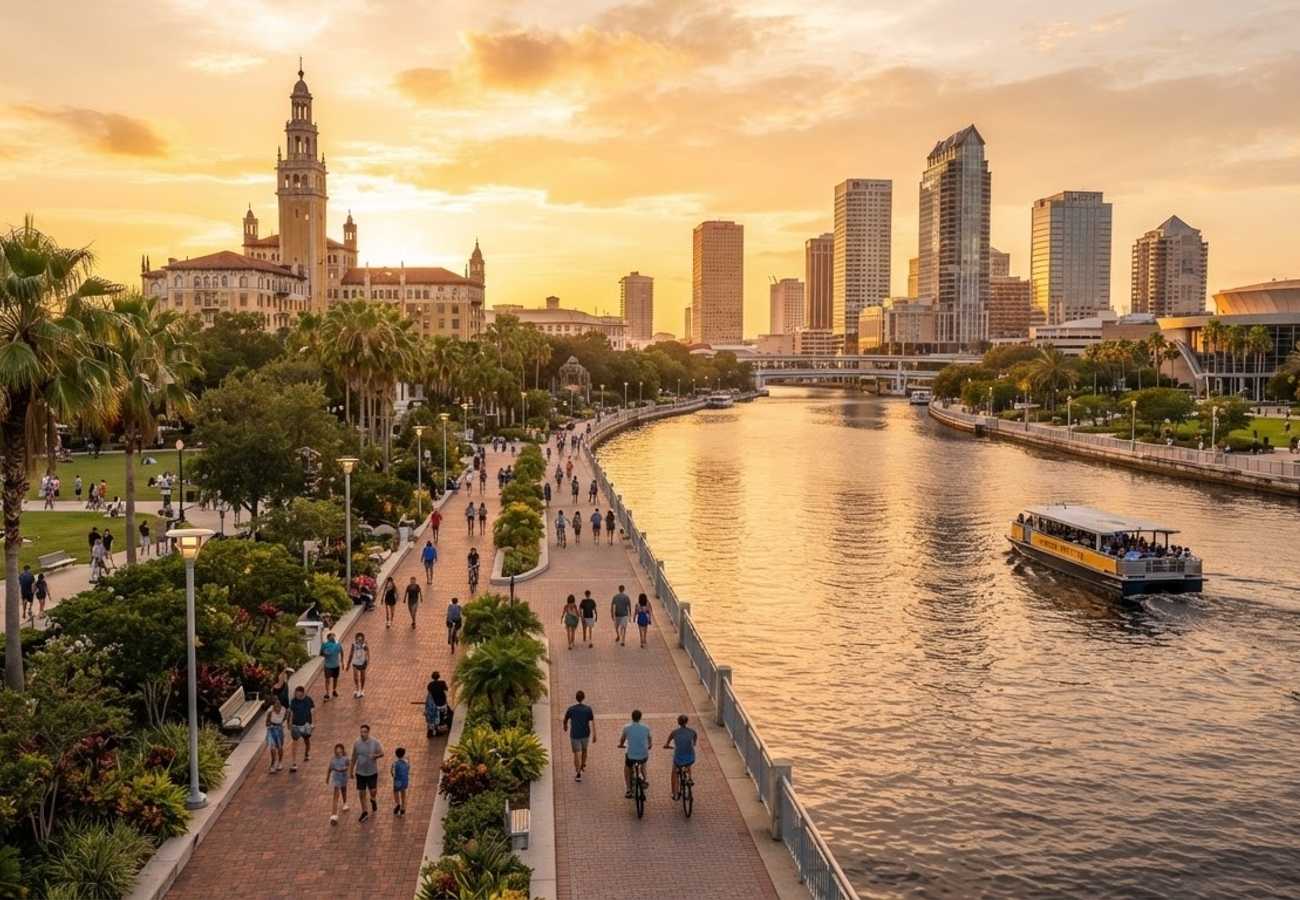
Image generated by AI
Tampa has evolved into a premier urban destination for 2026, defined by a highly walkable waterfront core and a distinct blend of historic Latin quarters and high-intensity theme parks.
Waterfront Logistics and the Tampa Riverwalk
The Tampa Riverwalk serves as the city's primary pedestrian artery, consisting of a 2.6-mile promenade that links the downtown core to the Channelside district. For the strategic traveler, this route is more than a scenic path; it is a functional transit corridor connecting major hotels, museums, and dining hubs.
Our analysis of the route indicates that a full traversal at a relaxed pace requires approximately two to three hours. The promenade begins near the Tampa Convention Center and extends through Curtis Hixon Waterfront Park. To optimize mobility, visitors should utilize the app-based scooter rentals and kiosks located at major hotel access points.
For those seeking to avoid pedestrian fatigue, the hop-on, hop-off water taxi system is the most efficient alternative. These services connect key nodes including Armature Works and the Channel District. Data suggests an all-day pass is cost-competitive with multiple rideshare trips while providing superior views of the University of Tampa minarets and local wildlife.
Culinary Hubs and Waterfront Dining Costs
Dining in Tampa is centered around a few high-capacity anchors. Armature Works, located in a restored 1910 streetcar warehouse in Tampa Heights, operates as a multi-vendor food hall.
Dining Cost Breakdown:
- Armature Works: Casual entrées typically range from $15 to $25.
- Ybor City Cuban Sandwiches: A standard lunch pairing generally costs between $15 and $20.
- Ulele: Positioned as a mid-to-upscale option focusing on Florida-native ingredients (e.g., Florida pompano and alligator hush puppies).
To avoid peak congestion, our data suggests arriving at Armature Works before 6 p.m., particularly during high-season weekends. For those seeking a lower-intensity experience, The Sail Plaza near the Convention Center provides an open-air environment with counter-service options from Big Ray’s Fish Camp.
High-Impact Attractions: Theme Parks and Marine Life
Tampa’s attraction profile is split between high-adrenaline land parks and educational waterfront exhibits.
Busch Gardens Tampa Bay Located approximately 20 minutes from the city center, this facility integrates a zoological park with high-intensity coasters. The Iron Gwazi hybrid coaster remains a primary draw. Visitors should be aware that internal food pricing is premium; we recommend a substantial meal prior to entry to manage daily expenditures.
The Florida Aquarium Situated in the Channelside district, this facility focuses on the progression from Florida's freshwater springs to the Gulf of Mexico. Due to high demand during school holiday periods, timed-entry reservations are now standard. For an extended experience, 75 to 90-minute dolphin cruises departing from nearby docks provide a direct transition from the aquarium to the open bay.
Regional Character: Ybor City and Hyde Park
Beyond the waterfront, two distinct neighborhoods define the city's cultural identity.
Ybor City As the historic Latin quarter and former cigar center, Ybor is characterized by brick streets and hand-rolled cigar shops. It functions as a dual-purpose district: a cultural museum hub by day and a nightlife center by night. The neighborhood is best accessed via the streetcar system from downtown.
Hyde Park Located southwest of the core near Bayshore Boulevard, Hyde Park offers a residential contrast to Ybor. The area is centered around Hyde Park Village, an open-air retail and dining district known for early 20th-century architecture and boutique shopping.
Passenger & Visitor Advisory: Navigating Tampa in 2026
For the visitor, navigating Tampa effectively requires a shift from car-dependency to a multimodal approach.
Transport Strategy:
- The "Riverwalk-First" Approach: For those staying in downtown hotels, the Riverwalk is the most reliable way to reach the Convention Center and Sparkman Wharf without dealing with urban traffic.
- Ybor Access: Use the streetcar to avoid the high cost and difficulty of parking in the historic district.
- Theme Park Transit: Rideshares are the most efficient way to reach Busch Gardens, as the park is removed from the pedestrian-centric downtown core.
Booking Advice: Our analysis of local demand suggests that reservations for Ulele and timed-entry tickets for The Florida Aquarium are non-negotiable for weekend visitors to avoid 2+ hour wait times.
Tampa remains a compact, high-efficiency destination for those who balance the grit of Ybor City with the polish of the Riverwalk.
Related Travel Guides
Disclaimer
This article is for informational and educational purposes only. It does not constitute legal, financial, or professional advice. While we strive to provide accurate and up-to-date information, travel policies, regulations, and conditions change rapidly. Always verify information with official sources before making travel decisions. Nomad Lawyer makes no representations about the accuracy, reliability, completeness, or suitability of the information provided. Readers should consult qualified professionals for advice specific to their circumstances. The views expressed in this article are those of the author and do not necessarily reflect the views of Nomad Lawyer.
Raushan Kumar
Founder & Lead Developer
Full-stack developer with 11+ years of experience and a passionate traveller. Raushan built Nomad Lawyer from the ground up with a vision to create the best travel and law experience on the web.
Learn more about our team →