
Bengaluru Airport Metro Blue Line Phased Opening: Hebbal Junction Bottleneck and 2027-2028 Timeline
Bengaluru's 58 km Blue Line metro to Kempegowda International Airport shifts to a phased launch, with the Hebbal-Airport segment targeted for late 2027 amid complex multi-modal hub construction.

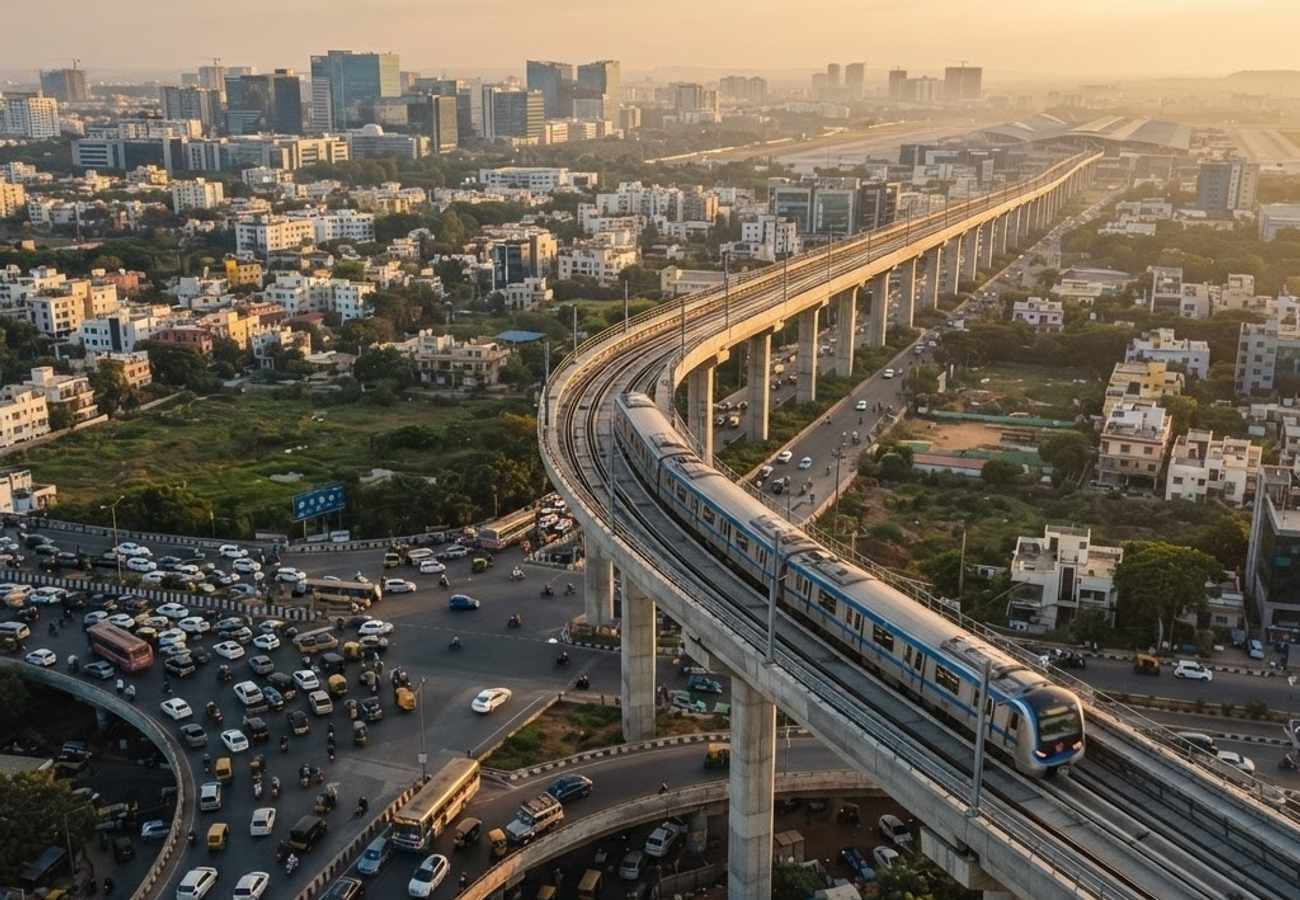
Image generated by AI
The 58 km Namma Metro Blue Line is abandoning a single launch date in favor of a segmented rollout, with the Hebbal-to-airport stretch now targeted for commercial operations as early as late 2027.
The Shift to Segmented Transit
Bengaluru’s long-awaited rail link to Kempegowda International Airport is evolving. Rather than a simultaneous opening of the entire corridor from Central Silk Board to the terminal, authorities are adopting a pragmatic "open what is ready" strategy. This shift is a direct response to the extreme engineering complexities and land-acquisition hurdles encountered along the Outer Ring Road (ORR).
Current projections indicate that the northern segment—stretching from Hebbal through Yelahanka and Doddajala to the airport—could begin operations by September 2027. However, the full Blue Line, connecting the city's southern IT hubs to the terminal, is not expected to be fully operational until approximately March 2028.
For the international traveler or digital nomad, this means the "seamless" ride from the city center is still a few years away. In the interim, the metro will serve as a high-speed shuttle for those already in the northern suburbs or those willing to navigate to Hebbal via road before transferring to the rail.
The Hebbal Pinch Point: Engineering a Multi-Modal Hub
The crux of the delay lies at Hebbal. This junction is not merely a stop; it is the strategic hinge where the Outer Ring Road, National Highway 44, and the airport corridor converge. The ambition is to transform this congested node into a massive multi-modal transport hub.
The technical scale of this project is immense. To accommodate future growth, engineers are constructing a four-track elevated viaduct between Hebbal and Kempapura. This structure is designed to allow the Blue Line and the upcoming Orange Line to share the same corridor without sacrificing frequency or capacity.
The real impact for the visitor is a temporary increase in local congestion. Integrating metro platforms, a suburban rail station, and upgraded bus bays into one of the city's busiest gateways requires a surgical approach to construction. Every ramp and station box must be sequenced with utility shifts and flyover modifications to avoid a total standstill of airport-bound traffic.
Regional Connectivity and the Tech Corridor Lag
While the northern stretch benefits from clearer land availability, the southern and eastern legs are facing a slower trajectory. Phase 2A (Central Silk Board to KR Puram) and the 2B link (KR Puram to Hebbal) are essential for channeling passengers from the city's dense tech clusters.
Construction progress remains uneven. While some elevated structures are visible near major IT hubs, other sections are stalled by utility realignment and traffic diversion challenges. This means that for a significant window, the metro will function as a fragmented system—potentially serving local city commutes between IT clusters before it ever connects them to the airport.
Visitor Insider Tips for Bengaluru Transit
Navigating Bengaluru during this transition requires local knowledge to avoid the notorious "Hebbal crawl."
- The Transfer Strategy: Once the first phase opens in late 2027, plan for a "hybrid commute." Use app-based ride-hailing services to reach Hebbal during off-peak hours (11:00 AM to 4:00 PM) to avoid the peak-hour gridlock, then switch to the metro for the final leg to the airport.
- Cultural Etiquette: When using Namma Metro, be mindful of the separate queues for men and women, a standard practice in Bengaluru to ensure comfort and order.
- Dining Near Hubs: While waiting for transit at the northern hubs, seek out local "Darshinis"—small, standing-only eateries—for a traditional filter coffee and masala dosa, providing a more authentic experience than airport terminals.
- Sustainable Transit: Support the local economy by using the BMTC (Bengaluru Metropolitan Transport Corporation) feeder buses to reach metro stations, reducing the reliance on private cabs and lowering your carbon footprint.
Tourism and Infrastructure Outlook
The long-term integration of the Blue Line, the Bengaluru Suburban Rail, and the proposed Metro Phase 3 will fundamentally alter the city's geography. By removing thousands of cars from the Outer Ring Road, the city aims to improve the quality of life for residents and the ease of access for business travelers.
The focus on a multi-modal hub at Hebbal aligns with global trends in "Transit-Oriented Development" (TOD), where high-density commercial and residential growth is concentrated around major transit nodes. For the global traveler, this will eventually mean a predictable, timed journey to the airport, stripping away the anxiety of Bengaluru's unpredictable road traffic.
The road to a seamless airport commute is being built in pieces, making patience the primary requirement for the modern traveler in Bengaluru.
Related Travel Guides
Disclaimer
This article is for informational and educational purposes only. It does not constitute legal, financial, or professional advice. While we strive to provide accurate and up-to-date information, travel policies, regulations, and conditions change rapidly. Always verify information with official sources before making travel decisions. Nomad Lawyer makes no representations about the accuracy, reliability, completeness, or suitability of the information provided. Readers should consult qualified professionals for advice specific to their circumstances. The views expressed in this article are those of the author and do not necessarily reflect the views of Nomad Lawyer.
Preeti Gunjan
Contributor & Community Manager
A passionate traveller and community builder. Preeti helps grow the Nomad Lawyer community, fostering engagement and bringing the reader experience to life.
Learn more about our team →