
Belize Travel Surges as Dark Skies, Maya Astronomy, and Private Islands Fuel Astrotourism in 2026

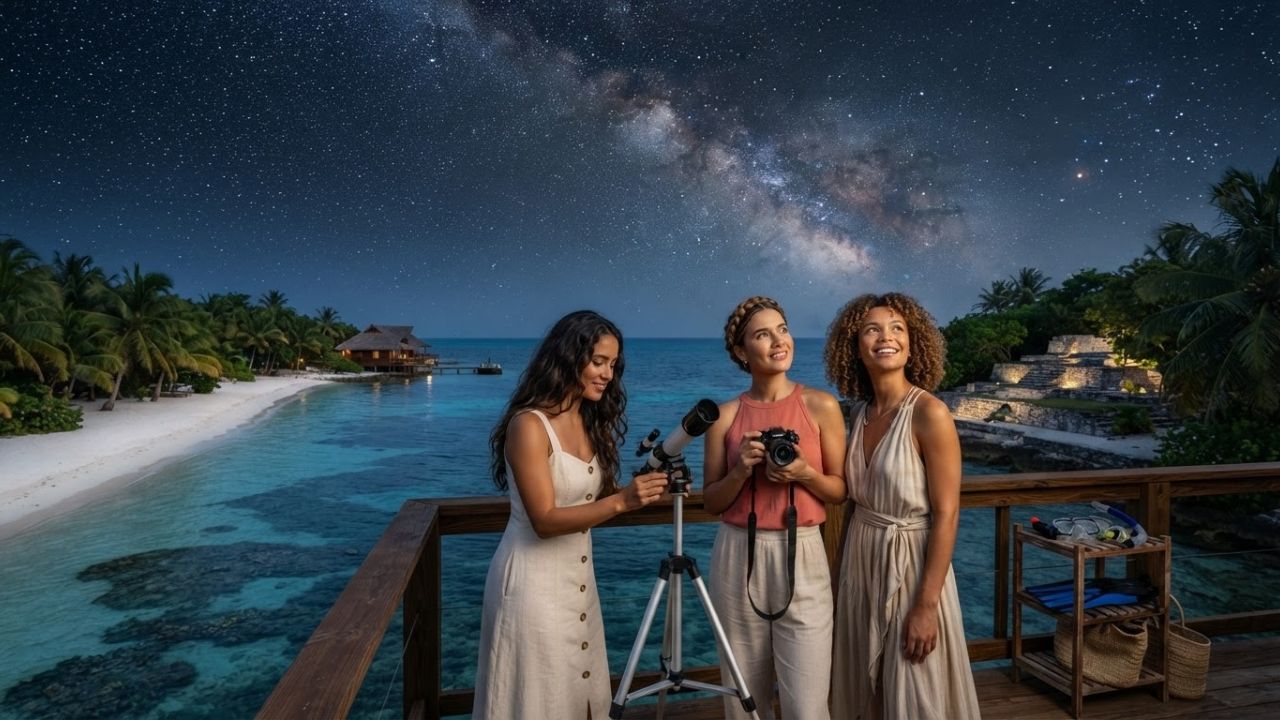
With more than 60 percent of its territory blanketed in pristine tropical rainforest and dozens of uninhabited coral atolls scattered across the western hemisphere's largest living barrier reef, Belize is transforming into Central America’s premier astrotourism sanctuary in 2026. By uniting ancient Maya archaeoastronomy at mountain strongholds like Caracol with low-impact luxury retreats on private cayes, the nation is drawing high-value global travelers who trade light-polluted metropolises for star-drenched skies and indigenous celestial wisdom.
The rapid rise of astrotourism reflects a fundamental shift in experiential travel. Modern explorers increasingly seek out unpolluted night skies where the Milky Way is visible to the naked eye. In Belize, this pursuit of pristine darkness intersects directly with one of humanity's most sophisticated scientific legacies. Thousands of years before the invention of modern optical telescopes, ancient Maya astronomers charted the synodic cycles of Venus, calculated solar and lunar eclipses with mathematical precision, and aligned monumental limestone temples to the spring and autumnal equinoxes. Today, that astronomical heritage provides the intellectual framework for an eco-conscious tourism model that safeguards both natural wilderness and ancient cultural memory.
The Astrotourism Revolution: Pristine Night Skies Above Belize
As urban light pollution obscures starry skies across Europe and North America, international travelers are prioritizing journeys that reconnect them with the cosmos. The Belize Tourism Board (BTB) and regional conservation managers are capitalizing on the country's minimal artificial glow, sparse population density, and strict municipal lighting codes to establish the nation as an elite dark-sky destination.
Astrotourism in Belize spans specialized celestial observation, night photography excursions, and guided astronomical interpretations led by indigenous elders. The geographic compactness of Belize allows visitors to experience two starkly contrasting nocturnal environments within a single trip: the deep, canopy-covered wilderness of the Maya Mountains in the west, and the pitch-black oceanic horizons of offshore marine reserves along the Caribbean coast.
| Astrotourism Sanctuary | Regional Environment | Key Celestial Experience |
|---|---|---|
| Caracol Archaeological Reserve | High-elevation jungle, Cayo District | Archaeoastronomy, temple star alignment, zero light pollution |
| Mountain Pine Ridge Forest Reserve | Granite plateau, pine savanna | High-altitude naked-eye Milky Way observation, astrophotography |
| South Water Caye Marine Reserve | Outer barrier reef coral island | 360-degree oceanic horizon, bioluminescent night paddling |
| Glover’s Reef Atoll | Isolated coral atoll, deep Caribbean | Open ocean darkness, zodiac stargazing, celestial navigation |
| Ambergris Caye & Caye Caulker | Coastal reef barrier cayes | Eco-resort astronomy lounges, beachside telescope platforms |
On the mainland, high-elevation plateau regions in the Cayo District provide clear, stable atmospheric viewing conditions. Out at sea, remote islands situated ten to thirty miles beyond the mainland shelf enjoy Bortle Class 1 and Class 2 night skies—the darkest ratings achievable on Earth.
Archaeoastronomy at Caracol: Reconnecting with Maya Cosmological Heritage
The intellectual anchor of Belizean astrotourism is Caracol, the sprawling ancient Maya city hidden deep within the Chiquibul Forest Reserve in the Cayo District. Covering an estimated 200 square kilometers with monumental plazas, causeways, and the towering Caana pyramid—which rises 43 meters (141 feet) above the rainforest canopy—Caracol was designed as an architectural reflection of Maya cosmology.
Maya priests and astronomers studied celestial mechanics to establish complex ritual calendars (the Tzolk'in and Haab'), synchronize agricultural planting cycles with rainfall patterns, and legitimize royal dynastic lineages through celestial alignments. At Caracol's E-Group architectural complexes, structures were precisely calibrated to mark the summer and winter solstices and the vernal equinox as viewed from central ceremonial platforms.
For the modern traveler, exploring Caracol under the guidance of licensed Maya archaeologists offers profound perspective. Standing atop Caana at twilight as the jungle transitions from howler monkey calls to nocturnal silence, visitors observe the same constellations that guided urban planners over 1,500 years ago. This synthesis of archaeology, indigenous heritage, and astronomical science elevates the journey far beyond conventional sightseeing.
Luxury Private Islands and Barrier Reef Sanctuaries
Complementing mainland jungle explorations, Belize's luxury private island sector has embraced dark-sky travel as a cornerstone of high-end hospitality. Stretching 300 kilometers (185 miles) along the coast, the Belize Barrier Reef Reserve System—a UNESCO World Heritage site—is dotted with hundreds of secluded cayes and three offshore atolls: Turneffe Atoll, Lighthouse Reef, and Glover’s Reef.
Boutique private island properties are pioneering off-grid sustainable luxury. By utilizing solar microgrids, low-kelvin amber pathway lighting, and shielded downward-facing fixtures, these eco-resorts maintain pristine nocturnal darkness while delivering five-star comforts. Guests spend daylight hours snorkeling alongside nurse sharks at Hol Chan Marine Reserve or diving the Great Blue Hole, before transitioning into evening star-navigation workshops led by resident astronomers.
This dual focus on marine conservation and celestial observation creates a balanced itinerary. Luxury travelers are no longer content with passive resort stays; they demand intellectual enrichment, environmental stewardship, and exclusive access to unblemished wilderness.
Ecological Preservation and Community-Based Stewardship
Dark-sky tourism directly reinforces Belize’s nationwide conservation agenda. Preserving natural darkness is vital for regional biodiversity. Along the barrier reef cayes, unshielded artificial lighting disorients nesting hawksbill and loggerhead sea turtles and misguides newly hatched turtles moving toward the sea. In rainforest corridors, artificial glow disrupts the nocturnal feeding and mating cycles of jaguars, tapirs, bats, and tree frogs.
By attaching direct economic value to dark skies, astrotourism encourages regional conservation trusts—including the Belize Audubon Society and the National Institute of Culture and History (NICH)—to enact protective buffer zones around national parks and marine reserves.
Simultaneously, the trend channels economic benefits directly into rural and indigenous communities. Mopan and Q'eqchi' Maya community members are trained and certified as specialized archaeoastronomy guides, ensuring that indigenous oral traditions and celestial knowledge are preserved and compensated fairly. Community-operated lodges in southern Belize provide authentic cultural exchanges, traditional cacao preparation, and guided night walks through community forests, creating durable economic alternatives to timber harvesting or commercial farming.
Local Visitor Insider Tips: Equinox Alignments, Etiquette, and Culinary Traditions
Travelers planning an astronomy-focused expedition to Belize should incorporate these local insights to optimize their journey:
- Optimal Astrotourism Windows: Book travel during the dry season between February and May, when cloud cover is minimal and nighttime viewing conditions are exceptionally clear. To maximize stargazing visibility, align trips with the new moon cycle each month. For a rare historical experience, visit Caracol or Xunantunich during the vernal equinox (late March) or autumnal equinox (late September) to observe solar alignments across ancient temple axes.
- Cultural and Archaeological Etiquette: Ancient Maya temples remain active sacred sites for modern Maya descendants. Always speak quietly when traversing ceremonial plazas, never step on marked sacrificial altars or fragile stucco carvings, and hire locally licensed Maya guides accredited by the Belize Institute of Archaeology.
- Essential Gear and Night Etiquette: Bring a dedicated red-light headlamp for nocturnal forest walks and beach stargazing; red light preserves human night vision and prevents disturbing coastal wildlife. Use reef-safe, non-nano zinc oxide mineral sunscreens and biodegradable insect repellents to avoid damaging fragile coral reef ecosystems and freshwater jungle streams.
- Regional Culinary Specialties: Savor Belize's culinary heritage by sampling authentic Maya chocolate made from heirloom criollo cacao beans stone-ground on traditional metates and served as a spiced, unsweetened ceremonial beverage. Indulge in classic Belizean stewed chicken simmered in red recado paste, served with coconut rice and beans and fried plantains. For breakfast, enjoy hot, puffed fry jacks drizzled with local raw rainforest honey, and sample freshly caught spiny lobster (seasonally available from July 1 through February 28) or conch ceviche marinated in sour orange juice.
- Hidden Stargazing Spots: Escape busy resort hubs on Ambergris Caye by venturing inland to the Mountain Pine Ridge Forest Reserve, where open granite clearings offer sweeping views of celestial constellations. On the coast, charter a wooden sailboat to the outer ring of South Water Caye Marine Reserve, where nighttime bioluminescence in the shallow flats mirrors the starfields above.
Tourism Outlook: Sustainable Stargazing on the Global Horizon
Belize's embrace of astrotourism positions the nation at the forefront of experiential travel in Latin America. By weaving together ancient Maya archaeoastronomy, world-class reef preservation, and luxury island retreats, Belize has crafted a distinct destination identity that avoids the pitfalls of mass tourism.
As global awareness grows regarding light pollution and environmental degradation, destinations that protect natural darkness will command premium value. Through community empowerment, rigorous archaeological protection, and proactive conservation policies, Belize proves that the future of travel lies in looking upward—connecting modern travelers with the ancient rhythms of the universe.
Related Travel Guides
- Ohio Dark Sky Stargazing Travel Guide: Observatory Park and Hocking Hills Night Sky Trails
- Baja California Eco-Tourism and Gastronomy Guide: Marine Conservation and Adventure Travel 2026
- Solomon Islands Modern eVisa System and Island Eco-Tourism Transit Guide 2026
- Costa Rica Cruise and Eco-Tourism Surge: Rainforest Conservation and Sustainable Transit 2026
Disclaimer
This article is for informational and educational purposes only. It does not constitute legal, financial, or professional advice. While we strive to provide accurate and up-to-date information, travel policies, regulations, and conditions change rapidly. Always verify information with official sources before making travel decisions. Nomad Lawyer makes no representations about the accuracy, reliability, completeness, or suitability of the information provided. Readers should consult qualified professionals for advice specific to their circumstances. The views expressed in this article are those of the author and do not necessarily reflect the views of Nomad Lawyer.
Raushan Kumar
Founder & Lead Developer
Full-stack developer with 11+ years of experience and a passionate traveller. Raushan built Nomad Lawyer from the ground up with a vision to create the best travel and law experience on the web.
Learn more about our team →