
Belgium Tourism Reaches 46.1 Million Overnight Stays Fueled by US, Dutch, and Spanish Visitor Influx
Statbel data reveals Belgium generated 46.14M overnight stays, with US visitors producing 1.12M nights, Dutch travelers 6.54M, and Spanish visitors 864K.

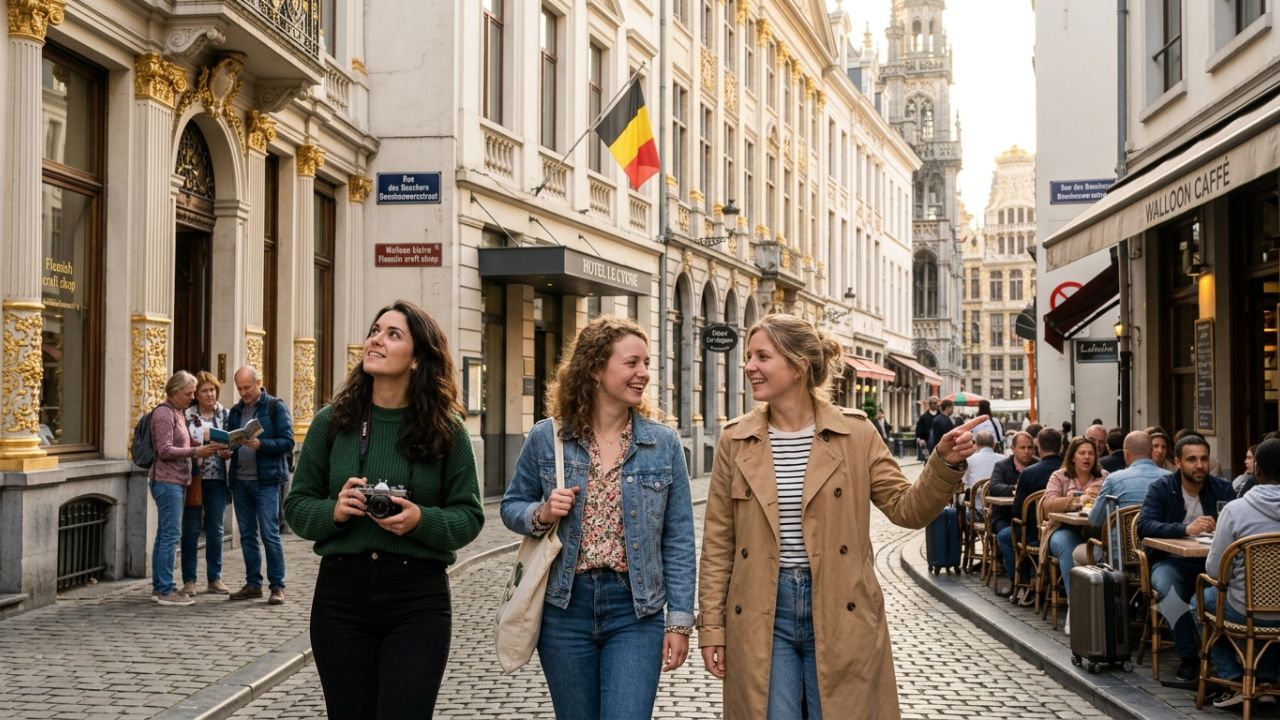
Image generated by AI
Official Statbel data confirms that Belgium recorded 46.14 million overnight stays in 2025—a 2.9 per cent year-on-year increase—driven by 6.54 million Dutch stays, 1.12 million US nights, and 864,000 Spanish visitors across Brussels, Flanders, and Wallonia.
BRUSSELS, Belgium — Official tourism performance metrics published by Statbel (the Belgian statistical office) show that Belgium's travel economy generated 46,136,112 total overnight stays in 2025, representing a 2.9 per cent increase compared to 2024. While hotels remained the dominant accommodation category with 21,428,505 nights (accounting for 46 per cent of all stays), alternative accommodation formats generated 54 per cent of overall overnight volume, led by a 10.5 per cent annual surge in camping ground stays.
The early months of 2026 reflect a stable accommodation market. Combined Statbel data for January through April 2026 reached 11,526,179 overnight stays, compared to 11,516,698 during the same four-month period in 2025 (+0.08 per cent YoY growth), illustrating strong market resilience across Belgium's three administrative regions: Flanders, Wallonia, and the Brussels-Capital Region.
Early 2026 Performance and April Accommodation Breakdown
In April 2026 alone, Belgium registered 4,142,960 overnight stays across all accommodation types. While traditional hotels accounted for 44.0 per cent of April nights (1,823,364 stays), non-hotel options—such as holiday rentals, youth hostels, and holiday parks—captured the remaining 56.0 per cent majority share.
The table below breaks down the distribution of overnight stays across accommodation categories in Belgium during April 2026:
| Accommodation Category | April 2026 Overnight Stays | Percentage Share | Primary Visitor Demographic |
|---|---|---|---|
| Hotels | 1,823,364 | 44.0% | Business travelers & urban leisure tourists |
| Holiday Homes & Apartments | 721,406 | 17.4% | Families & extended self-catering visitors |
| Holiday Centres & Villages | 535,528 | 12.9% | Domestic & regional European vacationers |
| Youth Hostels | 449,904 | 10.9% | Independent travelers & student groups |
| Camping Grounds & RV Parks | 334,640 | 8.1% | Eco-tourists & mobile outdoor campers |
| Short-Stay Holiday Lodgings | 168,498 | 4.1% | Seasonal leisure & weekend visitors |
| Guest Rooms & Bed & Breakfasts | 109,620 | 2.6% | Cultural heritage travelers |
| Total Accommodation Output | 4,142,960 | 100.0% | Comprehensive Belgian national market |
United States Long-Haul Demand Focuses on Brussels and Flanders
The United States stands out as Belgium's largest non-European long-haul origin market. US residents generated 1,120,581 overnight stays in Belgium during 2025, accounting for approximately 5.0 per cent of all published non-resident overnight stays.
Geographically, American demand is heavily concentrated in urban centers:
- Flanders Region: Received 531,384 US overnight stays, driven by historic art cities like Bruges, Ghent, and Antwerp.
- Brussels-Capital Region: Recorded 514,769 US overnight stays, benefiting from corporate, diplomatic, and leisure travel.
- Walloon Region: Captured 74,428 US overnight stays, representing a smaller market footprint.
In total, 93.3 per cent of recorded US overnight stays were split between Flanders and Brussels. Preliminary arrival metrics from Toerisme Vlaanderen counted approximately 467,000 US visitor arrivals in Flanders, ranking the United States among its top five international source markets.
The table below details the performance metrics of the US travel market in Belgium during 2025:
| US Market Metric | 2025 Reported Value | Geographic Distribution & Strategic Role |
|---|---|---|
| Total US Overnight Stays | 1,120,581 nights | ~5.0% share of all published non-resident nights |
| Flemish Region Output | 531,384 nights | Dominant share driven by historic Flemish art cities |
| Brussels-Capital Output | 514,769 nights | High-yield urban business & cultural leisure market |
| Walloon Region Output | 74,428 nights | Niche eco-tourism & historical battlefield visits |
| Flanders Arrival Volume | ~467,000 arrivals | Top 5 long-haul market in Toerisme Vlaanderen data |
Dutch Source Market Dominates Regional Tourism Across Flanders and Wallonia
The Netherlands represents Belgium’s single largest foreign travel market by a wide margin. Dutch residents produced 6,535,262 overnight stays in 2025, accounting for 29.2 per cent of all non-resident overnight stays published by Statbel.
Unlike the urban-centric US market, Dutch travel demand is heavily distributed across rural and coastal regional destinations:
- Flanders: Captured 4,010,543 Dutch overnight stays, heavily benefiting the North Sea coast and cycling networks.
- Wallonia: Received 2,249,969 Dutch overnight stays, supporting holiday villages and outdoor camping in the Ardennes.
- Brussels: Recorded only 274,750 Dutch overnight stays, demonstrating that Dutch travelers prioritize regional leisure over capital city stays.
Preliminary figures from Toerisme Vlaanderen confirm approximately 1.9 million Dutch arrivals in Flanders alone, reinforcing the Netherlands' position as the foundational pillar of cross-border Belgian tourism.
The table below outlines the volume and regional distribution of Dutch overnight stays in 2025:
| Dutch Market Metric | 2025 Reported Value | Regional Impact & Market Character |
|---|---|---|
| Total Dutch Overnight Stays | 6,535,262 nights | #1 foreign market (~29.2% of non-resident total) |
| Flemish Region Share | 4,010,543 nights | High volume across coastal resorts & cycling trails |
| Walloon Region Share | 2,249,969 nights | Strong driver for Ardennes holiday parks & camping |
| Brussels-Capital Share | 274,750 nights | Minor capital footprint relative to regional volume |
| Flanders Dutch Arrivals | ~1.9 million arrivals | Primary cross-border origin market in Flanders |
Spanish Market Influx Drives Brussels Business and Leisure Growth
Spain represents a vital Southern European source market that plays a disproportionate role in supporting the capital’s hospitality economy. Spanish residents generated 864,725 overnight stays nationally in 2025, representing roughly 3.9 per cent of published non-resident nights.
Crucially, Brussels captured 476,516 of these nights—meaning 55.1 per cent of all Spanish overnight stays in Belgium took place in the capital. Flanders recorded 334,441 Spanish nights, while Wallonia accounted for 53,768.
Data from Toerisme Vlaanderen indicated a 3 per cent annual increase in Spanish arrivals to Flanders. Simultaneously, the Brussels Tourism Observatory reported a 12 per cent surge in Spanish business overnight stays in 2025, underscoring Spain's growing importance to Brussels' corporate travel sector.
The table below summarizes the key indicators of Spanish visitor activity in Belgium:
| Spanish Market Metric | 2025 Reported Value | Market Characteristics & Capital Concentration |
|---|---|---|
| Total Spanish Overnight Stays | 864,725 nights | ~3.9% share of total non-resident overnight stays |
| Brussels-Capital Share | 476,516 nights | 55.1% concentration in the national capital |
| Flemish Region Share | 334,441 nights | +3% arrival growth in Toerisme Vlaanderen data |
| Walloon Region Share | 53,768 nights | Niche leisure market in Southern Belgium |
| Brussels Business Growth | +12% YoY increase | Corporate growth recorded by Brussels Tourism Observatory |
Regional Shifts and Record Airport Passenger Throughput in 2025
Despite overall market stability in early 2026, April data highlights distinct regional trends. Overnight stays in Wallonia expanded by 7.5 per cent to 962,831 nights. In contrast, Flanders recorded 2,564,342 nights (-1.2 per cent YoY), and Brussels experienced 615,787 nights (-6.8 per cent YoY).
Supporting this broader travel activity, Belgian airport infrastructure handled record passenger volumes. Statbel recorded more than 36 million arriving and departing passengers at Belgian airports in 2025—a 4 per cent increase over 2024 that surpassed the pre-pandemic 2019 passenger record. Commercial passenger and cargo flights reached 296,756 movements (+3.4 per cent YoY).
The table below provides a summary of key performance indicators for Belgium's tourism and transport sectors:
| Key Performance Indicator | Latest Official Figure | Travel Industry Significance |
|---|---|---|
| Belgium Total Stays (April 2026) | 4,142,960 nights | Large, resilient national accommodation market |
| Hotel Market Share (April 2026) | 44.0% share | Non-hotel accommodation formats form 56% majority |
| Wallonia April YoY Growth | +7.5% increase | Fastest-growing Belgian region in April 2026 |
| Flanders April Volume | 2,564,342 nights | Largest regional accommodation volume nationwide |
| Brussels April Volume | 615,787 nights | High-density urban market affected by spring shifts |
| Annual Airport Passengers (2025) | 36+ million passengers | Historic high throughput across Belgian airports (+4% YoY) |
Why This Matters for European and Long-Haul Travelers to Belgium
For international travelers, Belgium's accommodation statistics demonstrate that the country offers diverse lodging choices beyond traditional downtown hotels. With 56 per cent of April overnight stays occurring in holiday apartments, hostels, camping sites, and B&Bs, visitors can easily find alternative lodging tailored to their budget and travel style.
For travel planners and tour operators, the geographic split between source markets highlights clear travel patterns. US and Spanish visitors concentrate their time in urban hubs like Brussels, Bruges, and Ghent, making early hotel bookings essential in art cities. Conversely, Dutch travelers spread across coastal and Ardennes regions, ensuring strong regional tourism infrastructure outside major cities.
Additionally, record airport throughput (+36 million passengers) confirms excellent air connectivity into Brussels Airport (BRU) and Charleroi Airport (CRL), making Belgium an accessible gateway for broader European travel.
Practical Travel Guidance: Navigating Accommodation and Regional Transit
Travelers planning a trip to Belgium should consider these practical guidelines based on current market trends:
- Book Art Cities Early: Reserve hotel rooms in Brussels, Bruges, and Ghent well in advance during peak spring and summer months due to heavy US and Spanish demand.
- Explore Non-Hotel Lodging: Take advantage of Belgium's extensive network of self-catering holiday homes, youth hostels, and eco-camping sites in Wallonia and coastal Flanders.
- Utilize Rail Infrastructure: Use SNCB/NMBS passenger trains for seamless transit between Brussels, Flanders, and Wallonia without needing rental cars.
- Consider Shoulder Season Travel: Plan trips during early spring or autumn to avoid peak regional crowds while benefiting from stable accommodation rates.
FAQ
How many overnight stays did Belgium record according to Statbel?
Statbel recorded 46.14 million (46,136,112) total overnight stays in 2025, representing a 2.9 per cent year-on-year increase.
What are the top international source markets for Belgian tourism?
The Netherlands is the largest foreign market with 6.54 million nights (29.2% share), followed by Germany, France, the UK, the United States (1.12 million nights), and Spain (864,000 nights).
Where do US travelers stay when visiting Belgium?
Nearly 94 per cent of US overnight stays are split between Flanders (531,384 nights) and the Brussels-Capital Region (514,769 nights), with a small portion visiting Wallonia (74,428 nights).
What share of Belgian accommodation is outside of traditional hotels?
In April 2026, traditional hotels generated 44 per cent of overnight stays, while non-hotel formats (apartments, holiday parks, hostels, camping) accounted for the 56 per cent majority.
Related Travel Guides
Disclaimer
This article is for informational and educational purposes only. It does not constitute legal, financial, or professional advice. While we strive to provide accurate and up-to-date information, travel policies, regulations, and conditions change rapidly. Always verify information with official sources before making travel decisions. Nomad Lawyer makes no representations about the accuracy, reliability, completeness, or suitability of the information provided. Readers should consult qualified professionals for advice specific to their circumstances. The views expressed in this article are those of the author and do not necessarily reflect the views of Nomad Lawyer.
Raushan Kumar
Founder & Lead Developer
Full-stack developer with 11+ years of experience and a passionate traveller. Raushan built Nomad Lawyer from the ground up with a vision to create the best travel and law experience on the web.
Learn more about our team →