Nepal Unveils Rs 40 Million Nareshwor Artificial Lake Project to Transform Tanahun Tourism

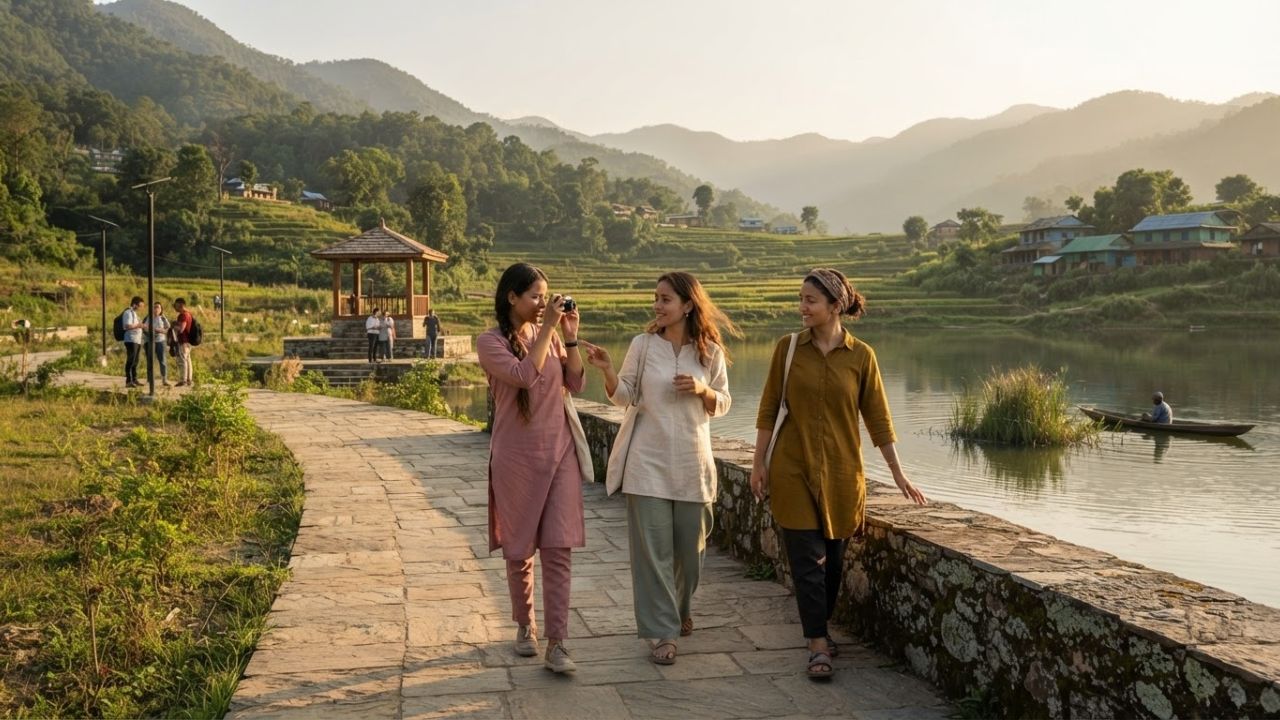
Image generated by AI
Municipal authorities in Nepal have completed main construction on Nareshwor Lake in Tanahun district, impounding 30,000 cubic metres of water behind a concrete gravity dam to establish a new eco-tourism attraction and agricultural irrigation reservoir.
TANAHUN, Nepal — Infrastructure developers in Gandaki Province have officially begun filling the newly constructed Nareshwor Lake, a multi-purpose artificial reservoir spanning approximately 28 ropanis in Ward No. 10 of Byas Municipality. Built at an estimated overall project cost of Rs. 40 million, the artificial body of water transforms the Dumsichaur area by damming the natural Nareshwor stream to generate new recreational capacity while supporting local agricultural water security.
Local government leaders designed the project to establish a distinct nature-based stopover within Tanahun district, leveraging the scenic topography of western Nepal to attract domestic and international travelers. Early visitor interest is already accelerating across digital platforms, where initial photos and videos of the rising shoreline are generating viral engagement among regional travel communities.
Byas Municipality Transforms Dumsichaur Valley with Nareshwor Lake
The conversion of the Nareshwor stream into a permanent 30,000 cubic metre lake represents a deliberate strategy by Byas Municipality to diversify the local economy. Known for its rolling hills, river corridors, and traditional settlements, Tanahun district has historically served as a transit zone between major metropolitan hubs. By establishing Nareshwor Lake in Dumsichaur, local officials aim to convert passing traffic into multi-day tourist stays.
Regional planners view artificial water bodies as an effective mechanism for geographic tourism distribution. By creating structured natural spaces outside established resort cities, municipal planners can relieve environmental pressure on high-density destinations while directing tourist expenditures directly into rural village economies.
Financial Allocations and GES Construction Service Contract
Development of the Nareshwor Lake project relied on a collaborative funding arrangement between local municipal leadership and provincial authorities in Gandaki Province. Public funding bodies mobilized multiple financial streams to cover civil works, site preparation, and property acquisition across the project area.
The Gandaki Province Government provided the largest single grant, allocating Rs. 15 million toward reservoir construction. Additional direct public funding included Rs. 1 million from the Provincial Lake Conservation Authority and Rs. 5 million committed directly from Byas Municipality treasury funds.
Engineering and physical civil works were managed through a public tendering process. Byas Municipality formally awarded the primary construction contract to GES Construction Service at an agreed contract value of Rs. 18.4 million. The contractor completed the primary containment barriers and dam structures, enabling water accumulation to begin on schedule.
Engineering Specifications of the Concrete Gravity Dam
The physical containment structure of Nareshwor Lake utilizes a concrete gravity dam engineered to impound the seasonal and perennial flow of the Nareshwor stream. The resulting reservoir covers a total surface footprint of approximately 28 ropanis, creating a permanent aquatic feature within the valley landscape.
The body of water extends approximately 300 metres in overall length along the valley floor. Measurements across the reservoir basin show a variable width ranging between 28 metres at its narrower neck and 68 metres at its widest span. The basin maintains an average water depth of around 3.5 metres, yielding a maximum total storage volume of approximately 30,000 cubic metres.
The structural design balances hydraulic containment with aesthetic landscaping. The concrete gravity wall provides long-term resistance against seasonal monsoon runoff while keeping water levels stable throughout the dry season to maintain year-round recreational access.
Nareshwor Lake Project Specifications and Financial Breakdown
The detailed technical specifications, dimensions, and public investment breakdown for Nareshwor Lake are highlighted below:
| Project Parameter | Technical Specification / Financial Detail |
|---|---|
| Location | Dumsichaur, Ward No. 10, Byas Municipality, Tanahun, Gandaki Province, Nepal |
| Primary Water Source | Nareshwor Stream |
| Dam Structure Type | Concrete Gravity Dam |
| Total Estimated Project Cost | Rs. 40 million |
| Gandaki Province Government Grant | Rs. 15 million |
| Provincial Lake Conservation Authority Grant | Rs. 1 million |
| Byas Municipality Contribution | Rs. 5 million |
| GES Construction Service Contract Value | Rs. 18.4 million |
| Total Land Compensation Paid | Rs. 13.7865 million |
| Reservoir Surface Footprint | Approximately 28 ropanis |
| Private Land Acquired | 24 ropanis and 11 annas |
| Maximum Reservoir Length | Approximately 300 metres |
| Reservoir Width Range | 28 metres to 68 metres |
| Average Water Depth | Approximately 3.5 metres |
| Total Water Storage Capacity | Approximately 30,000 cubic metres |
Land Acquisition and Compensation for Local Property Owners
To assemble the continuous footprint required for the reservoir and its surrounding public shoreline, Byas Municipality executed a formal land acquisition process involving private landowners in Dumsichaur. Municipal authorities acquired a total of 24 ropanis and 11 annas of private land from local residents.
Financial compensation was calculated using a standardized valuation matrix based on official land classifications and agricultural productivity tiers. In total, the municipality distributed approximately Rs. 13.7865 million directly to affected property owners.
Securing unified municipal ownership over the perimeter land allows city engineers to enforce zoning regulations around the reservoir. This buffer zone prevents unplanned commercial encroachments while setting aside dedicated space for public promenades, green parks, and commercial dock facilities.
Dual-Purpose Engineering: Farmland Irrigation and Eco-Tourism
Beyond its role as a tourism attraction, Nareshwor Lake features a dual-purpose engineering framework designed to strengthen agricultural productivity in surrounding rural farming communities. Engineers constructed a dedicated secondary irrigation tank adjacent to the main reservoir to capture and manage water distribution.
The integrated irrigation infrastructure routes stored water from the 30,000 cubic metre impoundment directly into agricultural canals serving nearby farmland. By stabilizing water availability, the system reduces local farmers' reliance on erratic seasonal rainfall and supports multi-crop cultivation cycles throughout the dry months.
Simultaneously, municipal officials are advancing master plans for commercial recreational amenities around the lake edge. Planned additions include non-motorized watercraft rentals, fishing piers, structured picnic zones, and pedestrian walking trails. These additions aim to extend average visitor duration, encouraging tourists to utilize local homestays, dining establishments, and artisanal markets.
Practical Implications for Himalayan Travelers and Local Development
For the traveler, the opening of Nareshwor Lake introduces an accessible, low-altitude natural retreat situated conveniently along the travel corridors of western Nepal. It offers an alternative for itineraries seeking quiet, nature-focused stopovers without demanding the physical rigor or logistical preparation of high-altitude Himalayan trekking.
From an environmental and municipal management standpoint, the project demonstrates how regional authorities can combine climate-resilient water storage with revenue-generating tourism assets. By engineering a single civil infrastructure project to simultaneously solve agricultural drought vulnerability and supply recreational real estate, Byas Municipality establishes an economically sustainable blueprint for rural development in Nepal.
As secondary construction phase facilities—including waterfront commercial kiosks and boat launching ramps—come online, Nareshwor Lake is positioned to solidify its role as a key contributor to Tanahun's growing eco-tourism economy.
Visitor Guidance: Accessing Nareshwor Lake in Tanahun
If you are planning a visit to Nareshwor Lake in Dumsichaur, keep these practical travel tips in mind:
- Location & Access: Situated in Ward No. 10 of Byas Municipality, the lake is easily reachable via ground transport from Damauli, the district headquarters of Tanahun.
- Best Time for Photography: Early morning and late afternoon offer calm water reflections against the surrounding hills of Gandaki Province.
- Support Local Businesses: Visitor services are rapidly expanding, so travelers are encouraged to utilize local family-run eateries and purchase fresh produce directly from nearby farm stands.
- Environmental Respect: As a dual-use irrigation and eco-tourism reservoir, visitors should practice leave-no-trace ethics to maintain water quality for downstream farming communities.
Related Travel Guides
- Senior Solo Travel Trends 2026: Modern Planning Strategies and Industry Accommodation Shifts for Independent Mature Tourism
- Israel Joins UAE, Saudi Arabia, and France in Global Travel Crisis as Airbnb and Expedia Record Massive Cancellations Amid $200 Oil, Strait of Hormuz Lockdown, and US-Iran Conflict Volatility: How Tourism Hubs Navigate 2026 Energy Crisis
- Kimberley's Gwion Gwion Rock Art Sparks Global Heritage Tourism Boom Across Western Australia in 2026
This article is for informational purposes. Flight routes, passenger regulations, visa rules, and transit advisories are subject to change by airlines and aviation authorities. Readers are advised to verify schedules and travel documentation with relevant carriers and border agencies before departure.
Related Stories

Thailand and Vietnam Lead Asia Tourism Surge in 2026 via Strategic Visa Policy Shifts

Samarkand Marathon 2026: Uzbekistan Attracts 1,500 Athletes from 63 Nations for Sports Tourism