Belgium Outbound Tourism Strengthens As 73% Of Flemish Residents Take Holidays While Financial Barriers Shape Travel Trends

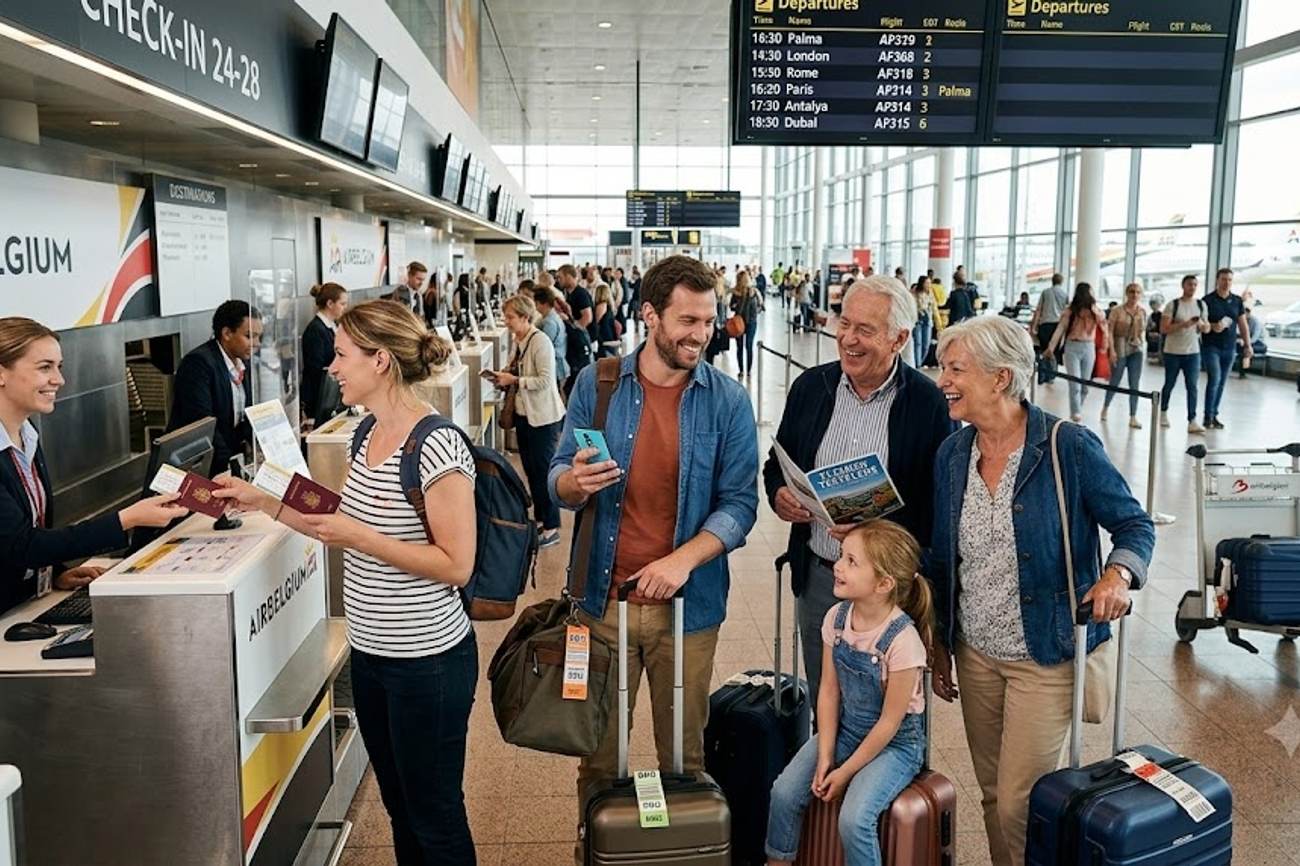
Image generated by AI
73 percent of Flemish residents completed at least one overnight trip in 2025, cementing travel as a non-negotiable component of the Belgian lifestyle. This high participation rate underscores a resilient outbound tourism market where the desire for exploration outweighs broader economic volatility. While domestic trips remain a staple, the appetite for international movement is aggressive, with 65 percent of respondents venturing beyond national borders. This data signals that the Flemish market is not merely recovering from previous global disruptions but is actively expanding its footprint across the European continent and beyond.
The Socio-Economic Engine of Flemish Tourism
The surge in Belgian outbound travel is not evenly distributed across the population; rather, it is driven by specific demographic clusters with high disposable income and employment stability. The data reveals a stark correlation between household composition and the ability to travel. Households featuring two employed individuals lead the market with a 91 percent participation rate, representing the most lucrative segment for international tour operators and airlines.
Following closely are families with children, who maintain an 87 percent participation rate. This segment is shifting its preferences toward "hybrid" vacations—trips that merge educational value with leisure and relaxation. The proximity of Flanders to major European hubs makes it a primary source market for neighboring countries, as the region's established travel culture favors short-haul city breaks and cultural excursions. This consistent demand is supported by the International Air Transport Association (IATA), which tracks the systemic growth of regional connectivity within the European Single Aviation Market.
Participation Disparities and Economic Barriers
Despite the overall growth, a significant "tourism divide" has emerged, dictated largely by financial solvency and health status. For those who remained stationary in 2025, the primary deterrent was economic: 37 percent of non-travellers cited financial constraints as the sole reason they could not take a trip. This suggests that while the upper and middle classes are traveling more frequently, a substantial portion of the population is being priced out of the market by rising costs in aviation, lodging, and sustenance.
The disparity is most evident when comparing household employment statuses. While dual-income homes nearly hit a ceiling of participation, households with no employed members saw their participation plummet to 46 percent. This gap highlights the sensitivity of the Flemish market to inflation and the cost of living.
| Demographic Group | Travel Participation Rate (2025) | Primary Driver/Barrier |
|---|---|---|
| Dual-Employed Households | 91% | High Income/Financial Flexibility |
| Households with Children | 87% | Family-Centric Leisure Demand |
| Residents Aged 55+ | 58% | Health/Age-Related Factors |
| Single Residents | 50% | Higher Per-Person Costs |
| Non-Employed Households | 46% | Financial Limitations |
Beyond finances, physical accessibility remains a hurdle. Approximately 16 percent of those who did not travel pointed to health concerns as the deciding factor. This indicates a market failure in the provision of "accessible tourism," leaving a gap for specialized travel agencies that cater to the elderly or those with chronic health conditions.
Expert Analysis: The "Premiumization" of the Flemish Traveler
From a journalistic and industry perspective, the 2025 data reveals a transition toward the "premiumization" of Belgian outbound tourism. When 65 percent of a population travels internationally, the market moves from a growth phase to a maturity phase. For travelers booking routes out of Brussels or Antwerp, the direct consequence is a shift in how airlines and hotel chains price their offerings. Because the dual-income and highly educated segments are traveling at such high rates (91% and above average, respectively), providers are likely to pivot toward higher-margin, luxury, or "experience-based" packages.
The pricing pressure this creates means that "value-driven" options are becoming harder to find, further alienating the 37 percent of the population already struggling with affordability. We are seeing a bifurcation of the market: a high-spending elite that views travel as a lifestyle requirement, and a marginalized group for whom travel is becoming a luxury they can no longer afford.
Recent data indicates a strong recovery in Belgian outbound travel, with a significant majority of Flemish residents prioritizing international trips despite economic pressures. Travelers frequently utilize Brussels Airport as their primary gateway, where passenger logistics are increasingly shaped by a shift toward budget-conscious destinations.
Furthermore, the high participation of single parents and younger travelers suggests a shift in the "travel window." We are moving away from the traditional two-week summer holiday toward a model of fragmented, frequent, and shorter trips. This puts immense pressure on regional transport infrastructure and increases the demand for flexible booking systems. For destinations seeking to attract Flemish tourists, the strategy must shift from promoting "long stays" to promoting "accessible, high-frequency escapes." Organizations like VisitFlanders are positioned at the center of this shift, balancing the promotion of domestic gems with the reality of a population that is increasingly looking outward.
Key Takeaways
- Market Dominance: 73% of Flemish residents took an overnight trip in 2025, with 65% of the total population traveling internationally.
- Income Correlation: Employment is the strongest predictor of travel, with dual-income households reaching a 91% participation rate.
- The Affordability Gap: Financial barriers are the leading cause of non-travel, affecting 37% of those who stayed home.
- Demographic Lags: Single residents (50%) and seniors (58%) show significantly lower participation rates than families.
- Health Barriers: 16% of non-travellers are sidelined by health issues, signaling a need for better accessible tourism infrastructure.
FAQ: Belgium Outbound Tourism 2025
Why is international travel so popular among Flemish residents? High purchasing power in employed households, a strong cultural interest in European exploration, and excellent transport connectivity to neighboring countries make foreign excursions a preferred choice for 65% of the population.
Which group in Belgium is most likely to travel? Households with two employed persons have the highest participation rate at 91%, followed by families with children at 87%. These groups benefit from higher financial flexibility and stable income.
What are the main reasons some Flemish residents do not travel? The primary reason is financial instability, cited by 37% of non-travellers. Other significant factors include health concerns (16%), lack of time, and a general lack of interest.
How does education affect travel habits in Flanders? Highly educated residents travel more frequently than the average citizen. This is typically linked to better employment opportunities, higher income stability, and a greater personal inclination toward international cultural experiences.
As the Flemish market splits between the high-earning explorer and the priced-out resident, the future of Belgian tourism will be defined by who can afford the ticket.
Tags: VisitFlanders 2025, Belgium Outbound Tourism, Flemish Travel Trends, European Tourism Market, Accessible Tourism Belgium
Related Travel Guides
- Türkiye Partners With Denmark In Museum Exchange Programme Supporting Heritage Research And Tourism
- Saudi Arabia and Jamaica Open New Aviation Pathway to Boost Tourism, Business Travel and Caribbean Connectivity
- Canada Partners With Indonesia As Trade Deal Drives New Tourism Routes, Investment And Business Connections
This article is for informational purposes. Flight routes, passenger regulations, visa rules, and transit advisories are subject to change by airlines and aviation authorities. Readers are advised to verify schedules and travel documentation with relevant carriers and border agencies before departure.
Related Stories

Brussels Travel Price Storm: How Surging Energy Tariffs and VAT Hikes Are Reshaping Belgian Urban Tourism

Thailand Tourism Slowdown Tests Small Businesses as Kingdom Pivots to High-Yield Travel and Secondary Provinces