
Belgium, France, and 7 EU Nations Demand EES Border Flexibility Before September 6 2026 Deadline
Nine European nations are pressuring the EU to maintain emergency flexibility for the Entry/Exit System (EES) to prevent massive border congestion as temporary safeguards expire on September 6, 2026.

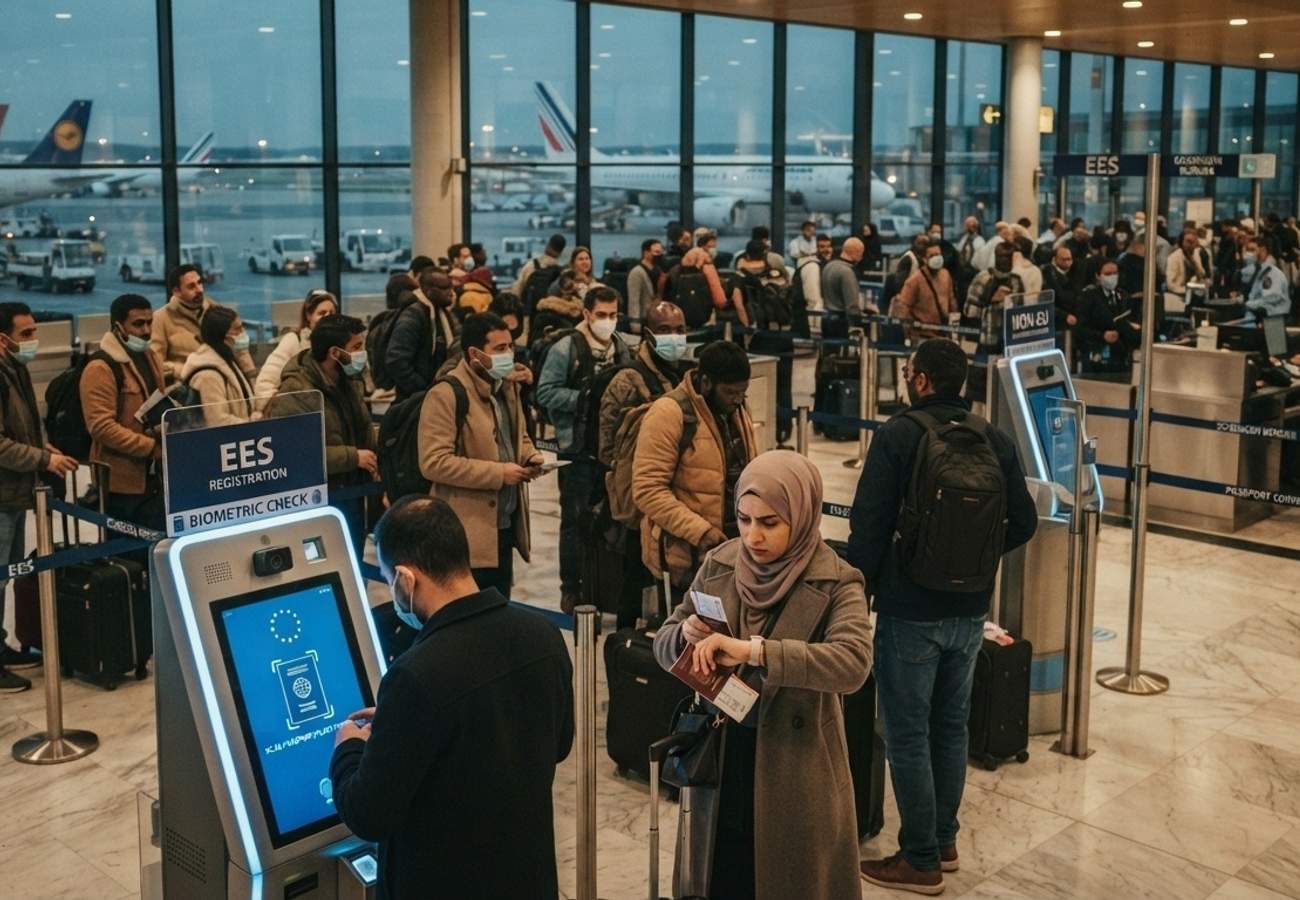
Image generated by AI
Belgium, France, Germany, Greece, Italy, Malta, the Netherlands, Portugal, and Switzerland are formally requesting that the European Union preserve emergency flexibility within the Entry/Exit System (EES) to avoid systemic border collapse.
The urgency stems from a looming deadline of 6 September 2026, after which temporary safeguards allowing border authorities to bypass certain biometric requirements during extreme congestion will expire.
The EES Conflict: Biometrics vs. Border Flow
The Entry/Exit System (EES) became fully operational across participating external Schengen border points on 10 April 2026, following a phased rollout that began on 12 October 2025. The system replaces manual passport stamping with a digital record of non-EU short-stay travellers, utilizing passport data, facial images, and fingerprints.
While the transition to digital records is permanent, the "safety valve" that allows authorities to partially suspend biometric processing during passenger surges is set to vanish. The nine intervening countries are not attempting to scrap the EES; rather, they are demanding the power to ease processing when airports, ports, and rail terminals face exceptional queues.
Critical EES Implementation Data
| EES Milestone | Date / Figure |
|---|---|
| Phased EES Introduction | 12 October 2025 |
| Full EES Operation | 10 April 2026 |
| Nine-Country Intervention | July 2026 |
| Temporary Flexibility Deadline | 6 September 2026 |
| Stricter Post-Safeguard Period | From 7 September 2026 |
| Total EES Activity (by late July) | Over 145 million entries/exits |
| Nations Seeking Flexibility | 9 |
Regional Pressure Points and Operational Risks
Our analysis of the current border landscape reveals that different hubs face distinct logistical threats as the September 6 deadline approaches.
France: The Cross-Channel Bottleneck France manages some of the most complex EES junctions, including juxtaposed controls for Eurostar, LeShuttle, and Dover. Authorities are concerned that rigid biometric registration will create severe vehicle and passenger congestion at Paris gateways and the English Channel crossings.
Germany: The Hub Connection Crisis At Frankfurt Airport, the primary risk is the "simultaneous arrival" effect. When multiple long-haul flights land at once, hundreds of first-time EES travellers require biometric registration. Without flexibility, immigration delays will lead to a spike in missed onward connections.
Greece: Seasonal Island Volatility Greece faces a space-to-volume mismatch. Regional island airports often lack the terminal square footage to hold massive queues. Rigid processing during charter flight waves could create unsafe overcrowding in immigration halls.
Italy: Network Contagion Italy has already seen the ripple effect of EES delays. In April 2026, congestion at Milan Linate resulted in 122 passengers missing an easyJet flight to Manchester. This proves that border delays quickly evolve into airline operational failures, impacting crew limits and aircraft rotations.
Netherlands: The Infrastructure Paradox Amsterdam Schiphol has invested heavily, installing 161 registration kiosks and increasing support staff. Despite this, substantial waits persist. The Dutch government argues that infrastructure alone cannot solve the problem; operational flexibility is required to maintain Schiphol's status as a global transfer hub.
Portugal: Leisure Traffic Surges Lisbon and Faro airports are highly susceptible to concentrated arrival waves from non-Schengen markets, particularly the UK. Portugal is seeking a "release valve" to reduce biometric processing when queues become unmanageable during holiday peaks.
Why This Matters: Industry Implications
For the aviation and travel industry, the expiration of these safeguards on 6 September 2026 represents a shift from "managed implementation" to "rigid enforcement."
From a logistical perspective, this means the "buffer time" previously relied upon by airlines and ground handlers is effectively disappearing. When biometric processing becomes mandatory regardless of queue length, the risk of "gridlock" increases. For the traveller, this is no longer about a minor delay; it is about the systemic risk of missing flights because the border infrastructure cannot scale to meet peak demand.
Our analysis suggests that the "Italy Incident" (the 122 missed passengers) will become a frequent occurrence rather than an anomaly if the EU does not grant the requested extensions. This creates a liability chain extending from border authorities to airlines and travel insurance providers.
Forward Outlook
If the EU denies the request for continued flexibility, travellers entering the Schengen Area after 7 September 2026 should expect:
- Extended Processing Windows: A significant increase in time required for first-time biometric registration.
- Connection Volatility: A higher probability of missed transfers at major hubs like Frankfurt and Schiphol.
- Airport Congestion: Potential overcrowding at smaller regional airports in Greece and Portugal.
The industry will likely see airlines increasing their recommended minimum connection times (MCT) for non-Schengen arrivals to mitigate these risks.
The tension between digital security and passenger flow has reached a breaking point.
Related Travel Guides
Disclaimer
This article is for informational and educational purposes only. It does not constitute legal, financial, or professional advice. While we strive to provide accurate and up-to-date information, travel policies, regulations, and conditions change rapidly. Always verify information with official sources before making travel decisions. Nomad Lawyer makes no representations about the accuracy, reliability, completeness, or suitability of the information provided. Readers should consult qualified professionals for advice specific to their circumstances. The views expressed in this article are those of the author and do not necessarily reflect the views of Nomad Lawyer.
Kunal K Choudhary
Co-Founder & Contributor
A passionate traveller and tech enthusiast. Kunal contributes to the vision and growth of Nomad Lawyer, bringing fresh perspectives and driving the community forward.
Learn more about our team →