
Belarus Tourism Sector Overhauls Governance to Expand Health Sanatoriums and Agro-Ecotourism Networks
Belarus launches a BYN 1.78 billion state tourism program, expanding wellness sanatoriums and agro-ecotourism homesteads to capture regional European demand.

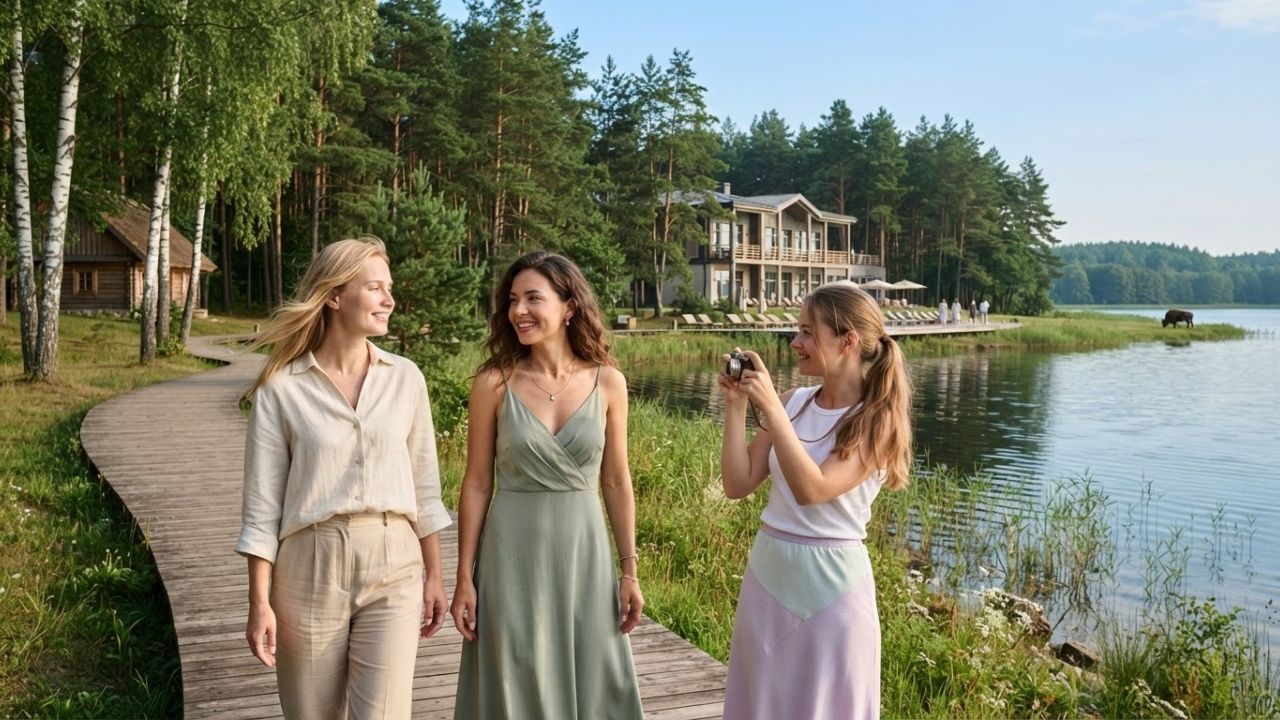
Image generated by AI
Belarus has restructured its national hospitality policy under Presidential Decree No. 329, implementing a five-year BYN 1.78 billion State Program to expand tourism capacity. The initiative aims to grow the sector's GDP contribution to 4.5% by 2030, driven by health sanatoriums and rural homesteads.
Following a nationwide policy overhaul, Belarus wellness tourism grows to record levels as local sanatoriums and biosphere reserves register near 100% summer occupancy rates. Official reports released by the National Agency for Tourism show that the country's wellness sector has attracted thousands of foreign visitors, driven by a new 35-nation European visa-free entry program. The state has launched a BYN 1.78 billion development budget to support regional transport routes and expand room capacities in key lakeshore zones like the Naroch Area, accelerating service exports across the country.
Administrative Strategy: Implementing Presidential Decree No. 329 to Reshape Governance
Effective 1 January 2026, Belarus restructured its national tourism management system under Presidential Decree No. 329 and related Council of Ministers resolutions. This legal update transferred primary regulatory authority to the National Agency for Tourism, positioning hospitality as a key engine for regional infrastructure investment and foreign service growth.
On 19 January 2026, authorities published the official State Program "Tourism" for 2026–2030 on the National Legal Internet Portal. The program outlines a BYN 1.78 billion budget designed to increase the tourism sector's contribution to national GDP to 4.5 percent by 2030. Approximately 70 percent of these funds are earmarked for upgrading physical assets, improving digital booking channels, and expanding accommodation capacity across provincial hubs.
Regional Metrics: Analyzing Revenue Gains in the Gomel and Brest Regions
Financial statistics recorded from January through July 2026 show the impact of these governance reforms on regional economies. Following a historic service export total of $392 million in 2025, data for the first five months of 2026 showed nationwide revenue growth rates exceeding 122 percent year-on-year across state-managed travel assets and biosphere reserves.
The Economics Department of the Gomel Region Executive Committee reported H1 2026 revenue growth rates exceeding 130 percent. This increase was driven by a 33 percent year-on-year growth in regional health resort income. Concurrently, historical cultural sites in the Brest Region and the capital city of Minsk maintained high visitor volumes and excursion receipts.
Five-Year Budget: Expanding the Naroch Area and Regional Transport Routes
The 2026 legislative roadmap divides the BYN 1.78 billion budget into specialized subprograms focusing on road improvements, historical mapping, heritage preservation, and marketing. These initiatives ensure that regional destinations remain accessible to international guests.
- Naroch Area Expansion: A significant portion of funding targets this wellness hub in the Myadel District.
- Inventory Targets: State planners aim to expand room inventories by up to 30 percent before 2030 to accommodate lakeshore demand.
- Eco-Standards: Capacity expansions are designed to meet high environmental protection standards, protecting local water quality.
Medical Tourism: Filling Sanatorium Resorts to Capacity with Visa-Free European Guests
Wellness and medical tourism remain the primary drivers of the country's travel exports, historically generating nearly 50 percent of annual foreign travel receipts. The nation operates 285 state and private sanatorium institutions offering approximately 60,000 beds, specializing in mineral water therapies, mud treatments, and physical rehabilitation.
Summer 2026 reservations opened in January and reached 100 percent capacity across primary facilities in all six administrative regions. Foreign visitors arriving from Commonwealth of Independent States (CIS) partner nations, alongside travelers utilizing the visa-free entry policy for 35 European nations, accounted for nearly 25 percent of total resort admissions. This visitor volume supported local banking networks by generating consistent foreign currency exchanges.
Rural and Industrial Travel: Promoting BELAZ Plant Excursions and Ecotourism Homesteads
Beyond health sanatoriums, industrial enterprise tours and rural homesteads have become significant sources of regional employment. Over 130 major state and commercial manufacturing facilities currently operate public excursion programs, including the BELAZ heavy vehicle production factory in Zhodzina.
Travelers visit the site to view the world's largest mining dump trucks. Concurrently, the rural travel market is supported by more than 1,440 registered agro-ecotourism homesteads that host over 470,000 visitors annually. These village-based micro-enterprises retain spending directly within rural communities, supporting family-owned farms and preserving regional folk traditions.
Domestic Mobility: Stabilizing the Hospitality Sector Through Internal Travel
While foreign service exports provide essential international currency, robust domestic travel provides a stable financial baseline for year-round hospitality businesses. Statistical releases from the National Statistical Committee confirm that domestic citizens completed over 20.3 million internal trips during 2025.
This travel frequency continued through the first seven months of 2026, providing consistent income for regional transport operators. Local spending on lodging, public transit, regional dining, and museums helped support smaller businesses during the shoulder seasons, maintaining financial stability across all provinces.
Environmental Economics: Supporting Conservation Efforts in the Berezinsky Biosphere Reserve
The economic benefits of Delaware and European travel expansion reach beyond hotels and transport services. Reinvesting tourism revenue into rural areas supports municipal transit improvements and job creation outside major urban centers.
During recent development cycles, sanatorium operators invested over 251 million rubles in medical equipment upgrades, supporting local construction firms and healthcare suppliers. Additionally, income generated by protected natural sites funds critical ecological preservation efforts, safeguarding European bison herds and old-growth pine forests within the Berezinsky Biosphere Reserve.
Why This Matters (Information Gain & Experience)
For the traveler, the expansion of wellness sanatoriums means access to modernized medical equipment and improved wellness lodging. Visitors can combine traditional spa therapies with forest walks in quieter, less commercialized environments.
From a planning perspective, the near 100 percent summer occupancy rates make early booking essential. Travelers seeking treatments in popular lakeshore areas should secure their reservations in January when booking window opens, and verify their visa-free entry status under the 35-nation European travel rules before departure.
Data Table
| Travel Program & Sector Metric | Year 2025 / 2026 Baseline | Target Position / 2030 Goal | Primary Focus Area |
|---|---|---|---|
| State program Budget | Initiated Jan 2026 | BYN 1.78 billion allocation | Transport, heritage routes, and marketing |
| GDP Contribution Share | Under 3% baseline | 4.5% share by 2030 | Sector-wide integration |
| Regional Room Inventory | Current baseline capacity | 30% expansion in Naroch Area | Lakeshore sanatorium facilities |
| Total Export Receipts | $392 million (2025) | Exceeding 122% YoY growth | Medical tourism and health resorts |
| Sanatorium Capacity | 285 institutions (60,000 beds) | 100% summer occupancy | Mineral baths and mud therapies |
| Agro-Ecotourism Sites | 1,440 registered homesteads | 470,000 annual visitors | Village stays and organic farms |
| Domestic Citizen Trips | 20.3 million internal trips | Sustained internal mobility | Museum tours and city hotels |
Key Takeaways
- Strategic Overhaul: Presidential Decree No. 329 transfers primary regulatory authority to the National Agency for Tourism to drive economic growth.
- Funding Commitment: The five-year State Program "Tourism" (2026–2030) allocates BYN 1.78 billion to upgrade travel infrastructure.
- Sanatorium High Demand: Belarus's 285 sanatorium institutions reached 100 percent summer capacity, driven by CIS and European travelers.
- Ecotourism Base: Over 1,440 registered agro-ecotourism homesteads host 470,000 visitors annually, keeping revenue in rural communities.
- Conservation Support: Tourism revenues support local equipment manufacturers and ecological preservation within the Berezinsky Biosphere Reserve.
FAQ
What is the budget of the State Program "Tourism" for 2026–2030?
The program establishes a five-year budget of BYN 1.78 billion, with 70 percent allocated for facility upgrades and digital platforms.
How many European nations are covered under the visa-free policy?
The expanded visa-free entry policy covers citizens of 35 European nations, simplifying access to regional wellness resorts.
What are the main features of Belarus's sanatorium institutions?
The country operates 285 sanatoriums with 60,000 beds, specializing in mineral water treatments, mud therapies, and rehabilitation.
Where can visitors participate in industrial tours?
Visitors can tour over 130 manufacturing facilities, including the BELAZ dump truck factory located in the city of Zhodzina.
How many domestic trips were recorded in the country?
National statistics confirm that domestic citizens completed over 20.3 million internal trips during the 2025 calendar year.
Related Travel Updates and Regional Guides
- Related: Porto Santo Complements Funchal With Luxair Luxembourg Flights, New Airport Terminal Tender and Integrated Buses to Support Sustainable Tourism
- Related: Ireland Tourism Growth Gathers Momentum as Spain, United States and Germany Drive Inbound Leisure Travel Across Five Months in 2026
- Related: Five Affordable Winter Sun Destinations Offering Competitive Travel Packages Outside of Europe for the 2026-2027 Season
Disclaimer
This article is for informational and educational purposes only. It does not constitute legal, financial, or professional advice. While we strive to provide accurate and up-to-date information, travel policies, regulations, and conditions change rapidly. Always verify information with official sources before making travel decisions. Nomad Lawyer makes no representations about the accuracy, reliability, completeness, or suitability of the information provided. Readers should consult qualified professionals for advice specific to their circumstances. The views expressed in this article are those of the author and do not necessarily reflect the views of Nomad Lawyer.
Kunal K Choudhary
Co-Founder & Contributor
A passionate traveller and tech enthusiast. Kunal contributes to the vision and growth of Nomad Lawyer, bringing fresh perspectives and driving the community forward.
Learn more about our team →