
Beijing Echoes Guangzhou and Many Other Cities Across China in Creating Multilingual Tourism Services
Beijing Echoes Guangzhou and Many Other Cities Across China in Creating Multilingual Tourism Services

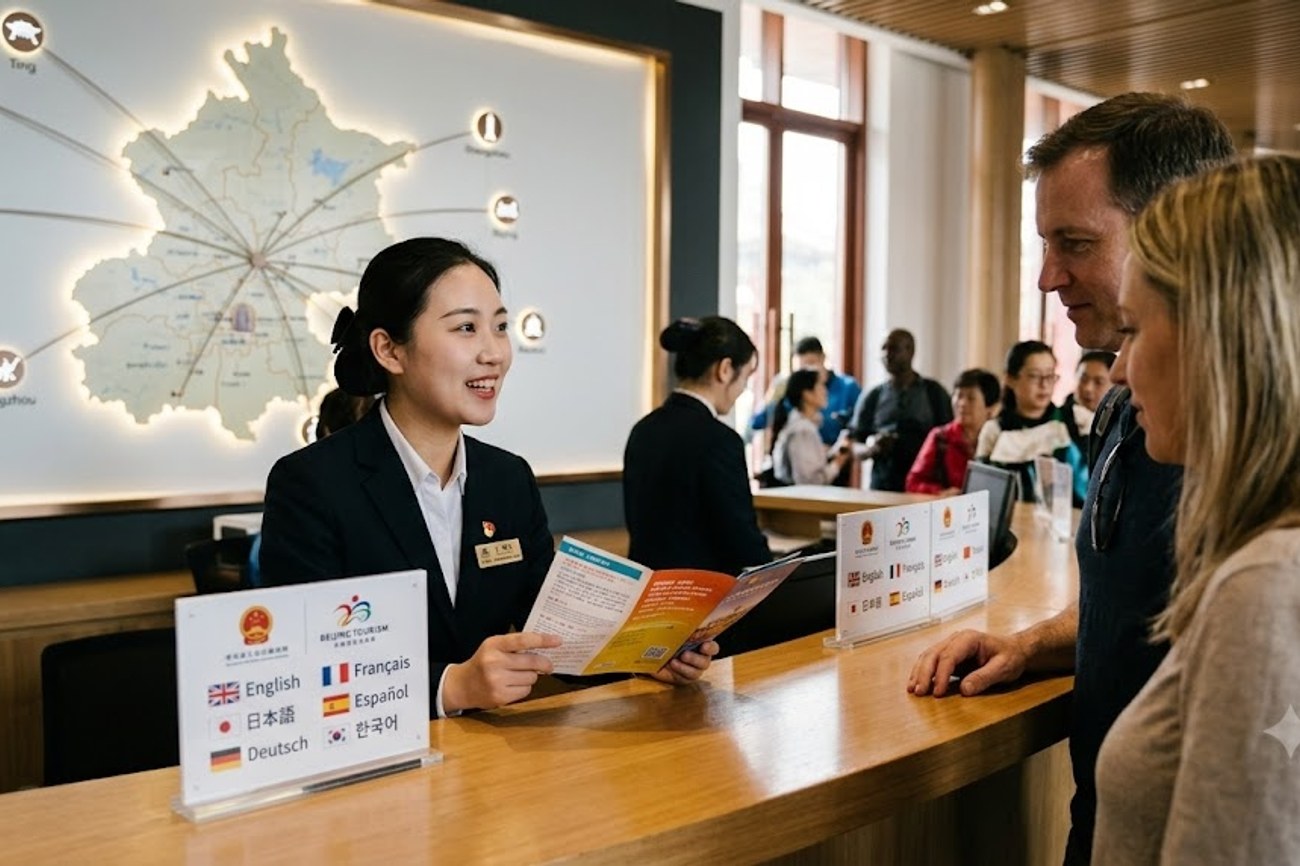
Image generated by AI
[Beijing, October 2025] — China is deploying a massive overhaul of its tourism infrastructure across primary urban hubs to eliminate linguistic barriers for international travelers arriving in 2026. The initiative centers on the integration of artificial intelligence (AI) translation, expanded multilingual digital platforms, and specialized visitor support systems designed to make the country more competitive in the global tourism market.
The strategic rollout targets high-traffic gateways including Beijing, Shanghai, Shenzhen, Hangzhou, Chengdu, and Xi’an. By transitioning from traditional sightseeing models to "smart tourism," these cities are implementing a comprehensive service ecosystem that covers every touchpoint of the visitor journey—from initial airport arrival and local transit to hotel check-ins, retail transactions, and museum navigation.
The Push for Linguistic Accessibility
The catalyst for this expansion is a systemic effort to increase China's international tourism competitiveness. Authorities have identified communication gaps as a primary deterrent for overseas guests. To counter this, the 2026 development focus shifts toward "seamless journeys," where AI-powered terminals and digital guides replace the need for human translators in routine interactions.
In Beijing, the strategy involves the GO BEIJING platform, which now supports 16 languages, including English, Russian, Korean, and Arabic. The city is also deploying multilingual smart translation devices at airport counters to streamline the entry process for business travelers and cultural tourists.
Shanghai is positioning itself as a global consumption hub by integrating AI travel assistants that handle not only translation but also personalized recommendations and payment support. The "Meet China" platform in Shanghai currently supports 10 languages, while "Hu Xiaoyou" service hubs are being installed to provide a hybrid of digital and human assistance.
Cities and Strategic Impacts
The rollout varies by city, with each destination tailoring its multilingual tools to its specific economic and cultural draw.
| City | Primary Target Groups | Key Infrastructure Focus | Priority Zones |
|---|---|---|---|
| Beijing | Business, Students, Cultural Tourists | 16-language GO BEIJING platform | Forbidden City, Great Wall, Olympic Venues |
| Shanghai | Luxury, Cruise, Independent Travelers | AI-powered terminals & payment support | The Bund, Disneyland, Yu Garden |
| Shenzhen | Entrepreneurs, Tech Tourists | Smart city services & AI translation | Futian CBD, Shenzhen Bay |
| Hangzhou | Digital Economy & Leisure Tourists | Multilingual apps & digital guides | West Lake, Grand Canal |
| Chengdu | Nature & Gastronomy Tourists | Foreign-language materials & panda guides | Giant Panda bases, Sichuan food districts |
| Xi'an | History & Educational Groups | Translated museum info & ticketing | Terracotta Warriors, Ancient City Wall |
| Guangzhou | Trade Fair & SE Asian Visitors | International payment & visitor centers | Canton Tower, Canton Fair areas |
| Chongqing | Adventure & Food Tourists | Smart tourism platforms | Yangtze River, Hotpot districts |
| Nanjing | History & Student Travelers | Museum interpretation systems | Ming Xiaoling Mausoleum |
| Suzhou | Premium Cultural Tourists | UNESCO heritage digital interpretation | Classical gardens, Silk museums |
Practical Traveler Advisory and Strategic Insights
For the individual traveler, these updates represent a fundamental shift in how one navigates China. The reliance on third-party translation apps is expected to decrease as official city infrastructure integrates these tools directly into the environment.
1. Simplified Navigation and Logistics Travelers will encounter multilingual digital information systems at transit hubs. In cities like Shenzhen and Hangzhou, the "smart city" infrastructure means that navigation and public transport instructions will be available in multiple languages via official digital portals, reducing the risk of getting lost in non-English speaking districts.
2. Frictionless Payments and Commerce One of the steepest learning curves for visitors to China has been the digital payment ecosystem. Shanghai and Guangzhou are specifically integrating international payment support into their multilingual visitor hubs, meaning tourists can receive guided assistance on how to link foreign cards to local payment systems.
3. Enhanced Cultural Depth In heritage-heavy cities like Xi'an and Suzhou, the focus is on "interpretation" rather than just "translation." This means that instead of simple signs, visitors will have access to translated cultural content and digital guides that explain the historical significance of sites like the Terracotta Warriors or UNESCO-listed gardens in their native tongue.
Beijing is expanding its multilingual support systems to streamline navigation and hospitality for international visitors, mirroring successful initiatives in Guangzhou. Travelers can access updated entry requirements and official travel advisories through the Ministry of Foreign Affairs of the People's Republic of China to ensure a seamless arrival.
4. Airport-to-Hotel Continuity The "seamless journey" mandate means that the support provided at the airport (such as the smart translation devices in Beijing) will be mirrored in hotels and major shopping districts, ensuring that the traveler does not lose support once they leave the terminal.
The 2026 Technology Roadmap
The next phase of development focuses on the scaling of AI-powered multilingual terminals. These are not merely kiosks but integrated hubs located in airports, hotels, and commercial zones. These terminals are designed to provide real-time translation and personalized itinerary adjustments based on the visitor's language and preferences.
In the south, Guangzhou is focusing on the integration of commerce and tourism, specifically targeting the high volume of trade travelers attending the Canton Fair. The goal is to create a "trade-tourism" hybrid where business visitors can transition seamlessly into leisure activities using integrated multilingual support.
Meanwhile, the "tech-driven" approach in Shenzhen will prioritize the youth and entrepreneur demographics, utilizing the city's existing high-tech infrastructure to create a frictionless experience for those visiting innovation districts and the Futian CBD.
The overarching goal for the Ministry of Culture and Tourism of the People's Republic of China is to move away from fragmented services toward a unified, digital-first international visitor experience. By the start of 2026, the expectation is that a non-Chinese speaker can navigate the primary hubs of the country with minimal linguistic friction.
FAQ: China International Tourism 2026
Do I still need a personal translation app for 2026? While official AI terminals and multilingual platforms like GO BEIJING are expanding, personal apps remain a useful backup for rural areas or small businesses outside the primary tourist zones of the 10 major cities.
Which cities have the best support for non-English speakers? Beijing is currently leading in diversity, with its platforms supporting 16 languages, including Arabic, Russian, and Korean. Shanghai and Guangzhou also offer extensive support for a wide range of international visitors.
How will the new payment support work? Cities like Shanghai and Guangzhou are implementing international payment support within their visitor centers, helping travelers integrate foreign credit cards with local digital payment systems to avoid cash-dependency.
Will these services be available at historical sites? Yes. Xi'an, Suzhou, and Nanjing are specifically upgrading museum interpretation and ticketing systems to provide foreign-language guides and digital content for heritage attractions.
The era of the language barrier in China's urban centers is ending.
Related Travel Guides
- Auckland, Queenstown and Other Cities Catch the Attention of Different Generations of Travelers Through Seasonal Experiences in New Zealand
- Costa Rica Overtakes United States, Canada, Mexico and More 25 American and Caribbean Wellness Travel Destinations as Paradise for Health Lovers
- Australia Is in High Demand as Sydney, Melbourne and Beyond Broaden Luxury Retail and Local Shopping Experiences for International Tourists
Disclaimer
This article is for informational and educational purposes only. It does not constitute legal, financial, or professional advice. While we strive to provide accurate and up-to-date information, travel policies, regulations, and conditions change rapidly. Always verify information with official sources before making travel decisions. Nomad Lawyer makes no representations about the accuracy, reliability, completeness, or suitability of the information provided. Readers should consult qualified professionals for advice specific to their circumstances. The views expressed in this article are those of the author and do not necessarily reflect the views of Nomad Lawyer.
Naina Thakur
Contributor & Travel Specialist
Travel enthusiast and legal writer covering visa regulations, responsible tourism, and cultural journeys across global destinations.
Learn more about our team →