
Beijing Capital Airport Experiences Significant Flight Disruptions as Air China Cancellations and Regional Delays Cascade
Flight disruptions at Beijing Capital Airport reached 17 cancellations and 199 delays on July 8, 2026, with Air China accounting for all cancellations.

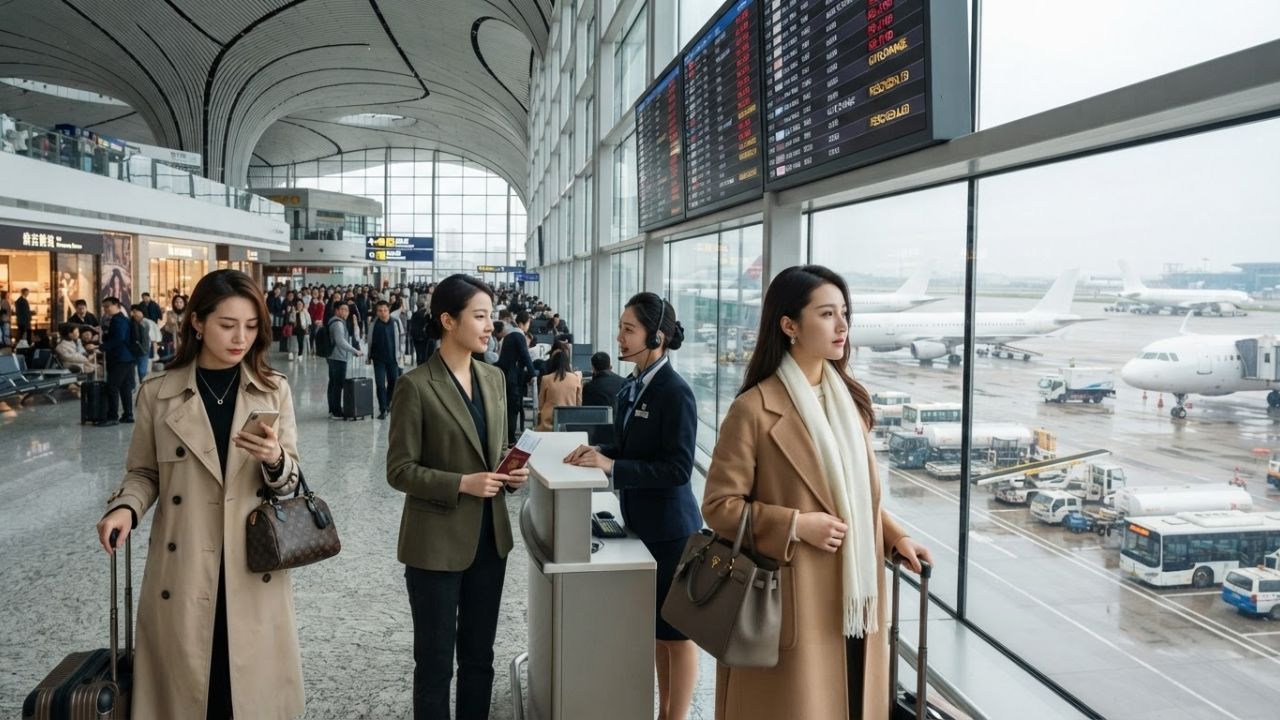
Image generated by AI
[Beijing, July 8, 2026] — Air travel through northern China's primary gateway faced operational pressure today. Beijing Capital International Airport (PEK) experienced 17 cancellations and 199 flight delays, impacting passenger schedules.
Industry observers note that disruptions at major hub airports create cascading schedule changes across regional routes. Late-arriving planes delay subsequent flights, impacting crews, gates, and baggage handling. Today's delays affected connections to South Korea, Japan, Singapore, Thailand, Germany, France, and the United States.
While airport flight operations continued throughout the day, the high volume of delays tested terminal resources. Travelers experienced extended wait times, missed connecting flights, and last-minute gate changes.
Air China Scheduled Operations Bear Brunt of PEK Cancellations
Air China was the carrier most impacted by today's disruptions. The airline accounted for all 17 cancellations at the airport, representing 2 percent of its scheduled operations. The carrier also reported 123 delayed flights.
Beijing Capital is a primary hub for Air China, meaning localized disruptions impact its national network. When inbound flights are delayed at PEK, the aircraft cannot depart on time for their next scheduled destinations.
Our analysis of the flight data indicates that the carrier's hub structure concentrates operational pressure during weather or airspace restrictions. This concentration makes it difficult to recover schedules quickly.
Hainan Airlines and Mid-Sized Carriers Face Significant Delays
Hainan Airlines experienced the second-highest delay count at the airport, reporting 28 delayed flights. This represented 14 percent of its scheduled operations at PEK.
Mid-sized domestic airlines also reported high delay rates. Shandong Airlines recorded 12 delays, which affected 31 percent of its scheduled flights. Sichuan Airlines reported 11 delays (26 percent), while Shenzhen Airlines registered 9 delays (22 percent). Dalian Airlines recorded 7 delays, affecting 22 percent of its flights.
These percentages show that smaller operators faced schedule disruptions despite having fewer flights. High delay rates indicate that flight turnarounds were slow across the airport.
International Passenger Schedules Disrupted Across Global Corridors
The disruptions at Beijing Capital impacted several international airlines, although their total delay numbers were small.
Air Macau reported one delayed flight, representing 25 percent of its scheduled services. EVA Air reported one delay (33 percent), while Asiana Airlines and Tibet Airlines each reported one delay. Cargolux Airlines International reported one delayed cargo flight, representing 50 percent of its daily schedule.
For international travelers, even a single delayed flight can cause missed connections to other continents. Rebooking long-haul flights is challenging during the busy summer travel season.
Compounding Triggers of Regional Air Traffic Restrictions
Aviation experts attribute today's flight disruptions to a combination of summer weather and airspace capacity constraints.
Summer in northern China frequently brings convective weather, including thunderstorms, heavy rain, and low visibility. These conditions require air traffic control to increase aircraft separation distances, reducing airport landing rates.
Additionally, military airspace restrictions in China limit the available routes for commercial flights. Inbound delays accumulate throughout the day, causing departure queues to grow at the terminal gates.
Economic Impacts and Regional Hospitality Industry Risks
The delays at Beijing Capital have economic consequences for China's tourism and business travel sectors. PEK is a primary gateway for international visitors arriving for business meetings, conferences, and tours.
When flights are delayed, travelers risk missing hotel check-ins, scheduled tours, and connecting domestic flights. This can lead to reduced visitor spending in popular tourist cities like Xi'an and Chengdu.
Airlines also face higher operating costs from aircraft repositioning, crew overtime, and passenger assistance. Maintaining schedule reliability is essential for supporting regional economic activity.
Beijing Capital International Airport Flight Disruption Snapshot
| Operating Airline | Cancelled Flights (#) | Cancelled Flights (%) | Delayed Flights (#) | Delayed Flights (%) |
|---|---|---|---|---|
| Air China | 17 | 2% | 123 | 14% |
| Hainan Airlines | 0 | 0% | 28 | 14% |
| Shandong Airlines | 0 | 0% | 12 | 31% |
| Sichuan Airlines | 0 | 0% | 11 | 26% |
| Shenzhen Airlines | 0 | 0% | 9 | 22% |
| Dalian Airlines | 0 | 0% | 7 | 22% |
| China Eastern | 0 | 0% | 3 | 6% |
| Cargolux Airlines | 0 | 0% | 1 | 50% |
| EVA Air | 0 | 0% | 1 | 33% |
| Air Macau | 0 | 0% | 1 | 25% |
| Tibet Airlines | 0 | 0% | 1 | 25% |
| Zhejiang Loong | 0 | 0% | 1 | 25% |
| Asiana Airlines | 0 | 0% | 1 | 14% |
Key International Flight Corridors Affected
| Destination Region | Major Cities Connected | Primary Operational Risk |
|---|---|---|
| East Asia | Seoul (South Korea), Tokyo (Japan) | High frequency regional commuter delays |
| Southeast Asia | Singapore, Bangkok (Thailand) | Missed leisure tour connections |
| Europe | Frankfurt (Germany), Paris (France) | Long-haul crew duty-time limits |
| North America | Los Angeles, New York (United States) | Complex rebooking on next-day flights |
Airway Capacity and Infrastructure Challenges
| Contributing Factor | Impact on Airport Capacity | Network Knock-on Effect |
|---|---|---|
| Summer Thunderstorms | Reduces active runway acceptance rates | Causes holding patterns and diversions |
| Airspace Restrictions | Limits available routing options | Delays departures due to slot sequencing |
| Aircraft Rotation | Delays early flights, impacting late routes | Spreads schedule delays to outstation airports |
Key Takeaways
- Hub disruption: Beijing Capital recorded 17 cancellations and 199 delays on July 8, 2026.
- Air China hit: Air China accounted for all 17 cancellations and reported 123 delayed flights.
- Regional delays: Shandong Airlines and Sichuan Airlines faced high delay rates, reaching 31% and 26%.
- Global routes: Disruptions impacted passenger schedules to Japan, Singapore, Europe, and the U.S.
- Weather and slots: Summer storms and airspace restrictions were the main drivers of the delays.
Why This Matters
Our analysis of the flight data indicates that Air China bearing 100% of the cancellations represents a strategic hub protection measure. When faced with air traffic control restrictions, a hub carrier will cancel select domestic flights to keep transit gates clear and preserve schedules for high-value international routes. This prevents long-haul aircraft from being grounded, which would disrupt international rotations for days.
Furthermore, the high delay percentages for mid-sized airlines like Shandong Airlines (31%) highlight the vulnerability of regional carriers. Unlike large network airlines, these carriers have smaller fleets and fewer standby aircraft at PEK. When slot restrictions are imposed, they cannot easily swap planes, resulting in long delays for regional travelers.
For the air cargo sector, the delay reported by Cargolux (50% of its schedule) shows that disruptions impact more than passengers. Cargo flight delays disrupt supply chains for time-sensitive goods like electronics and pharmaceuticals. This requires logistics managers to build schedule buffers when shipping goods through busy Chinese gateways.
Industry Outlook
Market trends suggest that Chinese airports will continue to experience capacity constraints during the summer storm season. Expect airlines to deploy larger aircraft on domestic routes to maintain seat capacity while reducing total flight frequencies. In the short term, airport operators will focus on improving ground handling speeds to reduce flight turnaround times.
FAQ
Why were flights cancelled and delayed at Beijing Capital Airport today? Flight disruptions were caused by a combination of summer thunderstorms, air traffic control congestion, and airspace capacity restrictions.
Which airline was most affected by cancellations at PEK? Air China recorded all 17 cancellations reported at the airport and also reported 123 delayed flights.
Which carriers reported the highest percentage of delayed flights? Shandong Airlines reported the highest delay rate at 31 percent, followed by Sichuan Airlines at 26 percent.
Are international flights from Beijing Capital being delayed? Yes. Delays were reported on routes connecting Beijing with South Korea, Japan, Singapore, Europe, and the United States.
Related Travel Guides
- JFK Airport Flight Cancellations: Airspace Reductions and Severe Weather Disrupt Transatlantic Summer Travel Coordinated by Delta and JetBlue
- Boston Logan International Airport Delays Mount as Airspace Volume and Air Traffic Control Initiatives Constrain New England Flights
- Miami International Airport Flight Cancellations: American, Delta, United, and Envoy Air Suspend Key Domestic and Caracas Routes
Disclaimer
This article is for informational and educational purposes only. It does not constitute legal, financial, or professional advice. While we strive to provide accurate and up-to-date information, travel policies, regulations, and conditions change rapidly. Always verify information with official sources before making travel decisions. Nomad Lawyer makes no representations about the accuracy, reliability, completeness, or suitability of the information provided. Readers should consult qualified professionals for advice specific to their circumstances. The views expressed in this article are those of the author and do not necessarily reflect the views of Nomad Lawyer.
Kunal K Choudhary
Co-Founder & Contributor
A passionate traveller and tech enthusiast. Kunal contributes to the vision and growth of Nomad Lawyer, bringing fresh perspectives and driving the community forward.
Learn more about our team →