
IndiGo Suspends Siem Reap–Kolkata Direct Route in July 2026 Amid Fuel Crisis and Seasonal Demand Collapse
IndiGo axes its Siem Reap–Kolkata direct service in early July 2026 as rising fuel costs and weak seasonal demand force a temporary network restructuring across India-Cambodia connectivity.

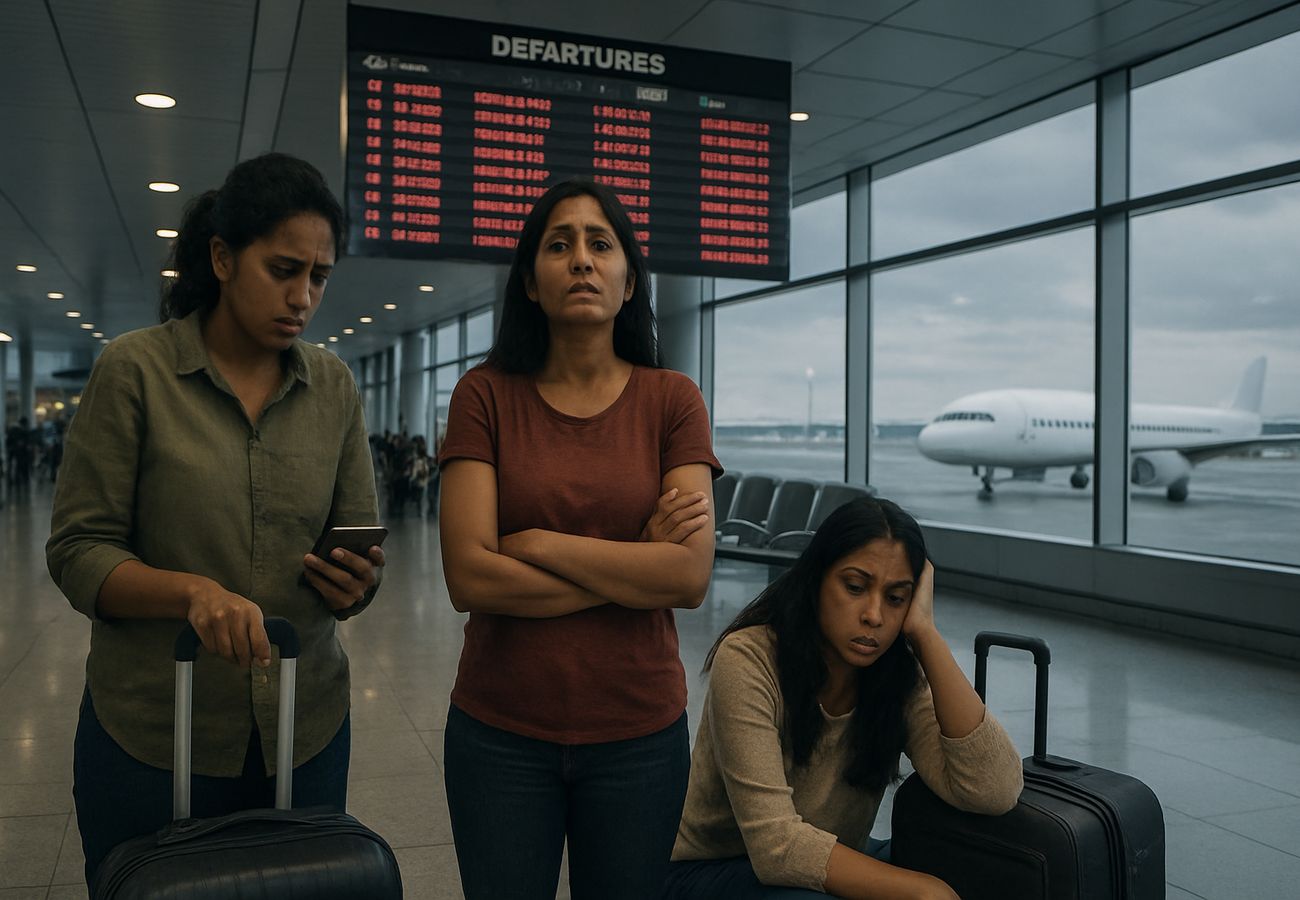
Image generated by AI
IndiGo, India's largest low-cost carrier, is pulling the plug on its direct Siem Reap–Kolkata service effective early July 2026. The temporary suspension marks a strategic retreat from one of South Asia's most promising emerging air corridors—a decision driven by punishing fuel price volatility, mounting operational pressures, and a brutal seasonal demand collapse across leisure travel markets.
This isn't just another schedule adjustment. It's a window into how global aviation economics are reshaping connectivity between India and Southeast Asia.
Eight Months of Operations End in Network Recalibration
The route launched in November 2025 with considerable fanfare, operating three weekly frequencies on Airbus A320neo aircraft between Kolkata Airport and Siem Reap Angkor International Airport. Demand surged immediately—within weeks, the airline expanded to six weekly flights, betting heavily on tourism and business traffic between eastern India and Cambodia's heritage tourism hub.
But eight months of operations proved insufficient to weather the current cost environment. The airline has now classified the suspension as temporary, a euphemism that reveals just how precarious route economics have become for carriers operating thin-margin international leisure sectors.
Reddit: "IndiGo was the only direct option—now I'm stuck routing through Bangkok again. This is what happens when fuel costs go through the roof." — r/IndiaTravel
The Fuel Cost Squeeze Is Existential
Global aviation turbine fuel prices have become the decisive variable in route survival. According to recent industry data, fuel represents 25-35% of operating costs for international carriers, and volatility in energy markets has become a critical strategic concern for fleet operators worldwide.
The Siem Reap–Kolkata route, a short-haul international service competing in price-sensitive leisure markets, offers minimal margin for cost absorption. When fuel spikes collide with seasonal demand troughs, the economics collapse rapidly.
IndiGo isn't alone. Across the aviation sector, carriers are deploying similar defensive strategies: frequency cuts, temporary suspensions, and dynamic capacity reallocation. The suspension reflects a broader industry trend toward adaptive scheduling as external economic shocks force painful network recalibrations.
Seasonal Demand: The Hidden Killer
Beyond fuel volatility, the route faces a structural demand problem. Siem Reap derives roughly 70-80% of its air traffic from leisure tourism—primarily Indian holiday travellers, cultural tour groups, and heritage pilgrims visiting the Angkor Archaeological Park, Southeast Asia's premier historical site.
This leisure-dependent traffic model leaves carriers dangerously exposed to seasonal fluctuations. Peak travel windows (November–March) generate strong load factors, but off-season months (June–September) see occupancy collapse. Operating six weekly flights during monsoon season through early July simply became economically untenable.
Airlines typically respond to such structural seasonality with temporary suspensions—freezing capacity until demand recovers, then reinstating service when booking curves strengthen. It's a financial triage decision, not a permanent network exit.
The Angkor Connectivity Crisis
The suspension hits Cambodia hard. Siem Reap has emerged as one of Southeast Asia's fastest-growing tourist destinations, with Indian arrivals climbing steadily as outbound travel from India's eastern regions accelerates. The direct connection from Kolkata eliminated the friction of transiting through regional hubs—Bangkok, Singapore, or Ho Chi Minh City—reducing journey time by 3-4 hours on average.
That convenience factor mattered for leisure travellers and tour operators pricing tight itineraries. The loss of the direct link will push traffic back toward connecting flows, reducing Cambodia's competitive positioning against other regional heritage destinations with stronger hub connectivity.
For bilateral India-Cambodia tourism, this is a setback. But it's not permanent—pending fuel price stabilisation and demand recovery during peak seasons.
When Will Service Resume?
IndiGo has positioned this as temporary, but reinstatement depends on three critical variables:
Sustained passenger demand recovery during peak travel windows (November 2026 onwards)
Stabilisation of global fuel prices within a range that supports thin-margin international leisure routes
Improved load factors and revenue performance justifying a return to six-weekly frequencies
The airline's broader strategy remains focused on network efficiency—channelling capacity toward stronger-performing routes and suspending services on marginal sectors until conditions improve. This adaptive approach has become standard practice across global carriers managing cost crises.
A Snapshot of Aviation's Fragility
The Siem Reap–Kolkata suspension illustrates a fundamental tension in modern aviation: the gap between growth ambitions and operational sustainability. IndiGo identified genuine market demand, launched a strategically important route, and scaled operations aggressively.
But external shocks—fuel volatility, seasonal demand patterns, competitive pressures—can overwhelm even well-executed route strategies within months. The airline's decision to pause rather than cancel entirely suggests confidence in eventual recovery, yet it underscores just how precarious leisure route economics remain in a volatile global energy market.
As India-Cambodia tourism flows continue growing, the direct Siem Reap–Kolkata corridor will almost certainly return. But the timeline depends on forces largely beyond any airline's control: geopolitical energy dynamics, global fuel markets, and seasonal travel patterns that nobody can predict with certainty.
For now, travellers are back to connecting flights and longer journey times. Welcome to aviation in 2026.
The suspension is temporary—but in aviation, temporary can last longer than anyone expects.
Related Travel Guides
Disclaimer
This article is for informational and educational purposes only. It does not constitute legal, financial, or professional advice. While we strive to provide accurate and up-to-date information, travel policies, regulations, and conditions change rapidly. Always verify information with official sources before making travel decisions. Nomad Lawyer makes no representations about the accuracy, reliability, completeness, or suitability of the information provided. Readers should consult qualified professionals for advice specific to their circumstances. The views expressed in this article are those of the author and do not necessarily reflect the views of Nomad Lawyer.
Raushan Kumar
Founder & Lead Developer
Full-stack developer with 11+ years of experience and a passionate traveller. Raushan built Nomad Lawyer from the ground up with a vision to create the best travel and law experience on the web.
Learn more about our team →