
Bashang Plateau: Hebei's 16,000 sq km Highland Escape Is Redefining China's Summer Tourism
Bashang Plateau in Hebei spans 16,000 square kilometres across four distinct tourism regions, offering summer temperatures of 18–24°C, scenic highland roads, Qing Dynasty royal heritage, and stargazing far from Beijing's light pollution.
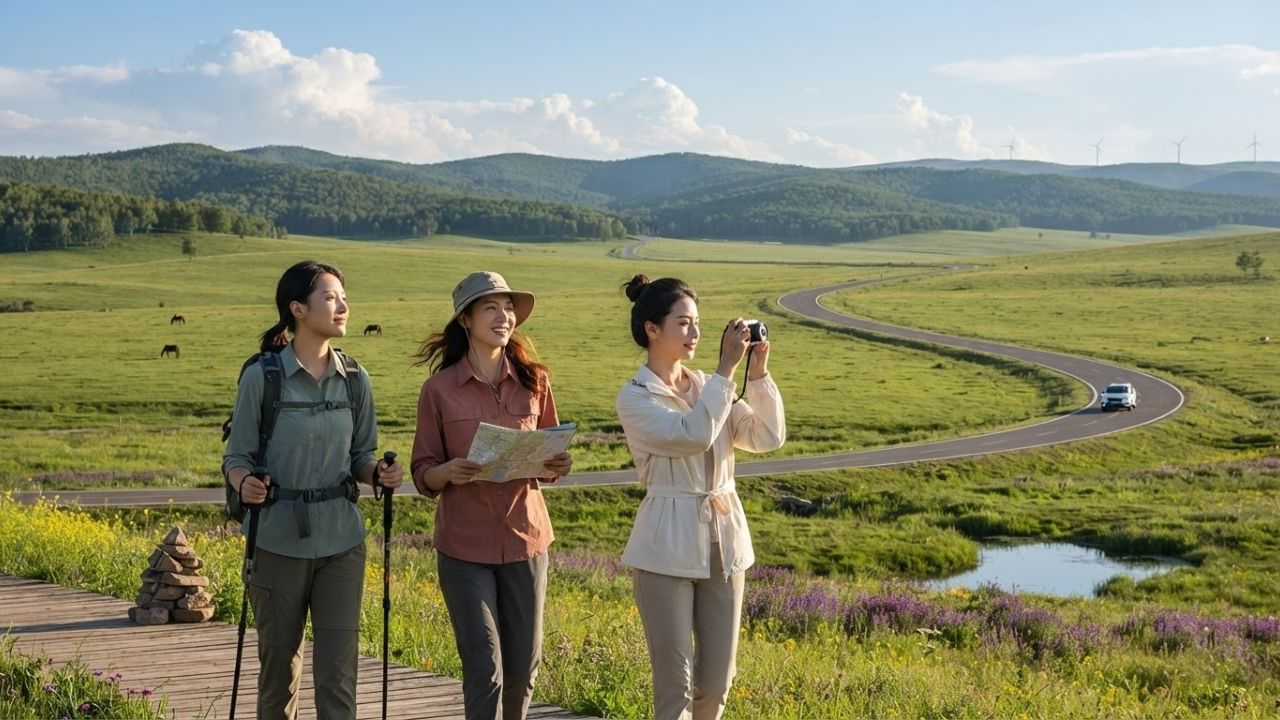
Image generated by AI
At 16,000 square kilometres, Bashang Plateau sits between the North China Plain and the Inner Mongolian Plateau — and with summer temperatures holding between 18 and 24°C while Beijing bakes, it has emerged as northern China's most practical highland escape for nature tourism, road trips and Mongolian cultural experiences.
How a Highland Plateau Became Hebei's Most Talked-About Summer Destination
China's domestic tourism market is shifting decisively toward nature-based and ecotourism experiences, and Bashang Plateau is one of the clearest expressions of that trend. The plateau stretches across parts of Chengde and Zhangjiakou cities in Hebei Province, occupying a geographic position that gives it one of the most reliable cool-summer climates in the north. While temperatures across urban northern China climb through July and August, Bashang's elevation holds daytime conditions at a consistent 18–24°C — cool enough for full days outdoors, comfortable enough for grassland riding, and clear enough at night for serious stargazing.
What distinguishes Bashang from other Chinese highland destinations is not any single attraction but the density of genuinely different experiences packed within a single plateau. Rolling highland roads cut through birch forests and wind turbine fields. Wetlands and lakes sit beside Qing Dynasty royal hunting grounds. Grassland music festivals occupy the same geography as UN-recognised forest restoration success stories. The result is a destination that supports adventure travellers, photographers, culture-seekers and families on slow holidays simultaneously — without any of these groups getting in each other's way.
The Hebei Provincial Department of Culture and Tourism has been actively developing Bashang's infrastructure to support this growing visitor base, with particular emphasis on scenic road maintenance, official riding facilities and ecological zone protections across the four main regions.
Four Regions, Four Distinct Characters
Bashang is not a single destination but a network of four linked tourism regions, each with its own identity and travel focus.
| Bashang Region | Location | Main Attractions | Distance from Beijing |
|---|---|---|---|
| Fengning Bashang | Chengde City | Datan Town, Hundred-Mile Sky Road, Qiansongba Forest Park, Yangchang River Wetland | Around 240 km, 3–4 hours |
| Weichang Bashang | Chengde City | Mulan Paddock, Saihanba National Forest Park, Ulan Buh Prairie | Around 400 km, 5–6 hours |
| Zhangbei Bashang | Zhangjiakou City | Grassland Music Festival, Prairie Music Highway, Zhongdu Grassland | Around 230 km, around 3 hours |
| Guyuan Bashang | Zhangjiakou City | Lightning Lake, Luan River source wetland, Five-Flower Meadow | Around 260 km, around 3.5 hours |
Fengning Bashang is the most accessible region from Beijing and the natural entry point for first-time visitors. Datan Town functions as the main visitor hub, and the Hundred-Mile Sky Road — the plateau's signature self-drive route — originates here. For travellers arriving with limited time, Fengning delivers the defining Bashang experience in the shortest possible trip.
Weichang Bashang demands more travel time but rewards with the plateau's greatest historical and ecological depth. Mulan Paddock, the former royal hunting ground of the Qing Dynasty emperors, gives this region a cultural gravitas absent elsewhere on the plateau. Saihanba National Forest Park — one of northern China's most celebrated ecological restoration achievements — occupies a substantial portion of this region and is the best base for serious nature and forest tourism.
Zhangbei Bashang targets a younger, more experiential traveller. The annual Grassland Music Festival draws major domestic acts, and the Prairie Music Highway self-drive route has developed a strong following among road-trip travellers who want scenery, music culture and open-road driving combined into one itinerary.
Guyuan Bashang is the plateau's quietest and most photogenic region. Lightning Lake and Five-Flower Meadow are peak-season photography locations, while the Luan River source wetland represents one of Bashang's most ecologically significant zones — the headwaters of a river system that flows through much of Hebei Province.
The Roads Are the Attraction: Hundred-Mile Sky Road and Prairie Music Highway
Self-drive tourism is the dominant mode of travel across Bashang, and the plateau's roads are among the most deliberately scenic in northern China.
The Hundred-Mile Sky Road in Fengning Bashang passes through birch forests, alpine grasslands and wind turbine fields before reaching high viewpoints across the plateau. Two stops define the route for most travellers: Baihua Slope, where summer wildflowers create dense colour across the hillsides, and Liuyun Ridge, where post-rainfall cloud formations produce some of the most dramatic highland photography conditions available in Hebei. The route's constant elevation changes mean the light quality shifts dramatically throughout the day — early morning departures capture the mist-in-birch-forest conditions that define Bashang's most shared photography.
The Prairie Music Highway in Zhangbei crosses a completely different character of terrain — rolling grasslands, agricultural fields and large-scale wind farms that have become a visual signature of this part of the plateau. The route's appeal is not just scenic but atmospheric: driving through grassland with the Mongolian cultural influences of this region's heritage creates an experience that feels genuinely distant from China's urbanised east coast.
Cultural and Environmental Value: What Bashang Protects and Preserves
For the visitor, the most important thing to understand about Bashang's ecological identity is Saihanba. This national forest park in Weichang is not simply a scenic destination — it is the world's largest artificial forest, created through decades of reforestation work on what was previously degraded highland land. The park's forests, wetlands and lakes now function as a carbon sink, a water source for downstream communities and one of northern China's most important ecological buffers. Visiting Saihanba is, in a direct sense, visiting a conservation success story that the United Nations Environment Programme has formally recognised.
The historical dimension is anchored at Mulan Paddock. The Qing Dynasty emperors used this vast grassland region as an imperial hunting ground across more than 150 years, and the area reflects the deep historical relationship between Chinese imperial culture and the northern grasslands. The traditions of horsemanship, archery and pastoral lifestyle that developed here are preserved in the cultural activities now offered to visitors — including horse riding at official facilities in Datan Town and Guyuan, and grassland bonfire evenings with traditional performances.
The wetland systems at Yangchang River in Fengning and the Luan River source in Guyuan add a third layer of environmental significance. These areas support bird populations and plant species that depend on the plateau's distinctive ecology, and their inclusion within Bashang's tourism network reflects a model of visitor access designed to generate ecological awareness rather than ecological damage.
Visitor Insider Tips for Bashang Plateau
Late June to August is peak season, but the shoulder periods outperform it for quality. September to early October delivers golden birch forests, yellow grasslands and clear blue skies with noticeably smaller crowds — the standard for serious photography visitors who want the colour without the chaos. Late May brings emerging wildflowers and minimal visitor pressure, though night temperatures remain cold and some facilities operate limited hours.
Self-driving is the only practical way to see multiple regions. Attractions are spread across a large geographic area and local transport between zones is limited. If you are not driving, book charter vehicles from your accommodation in Datan Town or Zhangbei in advance rather than relying on finding transport on arrival.
For Fengning and Guyuan, take the Jingli Expressway or Capital Ring Expressway from Beijing. Travel time is around 3–4 hours for approximately 240–280 km. For Zhangbei, take the Jingzang Expressway through Zhangjiakou — around 3–3.5 hours for approximately 230 km. For Weichang and Saihanba, use the Daguang Expressway through Chengde — allow 5–6 hours for the approximately 400–450 km journey.
High-speed rail eliminates the driving entirely for Zhangbei and Guyuan. Trains from Beijing North or Qinghe Railway Station to Zhangjiakou Railway Station take approximately 50–60 minutes. From Zhangjiakou, local transport or a pre-booked rental connects to the grassland zones. For Fengning or Weichang, Beijing Chaoyang Station to Chengde South Railway Station takes around one hour, then a rental car or charter for the final leg.
Stargazing is best from Guyuan Bashang, specifically around Lightning Lake, which sits far from any significant urban light source. The Milky Way is visible on clear nights from late July through September. Bring warm layers regardless of daytime temperatures — the plateau drops significantly after sunset even in summer.
Eat at the grassland lamb stations in Datan Town, not at the larger resort restaurants. Small family-run stalls serving hand-pulled noodles, roasted whole lamb and Mongolian milk tea represent the actual culinary tradition of this region and cost a fraction of what resort dining charges. In Zhangbei, Zhangjiakou buckwheat dishes are the local specialty — buckwheat noodles and buckwheat pastries are the foods most directly tied to this plateau's agricultural history.
Horse riding carries significant quality variation between operators. Official riding facilities at Datan Town and Guyuan are regulated and safer for travellers with limited experience. Unofficial roadside operators often offer lower prices but inconsistent animal welfare standards and no safety equipment. Use the facilities associated with established tourism zones.
Tourism Outlook: Bashang's Role in China's Nature Tourism Future
Bashang Plateau is operating within a broader shift in Chinese domestic tourism that is moving spending away from coastal resort destinations toward inland nature, culture and highland experiences. The plateau's four-region structure positions it to absorb growing visitor demand without concentrating pressure on any single site — a model that contrasts favourably with single-destination nature spots that struggle with overcrowding.
The Saihanba National Forest Park's international recognition has given Weichang Bashang a sustainability narrative that resonates with both domestic and international travellers who are increasingly selecting destinations based on ecological credentials. As China continues developing its national park and protected area network, Bashang's existing conservation infrastructure gives it a significant advantage over competing northern highland destinations.
The growth of Zhangbei as a music and road-trip destination demonstrates Bashang's capacity to attract younger travellers who might not prioritise traditional nature or culture tourism. The Grassland Music Festival's continued development is likely to expand Bashang's off-peak calendar, reducing the plateau's dependence on the July–August peak window.
With Beijing connectivity improving through both expressway upgrades and high-speed rail, the practical barrier between Bashang and its 21-million-strong capital city feeder market continues to shrink. Fengning's three-to-four-hour drive time already places it within easy weekend-trip reach for Beijing residents, and that proximity is the single most powerful driver of Bashang's medium-term growth trajectory.
Related Travel Guides
China's Tourist Trains Are Turning Scenic Railways into Cultural Travel Experiences
Nine Countries Introduce Visitor Caps and Tourism Fees as Overtourism Reshapes Global Travel Rules
Mongolia's Hidden Steppe Routes: A First-Timer's Guide to Grassland Nomadic Travel 2026
Disclaimer
This article is for informational and educational purposes only. It does not constitute legal, financial, or professional advice. While we strive to provide accurate and up-to-date information, travel policies, regulations, and conditions change rapidly. Always verify information with official sources before making travel decisions. Nomad Lawyer makes no representations about the accuracy, reliability, completeness, or suitability of the information provided. Readers should consult qualified professionals for advice specific to their circumstances. The views expressed in this article are those of the author and do not necessarily reflect the views of Nomad Lawyer.