
Barbuda Launches Blue Economy Tourism Strategy Via New Burton-Nibbs International Airport in 2026
Barbuda is pivoting toward a sustainable Blue Economy model, utilizing the new Burton-Nibbs International Airport to drive marine conservation and community-led eco-tourism over mass resort development.

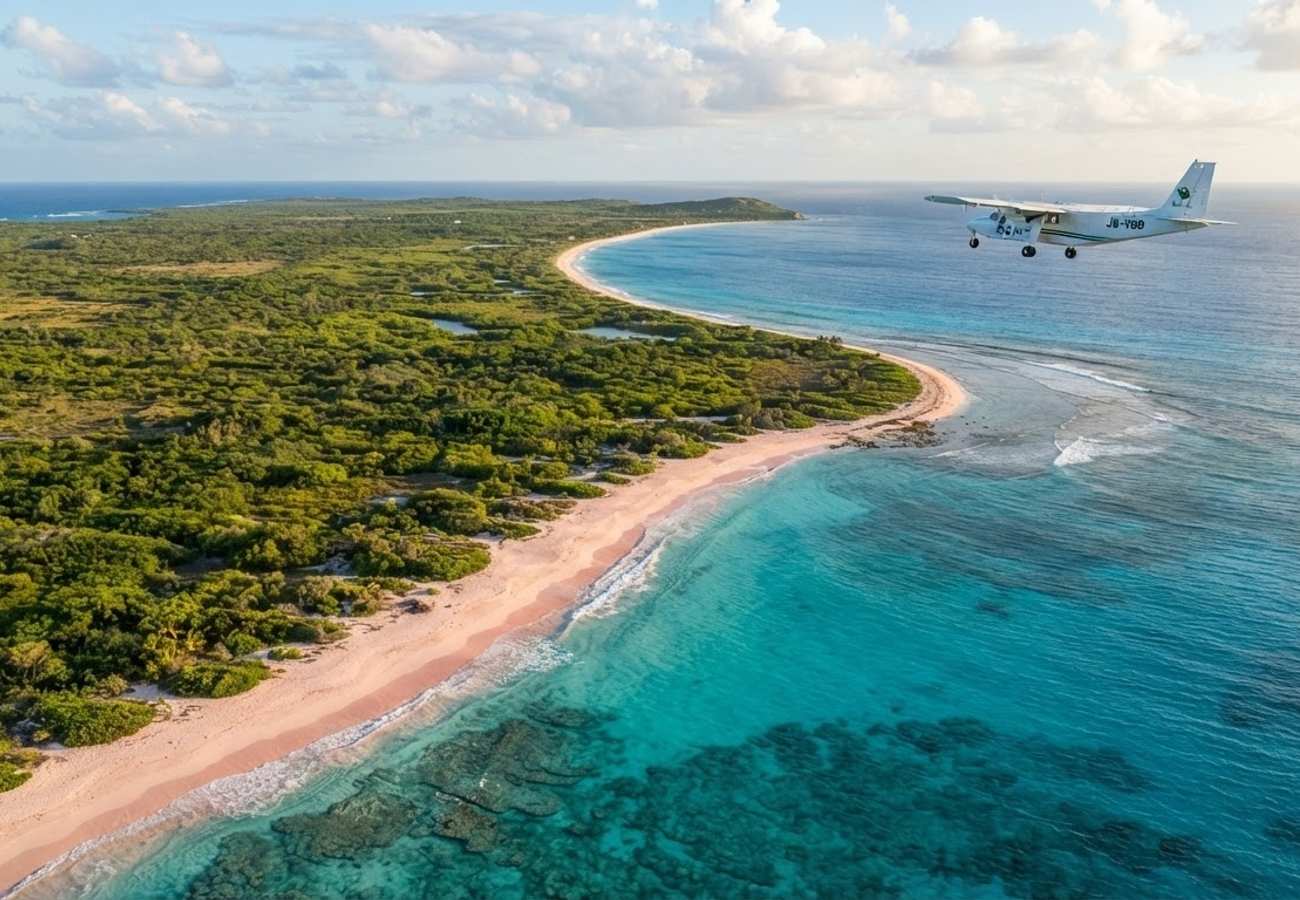
Image generated by AI
Barbuda is fundamentally altering its tourism trajectory by integrating the newly operational Burton-Nibbs International Airport into a comprehensive "Blue Economy" framework. Rather than pursuing the traditional Caribbean path of high-density resort expansion, the island is leveraging increased air accessibility to promote marine conservation, scientific research, and community-owned hospitality.
For decades, accessing Barbuda required a multi-step journey, typically involving a flight into Antigua followed by a maritime transfer. The introduction of the Burton-Nibbs International Airport removes this logistical bottleneck, allowing the island to attract a specific demographic of high-value, low-impact travelers. By bypassing the need for massive hotel infrastructure, officials are prioritizing the preservation of the island's fragile ecosystems while ensuring that the economic benefits of tourism remain within local communities.
Direct International Access via Burton-Nibbs International Airport
The commissioning of the Burton-Nibbs International Airport marks a strategic shift in the island's connectivity. By establishing a direct link to regional and international travel networks, Barbuda is no longer a secondary destination dependent on Antigua's transit hubs.
This aviation upgrade is not merely about volume but about the quality of the visitor experience. The ability to land directly on the island enables the creation of longer-stay itineraries that focus on immersive cultural and natural experiences. This logistical independence allows the government to control the pace of growth, ensuring that the influx of visitors does not overwhelm the island's limited resources or degrade its natural beauty.
Marine Sanctuaries and the Blue Economy Framework
At the heart of Barbuda's new strategy is the Blue Economy, a model that views the ocean as a primary economic engine that must be managed sustainably. Marine conservation is not a byproduct of this model; it is the main attraction.
The island is developing protected marine areas designed to host controlled visitor experiences. These include:
- Guided Boat Excursions: Regulated tours that educate visitors on coral health and marine biodiversity.
- Wildlife Observation: Low-impact viewing of endemic species.
- Research-Oriented Expeditions: Partnerships with scientific bodies to allow tourists to participate in data collection and conservation efforts.
By defining these sanctuaries, Barbuda creates a buffer zone where ecological protection takes precedence over commercial exploitation, ensuring that the very assets drawing tourists to the island are preserved for future generations.
Wildlife Preservation at the Frigate Bird Sanctuary
One of the most significant draws for the new wave of eco-tourists is the Frigate Bird Sanctuary, the largest of its kind in the Western Hemisphere. This site serves as a cornerstone for the island's nature-based tourism.
Visitors can engage in guided boat safaris that navigate the intricate mangrove systems and waterways surrounding the colony. This specialized attraction differentiates Barbuda from the standard "sun and sand" Caribbean holiday, appealing instead to birdwatchers, photographers, and environmentalists. The sanctuary operates under a strict management model to ensure that human presence does not disrupt the breeding and nesting patterns of the frigate birds.
Archaeological Heritage at Two Foot Bay
Beyond its marine assets, Barbuda is integrating its terrestrial history into the tourism loop. Two Foot Bay represents a critical intersection of natural beauty and human history.
The area is renowned for its cave systems containing ancient Amerindian petroglyphs. By offering guided explorations of these rock art sites, the island provides a cultural narrative that complements its ecological offerings. This approach transforms a simple beach visit into an educational journey, encouraging travelers to explore the island's early human history and its relationship with the coastal environment.
Sustainable Wetland Exploration through Lagoon Excursions
The island's lagoons and wetlands are being developed as low-impact zones for regulated excursions. These areas are ecologically sensitive, making unrestricted access a significant risk.
To mitigate this, the tourism model employs boat-based experiences that allow visitors to witness the wetland biodiversity without the need for permanent roads or heavy infrastructure. These controlled excursions ensure that the lagoon remains a viable habitat for wildlife while providing a serene, educational experience for the traveler.
Community-Driven Hospitality and Eco-Lodges
To prevent the "leakage" of tourism profits to foreign hotel chains, Barbuda is promoting community-operated eco-lodges. These smaller-scale properties are designed to blend into the landscape and are owned and managed by local residents.
This decentralized accommodation model has several direct benefits:
- Economic Distribution: Revenue stays within the community, supporting local food producers, guides, and transport operators.
- Cultural Authenticity: Guests receive a more genuine experience of Barbudan life compared to the sterilized environment of a luxury resort.
- Environmental Protection: Small-scale lodges have a significantly lower carbon and water footprint than large-scale resorts.
Specialist Travel and Research Expeditions
The Blue Economy model extends into the realm of academic and scientific tourism. By positioning itself as a living laboratory for marine ecosystems, Barbuda is attracting specialist expeditions.
These research-focused visitors create a steady, year-round demand for local services, reducing the volatility of seasonal tourism. When scientists and conservationists visit, they utilize local boat operators and guides, while simultaneously increasing global awareness of Barbuda's protected environments. This synergy between recreation and science strengthens the island's global standing as a leader in sustainability.
Preserving the 17-Mile Pink Sand Coastline
While the focus has shifted toward the Blue Economy, the island's iconic pink sand beaches remain a primary asset. Spanning approximately 17 miles of coastline, these beaches are a major draw for leisure travelers.
The challenge for Barbuda is to maintain the pristine nature of these shores in the face of increased accessibility provided by the new airport. The current strategy emphasizes low-density leisure activities—such as swimming and coastal trekking—rather than the construction of beach clubs or high-rise hotels. By integrating coastal conservation into the wider visitor strategy, the island ensures that its most famous visual asset does not become a victim of its own popularity.
Why This Matters: The Shift in Caribbean Travel
For the modern traveler, Barbuda's pivot represents a move away from "passive" tourism toward "active" or "regenerative" travel. Instead of simply consuming a destination, visitors are invited to participate in its preservation.
From a logistical standpoint, the Burton-Nibbs International Airport transforms Barbuda from a difficult-to-reach outpost into a viable destination for the conscious traveler. However, the real innovation lies in the legal and economic framework of the Blue Economy. By prioritizing community-owned lodges and marine sanctuaries over foreign-owned resorts, Barbuda is creating a blueprint for how small island developing states (SIDS) can grow their economies without sacrificing their environmental integrity.
Barbuda is proving that connectivity does not have to lead to congestion, and that the most valuable luxury a destination can offer is an intact ecosystem.
Related Travel Guides
Disclaimer
This article is for informational and educational purposes only. It does not constitute legal, financial, or professional advice. While we strive to provide accurate and up-to-date information, travel policies, regulations, and conditions change rapidly. Always verify information with official sources before making travel decisions. Nomad Lawyer makes no representations about the accuracy, reliability, completeness, or suitability of the information provided. Readers should consult qualified professionals for advice specific to their circumstances. The views expressed in this article are those of the author and do not necessarily reflect the views of Nomad Lawyer.
Kunal K Choudhary
Co-Founder & Contributor
A passionate traveller and tech enthusiast. Kunal contributes to the vision and growth of Nomad Lawyer, bringing fresh perspectives and driving the community forward.
Learn more about our team →