
Bangladesh and Japan Expand Aviation Partnership to Operationalize Dhaka Terminal 3
Bangladesh partners with Japan to operationalize Terminal-3 at Dhaka Airport, expanding direct Dhaka-Narita routes and unlocking 500+ heritage tourism sites.

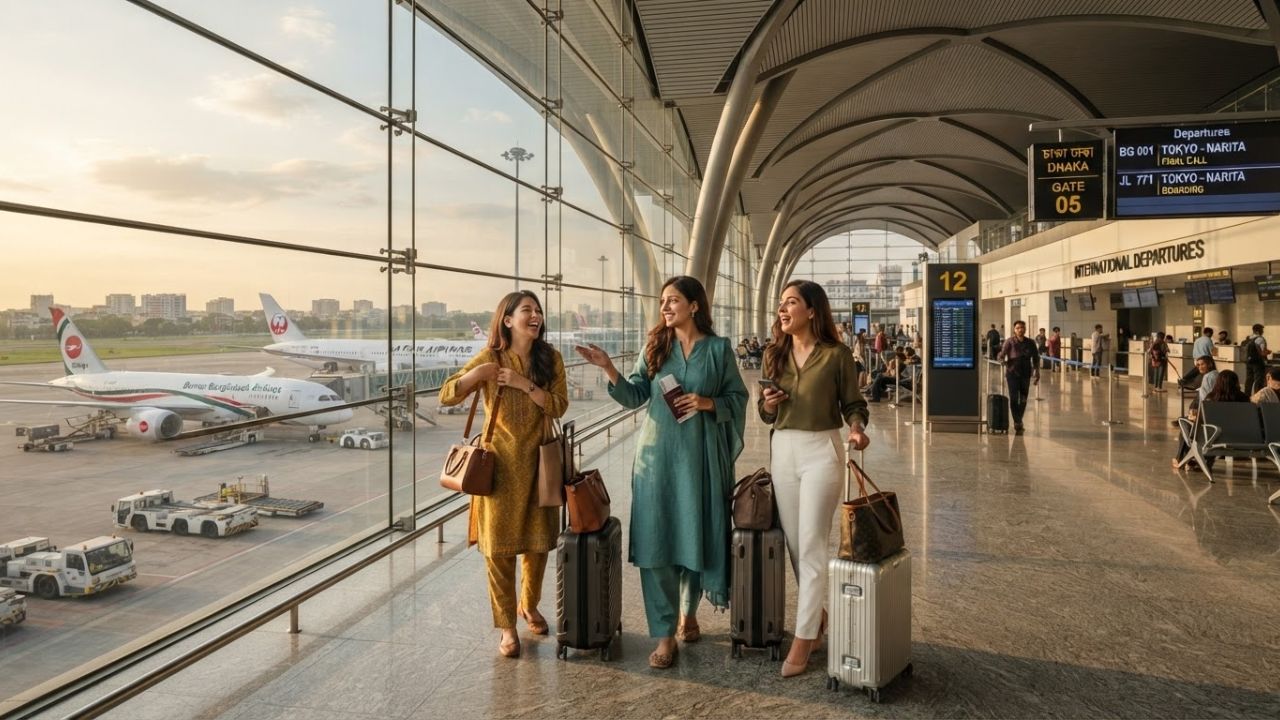
Image generated by AI
Bangladesh has advanced its strategic civil aviation partnership with Japan, completing the techno-financial evaluation for Terminal-3 at Dhaka’s Hazrat Shahjalal International Airport to unlock direct links to Tokyo Narita and develop over 500 national heritage tourism destinations.
Announced on September 5, 2026, the bilateral collaboration marks an essential turning point in South Asian air transport infrastructure. Positioned at the geographical nexus connecting South Asia with Southeast Asia, Bangladesh is executing a comprehensive modernization program to transform Hazrat Shahjalal International Airport (HSIA) into a premier regional transit hub. With the techno-financial assessment submitted by the Japanese Sub-working Group now finalized, the Ministry of Civil Aviation and Tourism (MoCAT) and the Civil Aviation Authority of Bangladesh (CAAB) are prioritizing Operational Readiness and Airport Transfer (ORAT) protocols alongside the final Letter of Assurance. This operational milestone directly complements the expanding direct flight route between Dhaka and Tokyo Narita, while laying the logistical groundwork to promote ancient Buddhist pilgrimage circuits to international cultural travelers.
The Local Trend Revealed: Japan-Backed Terminal-3 Prepares for Commercial Debut
The centerpiece of Bangladesh’s aviation transformation is the newly constructed Terminal-3 at Hazrat Shahjalal International Airport. Designed by renowned international architects and funded with substantial assistance from the Japan International Cooperation Agency (JICA), the expansive terminal will more than double the airport's annual passenger handling capacity:
- Completion of Technical Assessments: The techno-financial evaluation of management and operational proposals submitted by the Japanese Sub-working Group has officially concluded, paving the way for a joint public-private management framework.
- Rigorous ORAT Preparations: Authorities are accelerating Operational Readiness and Airport Transfer (ORAT) testing, conducting live simulations of passenger processing, automated biometric security gates, high-capacity baggage handling systems, and ground logistics before the full public opening.
- Execution of Letter of Assurance: Negotiations are entering final stages on the required Letter of Assurance governing international standards of safety, service quality, and facility management.
- Direct Dhaka–Narita Bridge: The operationalization of Terminal-3 builds directly upon the success of scheduled non-stop flights linking Dhaka (DAC) with Tokyo Narita (NRT), fostering seamless travel for trade delegations, academic exchanges, and international tourists.
Bangladesh-Japan Aviation & Tourism Cooperation Index
| Initiative Parameter | Operational Specification | Strategic Economic & Travel Impact |
|---|---|---|
| Flagship Infrastructure | Terminal-3 at Hazrat Shahjalal International (DAC) | Tripling passenger capacity with world-class amenities |
| Development Partner | Government of Japan / Japanese Consortium | Implementation of international management standards |
| Operational Milestone | Techno-financial evaluation completed | Transitioning into final ORAT phase and Letter of Assurance |
| Key Air Corridor | Direct Dhaka (DAC) ⇄ Tokyo Narita (NRT) | High-speed link between South Asia and East Asia |
| Heritage Tourism Asset | More than 500 cataloged heritage sites | National circuit development led by MoCAT and BTB |
| Targeted Niche Sector | Buddhist Heritage Tourism via PPP models | Attracting cultural pilgrims from Japan and East Asia |
| Geographic Positioning | South Asia–Southeast Asia transit crossroad | Establishing Dhaka as a competitive transfer alternative |
Cultural & Environmental Value: Revitalizing Ancient Buddhist Circuits
Bangladesh boasts a rich cultural history spanning millennia, home to more than 500 recognized heritage tourism locations. Among the most significant are the remnants of ancient monastic universities that flourished across Bengal before spreading Buddhist philosophy across East Asia.
Through public-private partnership (PPP) models with Japanese cultural institutions, Bangladesh is developing dedicated travel corridors focused on archaeological preservation:
- Somapura Mahavihara at Paharpur: A UNESCO World Heritage Site in Naogaon, this 8th-century terracotta monastery represents one of the largest Buddhist intellectual centers in pre-modern Asia, featuring a grand central stupa and 177 monastic cells.
- Mainamati and Shalban Vihara: Located in Cumilla, this archaeological complex preserves stupas, bronze sculptures, and inscribed copper plates from the ancient Deva dynasty.
- Mahasthangarh: Dating back to the 3rd century BCE along the Karatoya River in Bogura, it stands as the oldest fortified urban settlement in Bangladesh.
- Sustainable Airport Design: Terminal-3 incorporates advanced environmental architecture, including high-efficiency natural daylighting, energy-saving smart climate-control chillers, and comprehensive rainwater harvesting systems, reducing the carbon intensity of regional airport operations.
Visitor Insider Tips: Navigating Dhaka and Bangladesh Heritage Travel
Travelers planning a visit to Bangladesh as international flight frequencies expand can enhance their journey with these practical recommendations:
- Navigating Hazrat Shahjalal International Airport: After clearing customs at HSIA, exchange foreign currency into Bangladeshi Taka (BDT) at official bank booths in the arrivals hall. Pick up a local 4G/5G SIM card from provider kiosks (Grameenphone or Robi) before exiting the terminal. For transportation into central Dhaka neighborhoods like Gulshan or Banani, use app-based ride-hailing services (Uber) or pre-arranged hotel shuttles rather than informal airport street taxis.
- Explore the Old Dhaka Heritage Trail: Beyond modern Dhaka, dedicate a morning to exploring Old Dhaka (Puran Dhaka). Wander the historic lanes of Shankharia Bazar (Hindu Street), marvel at the pink baroque facade of Ahsan Manzil (the Pink Palace) along the Buriganga River, and visit the 17th-century Mughal fortress of Lalbagh Fort.
- Respectful Cultural Etiquette: When visiting religious monuments, mosques, or active Buddhist temples like the Dharmarajika Buddhist Monastery in Dhaka, dress conservatively. Cover shoulders and knees, remove shoes before entering temple sanctuaries, and ask permission before taking portraits of local artisans or residents.
- Savor Authentic Bengali Gastronomy: Bangladesh’s culinary traditions are legendary. In Old Dhaka, taste world-famous Kacchi Biryani—layers of spiced marinated mutton and fragrant chinigura rice slow-cooked in sealed clay pots with potatoes. Savor Shorshe Ilish (national Hilsa fish steamed in a pungent mustard-seed paste and green chilies) paired with hot white rice, and finish with legendary Bengali sweets like chomchom from Porabari or soft, spongy roshogolla.
- Best Travel Season: The optimal window to visit Bangladesh runs from November through February, when the dry winter climate brings pleasant daytime temperatures of 20°C to 26°C (68°F to 79°F), ideal for exploring archaeological ruins and cruising the Sundarbans mangrove forest.
Tourism Outlook: Dhaka as an Emerging Regional Aviation Crossroads
The comprehensive modernization of Bangladesh’s civil aviation ecosystem through strategic cooperation with Japan marks a new chapter for regional mobility. As Terminal-3 approaches operational readiness and international carrier operations streamline, Dhaka is positioned to capture substantial transfer flows connecting East Asia, the Middle East, and Europe.
By pairing modern transport infrastructure with targeted development across its 500-plus cultural heritage sites, Bangladesh is moving beyond its traditional identity as a commercial manufacturing hub to emerge as a captivating destination for international cultural tourism. The strengthening air corridor between Dhaka and Narita proves that sustainable infrastructure investment and bilateral cooperation can unlock lasting economic prosperity and global travel growth.
Related Travel Guides
Disclaimer
This article is for informational and educational purposes only. It does not constitute legal, financial, or professional advice. While we strive to provide accurate and up-to-date information, travel policies, regulations, and conditions change rapidly. Always verify information with official sources before making travel decisions. Nomad Lawyer makes no representations about the accuracy, reliability, completeness, or suitability of the information provided. Readers should consult qualified professionals for advice specific to their circumstances. The views expressed in this article are those of the author and do not necessarily reflect the views of Nomad Lawyer.
Preeti Gunjan
Contributor & Community Manager
A passionate traveller and community builder. Preeti helps grow the Nomad Lawyer community, fostering engagement and bringing the reader experience to life.
Learn more about our team →