
Bangkok Defeats Severe Travel Chaos and Global Airport Disruptions with Massive Suvarnabhumi and Don Mueang Expansion, Securing Thai Airways and Emirates: Latest Airline News
As severe flight cancellations and terminal gridlock paralyze Southeast Asian transfer hubs, Bangkok launches a massive dual-airport expansion to eradicate travel chaos and secure global aviation dominance.

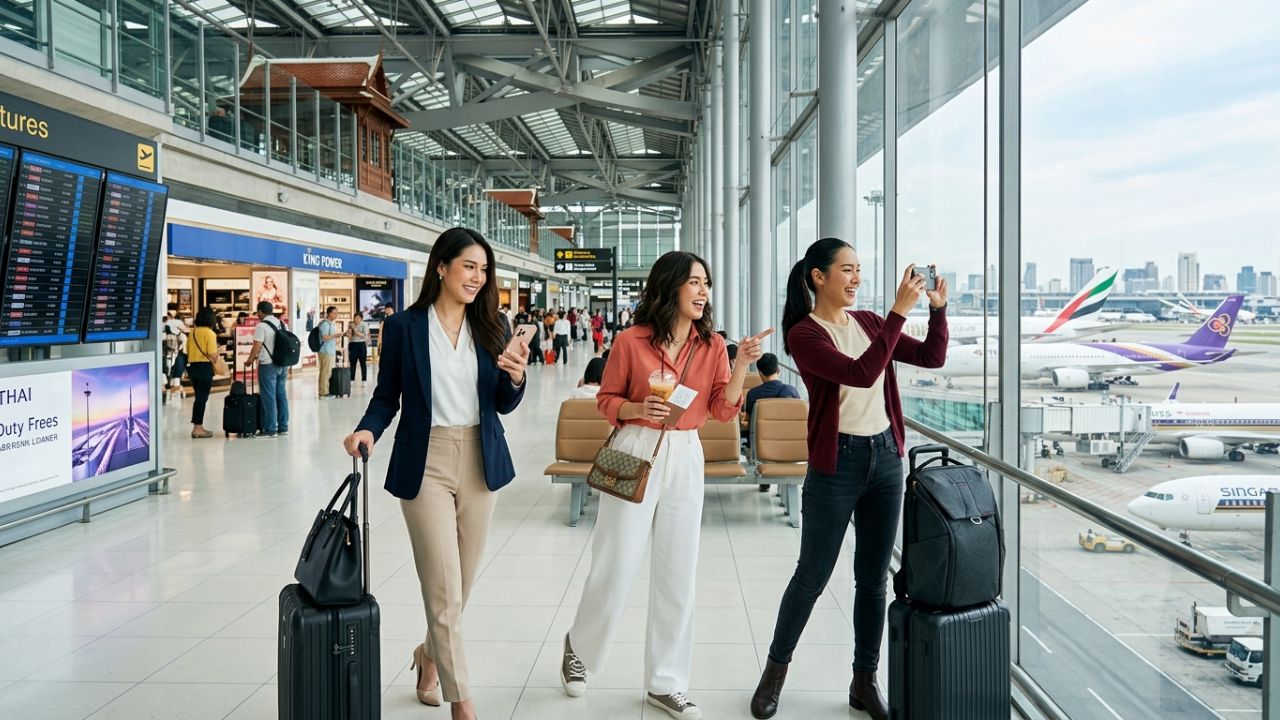
Image generated by AI
In a massive, geopolitically driven infrastructure upgrade designed to permanently eradicate the severe travel chaos and cascading flight cancellations currently plaguing the Asia-Pacific transit grid, Thailand has officially accelerated its unprecedented Bangkok airport expansion surge. As chronic airport disruptions and archaic capacity limitations continue to paralyze primary rival hubs in Singapore and Kuala Lumpur, Thailand is actively weaponizing both Suvarnabhumi Airport and Don Mueang Airport to absorb the exploding international passenger volume. Set to operate at full swing throughout 2026, this massive dual-airport expansion has successfully attracted global heavyweights like Thai Airways, AirAsia, Emirates, Singapore Airlines, Qatar Airways, IndiGo, Japan Airlines, and Cathay Pacific. By transforming Bangkok into the ultimate, un-congested transfer node connecting China, India, Europe, and the UAE, this massive capacity bypass represents the premier headline in today's breaking airline news and essential global aviation updates.
By introducing direct passenger coordination and dynamic scheduling backups, the regional aviation hubs target growing passenger demand across vital commerce sectors. The choice to coordinate flight departures in phases helps to manage gate capacity, supporting the country's broader regional transportation network.
Context: Eradicating Southeast Asian Network Congestion
For the millions of international tourists and corporate professionals relying on seamless connectivity through Southeast Asia, the established routing models have increasingly degenerated into an absolute nightmare of travel chaos.
Historically, passengers traveling between Europe, the Middle East, and East Asia have relied on highly congested mega-hubs. In the modern era of tight connection windows and massive post-pandemic demand spikes, these saturated airports are highly susceptible to cascading flight cancellations. If a connecting flight is delayed by localized weather or terminal gridlock, the entire intercontinental itinerary collapses. The dual expansion of Suvarnabhumi and Don Mueang completely annihilates this risk. Thailand’s transport planning agencies have designed these upgrades specifically to relieve congestion, violently increase the number of available flight slots, and build the ultimate high-capacity bypass. By separating premium long-haul traffic at Suvarnabhumi from low-cost regional carriers at Don Mueang, Bangkok is actively insulating travelers from the rolling delays that define older, legacy transit systems.
To view live flight schedules, specific route expansion updates, or alternative connection options, travelers must consult official Thai aviation directories. For direct booking access to the newly established transit routes and to secure the most efficient flight paths away from congested hubs, travelers should check the official Thai Airways or AirAsia booking portals. To explore live flight tracking and monitor the exact severity of the regional airspace bottlenecks they are actively avoiding, passengers can consult the official FlightAware tracking service.
Section-Wise Breakdown of the Dual-Airport Bypass
The Global Fortress: Suvarnabhumi Airport Expansion
The expansion of Suvarnabhumi Airport serves as the central component of Thailand’s capacity offensive. By executing a massive expansion of the East terminal and plotting additional runway capacity, Suvarnabhumi is building a fortress against global travel chaos. Crucially, the airport is overhauling its Immigration and Processing systems to eliminate the agonizing passenger queues that frequently cause missed connections. Upgrades to specialized cargo systems are also being deployed to absorb the explosive growth of global e-commerce.
The Regional Lifeline: Don Mueang Airport
To ensure Suvarnabhumi remains fluid, Thailand is radically expanding Don Mueang Airport into the ultimate dedicated low-cost carrier (LCC) hub. By housing all budget airlines—most notably AirAsia—within the same massive terminal, Don Mueang will drastically enhance short-haul connectivity. This structural separation is a masterstroke; by physically removing frequent, highly volatile ASEAN flights from Suvarnabhumi, the government effectively prevents regional delays from cascading into international flight cancellations.
The Hospitality and Tourism Shockwave
The airport expansion surge is triggering a massive parallel boom in the local hospitality sector. The demand for luxury, mid-range, and rapid-transit hotels directly connected to the airport infrastructure is exploding. This expansion allows Thailand to aggressively process short-stay transit tourism and MICE (Meetings, Incentives, Conferences, and Exhibitions) traffic, efficiently distributing millions of passengers outward to secondary destinations like Phuket and Chiang Mai without overwhelming the capital.
Technical Roster: Bangkok Airline Expansion and Route Matrix
To ensure absolute factual accuracy regarding the specific airlines and highly lucrative global transit routes defining this massive network upgrade, the following table details the exact operational deployments at the expanded Bangkok hubs:
| Airline Operator | Primary Expanding Routes | Strategic Market Impact |
|---|---|---|
| Thai Airways | BKK–LON, BKK–Tokyo | Flag carrier drives massive long-haul recovery and fleet refurbishment |
| AirAsia | BKK–Kuala Lumpur, BKK–Ho Chi Minh | Dominates ASEAN low-cost growth via the Don Mueang LCC hub |
| Emirates | DUB-BKK-TO/SEL | Establishes Bangkok as a massive global transit hub flow connector |
| Singapore Airlines | SIN-BKK-Europe connections | Strengthens high-yield premium connectivity into Europe |
| Qatar Airways | DOH-BKK-Asia routes | Utilizes Bangkok as a critical node for Middle East transit |
| IndiGo | DEL-BKK, MUM-BKK | Exploits the massive outbound growth from the Indian market |
| Japan Airlines | BKK-Tokyo routes | Captures high-value tourism demanding premium, delay-free flights |
| Cathay Pacific | BKK-Hong Kong | Capitalizes on the aggressive Northeast Asia market rebound |
Passenger Impact: Reclaiming the Intercontinental Transfer
For the everyday passenger and high-yield corporate traveler moving between China, India, Europe, and the UAE, the Bangkok expansion represents the ultimate logistical victory against travel anxiety.
The immediate passenger impact is the introduction of massive route optionality and intense price competition. Previously, travelers attempting to transit through Southeast Asia were frequently trapped by monopolized routes in heavily congested rival hubs. With Emirates routing Dubai traffic through Bangkok to Tokyo, and Qatar Airways cementing Doha-Bangkok-Asia pathways, passengers can now execute seamless, single-stop journeys that avoid traditional bottlenecks. Furthermore, the dedication of Don Mueang entirely to low-cost carriers means a traveler arriving from London on Thai Airways can rapidly transfer across the city to catch a hyper-affordable AirAsia flight to Ho Chi Minh City, completely insulating their long-haul itinerary from regional flight cancellations.
Industry Analysis: Threatening Singapore and Kuala Lumpur
Aviation industry analysts view the Thailand airport expansion surge as a highly aggressive, structural assault on the dominance of rival Southeast Asian hubs.
Analysts note that Bangkok is successfully leveraging its supreme geographic location to capture the massive post-pandemic recovery of passenger traffic between India, China, and the Middle East. By committing to massive physical infrastructure upgrades—runways, terminals, and dedicated LCC housing—Thailand is actively solving the capacity limits that currently plague Singapore and Kuala Lumpur. The influx of premium long-haul operations from Middle Eastern titans, combined with IndiGo's relentless high-frequency flights from Delhi and Mumbai, guarantees that Bangkok will absorb the transit traffic that competing hubs are too congested to handle. Analysts warn that passengers must remain flexible, as the heavy construction required for this 2026 expansion may cause temporary flow issues before the final capacity is unleashed.
Actionable Advice for Bypassing Global Transit Hub Chaos
If you are an international traveler seeking to leverage this massive infrastructure upgrade to avoid the severe travel chaos currently plaguing rival transit hubs, execute this strategic planning checklist immediately:
- Leverage Dual-Airport Strategies: If flying from Europe to a regional ASEAN destination, book your long-haul arrival into Suvarnabhumi, but actively seek out connecting budget flights launching from Don Mueang to save massive amounts of money.
- Monitor the Construction Timelines: While the 2026 expansion will permanently end terminal gridlock, active construction at Suvarnabhumi's East terminal may cause temporary delays. Always expect minor disruptions during high-flow construction phases.
- Exploit the Middle East Transit War: Emirates and Qatar Airways are actively fighting for transit dominance through Bangkok. Constantly compare prices between these two carriers for flights connecting the UAE/Doha through Bangkok to Japan or South Korea.
- Utilize Bangkok as your Primary Node: For complex, multi-country Asian itineraries, abandon older hubs and plan to route exclusively through Bangkok, utilizing the massive influx of IndiGo and Cathay Pacific flights for regional jumps.
FAQ: Bangkok Airport Expansion & Travel Chaos 2026
What is the primary goal of the Thailand airport expansion surge?
The dual expansion of Suvarnabhumi and Don Mueang Airports is designed to relieve severe terminal congestion, radically increase flight slots, and permanently bypass the travel chaos affecting rival Southeast Asian transit hubs.
Which specific airlines are leading the massive expansion in Bangkok?
Thai Airways, AirAsia, Emirates, Singapore Airlines, Qatar Airways, IndiGo, Japan Airlines, and Cathay Pacific are aggressively expanding their routes and frequencies through the newly upgraded Bangkok hubs.
How does Don Mueang Airport help prevent global flight cancellations?
By physically moving all low-cost carriers (like AirAsia) into a dedicated terminal at Don Mueang, Thailand prevents highly volatile, frequent regional flights from congesting Suvarnabhumi, protecting long-haul international flights from cascading delays.
The Breaking Point of Rival Hub Dominance
The massive, highly coordinated expansion of Bangkok’s aviation infrastructure proves definitively that the era of uncontested dominance by legacy Southeast Asian mega-hubs is ending. By offering corporate and leisure passengers a highly capitalized, direct bypass around the severe travel chaos crippling older international networks, Thailand has fundamentally shifted the balance of transit power in the Asia-Pacific. As Emirates, Qatar, Thai Airways, and IndiGo aggressively flood the expanded terminals with new, high-frequency routes, passengers must accept a critical new reality: avoiding brutal airport disruptions requires routing through cities that actively invest in massive physical capacity, and Bangkok has officially emerged as the ultimate transit fortress in global travel.
Key Takeaways
- Massive Dual Expansion: Thailand is radically expanding both Suvarnabhumi (international/premium) and Don Mueang (low-cost) to permanently eradicate regional travel chaos.
- Global Carrier Influx: Emirates, Qatar Airways, and Singapore Airlines are establishing Bangkok as a critical, un-congested node for Middle East and Europe transit.
- Don Mueang LCC Fortress: Consolidating all budget carriers like AirAsia at Don Mueang clears massive congestion from Suvarnabhumi, protecting long-haul reliability.
- IndiGo and Asian Growth: IndiGo is rapidly expanding high-frequency flights from Delhi and Mumbai, while Cathay Pacific and JAL capitalize on Northeast Asian demand.
- Tourism Shockwave: The massive increase in flight slots directly fuels a boom in transit tourism, MICE events, and hotel development across Bangkok and secondary destinations like Phuket.
Related Travel Guides
Riyadh Air Defeats Travel Chaos With Massive US Route Launch
Qantas Defeats Travel Chaos With Project Sunrise Direct Flights
Bangkok Airport Expansion and Thai Airways Strategies on Reddit
Disclaimer
This article is for informational and educational purposes only. It does not constitute legal, financial, or professional advice. While we strive to provide accurate and up-to-date information, travel policies, regulations, and conditions change rapidly. Always verify information with official sources before making travel decisions. Nomad Lawyer makes no representations about the accuracy, reliability, completeness, or suitability of the information provided. Readers should consult qualified professionals for advice specific to their circumstances. The views expressed in this article are those of the author and do not necessarily reflect the views of Nomad Lawyer.
Kunal K Choudhary
Co-Founder & Contributor
A passionate traveller and tech enthusiast. Kunal contributes to the vision and growth of Nomad Lawyer, bringing fresh perspectives and driving the community forward.
Learn more about our team →