
Australia Dominates Bali Tourism as Indonesia Diversifies Global Visitor Base
Bali recorded 6.95 million foreign arrivals in 2025, with Australia holding a 23.44% share. Explore the latest data on India, China, and US tourism growth.
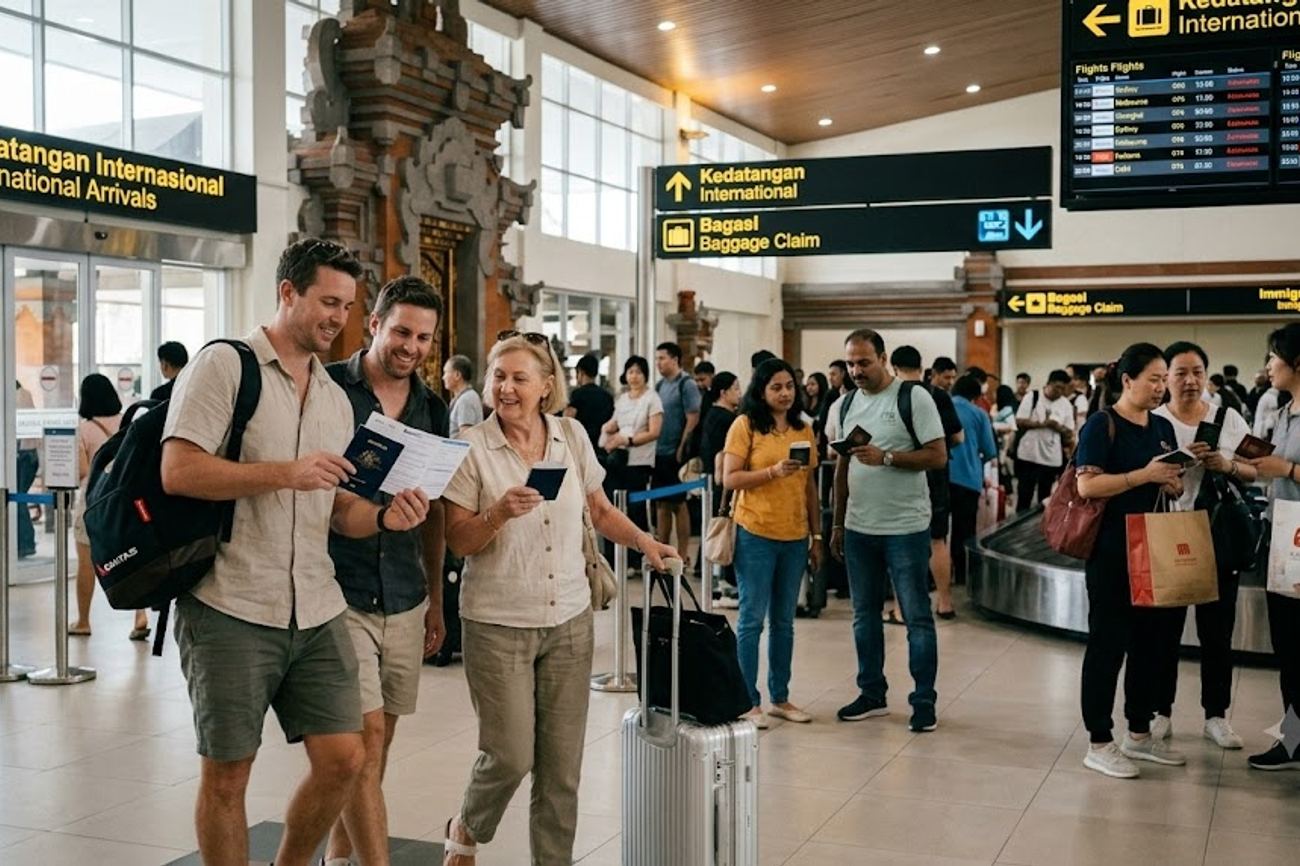
Image generated by AI
Bali Records Massive Growth in International Arrivals
[Denpasar, September 7, 2026] — Bali continues to solidify its status as a premier global destination, recording 6,948,754 direct foreign arrivals throughout 2025. This figure represents a 9.72% increase compared to the previous year, signaling a robust recovery and expansion of the island's tourism sector. While the destination attracts visitors from hundreds of nations, the data confirms that a handful of core markets—led by Australia, India, and China—drive the bulk of the economic activity.
The scale of these arrivals highlights Bali's ability to maintain appeal across vastly different geographic regions. Industry reports indicate that these figures only account for direct arrivals, meaning the total number of international passengers utilizing the island as a transit hub is likely significantly higher.
Australian Market Maintains Dominant Lead
Australia continues to be the most influential source market for Bali, maintaining a substantial lead over all other nations. In 2025, Australian travelers constituted 23.44% of all direct international arrivals. This dominance has persisted well into 2026, with data from June showing Australians representing 25.90% of the 605,013 international tourists who visited that month—a 4.63% increase over May's figures.
The trend was similarly evident in April, where international arrivals totaled 553,328, with Australian passport holders making up 26.46% of the total. This consistent volume is attributed to Bali's geographic proximity to Australia, a mature network of air links, and a high rate of repeat visitation. For the local hospitality sector, the Australian market provides a stable baseline of demand that supports hotel occupancy and long-term infrastructure investment.
Rapid Expansion of Indian and Chinese Visitor Volumes
While Australia holds the top spot, India and China are emerging as critical growth engines for the island. India has secured the position of the second-largest international source market, contributing approximately 569,260 arrivals in 2025. The Indian market is particularly valued for its diversity in travel purpose, encompassing high-spend segments such as destination weddings, luxury wellness retreats, and extended premium stays.
China follows closely as the third-largest market, with 537,380 visitors in 2025. The recovery of Chinese tourism has been especially aggressive; official reports from BPS indicate that Chinese visits surged by 98.54% year-on-year in February 2026. This spike has been a primary driver in pushing overall international arrival numbers above 2025 levels for the same period.
Global Reach Across Europe and North America
Bali's appeal extends far beyond the Asia-Pacific region, with significant contributions from Western markets that provide the destination with greater economic resilience. In 2025, the United Kingdom provided over 317,000 arrivals, followed by France with approximately 279,000 and the United States with roughly 275,000.
These long-haul markets typically exhibit different behavioral patterns than regional visitors. Travelers from Europe and North America often integrate Bali into broader Southeast Asian itineraries, spending more time on the island and engaging more deeply with luxury hospitality, surfing, and cultural tourism. This diversification ensures that Bali is not overly dependent on any single regional economy.
2025 International Arrival Statistics for Bali
| 2025 Source Market | Approx. Arrivals | Share of Bali’s Foreign Arrivals |
|---|---|---|
| Australia | 1.63 million | 23.44% |
| India | 569,260 | 8.19% |
| China | 537,380 | 7.73% |
| South Korea | 346,680 | 4.99% |
| United Kingdom | 317,520 | 4.57% |
| France | 279,120 | 4.02% |
| United States | 274,610 | 3.95% |
| Malaysia | 251,160 | 3.61% |
| Singapore | 211,330 | 3.04% |
| Japan | 208,620 | 3.00% |
Diplomatic Complexities and Entry Policies
Despite the broad international appeal, certain nationalities face different entry requirements due to diplomatic standings. Because Indonesia and Israel do not maintain formal diplomatic relations, Israeli passport holders are subject to a more rigorous "calling-visa" process. This requires prior approval from Indonesian immigration authorities before a visa can be granted.
Reports indicate that some Israeli nationals utilize secondary passports—such as Bulgarian or Romanian documents—to enter the country. While these cases have occasionally drawn political attention and immigration scrutiny, they represent a fraction of Bali's total visitor profile. The disproportionate focus on these arrivals often masks the reality that Bali is a truly global hub welcoming millions from a vast array of backgrounds.
Why This Matters: The Shift Toward a Portfolio Tourism Model
For the modern traveler and travel industry stakeholder, these statistics signal a fundamental shift in Bali's identity. The island has evolved from a regional getaway into a "portfolio destination." This means that if one market faces an economic downturn—such as a recession in Australia or travel restrictions in China—the island can lean on its growth in India or Europe to maintain stability.
From a logistical standpoint, the surge in Indian and Chinese arrivals is forcing a shift in how Bali manages its tourism products. We are seeing a move away from generic mass tourism toward high-value niches like wellness and luxury celebrations. For the visitor, this translates to a more diverse range of high-end services and a more multicultural environment.
Furthermore, the reliance on direct arrivals (nearly 7 million in 2025) underscores the importance of airport capacity and visa efficiency. The "calling-visa" complications for certain nations highlight the ongoing tension between national security/diplomacy and the economic drive for open tourism. As Bali continues to grow, the ability to streamline entry for a wider variety of passports will be the next frontier in its growth strategy.
Related Travel Guides
Disclaimer
This article is for informational and educational purposes only. It does not constitute legal, financial, or professional advice. While we strive to provide accurate and up-to-date information, travel policies, regulations, and conditions change rapidly. Always verify information with official sources before making travel decisions. Nomad Lawyer makes no representations about the accuracy, reliability, completeness, or suitability of the information provided. Readers should consult qualified professionals for advice specific to their circumstances. The views expressed in this article are those of the author and do not necessarily reflect the views of Nomad Lawyer.