
Beyond the Gateways: Massachusetts and New Jersey Compete for International Tourism Growth
Analysis of overseas visitor data for Massachusetts, New Jersey, Hawaii, and Illinois. Explore spending patterns, key global markets, and tourism strengths.

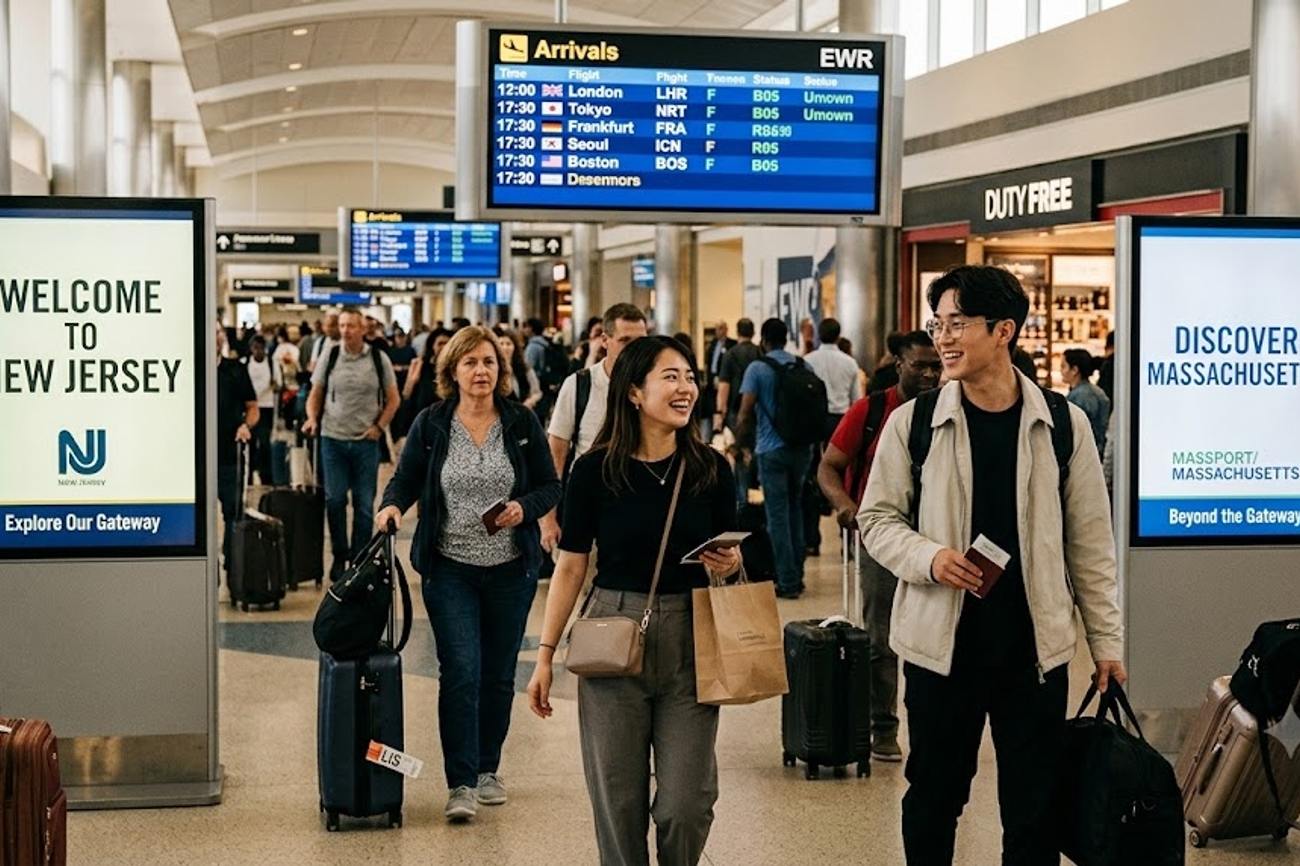
Image generated by AI
Regional Shift in Global Travel Patterns
The United States is seeing a strategic shift in how overseas visitors navigate the country. While major gateways remain essential, states like Massachusetts, New Jersey, Illinois, and Hawaii are aggressively capturing market share by leveraging specific niche appeals—ranging from academic prestige and colonial history to luxury island escapism.
According to National Travel and Tourism Office (NTTO) data, these four states represent distinct tourism models. The current trend shows a move toward "high-value" tourism, where states prioritize visitors who stay longer and spend more per capita rather than focusing solely on arrival volume.
Performance Metrics: State Comparison
The competitive landscape varies significantly based on the primary draw of each state. Massachusetts currently leads in spending efficiency among the mainland states analyzed, while Hawaii maintains a dominant position in the Pacific.
| Rank | State | Overseas Visitors (2024) | Overseas Visitor Spending | Primary Tourism Driver |
|---|---|---|---|---|
| 1 | Hawaii | 1.97 million | $7.46 billion | Luxury beaches, resorts, nature |
| 2 | Massachusetts | 1.50 million | $7.72 billion | Boston, history, education |
| 3 | Illinois | 1.41 million | $5.74 billion | Chicago, architecture, business |
| 4 | New Jersey | Included in NTTO rankings | $3.43 billion | Coastal tourism, Atlantic City |
Hawaii: The Pacific Powerhouse
Hawaii continues to anchor the US international market through a mix of luxury hospitality and natural landmarks. The state's strategy has shifted toward attracting premium travelers who seek authentic cultural immersion over standard resort stays.
The Japanese market remains the most critical pillar for Hawaii. In October 2025, the state saw 70,991 Japanese visitors, marking a 16% increase over October 2024. This growth is supported by robust direct air connectivity and a deep-rooted historical preference for Hawaiian honeymoon and luxury travel.
Market Breakdown for Hawaii:
- Japan: 731,922 visitors (2025) – Focused on luxury resorts and shopping.
- Canada: 394,345 visitors (2025) – Driven by winter escapes.
- Australia: 165,000+ visitors – Focused on surfing and nature.
- South Korea: 150,000+ visitors – Driven by weddings and resorts.
- Europe: 90,000+ visitors – Focused on adventure and volcanic tourism.
Economic momentum remains strong into 2026. In February 2026 alone, Hawaii welcomed 787,024 visitors, generating $1.91 billion in spending.
Massachusetts: The Cultural and Academic Magnet
Massachusetts has emerged as a high-yield destination, characterized by a massive surge in international spending. In 2024, the state welcomed 2.5 million international visitors, contributing to a total direct visitor spending figure of $24.2 billion.
The state's growth is particularly aggressive, with international visitor volume increasing by 21% year-on-year and spending jumping by 45% compared to 2023.
Massachusetts Tourism Impact (Latest Data):
- Total Visitors: 52.6 million (50.1 million domestic / 2.5 million international).
- Economic Contribution: $2.3 billion in state and local tax revenue.
- Employment: 155,808 tourism-supported jobs.
- Primary Markets: Canada (short-haul/shopping) and the United Kingdom (historic/cultural).
Strategic Divergence in Tourism Models
The data suggests a clear divergence in how these states attract global capital:
- Massachusetts utilizes "Education Tourism," leveraging Boston's universities to attract a demographic with high spending power.
- Hawaii relies on "Destination Luxury," maintaining high barriers to entry through long-haul travel but securing massive per-trip expenditures.
- Illinois focuses on "Urban Globalism," using Chicago's architecture and business hubs to attract corporate and event-based travelers.
- New Jersey operates as a "Gateway/Coastal" hybrid, capturing spillover from New York City and attracting beach-goers to Atlantic City.
Key Takeaways
- Spending Over Volume: Massachusetts is seeing a disproportionate increase in spending (+45%) relative to visitor volume (+21%), indicating a shift toward wealthier international demographics.
- Japanese Market Resilience: Hawaii's 16% growth in Japanese arrivals (Oct 2025) proves the resilience of established East Asian travel corridors.
- Economic Diversification: Tourism is a primary employment driver in these regions, specifically in Massachusetts where over 155,000 jobs are supported by the sector.
FAQ
Who are considered "overseas visitors" in these statistics? Overseas visitors are defined as travelers from a foreign country residing outside the US who visit for a temporary period for leisure, business, or education.
Which state has the highest overseas visitor spending among those listed? Massachusetts leads this group with $7.72 billion in overseas visitor spending.
Why is Japan such a significant market for Hawaii? Strong historical ties, frequent direct flight options, and a high demand for luxury resort and honeymoon packages drive these numbers.
Related Travel Guides
Disclaimer
This article is for informational and educational purposes only. It does not constitute legal, financial, or professional advice. While we strive to provide accurate and up-to-date information, travel policies, regulations, and conditions change rapidly. Always verify information with official sources before making travel decisions. Nomad Lawyer makes no representations about the accuracy, reliability, completeness, or suitability of the information provided. Readers should consult qualified professionals for advice specific to their circumstances. The views expressed in this article are those of the author and do not necessarily reflect the views of Nomad Lawyer.
Naina Thakur
Contributor & Travel Specialist
Travel enthusiast and legal writer covering visa regulations, responsible tourism, and cultural journeys across global destinations.
Learn more about our team →