
Australia Aligns with Singapore and Regional Markets as Kuala Lumpur Cafe Tourism Drives Malaysia Food Travel Growth
Kuala Lumpur's cafe culture propels Malaysia's Q1 2026 tourism surge to 10.65M visitors, with Australian arrivals rising 11.4% YoY.

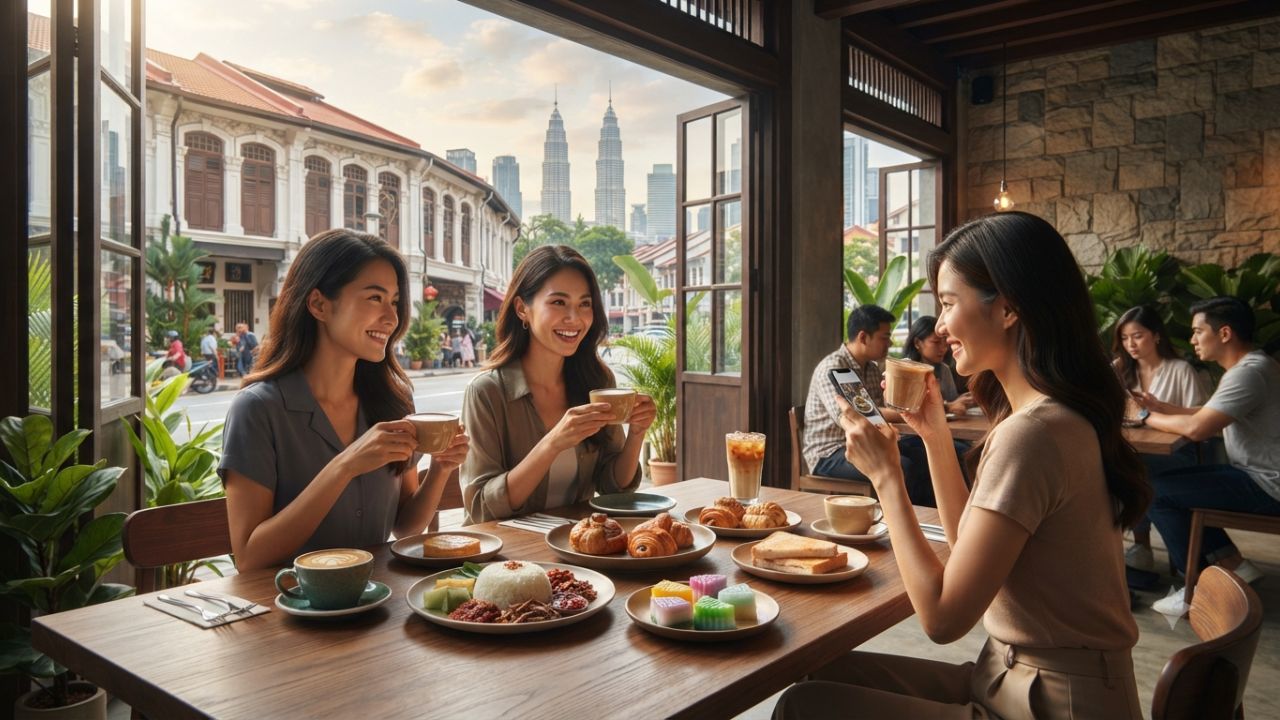
Image generated by AI
Expanding cafe culture and specialty coffee hubs across Kuala Lumpur are accelerating Malaysia's food tourism growth, supporting a 5.4% rise in Q1 2026 international visitor arrivals to 10.65 million alongside an 11.4% surge in Australian travelers.
Kuala Lumpur Cafe Culture Drives Visit Malaysia 2026 Inbound Growth
Kuala Lumpur is strengthening its position as a primary urban food destination across Southeast Asia, driven by expanding specialty coffee, artisan bakeries, and fusion brunch concepts. Supported by the nationwide Visit Malaysia 2026 promotional campaign, official tourism figures show that Malaysia welcomed 10.65 million international visitor arrivals in the first quarter of 2026, representing a 5.4% year-on-year increase.
MALAYSIA Q1 2026 INTERNATIONAL ARRIVALS & MARKET BREAKDOWN
| Column 1 |
|---|
| Total International Arrivals: [===========================] 10.65 Million (+5.4%) |
| Singapore Source Market: [========================] 5.14 Million Visitors |
| China Source Market: [========] 1.41 Million Visitors (+25% YoY) |
| Thailand Source Market: [====] 612,000+ Visitors |
| Australia Source Market: [==] +11.4% YoY Growth |
Cross-border data indicates strong expansion across several key source markets:
- Singapore: Remained Malaysia’s largest international source market, contributing approximately 5.14 million visitor arrivals in Q1 2026.
- China: Recorded a more than 25% year-on-year surge, bringing Chinese tourist arrivals to 1.41 million visitors.
- Thailand: Sustained strong ASEAN connectivity with over 612,000 visitor arrivals.
- Australia: Recorded an 11.4% year-on-year increase in arrivals, with Australian travelers increasingly targeting urban cafe districts that parallel coffee cultures in Melbourne and Sydney.
Neighborhood Dining Circuits Across Bukit Bintang, Bangsar, and Chow Kit
Kuala Lumpur’s cafe infrastructure is concentrated across historic and modern commercial precincts, offering distinct architectural styles, heritage conversions, and specialty menu offerings.
KUALA LUMPUR NEIGHBORHOOD CAFE CORRIDORS
| Column 1 |
|---|
| [ Bangsar ] ---------> Artisan bakeries, Australian brunch, expat lifestyle hub |
| [ Bukit Bintang ] ---> High-traffic urban cafes, specialty roasters, central shopping |
| [ Chinatown / Petaling ] Heritage building conversions, nostalgic kopitiam fusion |
| [ Chow Kit ] --------> Single-origin coffee bars, industrial-chic dining spaces |
| [ TRX District ] ----> Corporate executive dining, modern commercial architecture |
Australian and Singaporean visitors frequently target cafes in Bangsar and Bukit Bintang for Australian-style all-day breakfasts and single-origin pour-overs, while Chinatown (Petaling Street) and Chow Kit draw travelers seeking heritage architecture and Asian-fusion menus.
Verified Kuala Lumpur Specialty Cafes & Visitor Dining Metrics
The table below catalogs key specialty cafes, their geographic locations, primary menu highlights, and target traveler segments across Kuala Lumpur:
| Cafe / Venue Name | Neighborhood / Location | Main Specialty & Experience | Target Visitor Segment |
|---|---|---|---|
| Feeka Coffee Roasters | Bukit Bintang | Specialty coffee roasts & breakfast | Urban morning travelers & digital nomads |
| Kenny Hills Bakers | Bangsar | Artisan sourdough, pastries & brunch | Family & leisure dining enthusiasts |
| BlackBixon Cafe & Restaurant | Jalan Imbi | Contemporary coffee & modern dining | Lifestyle travelers & design enthusiasts |
| Kafei Dian | Petaling Street (Chinatown) | Heritage dining & local fusion breakfasts | Cultural travelers & heritage seekers |
| VCR | Bukit Bintang | Espresso bar & single-origin coffee | Specialty coffee purists & long-haul tourists |
| 103 Coffee | Chow Kit | Award-winning coffee & Japanese fusion | Coffee connoisseurs & Asian fusion foodies |
| Three Years Old Cafe | Bukit Bintang | Australian-style brunch in white townhouse | Lifestyle travelers & slow-paced diners |
| Plan B @ TRX | Tun Razak Exchange (TRX) | Executive city dining & modern beverages | Business travelers & shoppers |
| Niko Neko Matcha 2.0 | Chinatown | Minimalist Japanese matcha concepts | Specialty beverage & tea enthusiasts |
| Yellow Brick Road | Chinatown | Comfort food & vintage brunch settings | Weekend travelers & social diners |
| Tapestry | Chow Kit | Artisan dining in restored heritage space | Food explorers & architectural tourists |
| Urban Daybreak | Bangsar | Authentic Australian-inspired breakfast | Australian travelers & brunch lovers |
Traveler Logistics & Urban Transport Guide for Kuala Lumpur Food Tours
Navigating Kuala Lumpur’s cafe districts efficiently requires understanding the city's integrated rail transit network and digital payment infrastructure.
KUALA LUMPUR CAFE DISTRICT TRANSIT CONNECTIONS
| [ KLIA Airport ] ---> [ KLIA Ekspres ] ---> [ KL Sentral Hub ] |
|---|
| (28-Min Direct) (Non-Stop Rail) (Central Interchange) |
| v |
| +-----------------------------+-----------------------------+ |
| v v v |
| [ Kelana Jaya Line ] [ SBK MRT Line ] [ KL Monorail ] |
| (Bangsar Station) (Bukit Bintang / TRX) (Chow Kit Stop) |
Rail Transit Connectivity
- Air-to-City Connection: Arriving passengers at Kuala Lumpur International Airport (KLIA Terminal 1 or Terminal 2) can board the non-stop KLIA Ekspres train to KL Sentral in 28 minutes.
- RapidKL LRT & MRT Network:
- Bangsar Cafes: Take the LRT Kelana Jaya Line to Bangsar Station, followed by a short walk to Telawi street cafes.
- Bukit Bintang & TRX Cafes: Take the MRT Kajang Line directly to Bukit Bintang Station or TRX Station.
- Chinatown Cafes: Take the MRT or LRT to Pasar Seni Station for immediate access to Petaling Street.
- Chow Kit Cafes: Utilize the KL Monorail to Chow Kit Station or LRT to Sultan Ismail Station.
Payment Methods & Peak Operating Hours
- Cashless Acceptance: Nearly all specialty cafes in Kuala Lumpur accept international credit cards (Visa/Mastercard), Apple Pay, and local e-wallets such as Touch 'n Go eWallet or DuitNow QR.
- Weekend Queue Management: Popular venues like Kenny Hills Bakers and Feeka experience heavy weekend wait times between 11:30 AM and 1:30 PM. Arriving before 9:30 AM or after 2:30 PM ensures faster seating.
Economic and Retail Impact of Lifestyle Dining on Visit Malaysia 2026
The growth of cafe tourism generates multi-sector benefits across Malaysia’s economy, linking hospitality, public transport, retail malls, and urban redevelopment projects.
VISIT MALAYSIA 2026 CAFE ECONOMY IMPACT MATRIX
| Column 1 |
|---|
| Hospitality: Extends average hotel stay duration in central KL districts. |
| Retail Sector: Connects high-end cafe pop-ups with commercial hubs like TRX. |
| Urban Renewal: Revitalizes heritage shophouses in Chow Kit and Chinatown. |
Official tourism strategy under Tourism Malaysia prioritizes gastronomy as a core driver for increasing average tourist length-of-stay and daily expenditure. By converting historic shophouses in Chinatown and Chow Kit into modern cafe venues, operators preserve architectural heritage while generating local employment.
Kuala Lumpur Cafe Tourism FAQ
How many international tourists visited Malaysia in Q1 2026?
Malaysia recorded 10.65 million international visitor arrivals in Q1 2026, representing a 5.4% year-on-year increase.
Which country was Malaysia's top international source market in Q1 2026?
Singapore was Malaysia's top international source market, contributing approximately 5.14 million visitor arrivals.
How much did Australian tourist arrivals grow in early 2026?
Australian visitor arrivals to Malaysia grew by 11.4% year-on-year during the first quarter of 2026.
What rail transit line connects travelers to Bangsar's cafe district?
The LRT Kelana Jaya Line connects travelers directly to Bangsar Station for access to the neighborhood's cafe scene.
Related Travel Guides
Disclaimer
This article is for informational and educational purposes only. It does not constitute legal, financial, or professional advice. While we strive to provide accurate and up-to-date information, travel policies, regulations, and conditions change rapidly. Always verify information with official sources before making travel decisions. Nomad Lawyer makes no representations about the accuracy, reliability, completeness, or suitability of the information provided. Readers should consult qualified professionals for advice specific to their circumstances. The views expressed in this article are those of the author and do not necessarily reflect the views of Nomad Lawyer.
Kunal K Choudhary
Co-Founder & Contributor
A passionate traveller and tech enthusiast. Kunal contributes to the vision and growth of Nomad Lawyer, bringing fresh perspectives and driving the community forward.
Learn more about our team →