
Vault to Visitor: Australia Unlocks National Art to Drive Regional Tourism
Australia's Sharing the National Collection initiative moves masterpieces from Canberra storage vaults to regional galleries, driving a surge in drive-market tourism.

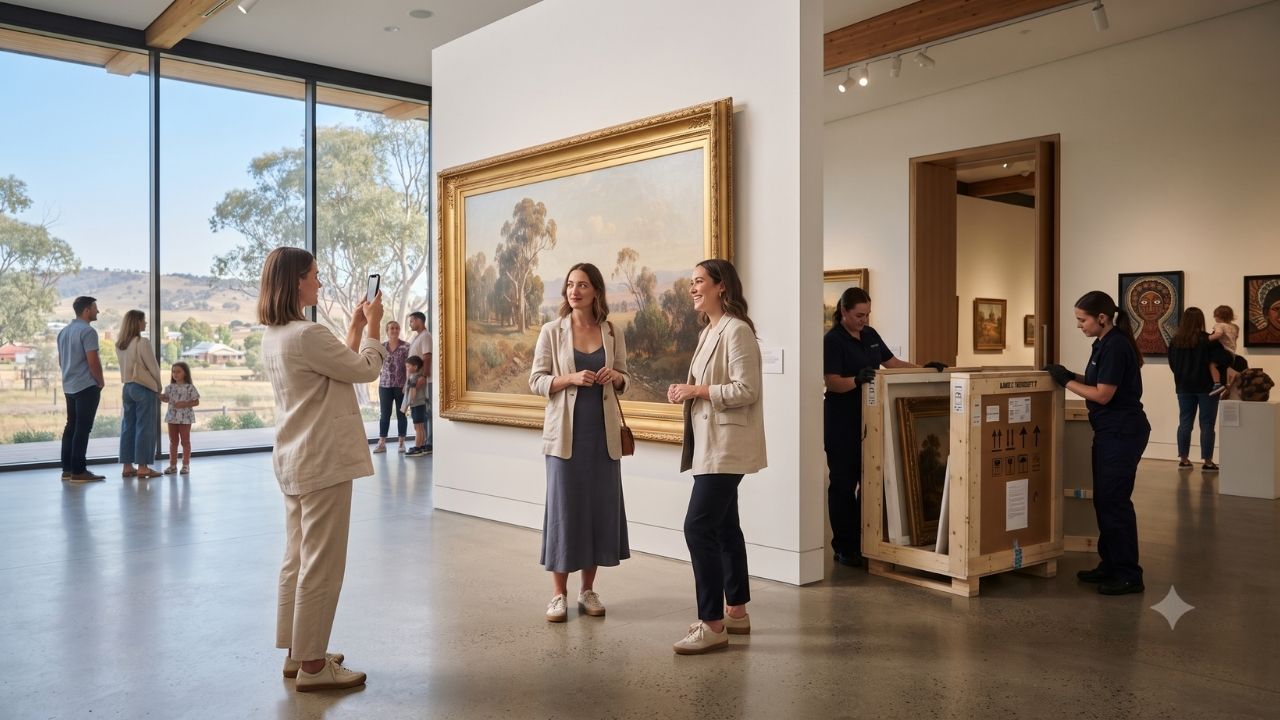
Image generated by AI
Australia's $11.8 million Sharing the National Collection initiative has triggered a regional tourism boom by loaning high-value artworks from Canberra storage vaults directly to regional and suburban galleries.
The Institutional Storage Paradox
Major public art galleries and national collecting institutions worldwide face severe spatial constraints, resulting in 90% to 98% of their permanent collections remaining stored in closed vaults. The National Gallery of Australia (NGA) in Canberra, custodian of over 155,000 to 166,000 artworks—including the world’s largest collection of Aboriginal and Torres Strait Islander art—historically displays only a tiny fraction of its holdings.
This centralization of cultural assets has historically limited cultural activities to capital cities, leaving regional galleries underutilized despite modern venues and willing local audiences.
Sharing the National Collection: A Policy Blueprint
To resolve this geographic disparity, the Australian Government launched the Sharing the National Collection initiative under Revive, the five-year National Cultural Policy. Funded with an initial $11.8 million investment over four years, the program loans works from the national vault to regional and suburban galleries for terms of two to five years.
Historically, regional galleries were barred from hosting high-value items due to the prohibitive cost of commercial fine-art insurance, climate-controlled transport logistics, and specialized white-glove installation. A single masterpiece by Claude Monet or Andy Warhol carries valuations exceeding $140 million to $170 million AUD.
To overcome this bottleneck, the federal government established a comprehensive risk-underwriting mechanism within the Revive policy, where the Commonwealth absorbs the insurance liability and the NGA funds and manages all transport, crating, and conservation logistics.
Impact of Vault-to-Visitor (V2V) Art Loans on Regional Venues
| Host Gallery & Location | Featured Masterpiece / Artist | Combined Value / Significance | Recorded Visitor Growth Impact |
|---|---|---|---|
| Wanneroo Regional Gallery (WA) | Andy Warhol (Elvis, pop-art portfolio) | $148 Million AUD pop-art loan | +754% foot traffic increase |
| Tweed Regional Gallery (NSW) | Claude Monet (Meules, milieu du jour) | $174 Million AUD masterpiece | Anchored 1,000,000+ visitor milestone |
| Shoalhaven Regional Gallery (NSW) | Barnett Newman (Broken Obelisk sculpture) | 3.5-tonne monumental steel | South Coast drive-market anchor |
| Ipswich Art Gallery (QLD) | Mark Rothko (1957 #20), Agnes Martin | Mid-Century Modernism masters | Major South East Queensland drawcard |
| National Program Average | Comprehensive NGA collection distribution | Multi-period national collections | +56% average visitation increase |
Mapping the Regional Art Corridors
By placing masterpieces directly into suburban and regional communities, the program has established a decentralized museum model. Host galleries nationwide report an average 56% surge in overall visitation within the first six months of displaying vault loans. Program attendance surpassed 1 million visitors by September 2025 and exceeded 2 million visitors in subsequent months.
- Wanneroo Regional Gallery (Western Australia): Secured a $148 million AUD pop-art loan of Andy Warhol’s 1963 life-sized screenprint Elvis alongside his famous Campbell’s Soup I screenprints. The exhibition generated a 754% increase in gallery foot traffic, drawing drive-market visitors from Perth, the Swan Valley, and the Coral Coast.
- Tweed Regional Gallery (New South Wales): Hosted Claude Monet’s Meules, milieu du jour (1890), valued at $174 million AUD. Located in South Murwillumbah, the loan established an impressionist travel corridor in the Tweed Valley, drawing visitors from Brisbane, the Gold Coast, and the Northern Rivers.
- Shoalhaven Regional Gallery (New South Wales): Installed Barnett Newman's monumental outdoor sculpture, Broken Obelisk. The 3.5-tonne steel piece required heavy-crane engineering to position, creating a South Coast drive-market anchor in Nowra.
- Ipswich Art Gallery (Queensland): Features American abstract expressionist Mark Rothko's 1957 #20 and Agnes Martin's mid-century paintings, paired with Australian ceramicist Gwyn Hanssen Pigott's works. The exhibition acts as a major cultural drawcard in South East Queensland.
- First Nations Narrative Tourism: The program returns iconic Aboriginal and Torres Strait Islander works to Country. Araluen Arts Centre in Alice Springs hosted works by Albert Namatjira and Desert Country artists, while the Godinymayin Yijard Rivers Centre in Katherine, NT, displayed Penny Archie’s BOAB100, allowing visitors to experience the art in its geographic context.
- Tasmanian and Outback Circuits: The program extends to remote galleries, such as broken Hill City Art Gallery in outback NSW, and North-West Tasmanian venues including Ulverstone's Art Gallery at HIVE (Auguste Rodin bronze studies) and Devonport Regional Gallery (Joan Ross digital creations).
The Cultural Tourism Multiplier
The Sharing the National Collection initiative aligns with the rise of "micro-cations"—short weekend getaways located within a two-to-four-hour drive of major capital cities. Regional galleries hosting high-profile works act as primary trip triggers.
While admission to the exhibitions is often free, visitors generate significant economic yield for surrounding regional businesses. Cultural drive-market visitors spend across several key sectors: booking local hotels or farm stays, dining at regional wineries and farm-to-table cafes, and purchasing artisan goods at local craft markets, distributing economic benefits directly to regional communities.
Destination Specialist Local Insider Tips
To help travelers plan regional art road trips, local travel specialists recommend the following insider tips:
- Plan Multi-Day Art Trails: Bundle visits to neighboring regional galleries—such as combining Tweed and Caloundra in the north, or Ulverstone and Devonport in Tasmania—to create a themed itinerary.
- Check Exhibition Schedules and Hours: Some regional galleries operate on reduced schedules or close on Mondays. Always verify opening hours before setting off.
- Support Local Farm-to-Table Dining: Dine at small cafes and restaurants situated near regional host galleries to directly support local producers and small businesses.
- Reserve Guided Community Tours: Many regional galleries offer curatorial tours led by local guides and First Nations custodians. Book these in advance for deeper regional insights.
- Combine Art with Nature Walks: Pair gallery visits with nearby nature explorations, such as hiking in Dorrigo National Park or the Blue Mountains, to enjoy a balanced eco-tourism experience.
Future Outlook
The Sharing the National Collection program offers a sustainable alternative to traditional tourism infrastructure development, upgrading the destination profile of regional towns immediately while avoiding massive construction debts. By shifting museum strategy from centralized storage to active regional distribution, Australia democratizes access to national heritage, reduces metropolitan congestion, and creates sustainable economic returns across regional communities.
Related Travel Guides
Disclaimer
This article is for informational and educational purposes only. It does not constitute legal, financial, or professional advice. While we strive to provide accurate and up-to-date information, travel policies, regulations, and conditions change rapidly. Always verify information with official sources before making travel decisions. Nomad Lawyer makes no representations about the accuracy, reliability, completeness, or suitability of the information provided. Readers should consult qualified professionals for advice specific to their circumstances. The views expressed in this article are those of the author and do not necessarily reflect the views of Nomad Lawyer.
Preeti Gunjan
Contributor & Community Manager
A passionate traveller and community builder. Preeti helps grow the Nomad Lawyer community, fostering engagement and bringing the reader experience to life.
Learn more about our team →