
Victoria Sets A$49.5 Billion Tourism Spending Record as UK Travelers Spend 42% More: 2026 Travel Trends

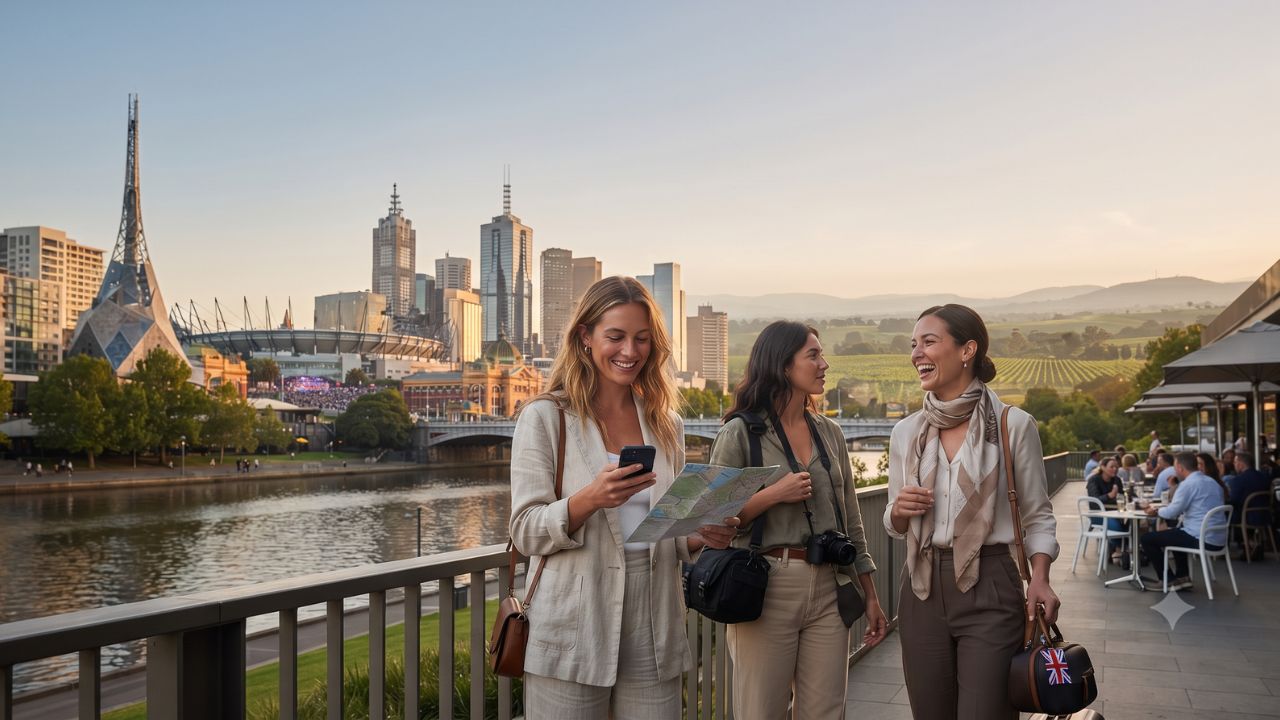
While total overnight stays across Victoria dropped by 1.4%, British travelers drove an unprecedented 42.6% surge in expenditure, propelling the state's visitor economy to a record A$49.5 billion. Official data released by the Victorian Department of Jobs, Skills, Industry and Regions for the year ending June 2026 highlights a profound structural shift in Australian tourism: international and domestic travelers are taking shorter, higher-yielding journeys centered around premium dining, culture, and major sports spectacles.
Statewide economic metrics published on 30 September and reinforced by Visit Victoria on 6 October demonstrate that total spending grew 6.6% year-on-year, alongside a 4.9% increase in total visitation to 121.2 million visits. However, total visitor nights slipped 1.4% to 166.2 million. This growing divergence between revenue and bed-nights reveals an evolving travel landscape where experience density outranks holiday duration.
The Spending vs. Stays Divide in Victoria's Economy
The headline figures illustrate how international travelers are spending significantly more per day across Melbourne and regional corridors. International overnight spending reached A$10.5 billion, climbing 12.9% against a modest 2.2% rise in international overnight visitors (2.8 million). Simultaneously, total international visitor nights declined 1.7% to 79.7 million nights.
The United Kingdom emerged as Victoria's standout growth engine. While British visitor arrivals grew by 21.4%, their total financial contribution escalated by 42.6%. This expenditure surge was heavily supported by blockbuster events on Melbourne's calendar, including the British & Irish Lions Tour and the historic Boxing Day Ashes Test at the Melbourne Cricket Ground (MCG).
China represented another pillar of international recovery, with Chinese visitor spending reaching A$3.6 billion—an increase of 20%—alongside an 11.4% gain in visitor arrivals.
| Tourism Metric | Year Ending June 2026 | Year-on-Year Growth | Key Trend Analysis |
|---|---|---|---|
| Total Visitor Spending | A$49.5 billion | Up 6.6% | New statewide spending record |
| Total Visitation (Visits/Trips) | 121.2 million | Up 4.9% | Strong domestic day-trip & international rebound |
| Total Visitor Nights | 166.2 million | Down 1.4% | Shift toward shorter, high-spend itineraries |
| International Overnight Spending | A$10.5 billion | Up 12.9% | Premium experiential spend outpaces arrival volume |
| International Overnight Visitors | 2.8 million | Up 2.2% | Steady recovery across key long-haul source markets |
| International Visitor Nights | 79.7 million | Down 1.7% | Faster-paced multi-destination trips |
| Domestic Day-Trip Expenditure | A$15.5 billion | Up 19.7% | Rapid expansion in regional dining & weekend excursions |
| Domestic Overnight Spending | A$23.5 billion | Down 2.8% | Budget reallocation toward day getaways |
What Makes Victoria's Travel Market Different
Victoria's tourism model differs fundamentally from sun-and-sand destinations in Queensland or Western Australia. The state operates on an event-driven, urban-cultural engine tightly connected to compact regional circuits. According to the Victorian Government, the state's major events portfolio generated A$3.64 billion in economic impact during 2025 alone, supporting nearly 17,000 jobs across hospitality, transit, and staging logistics.
Domestic habits are reshaping the local retail and hospitality fabric. Total domestic spending reached A$39 billion (up 5%). However, domestic overnight spending softened 2.8% to A$23.5 billion, while domestic day-trip spending jumped 19.7% to A$15.5 billion. Melburnians and regional residents are spending heavily on curated experiences—winery lunches in the Yarra Valley, boutique shopping in Daylesford, or surf trips along the Mornington Peninsula—without committing to multi-night hotel stays.
To balance this trend, regional Victoria captured A$9 billion in intrastate overnight expenditure, bolstered by targeted promotional programs that direct travel demand into communities recovering from historical bushfires and flood impacts.
Visitor Insider Tips for Touring Melbourne and Beyond
Navigating Victoria's compact geography and event calendar requires strategic local planning:
- Timing Major Event Windows: Melbourne's CBD accommodation fills months ahead during signature fixtures like the Boxing Day Ashes, Australian Open, and Melbourne Cup Carnival. If traveling during these periods, look for lodging in inner-neighborhood transit pockets like South Yarra, Fitzroy, or Carlton along direct tram lines.
- Regional Day-Trip Routing: You do not need a multi-day car rental to experience regional Victoria's top culinary hubs. Take the V/Line train from Southern Cross Station to Castlemaine, Bendigo, or Geelong to access regional art galleries, craft breweries, and farm-to-table dining without highway congestion.
- Coffee and Dining Etiquette: Melbourne's celebrated laneway cafe culture runs strictly on daytime operating hours. Most specialty roasters close by 3:30 p.m. Make dinner reservations well in advance for signature dining precincts along Flinders Lane and Gertrude Street.
- Free Tram Zone Hack: Within Melbourne's central grid and Docklands, all tram rides are completely free. You only need to tap your myki transport card when traveling outside the designated Free Tram Zone boundary toward St Kilda, Brunswick, or South Melbourne Market.
Cultural and Environmental Context of Victoria's Tourism Growth
The continuous concentration of high-spend tourism in Melbourne's city center highlights the ongoing challenge of regional economic dispersal. As promoted by Tourism Australia, the strategic objective for 2026 and beyond is channeling international expenditure into First Nations cultural tours, national park conservation, and rural artisanal producers.
Environmental stewardship remains central to preserving iconic regional assets like the Twelve Apostles on the Great Ocean Road and the sensitive rainforests of the Otway Ranges. Increased day-trip traffic places physical pressure on regional parking and coastal roads, prompting Parks Victoria to implement sustainable trail maintenance and localized waste management initiatives funded in part by growing visitor receipts. Visit Victoria projects total state tourism expenditure to reach A$57.2 billion by 2030 by focusing on sustainable yield over sheer tourist volume.
FAQ: Visiting Victoria 2026
What drove the A$49.5 billion tourism spending record in Victoria?
Record spending was powered by a 42.6% surge in UK traveler spending, a 20% rise in Chinese visitor spend, and a 19.7% boom in domestic day trips.
Are accommodation prices higher across Melbourne hotels?
Aggregate spending growth reflects increased event attendance and premium dining rather than universal hotel rate hikes. Room pricing fluctuates based on the major events calendar.
How do I get from Melbourne Airport to the city center?
The SkyBus express shuttle runs every 10–15 minutes directly from Tullamarine Airport to Southern Cross Station in downtown Melbourne, taking roughly 25 to 35 minutes.
What is the best way to explore regional Victoria?
Frequent V/Line regional trains link Melbourne to Ballarat, Bendigo, and Geelong, while self-driving along the Great Ocean Road offers flexible access to coastal national parks.
As global travelers spend more while staying fewer nights, Victoria's travel scene is setting a new benchmark for high-value cultural and event-led tourism.
Related Travel Guides
Disclaimer
This article is for informational and educational purposes only. It does not constitute legal, financial, or professional advice. While we strive to provide accurate and up-to-date information, travel policies, regulations, and conditions change rapidly. Always verify information with official sources before making travel decisions. Nomad Lawyer makes no representations about the accuracy, reliability, completeness, or suitability of the information provided. Readers should consult qualified professionals for advice specific to their circumstances. The views expressed in this article are those of the author and do not necessarily reflect the views of Nomad Lawyer.
Raushan Kumar
Founder & Lead Developer
Full-stack developer with 11+ years of experience and a passionate traveller. Raushan built Nomad Lawyer from the ground up with a vision to create the best travel and law experience on the web.
Learn more about our team →