
Australia Builds Resilient Roads to Protect Heritage Ecotourism Spots
Australia implements major climate-resilient road infrastructure upgrades to safeguard high-value ecotourism hubs like Cairns, the Daintree, and Dorrigo from storms.

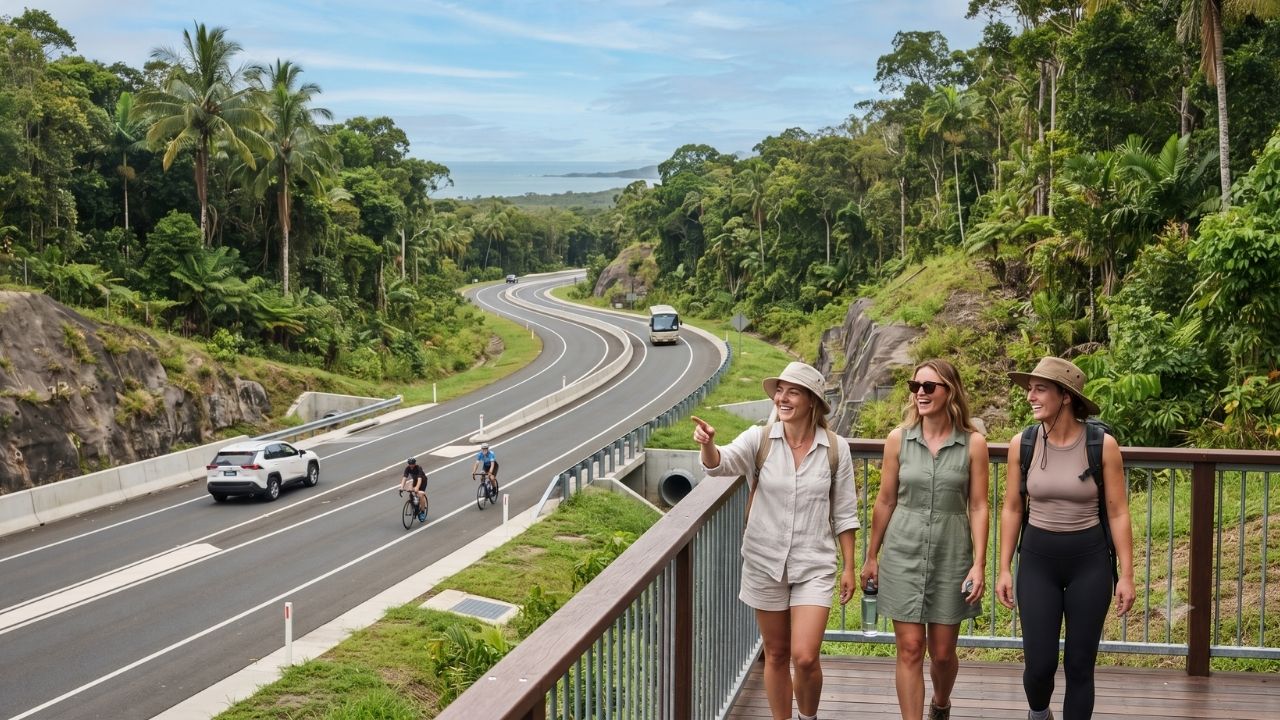
Image generated by AI
Australian transport authorities are delivering major climate-resilient infrastructure upgrades across key tourist corridors to safeguard high-value ecotourism destinations from severe tropical weather.
Climate Vulnerabilities of Single-Access Ecotourism Hubs
Regional nature-based economies depend heavily on reliable road connections to transport travelers to remote locations. High-value enclaves such as the Daintree Rainforest, the Great Barrier Reef hinterland, and the UNESCO World Heritage-listed Gondwana Rainforests generate billions of dollars in annual expenditure, but are often reached via narrow, single-access roads.
When extreme weather strikes, these linear roads become severe economic bottlenecks. For example, during Ex-Tropical Cyclone Jasper in December 2023, rainfall between 3.2 and 4.2 meters flooded the Douglas Shire in a single week. The storm triggered over 100 landslips, including a 300-tonne boulder fall near Oak Beach that closed a 27-kilometer stretch of the Captain Cook Highway. Further north, a 56-meter landslide along the Noah Range isolated the Cape Tribulation community north of the Daintree River for more than three months.
This disruption caused a 60 per cent year-on-year drop in regional tourism spend. The economic damage forced the activation of a $24.15 million Tourism Recovery Package under the Disaster Recovery Funding Arrangements (DRFA), including $10 million in Tourism Exceptional Assistance Grants (providing up to $500,000 per operator) and a $10 million Building Resilient Tourism Infrastructure Fund.
Proactive Betterment: The 2026 Infrastructure Model
To address these vulnerabilities, Australian transport departments are executing civil engineering upgrades focused on slope stability, flood immunity, and utility undergrounding. In 2026, four flagship projects illustrate this shift:
Key Australian Ecotourism Road Resilience Upgrades (2026)
| Project Name / Corridor | Construction & Geotechnical Methods | Subsurface & Hydrological Modifications | Funding Allocation | Tourism Access Secured |
|---|---|---|---|---|
| Cairns Western Arterial (CWAR) | Four-lane carriageway duplication, heavy pavement widening | Subterranean trenching & directional boring for utility relocation | Joint Federal-State funding | Secures primary access to Skyrail and Daintree |
| Waterfall Way Project (NSW) | Deep-soil anchors, rock bolts, vertical piling, gabion retaining walls | Sub-horizontal drainage to relieve internal groundwater pressure | $100M+ corridor funding ($30M detour upgrades) | Protects access to UNESCO Gondwana Rainforests |
| Flinders Highway Betterment | Full-width pavement rebuilding, shoulder widening | Elevated embankments, box culverts, concrete floodways | $89.91M 2026 Program (50:50 joint DRFA split) | Preserves Outback Dinosaur Trail circuits |
| FNQ Slope Stabilization | 66km soil nails, 27,000m² steel mesh, 1.7km structural piles | 11km sub-horizontal drains, 1,100m³ gabion baskets | $49M Betterment Fund across 8 road assets | Protects northern reef and rainforest corridors |
Cairns Western Arterial Road (CWAR) Duplication
In Far North Queensland, the duplication of the Cairns Western Arterial Road (CWAR) across the low-lying Barron River floodplain secures access for over 42,000 daily vehicles. A key phase of this project involves subterranean utility relocation. Managed by HEH Civil, crews are placing municipal power, telecommunications, water, and sewage conduits deep underground to protect them from surface washouts. Initial utility relocations were completed in August 2026, with pipe works running through late 2027.
Waterfall Way Resilience Project
In New South Wales, the 170-kilometer Waterfall Way connects the coastal Pacific Highway to Dorrigo National Park. Following a 250-tonne rockfall from a 26-meter cliff face at Gordonville Cutting in January 2026, Transport for NSW established single-lane controlled access within six weeks. In August 2026, long-term stabilization began at Gordonville Cutting and Myers Bluff, deploying deep-soil anchors, high-tensile steel mesh, vertical piles, and sub-horizontal drains. This work is backed by over $100 million in corridor funding and $30 million for local detour upgrades.
Flinders Highway Betterment Program
In Outback Queensland, the 800-kilometer Flinders Highway supports the "Overlanders Way" and "Australian Dinosaur Trail" touring circuits, connecting fossil attractions in Hughenden, Richmond, and Winton. The $89.91 million 2026 Betterment Program rebuilds pavement to heavy-duty standards, raises road formations, and installs reinforced concrete culverts to prevent seasonal flood blockages.
Far North Queensland Slope Stabilization
A broader $49 million betterment fund is stabilizing over 100 geotechnical sites on the Kuranda Range and Captain Cook Highway. The project deploys 66 kilometers of soil nails, 27,000 square meters of steel mesh, 1.7 kilometers of structural piles, and 11 kilometers of sub-horizontal drains to secure northern rainforest routes.
Multi-Modal Transit Integration and Redundancy
Ecotourism destinations function as integrated networks where highway reliability supports other transport modes. For example, visitors traveling between Cairns and the Atherton Tablelands use the Kuranda Scenic Railway and Skyrail Rainforest Cableway. When wind or landslips pause these services, visitor flow shifts to the road network. Duplicating the CWAR to a four-lane carriageway ensures the road network can absorb this diverted passenger volume without gridlock.
Similarly, these upgrades protect self-drive touring networks (rental fleets, motorhomes, and caravans) and secure supply chains for remote eco-resorts. Resilient highways ensure delivery trucks can supply remote lodges with produce, fresh water, and fuel, stabilizing operating costs throughout the wet season.
Destination Specialist Local Insider Tips
To help travelers visit these natural regions comfortably during wet seasons, local travel specialists recommend the following insider tips:
- Review Seasonal Weather Alerts: The wet season in Far North Queensland runs from November to April. Check state road traffic sites (like QLDTraffic) before driving.
- Utilize Resilient Detours: If Waterfall Way or Kuranda Range experience localized closures, utilize pre-planned, reinforced inland detours like Summervilles Road.
- Support Local Eco-Resorts Directly: Booking directly with operators in isolated enclaves (like Cape Tribulation or Dorrigo) helps fund their localized resilience initiatives.
- Check Rental Car Insurance Policies: Some rental contracts restrict driving on unsealed or flood-prone outback highways. Verify coverage before embarking on the Dinosaur Trail.
- Carry Emergency Travel Packs: Always keep drinking water, shelf-stable snacks, and basic first aid kits in your vehicle when navigating remote routes in Outback Queensland.
Future Outlook
Proactive infrastructure betterment delivers high returns by preventing business interruptions and protecting regional GDP ahead of the Brisbane 2032 Olympic Games, which aims to spread international visitors to regional ecotourism zones. By establishing flood-immune roads, anchored slopes, and underground utilities, Australia provides a practical blueprint for tropical nature destinations worldwide to protect their local economies.
Related Travel Guides
Disclaimer
This article is for informational and educational purposes only. It does not constitute legal, financial, or professional advice. While we strive to provide accurate and up-to-date information, travel policies, regulations, and conditions change rapidly. Always verify information with official sources before making travel decisions. Nomad Lawyer makes no representations about the accuracy, reliability, completeness, or suitability of the information provided. Readers should consult qualified professionals for advice specific to their circumstances. The views expressed in this article are those of the author and do not necessarily reflect the views of Nomad Lawyer.
Preeti Gunjan
Contributor & Community Manager
A passionate traveller and community builder. Preeti helps grow the Nomad Lawyer community, fostering engagement and bringing the reader experience to life.
Learn more about our team →