
US Autumn Travel Dynamics: How Cuyahoga Valley and New River Gorge Reshape Seasonal National Park Economics
As the National Park Service reports 323 million visits, Cuyahoga Valley crosses 3 million and New River Gorge nears 2 million, shifting autumn travel away from overcrowded New England hubs.

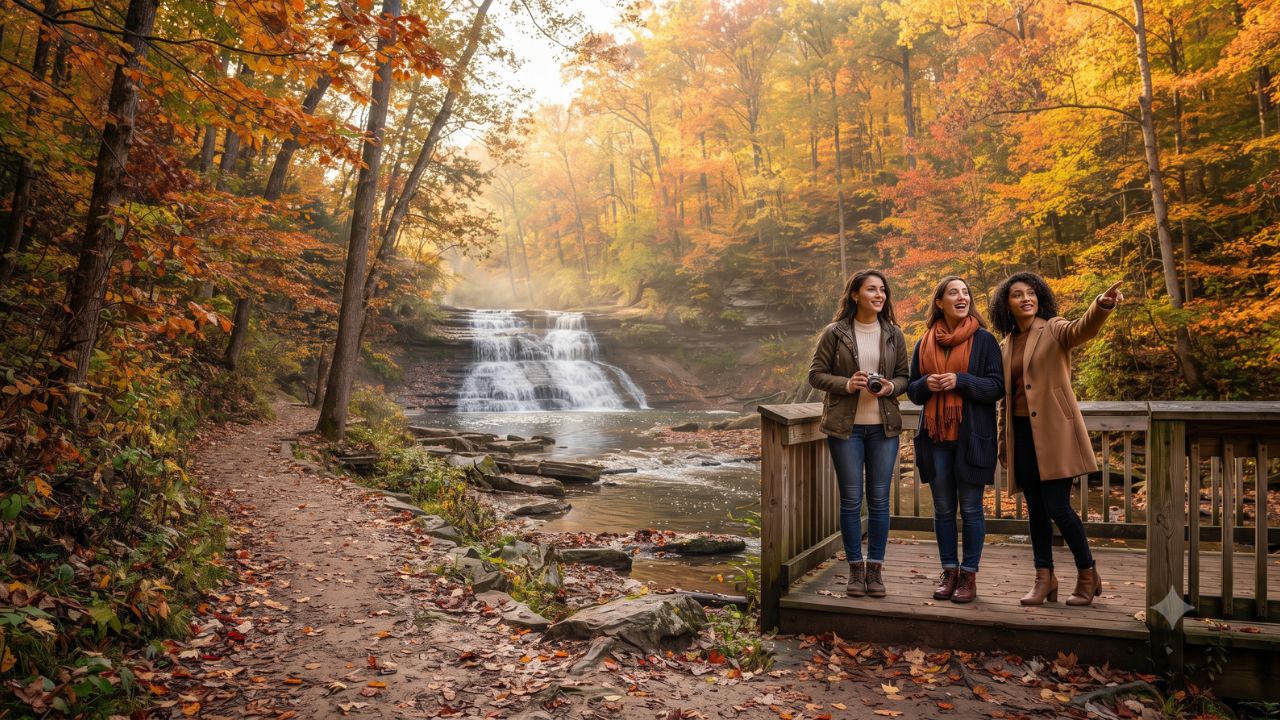
Recording 323,014,305 recreation visits across 406 reporting park sites in 2025, the National Park Service (NPS) documented a sustained geographic redistribution of seasonal domestic travel, highlighted by a 17.5 percent five-year surge in Cuyahoga Valley and a 16.4 percent expansion at New River Gorge. As traditional autumn leaf-peeping corridors across northern New England confront severe lodging inflation and vehicle congestion, travelers are redirecting itineraries toward accessible Appalachian preserves, Great Lakes shorelines, and secluded Western mountain basins.
The five-year visitation trajectories demonstrate that national park tourism is no longer dominated solely by legacy western reserves or coastal icons. While Acadia National Park in Maine maintained an established threshold above 4 million visits, Ohio's Cuyahoga Valley crossed the 3-million mark in 2025, and West Virginia's New River Gorge expanded to nearly 2 million visits. Supported by state tourism campaigns from Brand USA (Visit The USA), this structural shift balances outdoor recreation with regional culinary traditions, heritage railway transit, and decentralized regional hospitality spending.
Five-Year Visitation Trends Across Regional National Parks
Evaluating federal visitation data from 2021 through 2025 illustrates distinct regional divergence. While established parks like Acadia experienced plateaued growth (+0.3 percent over five years) and urban-adjacent preserves like Indiana Dunes recorded a gradual contraction (-17.2 percent), mid-Atlantic and Midwestern destinations registered strong annual gains.
The official recreation-visit counts across the six benchmark federal reserves are detailed in the comparative matrix below:
| National Park System Unit | 2021 Visits | 2022 Visits | 2023 Visits | 2024 Visits | 2025 Visits | 5-Year Net Trend (2021–2025) |
|---|---|---|---|---|---|---|
| Cuyahoga Valley, Ohio | 2,575,275 | 2,913,312 | 2,860,059 | 2,912,454 | 3,025,325 | +17.5% (+450,050 annual visits) |
| New River Gorge, West Virginia | 1,682,720 | 1,593,523 | 1,707,223 | 1,811,937 | 1,958,440 | +16.4% (+275,720 annual visits) |
| Indiana Dunes, Indiana | 3,177,210 | 2,834,180 | 2,765,892 | 2,705,209 | 2,629,497 | -17.2% (-547,713 annual visits) |
| Great Basin, Nevada | 144,875 | 142,115 | 143,265 | 152,068 | 161,210 | +11.3% (+16,335 annual visits) |
| Acadia, Maine | 4,069,098 | 3,970,260 | 3,879,890 | 3,961,661 | 4,079,318 | +0.3% (+10,220 annual visits) |
| Isle Royale, Michigan | 25,844 | 25,454 | 28,965 | 28,806 | 29,091 | +12.6% (+3,247 annual visits) |
| NPS Systemwide Footprint | 323M Total | Annual Record | 406 Parks | Federal Data | 323,014,305 | Systemwide Recreation Benchmark |
In Ohio, Cuyahoga Valley protects approximately 32,950 acres between the metropolitan centers of Cleveland and Akron. The park's expansion reflects the operational appeal of low-friction accessibility. Travelers can base themselves in historic villages like Peninsula or nearby urban hotels, utilizing the Cuyahoga Valley Scenic Railroad and the Ohio & Erie Canal Towpath Trail to access natural landmarks like Brandywine Falls without entering congested vehicle queueing gates.
In West Virginia, New River Gorge National Park and Preserve expanded from 1,682,720 visits in 2021 to 1,958,440 in 2025. Following its elevated federal designation, the gorge anchored around Fayetteville has become a premier adventure corridor, integrating panoramic New River Gorge Bridge overlooks with Class IV-V whitewater rafting and extensive sandstone rock climbing routes.
Economic Multipliers: Great Lakes Agriculture and Remote Wilderness
Beyond federally designated parks, regional destination data highlights how seasonal foliage tourism directly fuels localized business ecosystems. In Wisconsin's Door County peninsula, municipal reporting compiled by Destination Door County illustrates how cultural agri-tourism, waterfront heritage, and culinary traditions drive direct consumer expenditures:
- 2023 Direct Visitor Spending: Reached $497.0 million.
- 2024 Direct Visitor Spending: Rose to $523.2 million, generating $651.2 million in total economic impact.
- 2025 Economic Footprint: Yielded $551.6 million in direct visitor spending, pushing total economic impact to $685.8 million across lodging, dining, and retail.
Door County’s model—centered on Sturgeon Bay, Fish Creek, Ephraim, Peninsula State Park, and traditional Lake Michigan whitefish boils—demonstrates how secondary rural peninsulas capture significant autumn revenue. However, operating hours across seasonal restaurants and orchard bakeries scale down rapidly following the summer peak, requiring travelers to verify operating schedules ahead of late-October arrivals.
Conversely, ultra-low-density destinations like Great Basin National Park in Nevada and Isle Royale National Park in Michigan serve a contrasting travel demographic. Great Basin expanded 11.3 percent over five years, reaching 161,210 visits in 2025. Anchored by the remote town of Baker, Wheeler Peak Scenic Drive, ancient bristlecone pine groves, and Lehman Caves, the park offers pristine dark-sky conditions for astronomical tourism.
In Lake Superior, Isle Royale recorded 29,091 visits in 2025 (+12.6 percent since 2021). Accessible exclusively by passenger ferry or floatplane, the island enforces strict wilderness regulations, requiring independent packing, cold-weather backcountry preparedness, and advance lodging reservations before service terminals shutter for the sub-arctic winter.
Planning Horizons and Seasonal Regional Characteristics
Because foliage transitions depend on latitude, elevation, and regional frost lines, organizing successful autumn itineraries requires aligning travel dates with destination-specific infrastructure:
| Destination & Region | Recommended Stay Window | Core Seasonal Attraction | Primary Operational Planning Requirement |
|---|---|---|---|
| Cuyahoga Valley (OH) | 2–3 Days | Brandywine Falls, Canal Towpath, Scenic Railroad | Reserve Cuyahoga Valley Scenic Railroad tickets early |
| New River Gorge (WV) | 2–3 Days | Bridge Canyon overlooks, hiking, whitewater rafting | Verify seasonal rafting schedules and mountain weather |
| Door County (WI) | 3–4 Days | Lake Michigan village shorelines, cherry orchards | Confirm post-summer seasonal restaurant opening hours |
| Great Basin (NV) | 2–3 Days | Lehman Caves, Wheeler Peak, dark-sky astronomy | Pack cold-weather mountain gear; book cave tours online |
| Isle Royale (MI) | 3–4+ Days | Backcountry wilderness trails, island wildlife | Secure Lake Superior ferry transfers and camping permits |
| Acadia (ME) | 3 Days | Coastal loop roads, Sand Beach, fresh seafood | Manage vehicle reservation slots and peak Bar Harbor rates |
Expert Analysis: Pricing Disparities, Crowd Dispersal, and Transit Access
For travelers planning seasonal autumn journeys, the direct consequence of shifting from tier-one icons to secondary regional parks is significant cost reduction and reduced logistical stress. In traditional autumn epicenters such as Vermont's Green Mountains or Maine's Mount Desert Island, hotel room rates frequently surpass $400 to $600 per night during peak foliage weeks, accompanied by timed-entry vehicle reservations and crowded trailheads.
In contrast, parks like Cuyahoga Valley and New River Gorge offer a more favorable economic equation. Cuyahoga Valley’s proximity to Cleveland and Akron provides access to thousands of standard-rate hotel rooms, commercial airports, and interstate highway networks, avoiding the localized pricing spikes common to remote gateway towns. Furthermore, entry to Cuyahoga Valley remains free of federal entrance gate fees, eliminating the reservation hurdles increasingly common across the western national parks.
However, choosing smaller or more remote destinations requires increased personal logistical discipline. At Great Basin or Isle Royale, medical services, roadside assistance, and dining facilities are scarce. High-elevation passes like Wheeler Peak frequently experience early snowstorms by mid-October, closing scenic roads without warning. Travelers must balance the benefits of uncrowded trails against the reality of limited regional infrastructure, verifying that vehicle tires, thermal clothing, and supply provisions meet wilderness conditions.
Key Takeaways
- Systemwide Scale: The National Park Service logged 323,014,305 recreation visits across 406 reporting units in 2025, reflecting strong post-pandemic outdoor recreation demand.
- Regional Park Growth: Cuyahoga Valley surged 17.5 percent to 3,025,325 visits, while New River Gorge expanded 16.4 percent to 1,958,440 visits between 2021 and 2025.
- Door County Economic Weight: Wisconsin's Door County generated $551.6 million in direct visitor spending and $685.8 million in total economic impact in 2025.
- Low-Density Alternatives: Great Basin (161,210 visits) and Isle Royale (29,091 visits) offer crowd-free autumn environments, but require advance planning for ferry transfers, cave permits, and sub-freezing nights.
- Logistical Flexibility: Travelers can circumvent peak New England lodging rates by choosing Midwestern and Appalachian parks with urban-adjacent hotel bases.
FAQ: United States Autumn National Park Travel 2026
How many visitors did Cuyahoga Valley National Park receive in 2025?
Cuyahoga Valley recorded 3,025,325 recreation visits in 2025, marking a 17.5 percent increase over its 2021 total of 2,575,275.
What was the economic impact of tourism in Door County in 2025?
Destination Door County reported $551.6 million in direct visitor spending and a total economic impact of $685.8 million for 2025.
When do commercial services close at Isle Royale National Park?
Ferry services, lodging facilities, and concessionaire operations on Isle Royale typically close by mid-to-late October as winter conditions arrive on Lake Superior.
Does Cuyahoga Valley National Park charge an entrance fee?
No. Cuyahoga Valley National Park does not charge an entrance fee, though tickets are required for excursions on the Cuyahoga Valley Scenic Railroad.
Navigating America's autumn landscapes successfully means trading saturated tourism hotspots for resilient regional preserves where vibrant forests meet authentic local communities.
Related Travel Guides
Disclaimer
This article is for informational and educational purposes only. It does not constitute legal, financial, or professional advice. While we strive to provide accurate and up-to-date information, travel policies, regulations, and conditions change rapidly. Always verify information with official sources before making travel decisions. Nomad Lawyer makes no representations about the accuracy, reliability, completeness, or suitability of the information provided. Readers should consult qualified professionals for advice specific to their circumstances. The views expressed in this article are those of the author and do not necessarily reflect the views of Nomad Lawyer.
Kunal K Choudhary
Co-Founder & Contributor
A passionate traveller and tech enthusiast. Kunal contributes to the vision and growth of Nomad Lawyer, bringing fresh perspectives and driving the community forward.
Learn more about our team →