
Australia's Major Cities Deploy AI-Powered Travel Systems to Enhance Visitor Experience in 2026
Sydney, Melbourne, and Brisbane are leading a nationwide shift toward AI-driven tourism infrastructure to streamline transport and personalize visitor services in 2026.

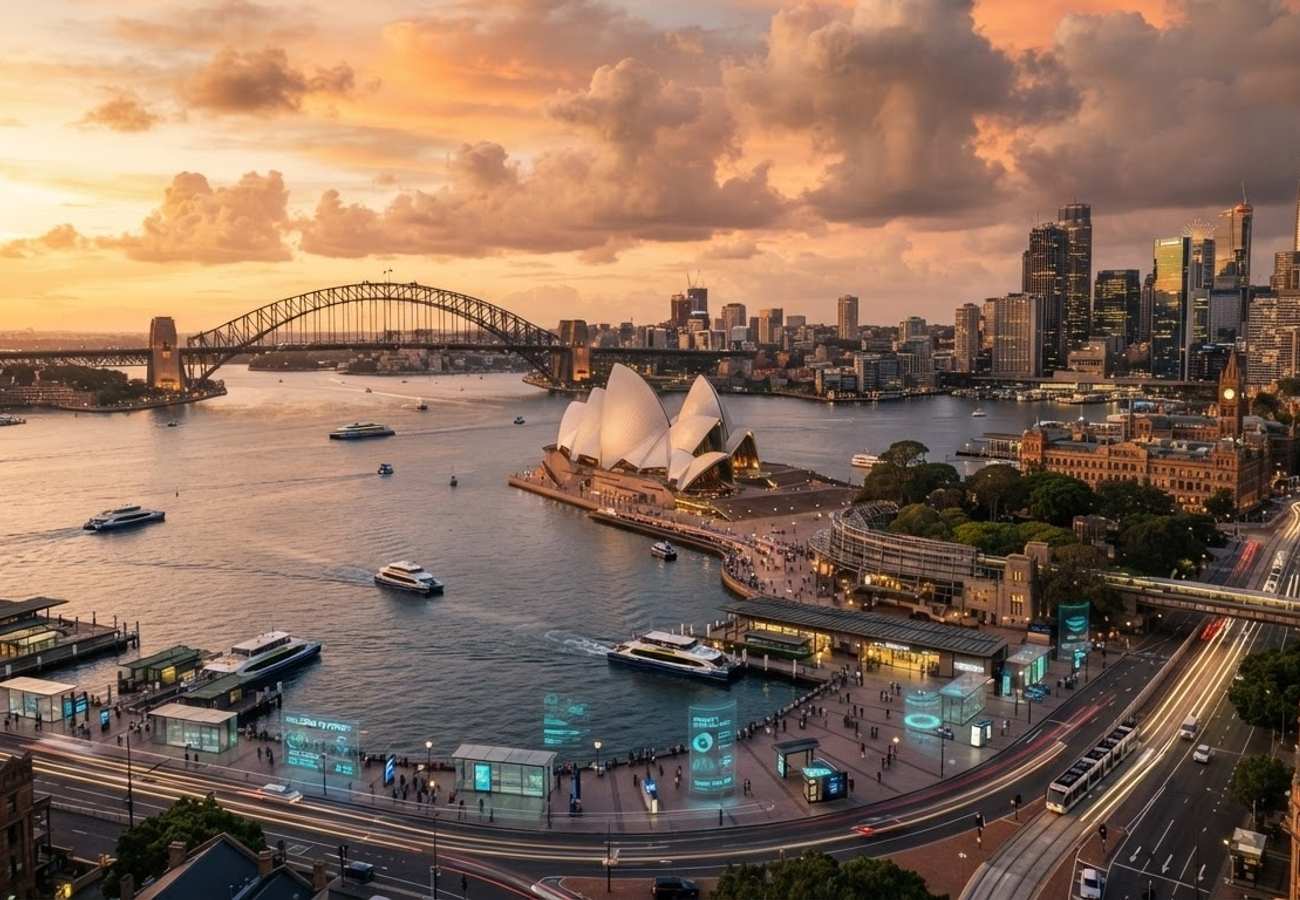
Image generated by AI
Australia is aggressively integrating artificial intelligence into its urban infrastructure, with cities like Sydney, Melbourne, and Brisbane deploying AI-powered travel systems in 2026 to eliminate friction for millions of international and domestic visitors.
The shift toward a "connected travel ecosystem" is not governed by a single national mandate but is instead a coordinated effort across major hubs to align with broader digital transformation goals. By leveraging predictive analytics, smart transport, and AI-driven destination planning, Australia aims to meet the rising expectations of a tech-savvy global traveler base.
Strategic Shift Toward Intelligent Destination Management
The drive toward AI adoption is a direct response to increasing international arrival numbers and the logistical complexities of managing high-density tourism zones. Rather than relying on static visitor guides, Australian cities are transitioning to dynamic, data-driven environments. This evolution focuses on reducing traditional travel barriers—such as transit congestion and information gaps—while providing a more tailored experience for the end user.
From the implementation of robotics in coastal hubs to the deployment of predictive maintenance in aviation centers, the scope of this digital overhaul covers every touchpoint of the visitor journey. These initiatives are designed to create a seamless flow from the moment a traveler lands at an airport to their movement through cultural precincts and remote regional attractions.
AI Integration Across Australian Urban Hubs in 2026
The deployment of these technologies varies by city, reflecting the specific needs of each region's tourism profile. While some focus on mass transit and crowd control, others are prioritizing aviation efficiency or sustainable environmental monitoring.
| Australian City | AI Travel Policy / Digital Tourism Direction in 2026 | Key AI Initiatives and Technologies | Benefits for Travellers | Main Tourism Areas Impacted | Status / Source Context |
|---|---|---|---|---|---|
| Sydney, New South Wales | Smarter visitor ecosystem via AI urban management and transport intelligence | AI traffic management, real-time transport data, predictive visitor analytics | Faster transit, improved navigation, better crowd control | Sydney Harbour, Opera House, CBD, Museums | Existing smart transport systems moving toward AI visitor services |
| Melbourne, Victoria | Expansion of digital infrastructure and smart-city mobility | AI transport planning, data-driven tourism insights, smart urban planning | Seamless city movement, personalized visitor services | Melbourne CBD, cultural precincts, festivals | Strong tech and research foundation driving AI development |
| Brisbane, Queensland | Future-ready smart tourism city for major international events | AI city planning, smart infrastructure, digital visitor engagement | Efficient travel planning, enhanced event tourism | South Bank, Brisbane River, Olympic infrastructure | Positioning as a tech-focused global city via economic strategies |
| Gold Coast, Queensland | Transition to an AI-powered innovation and tourism hub | AI development, robotics, data centers, advanced mobility | Smoother resort stays, intelligent visitor services | Surfers Paradise, theme parks, coastal tourism | Focus on robotics and digital infrastructure for innovation |
| Adelaide, South Australia | AI aviation and travel technology center | AI customer service, smart baggage tracking, predictive maintenance | Reduced travel friction, seamless airport journeys | Adelaide Airport, international connections | Qantas established an AI and digital innovation center here |
| Canberra, ACT | AI governance and digital government systems for visitor services | AI-enabled public services, digital info platforms | Faster access to tourism data, improved online support | Parliament tourism, museums, cultural sites | Aligned with public sector AI strategy |
| Perth, Western Australia | Smart tourism via digital transformation and visitor data | Smart city tech, digital destination marketing, data analytics | Better regional recommendations, improved engagement | Perth CBD, Rottnest Island, WA gateway | Supported by broader national digital policies |
| Hobart, Tasmania | Digital tools for sustainable destination management | Data-based visitor management, smart environmental monitoring | Better nature tourism planning, reduced site pressure | MONA, wilderness tourism, heritage sites | Focus on sustainable, tech-supported management |
| Darwin, Northern Territory | Digital solutions for remote tourism access | Digital platforms, visitor analytics, smart regional tools | Easier remote planning, improved communication | Indigenous tourism, national parks, adventure travel | Linked to national tourism digital transformation agenda |
Redefining the Visitor Journey Through Predictive Technology
The application of artificial intelligence in 2026 extends far beyond simple chatbots. Australian cities are now utilizing AI to analyze visitor behavior in real-time, allowing authorities to predict demand patterns before they result in bottlenecks. This proactive approach is particularly evident in the integration of AI into city planning and airport operations.
The Australian Government has provided a framework for this transition, emphasizing responsible AI adoption. Guidelines, such as the Tourism Australia AI Adoption and Use Statement, ensure that while efficiency increases, the pillars of transparency, security, and trust remain intact. This ensures that the collection of visitor data—used to personalize recommendations—is handled ethically.
Sydney's Evolution Into a Smart Tourism Gateway
As the primary entry point for most international arrivals, Sydney serves as the testing ground for high-capacity AI travel solutions. The city faces the unique challenge of moving millions of people between the airport, the Central Business District (CBD), and iconic landmarks.
Sydney has countered this by scaling its adaptive traffic management systems. These AI-supported solutions analyze traffic flow in real-time, identifying potential congestion risks and rerouting transport to ensure that journeys to the Sydney Opera House or the Harbour Bridge are predictable and efficient.
Furthermore, the city is using predictive analytics to manage "overtourism" at popular sites. By understanding crowd movements through data, tourism authorities can redistribute visitors across various attractions, reducing pressure on any single location and improving the overall quality of the visit.
Why This Matters: The Impact on the Modern Traveler
For the traveler, this digital shift transforms Australia from a series of disconnected destinations into a cohesive, intelligent network. The practical implications are significant:
- Reduced Transit Anxiety: With AI-powered traffic and transport data, the "guesswork" of navigating a new city is removed. Real-time adjustments mean fewer delays and more reliable arrival times.
- Hyper-Personalization: Instead of generic "top ten" lists, visitors receive recommendations based on real-time data and personal preferences, leading to a more authentic exploration of the country.
- Sustainable Exploration: In regions like Hobart and Darwin, AI helps protect the environment by managing visitor footprints, ensuring that nature tourism does not destroy the very assets travelers come to see.
- Operational Reliability: In aviation hubs like Adelaide, AI-driven predictive maintenance and baggage tracking mean fewer cancelled flights and lost luggage—the two biggest pain points in modern air travel.
From a logistical standpoint, this creates a blueprint for other global destinations. By integrating AI into the very fabric of urban management rather than treating it as a marketing add-on, Australia is effectively future-proofing its tourism economy.
The transition to AI-driven travel marks the end of the static itinerary and the beginning of the fluid, responsive journey.
Related Travel Guides
Disclaimer
This article is for informational and educational purposes only. It does not constitute legal, financial, or professional advice. While we strive to provide accurate and up-to-date information, travel policies, regulations, and conditions change rapidly. Always verify information with official sources before making travel decisions. Nomad Lawyer makes no representations about the accuracy, reliability, completeness, or suitability of the information provided. Readers should consult qualified professionals for advice specific to their circumstances. The views expressed in this article are those of the author and do not necessarily reflect the views of Nomad Lawyer.
Preeti Gunjan
Contributor & Community Manager
A passionate traveller and community builder. Preeti helps grow the Nomad Lawyer community, fostering engagement and bringing the reader experience to life.
Learn more about our team →