
Qantas Delays Airbus A321XLR International Debut on Brisbane-Manila Route to 2027
Qantas has postponed the international rollout of its Airbus A321XLR on the Brisbane-Manila route, opting to retain widebody A330 aircraft to maintain passenger comfort and capacity.

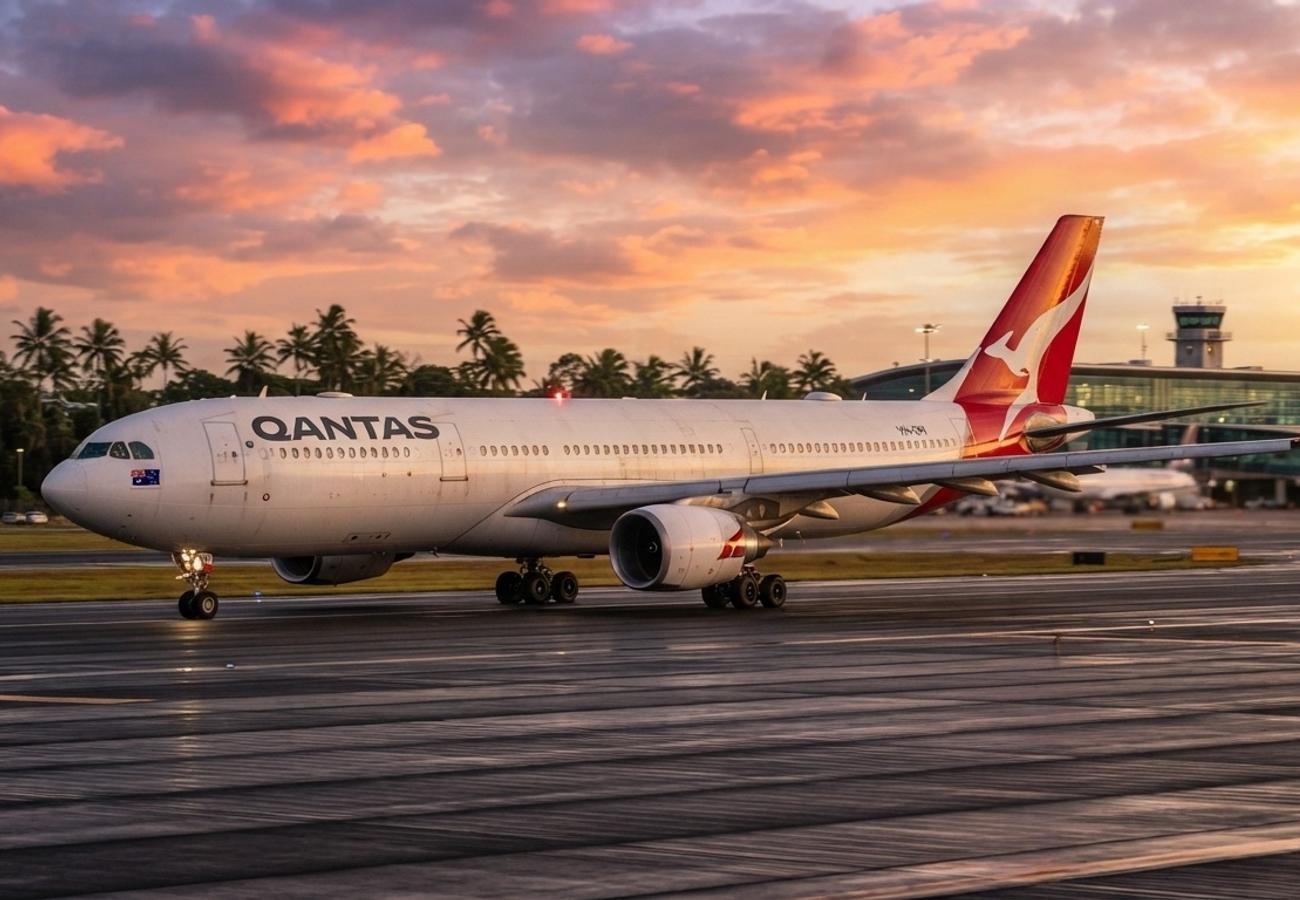
Image generated by AI
Australia's strategic diplomatic pivot toward the Philippines is facing a logistical bottleneck as Qantas delays the international debut of its Airbus A321XLR on the Brisbane–Manila corridor.
Fleet Pivot: Widebody Retention Over Narrowbody Efficiency
While Australian and Philippine governments accelerate security and economic partnerships, Qantas is taking a cautious approach to its fleet deployment. The airline has pushed back the planned international introduction of the Airbus A321XLR, a move that contrasts with the rapid diplomatic momentum in the Indo-Pacific region.
Originally slated for an October 2026 launch, the A321XLR was intended to replace the larger Airbus A330 widebody jets on the Brisbane–Manila route. The transition aimed to shift the service to a daily frequency, leveraging the fuel efficiency of the narrowbody aircraft. However, updated booking displays and route filings indicate that this transition has been deferred into 2027.
The delay is attributed to a combination of fleet utilization challenges and passenger feedback. Since the A321XLR entered domestic service in 2025—primarily on the Brisbane–Perth and east-coast corridors—reports have emerged regarding diminished comfort in economy class on flights exceeding four hours.
Route Specifications and Capacity Adjustments
The Brisbane–Manila route remains a critical link for Queensland, but capacity has fluctuated throughout 2026 as Qantas manages its widebody fleet.
| Parameter | Previous Plan (Late 2026) | Current Status (August 2026/2027) |
|---|---|---|
| Aircraft Model | Airbus A321XLR (Narrowbody) | Airbus A330 (Widebody) |
| Flight Frequency | Daily | 3 to 5 Weekly Services |
| Launch Date | October 25, 2026 | Deferred to 2027 |
| Primary Focus | Fuel Efficiency & Frequency | Passenger Comfort & Capacity |
| Flight Duration | 7+ Hours | 7+ Hours |
Traveler Logistics Guide: Navigating the Brisbane-Manila Corridor
From a ground-level perspective, the decision to retain the A330 is a significant advantage for passengers prioritizing comfort. The A330 provides a wide-body cabin experience, which is markedly different from the single-aisle A321XLR on a seven-hour journey.
Booking and Seat Selection For those booking business class, the A330 typically offers lie-flat seats, a critical differentiator for overnight travel. Travelers should verify the aircraft type during booking; a "Widebody" or "A330" designation ensures more shoulder room and better recline than the narrowbody alternative.
Connection Strategies If Qantas frequencies dip to three weekly services, travelers should consider alternative hubs to maintain flexibility:
- Singapore (SIN): High frequency via Singapore Airlines.
- Hong Kong (HKG): Robust connectivity via Cathay Pacific.
- Manila (MNL) Arrival: Ensure all e-Travel registrations are completed 72 hours prior to arrival to avoid bottlenecks at Ninoy Aquino International Airport.
Customs and Digital Transit Travelers should utilize digital transit declarations where available. For those connecting through other Asian hubs, ensure passport validity is at least six months beyond the intended stay.
Infrastructure and Strategic Impact
The divergence between geopolitical goals and aviation reality highlights a tension in regional connectivity. Australia views the Philippines as a frontline state in the Indo-Pacific, with expanded defense cooperation and joint maritime activities. However, physical connectivity—the "people-to-people" exchange—is lagging behind these high-level agreements.
The A321XLR is designed for "long, thin" routes, allowing airlines to serve destinations that cannot support a full widebody aircraft. By delaying its use on the Manila run, Qantas is signaling that the Brisbane–Manila market is not "thin," but rather a high-demand corridor where passenger experience outweighs the operational cost-savings of a narrowbody jet.
This decision also serves as a competitive hedge against Philippine Airlines, which already utilizes narrowbody A321s on certain Australian routes. By maintaining the A330, Qantas preserves a premium product offering to attract high-yield business travelers and loyalty members.
A strategic pause in fleet deployment to protect the passenger experience on a critical diplomatic corridor.
Related Travel Guides
Disclaimer
This article is for informational and educational purposes only. It does not constitute legal, financial, or professional advice. While we strive to provide accurate and up-to-date information, travel policies, regulations, and conditions change rapidly. Always verify information with official sources before making travel decisions. Nomad Lawyer makes no representations about the accuracy, reliability, completeness, or suitability of the information provided. Readers should consult qualified professionals for advice specific to their circumstances. The views expressed in this article are those of the author and do not necessarily reflect the views of Nomad Lawyer.
Preeti Gunjan
Contributor & Community Manager
A passionate traveller and community builder. Preeti helps grow the Nomad Lawyer community, fostering engagement and bringing the reader experience to life.
Learn more about our team →