Australia Cruise Travel Protections Under Scrutiny as Southern Hemisphere Markets Clash on Refunds and Medical Rescues

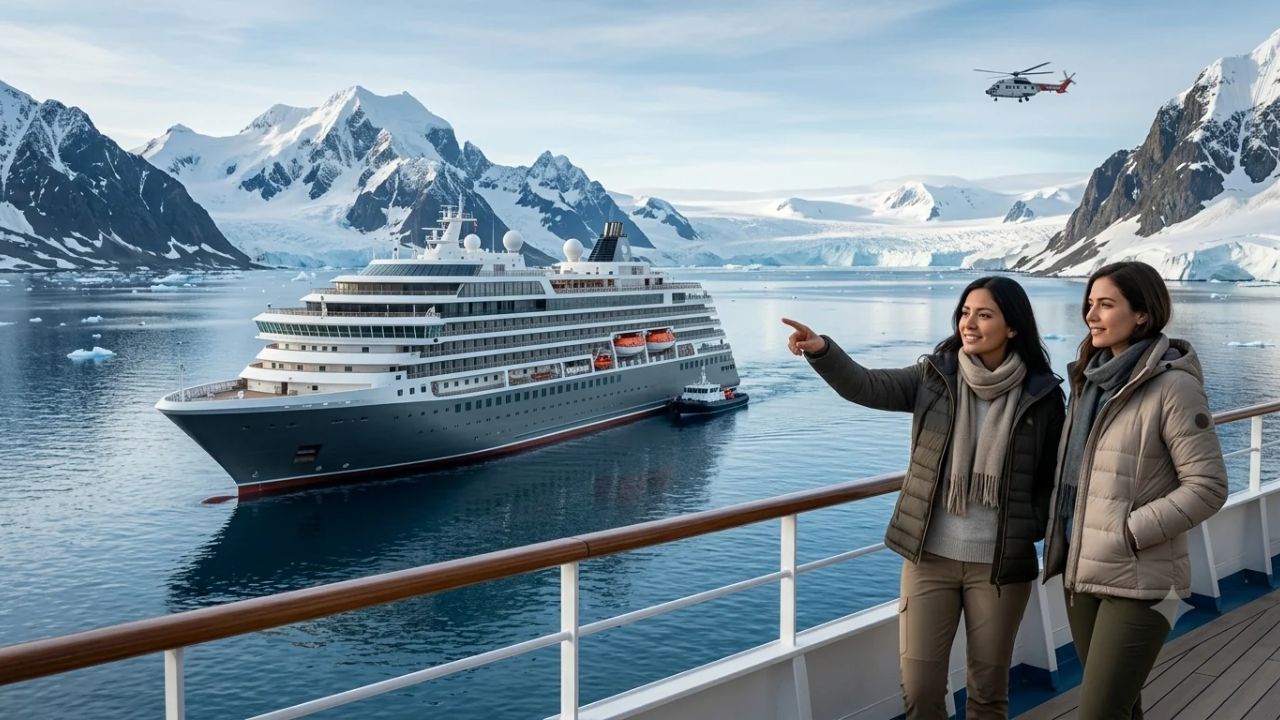
Cruise passenger protections across Australia, New Zealand, Chile, Argentina, and South Africa face heightened scrutiny amid diverging refund laws and high-cost medical evacuations.
SYDNEY, November 3, 2026 — As luxury cruise liners and polar expedition vessels commence Southern Hemisphere voyages across Australia, New Zealand, Chile, Argentina, and South Africa, international travelers face a fragmented patchwork of national consumer laws, maritime codes, and rescue regimes that leave refund entitlements and catastrophic medical evacuation costs dangerously misunderstood. While port berths from Melbourne and Dunedin to Valparaíso, Ushuaia, and Cape Town confirm record seasonal deployments, maritime legal authorities warn that government-coordinated search and rescue operations do not absolve passengers of personal liability for six-figure medical transport bills, nor do contractual marketing itineraries guarantee cash reimbursements when wild ocean conditions force route abandonments.
[!NOTE] Key Regulatory Takeaway for 2026–2027 Southern Hemisphere Cruisers: No uniform international convention or multi-nation accord harmonizes passenger rights across the Southern Oceans. While the Australian Competition and Consumer Commission enforces mandatory consumer guarantees on any voyage departing Australian shores regardless of corporate domicile, neighboring and transatlantic destinations apply starkly distinct maritime codes. Travelers must navigate divergent statutory thresholds spanning New Zealand's Consumer Guarantees Act, Chile's Maritime Commerce Code Articles 1052–1056, Argentina's Navigation Law 20.094, and South Africa's Consumer Protection Act Section 17.
THE SOUTHERN HEMISPHERE CRUISE LEGAL TRILEMMA
| Column 1 |
|---|
| 1. OPERATIONAL PROMISE 2. FINANCIAL PROMISE 3. MEDICAL PROMISE |
| ===================== ==================== =================== |
| * Glossy sales brochures * Standard ticket contracts * State naval & SAR team |
| * Advertised ports of call * Restrictive waivers * Emergency coordination |
| * Expedition landings * Force majeure clauses * Life-saving extraction |
| v v v |
| [ Maritime Disruption ] [ Divergent Consumer Laws ] [ Financial Liability ] |
| * Severe sub-Antarctic gales * Australia: ACCC Guarantees * SAR is free to launch |
| * Pack ice & safety hazards * New Zealand: CGA Skill Standard * BUT hospital, air-med |
| * Mechanical propulsion failure * Chile: Art. 1052-1056 Half-Fare * & maritime repatriation |
| * Captain's safety prerogative * Argentina: Law 20.094 Carrier Fault* billed to traveler or |
| * S. Africa: CPA Section 17 Fees * private underwriter |
Southern Hemisphere Cruise Season Launch: Port Schedules and the Illusion of Legal Uniformity
The commencement of the 2026–2027 Southern Hemisphere cruise season reflects an unprecedented deployment of maritime tonnage across the southern oceans. Operating data published by regional port authorities confirms that mega-ships and boutique expedition vessels are simultaneously converging on major maritime gateways. Ports Victoria official scheduling records show Carnival Splendor arriving at Station Pier in Melbourne on November 3, 2026, before departing on November 5 to initiate its regional summer circuit. Across the Tasman Sea, Port Otago records confirm the arrival of Celebrity Edge at Dunedin on November 5, inaugurating New Zealand's peak cruise calendar.
Concurrently, South American maritime hubs are registering historic traffic levels. In Chile, Puerto Valparaíso harbor authorities logged the arrival of the luxury expedition vessel Le Lyrial across November 2 and November 3, with additional ice-strengthened expedition vessels berthing on November 4 ahead of their transit through the Chilean Fjords toward Cape Horn. On the Atlantic seaboard, Argentina's national ports administration reported an unprecedented milestone in its official September announcement, confirming more than 590 scheduled cruise calls for the port of Ushuaia during the 2026–2027 cycle. Ushuaia functions as the primary international gateway to the Antarctic Peninsula, handling over ninety percent of global polar cruise passenger traffic. Across the Atlantic, MSC Cruises is preparing to initiate its South African summer season with scheduled liner departures from Durban beginning November 27, while Cape Town's international passenger terminal is already hosting round-the-world circumnavigations and sub-Antarctic voyages.
While these five maritime markets appear united by seasonal timing and shared geographic latitude, they remain entirely fragmented in their legal treatment of passenger consumer rights. Many travelers erroneously assume that purchasing a cruise ticket generates a unified international standard of consumer protection. In reality, an international passenger booking a voyage that transits between Sydney, Auckland, Valparaíso, Ushuaia, and Cape Town enters five separate, highly complex legal jurisdictions. Departure location, ticket issuance domicile, governing law clauses buried in maritime contracts, and national statutory remedies interact in ways that frequently contradict glossy promotional literature. When itineraries collapse due to extreme weather, mechanical breakdowns, or medical emergencies, travelers discover that marketing promises carry zero legal weight against maritime contract exemptions and local legislative barriers.
Australia's Regulatory Architecture: ACCC Statutory Guarantees vs. Carrier Contractual Exclusions
Within Australia, passenger protections are governed by the Competition and Consumer Act 2010 and enforced by the Australian Competition and Consumer Commission. The critical legal reality for international cruise passengers is that the Australian Consumer Law statutory consumer guarantees apply to all cruise services departing from Australian ports, irrespective of whether the operating cruise line is incorporated in Bermuda, Panama, the United Kingdom, or the United States. Under Australian statutory principles, when a consumer purchases a travel service, the provider automatically guarantees that the service will be rendered with due care and skill, will be reasonably fit for any specified purpose, and will be supplied within a reasonable time.
These statutory protections fundamentally alter the balance of power between passengers and cruise operators. Under standard maritime ticket contracts, carriers routinely insert comprehensive exculpatory clauses asserting that published itineraries are mere estimates, granting the captain absolute discretion to eliminate ports of call, truncate voyages, or substitute remote industrial docks for iconic harbor destinations without compensating ticket holders. Under the Australian Consumer Law, however, contractual terms that seek to exclude, restrict, or modify statutory consumer guarantees are legally void and unenforceable. If a cruise operator experiences a major failure to supply the promised service—such as an engine casualty that cancels half the voyage or an avoidable logistical collapse—the passenger possesses an unambiguous statutory right to elect a full cash refund rather than being forced to accept an expiring future cruise credit or discretionary onboard voucher.
Significantly, the Australian legal framework draws a sharp distinction between carrier-induced failures and passenger-initiated cancellations. If a passenger voluntarily cancels their reservation due to personal schedule changes, fear of rough seas, or mild personal illness, the statutory consumer guarantees provide no mandatory entitlement to a refund. In such instances, the strict cancellation penalties specified in the cruise contract dictate the financial outcome. Concurrently, if an itinerary modification is forced by external third-party events or extraordinary maritime weather, the regulatory determination shifts toward whether the operator took reasonable measures to deliver an acceptable substitute service.
The Australian Government's official Smartraveller agency continually emphasizes that consumer guarantees do not insulate passengers from operational maritime hazards or onboard financial liabilities. Australian authorities highlight that domestic Medicare and private health insurance policies cease coverage the moment a passenger steps aboard a cruise ship transiting coastal or international waters. Shipboard infirmaries operate as private clinics charging commercial rates for consultations, pathology, and pharmaceuticals. If an acute illness demands helicopter extraction or naval interception off the Great Barrier Reef or across the Bass Strait, the resulting expenses easily escalate beyond tens of thousands of dollars, demonstrating that consumer protection laws govern fare refunds rather than emergency medical indemnification.
New Zealand's Consumer Guarantees Act and the 30-Million-Square-Kilometre Rescue Mirage
Across the Tasman Sea, New Zealand enforces its own robust statutory framework through the Consumer Guarantees Act 1993. Similar to its Australian counterpart, New Zealand's legislation mandates that transport and recreational travel services must be performed with reasonable care and skill, ensuring fitness for particular representations. Where an operating carrier commits a substantial failure of service that cannot be remedied within a reasonable period, New Zealand law empowers consumers to cancel the contract and demand a full refund alongside documented consequential damages.
However, jurisdictional complexities emerge when foreign travelers purchase cruise tickets through offshore digital platforms or overseas travel consolidators for voyages calling at New Zealand ports like Milford Sound, Dunedin, and Tauranga. If the contract is explicitly governed by foreign maritime law and executed through an international entity without a permanent corporate establishment in New Zealand, domestic enforcement mechanisms face severe practical hurdles. Travel legal specialists urge consumers to establish the precise corporate entity named on their booking confirmation before assuming New Zealand consumer statutes will automatically bind the carrier.
Concurrently, the Ministry of Foreign Affairs and Trade, through its SafeTravel platform, issues stern warnings regarding maritime safety and the immense geographic realities of Southern Ocean transit. New Zealand maintains one of the largest search and rescue regions on the planet. Maritime New Zealand's Rescue Coordination Centre New Zealand oversees a designated oceanic jurisdiction spanning approximately 30 million square kilometres, stretching from the equatorial Pacific southward to the South Pole, and extending halfway across the Southern Ocean toward Chile.
While New Zealand's search and rescue coordination is universally recognized for its operational efficiency, international voyagers frequently fall victim to a dangerous psychological misconception. Travelers assume that because a state agency coordinates a military or civil rescue, the state absorbs the financial cost of that operation. This assumption is fundamentally incorrect. The state coordinates search and rescue as a humanitarian obligation under international maritime conventions to preserve life. It does not pay for private hospital admissions, commercial air ambulance charters, medical escorts, or repatriation flights back to an overseas home country. A passenger airlifted from a cruise liner off the sub-Antarctic Auckland Islands by military helicopters will receive world-class logistical support, but the subsequent specialized healthcare, civilian air ambulance transport, and lost-luggage costs fall entirely upon the individual or their travel insurance provider.
Comparative Legal Matrix: Passenger Protection Across Five Key Maritime Jurisdictions
The regulatory frameworks governing passenger rights across the Southern Hemisphere exhibit dramatic differences in statutory scope, cancellation penalties, and judicial interpretation. The following comparison highlights the operative legislative statutes and core legal tests governing cancellations and service interruptions across the five primary regional markets.
| Maritime Jurisdiction | Primary Governing Statute / Legal Code | Statutory Refund Triggers for Carrier Disruptions | Passenger Withdrawal Statutory Rules | Jurisdictional Applicability & Extraterritoriality |
|---|---|---|---|---|
| Australia | Competition and Consumer Act 2010 (Australian Consumer Law) | Major service failures, lack of due care/skill, inability to supply core purpose. Mandatory cash refund rights. | Contractual terms prevail; no statutory refund right for purely voluntary cancellations. | Applies to all voyages departing Australian ports, even when operators are foreign-domiciled. |
| New Zealand | Consumer Guarantees Act 1993 | Failure to provide service with reasonable care and skill; substantial failure allows contract cancellation and refund. | Contractual terms dictate penalties; consumer statutes apply only to supplier service failures. | Applies to domestic suppliers and overseas entities doing business within New Zealand territory. |
| Chile | Commercial Code (Libro III de la Navegación y Comercio Marítimo, Arts. 1052–1056) | Article 1052: Carrier cancellation mandates fare refund plus damages, except under proven force majeure. | Article 1055: Default statutory half-fare liability if passenger withdraws before sailing, subject to contract. | Governs maritime contracts executed under Chilean law or voyages operating within Chilean territorial waters. |
| Argentina | Ley de la Navegación No. 20.094 (Arts. 326–329) | Article 326: Carrier-caused non-performance triggers full refund and indemnification for proven damages. | Article 326: Passenger cancellation due to illness or personal reasons carries default fifty percent fare forfeiture. | Controls cabotage, departures from Argentine ports (including Ushuaia), and contracts governed by Argentine jurisdiction. |
| South Africa | Consumer Protection Act 68 of 2008 (Section 17) | Section 54: Non-performance or defective service entitles consumer to remedy or proportional refund. | Section 17: Right to cancel advance bookings; supplier may charge a reasonable fee (fee banned upon death/hospitalization). | Governs transactions within South Africa; overseas digital purchases require analysis of contracting party. |
Chile's Maritime Commerce Code: Articles 1052 to 1056 and the Force Majeure Threshold
Chile occupies a critical position in global expedition cruising, serving as the staging ground for voyages through the Chilean Fjords, the Strait of Magellan, the Beagle Channel, and onward to Antarctica. Unlike common-law jurisdictions that rely heavily on overarching consumer protection statutes, Chile maintains highly specific statutory provisions within Book III of its Commercial Code governing maritime navigation and passenger transport.
Articles 1052 through 1056 of the Chilean Commercial Code establish codified rules that directly address voyage cancellations, sailing delays, and passenger withdrawals. Under Article 1052, if a carrier cancels a scheduled sailing prior to departure, the passenger is legally entitled to the complete restitution of the ticket passage fare, alongside compensation for damages, unless the carrier demonstrates that the cancellation resulted from force majeure or fortuitous circumstances. In maritime operations around Patagonia and Cape Horn, however, carriers routinely invoke force majeure due to gale-force winds or rough seas, creating intense legal debates over whether severe weather constitutes a legally excusable event or an anticipated operational risk of sub-polar navigation.
Article 1053 governs departure delays, mandating accommodation and board for delayed passengers when the delay is attributable to the carrier, with options for contract rescission if delays exceed specified thresholds. Equally important is Article 1055, which codifies a statutory baseline for passenger-initiated cancellations: unless the contract establishes alternative conditions, a passenger who withdraws from the voyage prior to departure is legally liable for fifty percent of the agreed fare.
Chile's national consumer protection agency, the Servicio Nacional del Consumidor, actively supervises commercial operators to ensure compliance with agreed contracts and transparency in consumer information. SERNAC enforces standards requiring cruise lines to provide clear, upfront disclosure of all cancellation schedules and baggage limitations. Nonetheless, legal tension frequently arises when an expedition cruise encounters severe weather in the Patagonian channels. When an operator bypasses a signature scenic glacier or cancels an advertised Zodiac landing due to turbulent swells, travelers frequently demand refunds under general consumer expectations. Chilean maritime jurisprudence consistently distinguishes between a complete cancellation of the maritime voyage under Article 1052 and tactical operational itinerary adjustments dictated by captain navigational safety, leaving many travelers without financial recourse unless specific contractual guarantees were breached.
Argentina's Navigation Law 20.094: Ushuaia's Gateway Dynamics and Interrupted Voyage Liabilities
Across the Andes, Argentina functions as the global epicenter of Antarctic tourism. The port of Ushuaia, situated on the Beagle Channel in Tierra del Fuego, experiences an extraordinary concentration of expedition traffic during the austral summer. Argentina's maritime transport relationships are fundamentally governed by national Navigation Law 20.094, which contains detailed statutory clauses regulating passenger carriage contracts under Articles 326 through 329.
Under Article 326 of Argentine Navigation Law 20.094, the legal consequence of an unperformed voyage depends entirely on the party responsible for the interruption. If the passenger cancels the voyage before sailing, or is prevented from boarding due to personal reasons including sudden illness, the statutory default mandates that the passenger forfeits half of the total agreed fare. Conversely, if the carrier is responsible for the failure of the voyage to take place, the law strictly obligates the operator to refund the ticket price in full and compensate the passenger for any material harm directly resulting from the cancellation. Where the cancellation arises from accidental events or force majeure affecting the vessel, the passenger retains the right to a complete fare refund, but cannot claim additional damages from the carrier.
Article 327 of Law 20.094 addresses the complex reality of voyages interrupted after departure. If a vessel suffers an operational breakdown or navigational impediment in the Southern Ocean after embarking from Ushuaia, the passenger is legally obligated to pay a proportional fare corresponding to the nautical distance successfully covered. If the carrier offers to transport the passenger to their final destination on another vessel of equivalent characteristics and comparable departure timing, without imposing supplementary costs, the passenger must accept the substitute carriage or bear their own disembarkation expenses.
These statutory provisions carry immense practical implications for the 2026–2027 season, in which Ushuaia anticipates over 590 port calls. While Argentine law provides clear statutory formulas, the vast majority of international polar voyagers book through foreign travel tour operators based in North America, Germany, or the United Kingdom, who issue passage contracts subject to international arbitration or foreign governing law. When an expedition vessel suffers an engine casualty in the Drake Passage or is turned back by pack ice in the Weddell Sea, travelers encounter an intricate jurisdictional collision between Argentine port regulations, international maritime conventions, and the restrictive contractual conditions printed on their passenger ticket vouchers.
South Africa's Consumer Protection Act: Section 17 Cancellation Penalties and Medical Exemptions
South Africa represents the premier cruise gateway for the African continent, with Durban hosting high-volume regional Indian Ocean circuits and Cape Town serving as an essential hub for long-range transatlantic and sub-Antarctic repositioning voyages. Consumer rights within the Republic are rigorously framed by the Consumer Protection Act 68 of 2008, administered by the National Consumer Commission.
Section 17 of the South African Consumer Protection Act establishes an advanced, progressive statutory right regarding consumer reservations and advance bookings. Under Section 17(2), an individual consumer retains the unilateral statutory right to cancel any advance booking, reservation, or order for goods or services. In response, Section 17(3) empowers the supplier to impose a reasonable cancellation charge. Significantly, the statute outlines strict objective criteria for assessing whether a cancellation penalty is legally reasonable. Regulators and courts must evaluate the nature of the booked service, the length of notice provided by the consumer before the scheduled departure date, the reasonable potential for the cruise line to find an alternative customer to rebook the vacated cabin, and prevailing commercial practices across the maritime travel industry.
Most significantly, Section 17(5) of the South African Consumer Protection Act provides an absolute statutory shield for consumers facing acute personal trauma. The law explicitly states that no cancellation fee or penalty may be imposed upon a consumer if the person for whom or for whose benefit the booking was made cannot travel as a consequence of their death or hospitalization. This legislative protection stands in direct opposition to standard international maritime ticket contracts, which routinely enforce one hundred percent cancellation penalties when a customer is hospitalized weeks or days before sailing.
However, the extraterritorial applicability of the South African statute remains a critical battleground. While domestic day excursions and coastal liner sailings operated by entities registered in South Africa fall squarely under the Consumer Protection Act, international mega-ships departing Cape Town or Durban are frequently operated by foreign-registered holding companies. When a dispute over cancellation penalties or booking rescission arises, foreign operators often argue that their corporate domicile or the choice-of-law clause on the ticket supersedes domestic South African statutes. The National Consumer Tribunal maintains that any commercial transaction concluded or performed within the borders of South Africa must respect the mandatory provisions of the Act, reinforcing the necessity for South African consumers and local travel agencies to scrutinize the corporate identity of the contracting supplier.
The Rescue Reality Check: Operational Coordination Does Not Eliminate Financial Liability
Beyond fare refunds and cancellation schedules, the most perilous misconception among international cruise voyagers concerns emergency search and rescue operations and offshore medical evacuations. Recent documented maritime incidents throughout 2026 highlight the extraordinary operational complexity and financial magnitude of maritime rescue operations across the Southern Hemisphere.
On April 2, 2026, Chile's maritime authority, the Dirección General del Territorio Marítimo y de Marina Mercante, executed a complex medical evacuation in the remote channels of southern Patagonia. Two elderly international passengers aboard the expedition vessel Sylvia Earle suffered severe medical distress while navigating the Estero de las Montañas area. DIRECTEMAR deployed a naval launch to intercept the cruise vessel, safely transferring the patients across freezing waters to Puerto Natales, where waiting ambulances facilitated emergency hospital admission. Days earlier, on March 25, 2026, the Argentine Navy coordinated an emergency air-sea evacuation of a critically ill passenger from the expedition ship World Voyager deep within the treacherous Drake Passage. Naval vessels, onboard medical personnel, and specialized naval aviation assets were integrated to stabilize and airlift the traveler to specialized regional facilities in Tierra del Fuego. Separately, South Africa's National Department of Health documented grave medical emergencies involving passengers aboard the polar vessel Hondius following its transatlantic transit from Ushuaia, which required hospitalizations and quarantine measures upon arrival in South African waters.
These documented emergencies illustrate that naval authorities, coastal guard services, and rescue coordination centers execute life-saving operations irrespective of a passenger's wealth or nationality. Under the International Convention on Maritime Search and Rescue 1979, coastal states maintain an international duty to coordinate assistance to any person in distress at sea without regard to race, status, or financial capability. Consequently, a sovereign navy does not invoice a drowning or critically ill mariner for the fuel burned by its patrol boats or rescue helicopters during the immediate tactical extraction.
The devastating financial exposure begins the exact instant the tactical rescue concludes. Search and rescue coordination ends at the shoreline. The patient is delivered to a regional civilian or military hospital, where every subsequent medical procedure—including intensive care, specialized surgical interventions, continuous physician monitoring, and diagnostic imaging—is billed directly to the patient as a private foreign national. If the patient requires specialized medical transport back to their home nation, a dedicated international air ambulance charter equipped with life-support suites and specialized medical crews routinely costs between $150,000 and $350,000. Australia's Department of Foreign Affairs and Trade Smartraveller service repeatedly warns that helicopter winch evacuations from cruise decks and private maritime air ambulance charters can bankrupt uninsured travelers. When cruise passengers rely on generic credit card travel insurance that caps emergency medical extraction at nominal amounts or excludes open-ocean maritime activities, they face total financial ruin.
International Maritime Governance Deficits: Polar Code and Athens Convention Limitations
The widening gap between traveler expectations and legal remedies stems from fundamental deficits within international maritime governance. Many consumers assume that high-profile international treaties provide an overarching safety net for consumer compensation. A rigorous examination of prevailing international maritime law reveals that global conventions prioritize technical vessel safety and carrier liability ceilings rather than passenger consumer protection.
The International Code for Ships Operating in Polar Waters, established by the International Maritime Organization and in mandatory force since 2017, imposes rigorous technical requirements on vessels navigating Antarctic and Arctic latitudes. The Polar Code mandates ice-strengthened hull structures, specialized thermal survival equipment, advanced voyage planning, crew cold-weather navigation training, and comprehensive emergency search-and-rescue protocols. It establishes strict operational limitations regarding ice navigation to minimize catastrophic environmental and maritime disasters.
Significantly, however, the Polar Code contains zero provisions regarding passenger financial compensation, ticket refunds, or consumer rights. If a master decides, in strict accordance with the Polar Code's mandatory risk-assessment calculations, to bypass an entire archipelago of ice-choked Antarctic landing sites or return prematurely to port to avoid encroaching pack ice, the Code provides no financial redress for the passenger who spent $25,000 for an Antarctic landing experience. The master's safety decisions are shielded from consumer lawsuits by international maritime safety doctrines, leaving ticket holders entirely dependent on the exculpatory terms of their individual passage contracts.
Similarly, the Athens Convention Relating to the Carriage of Passengers and Their Luggage by Sea 1974, along with its 2002 Protocol, serves as the primary international instrument governing carrier liability for maritime incidents. The Athens Convention establishes uniform rules regarding carrier liability for personal injury, death, and physical damage to passenger luggage occurring during sea carriage. It establishes strict liability regimes and mandatory insurance requirements for operating carriers up to specified limits expressed in Special Drawing Rights of the International Monetary Fund.
Significantly, the Athens Convention does not govern commercial disputes regarding cancelled sailings, delayed departures, altered ports of call, or missed land excursions. It is an instrument designed to cap carrier exposure for catastrophic physical casualties, not a consumer protection directive. Unless an itinerary change directly inflicts compensable physical injury or personal property destruction, the convention provides no mechanism for securing monetary compensation for disrupted vacations.
Resolving the Three Promises Trilemma: Operational, Financial, and Medical Disconnects
The systemic vulnerability confronting international travelers across Australia, New Zealand, Chile, Argentina, and South Africa is structural. It arises from the complete fragmentation of three distinct promises that accompany every luxury and expedition cruise booking:
THE THREE PROMISES DISCONNECT
| Column 1 |
|---|
| [ 1. THE MARKETING / OPERATIONAL PROMISE ] |
| * Crafted by marketing departments and commercial booking agents. |
| * Promotes pristine destinations, secluded fjords, wildlife encounters, and luxury pampering. |
| * Reality: Operates purely at the discretion of prevailing weather, sea ice, and ship machinery. |
| [ 2. THE TICKET CONTRACT / FINANCIAL PROMISE ] |
| * Drafted by maritime defense attorneys and risk underwriters. |
| * Strips carrier liability for weather detours, missed ports, and tactical cancellations. |
| * Reality: Seeks to limit refunds to discretionary vouchers, clashing with local consumer laws. |
| [ 3. THE SEARCH & RESCUE / MEDICAL PROMISE ] |
| * Governed by coastal states, international navies, and humanitarian search-and-rescue teams. |
| * Guarantees life-saving extraction from peril on high seas without upfront fees. |
| * Reality: Leaves 100% of hospital, private air ambulance, and medical repatriation bills to the |
| unprepared passenger once ashore. |
These three promises are typically executed through entirely disconnected documents that travelers rarely synthesize before departure. The marketing itinerary displays vivid photos of sunny harbors; the ticket contract contains pages of fine-print exclusions drafted under maritime law to protect the carrier; the state rescue infrastructure operates under sovereign military mandates; and the private travel insurance policy contains hidden sub-limits, pre-existing condition exclusions, and strict definitions of what qualifies as a medically necessary repatriation. When an emergency strikes, travelers expect the operational promise to be safeguarded by the financial promise and backed by the medical promise. When that illusion shatters, passengers find themselves stranded in foreign ports, battling carrier legal departments, and facing crippling medical debts.
Strategic Risk Mitigation: Pre-Booking Protocol for Travelers and Travel Advisors
To protect against severe financial and operational exposure during the 2026–2027 Southern Hemisphere cruise season, travel advisors, corporate planners, and independent voyagers must institute a rigorous pre-booking verification protocol. Relying solely on verbal representations from cruise sales desks or standardized agency brochures exposes travelers to significant legal and financial peril.
First, identify the precise corporate contracting entity and its legal jurisdiction. Booking confirmations must be audited to verify whether the contractual supplier is a domestic subsidiary subject to local consumer protection laws (such as the Australian Consumer Law or South Africa's Consumer Protection Act) or a foreign-domiciled offshore shell company registered in a maritime flag state. The booking terms must be scrutinized to identify the governing law and arbitration clauses that will control any eventual dispute.
Second, separate operational disruption scenarios into distinct contractual categories. Travelers must understand exactly how their contract handles passenger-initiated withdrawal versus carrier-induced mechanical cancellations and unavoidable weather diversions. If a voyage is cancelled by the operator prior to departure, advisors must verify whether the contract permits the operator to issue an expiring future cruise voucher or mandates an immediate cash refund. For departures from Australia, advisors should explicitly advise clients of their non-excludable statutory rights under ACCC consumer guarantees.
Third, execute an exhaustive audit of travel insurance medical evacuation and repatriation policies. Standard international travel insurance policies are entirely inadequate for Southern Ocean and remote expedition cruising. Travelers must secure specialized cruise riders that explicitly cover open-ocean medical evacuations, helicopter hoist extractions from vessel decks, and international medical repatriation. Policies must feature a minimum evacuation limit of $500,000 to $1,000,000, with zero exclusions for maritime expedition activities such as Zodiac cruising, sea kayaking, or polar trekking. Equally important, travelers must verify the underwriter's protocol for emergency medical authorizations, ensuring that the insurance company operates a 24-hour emergency response team capable of coordinating directly with maritime rescue agencies and private air ambulance providers worldwide.
Fourth, safeguard onward travel arrangements through buffered scheduling and protected fares. Because Southern Hemisphere and polar voyages are exceptionally vulnerable to severe sea states and harbor delays, travelers should never book non-refundable connecting domestic flights or hotel stays on the scheduled day of disembarkation. Connecting flights should be booked on flexible or refundable fares, with minimum 24-to-48-hour buffers established between cruise disembarkation and transcontinental flights.
Fifth, maintain a comprehensive contemporaneous evidence trail. If an itinerary is altered, a sailing cancelled, or a medical crisis encountered, passengers must retain all official written notices issued by the master, daily navigational newsletters, medical facility billing receipts, and communications with customer service representatives. This documentation serves as the essential evidential foundation required by insurance adjusters, consumer protection tribunals, or maritime legal counsel.
Regional Economic Stakes: Infrastructure Expansion and Tourism Capital Inflows
The intense scrutiny surrounding cruise passenger protections arrives at a moment of explosive economic expansion across Southern Hemisphere cruise infrastructure. The economic contribution of cruise tourism to regional coastal economies has surged to unprecedented heights, motivating national governments and municipal port authorities to commit billions in capital improvements.
Data released by the International Association of Antarctica Tour Operators reveals that 113,518 international passengers traveled with its member operators during the 2025–2026 Antarctic season, encompassing 27,217 cruise-only visitors who explored polar waters without setting foot on the continent. To capture this high-yield demographic, the government of Tierra del Fuego in Argentina has accelerated major infrastructure upgrades at the port of Ushuaia. Port engineering projects have expanded commercial berthing space, enhanced heavy-duty mooring dolphins, installed modern LED lighting towers, and upgraded potable water and bunkering supply networks to accommodate the more than 590 confirmed vessel calls slated for the 2026–2027 season.
Across the Atlantic, regional economic development agency Wesgro confirmed that cruise tourism delivered extraordinary economic value to South Africa's Western Cape. Wesgro's comprehensive economic impact analysis revealed that 64 passenger vessels completed calls at the Port of Cape Town during the 2025–2026 operating season, bringing 106,240 international passengers and 37,200 crew members into the provincial economy. Wesgro's multi-year assessment calculates that cruise tourism contributed a cumulative R5.7 billion to the Western Cape economy across four consecutive seasons, generating thousands of jobs across hospitality, bunkering, provisioning, logistics, and retail. Concurrently, the South Australian Tourism Commission confirmed 54 scheduled cruise and boutique expedition vessel calls for South Australia's 2026–2027 season, funneling passenger expenditure into Adelaide, Kangaroo Island, and Port Lincoln.
As cruise tourism becomes an indispensable economic engine for coastal cities across Australia, New Zealand, Latin America, and Southern Africa, the regulatory tension between rapid commercial volume expansion and consumer protection becomes increasingly acute. Municipalities and port authorities have built modern terminals, deepened harbor channels, and subsidized terminal operations to attract mega-liners and expedition vessels. However, long-term brand equity and sustainable tourism growth require that passenger legal rights keep pace with physical infrastructure. Transparent contractual conditions, equitable refund mechanisms, and clear consumer disclosure regarding search-and-rescue expenses are essential to maintaining traveler trust across the southern oceans.
Frequently Asked Questions Regarding Southern Hemisphere Cruise Passenger Rights
Does an Australian port departure guarantee a cash refund if a cruise is cancelled?
Yes, under specific circumstances governed by the Australian Consumer Law. When a cruise departs from an Australian port, the statutory consumer guarantees enforced by the Australian Competition and Consumer Commission apply regardless of where the cruise line is incorporated. If the cancellation constitutes a major failure to provide the agreed service—such as an operator-induced technical failure, crew shortage, or logistical cancellation—the consumer has the legal right to reject the service and demand a full refund in original payment form rather than being compelled to accept a future cruise credit. However, if the voyage is aborted due to severe weather or unforeseen maritime safety emergencies where the carrier provides acceptable alternative transport, or if the passenger cancels voluntarily, refund entitlements depend upon contractual terms and the specific factual context of the disruption.
Who bears the financial cost of a helicopter medical evacuation from a cruise ship at sea?
While state search and rescue agencies coordinate life-saving extractions at sea without demanding upfront payment, the patient is ultimately responsible for all subsequent medical expenses, civilian transport fees, and international medical repatriation. Sovereign naval and coast guard assets perform emergency rescue missions as a humanitarian obligation to preserve life. However, once the patient is delivered to a shore-based medical facility, all hospitalization costs, private air ambulance flights, onboard medical consult charges, and companion transport are billed to the individual traveler. Without dedicated travel insurance featuring comprehensive medical evacuation coverage of at least $500,000, travelers face staggering personal out-of-pocket liabilities.
Can a cruise line change ports of call without offering compensation under Chilean or Argentine law?
Yes. Both Chile's Maritime Commerce Code (Article 1052) and Argentina's Navigation Law 20.094 recognize force majeure and navigational safety as legitimate grounds for modifying or truncating a maritime voyage without incurring damages. In expedition cruising around Patagonia, Cape Horn, and Antarctica, severe maritime weather, high winds, and sea ice are recognized by maritime courts as inherent operational hazards. If a captain determines that entering a port or conducting a Zodiac landing poses a risk to vessel safety or human life, maritime law protects that operational discretion. Compensation is typically mandated only when the entire sailing is cancelled through carrier fault or when contractual terms explicitly guarantee specific destination deliveries.
How does South Africa's Consumer Protection Act protect passengers who must cancel due to illness?
Under Section 17 of South Africa's Consumer Protection Act, consumers possess a statutory right to cancel advance reservations subject to a reasonable cancellation fee. However, Section 17(5) explicitly establishes that no cancellation charge or penalty may be imposed upon a consumer if they are unable to travel due to their death or hospitalization. For qualifying transactions governed by South African law, this statutory provision overrides standard maritime ticket contracts that attempt to seize one hundred percent of ticket funds when a traveler suffers sudden hospitalization prior to embarkation.
Does the International Maritime Organization Polar Code guarantee compensation for missed Antarctic landings?
No. The IMO Polar Code is strictly a technical safety, training, and environmental protection convention designed to ensure that vessels operating in extreme polar environments meet rigorous structural, equipment, and navigational standards. It governs hull integrity, cold-weather survival gear, and ice navigation qualifications. The Polar Code contains zero consumer protection rules and does not establish any financial compensation tariffs for altered itineraries, missed landings, or weather-related diversions in Antarctic waters.
Related Travel Guides
- China Eastern Airlines Expands Winter 2026–2027 Network with 180+ Global Routes and Premium Service Upgrades
- SkyAlps Launches Exclusive Groningen to Bolzano Flights for Summer 2027 Unlocking the Italian Dolomites
- Emirates Deploys Airbus A350 on Durban-Dubai Route in March 2027 with Premium Economy Debut
- Greenland Opens New Ilulissat International Airport with 2,200-Meter Runway to Revolutionize Arctic Tourism
- Dominican Republic Travel Safety Advisory: US Embassy Issues Serious Warning Over Drugging and Robbery Risks
This article is for informational purposes. Flight routes, passenger regulations, visa rules, and transit advisories are subject to change by airlines and aviation authorities. Readers are advised to verify schedules and travel documentation with relevant carriers and border agencies before departure.
Related Stories

Hapag-Lloyd Cruises Announces Major 2027 Europa 2 Suite Renovation in Singapore

Viking Takes Delivery of Viking Haki: 190-Guest Longship Expands Rhine, Main, and Danube Fleet